As an affiliate, we may earn a commission from qualifying purchases. We get commissions for purchases made through links on this website from Amazon and other third parties.
A 55-gallon rain barrel does not take a fixed number of inches of rain to fill. It depends on how much roof drains into the barrel.
As a useful example, about 0.9 inch of rain falling on 100 square feet of roof can provide 55 gallons of water before collection losses. In a real system, it may take closer to 1 inch or a little more because some water is lost to wetting the roof, overflowing gutters, leaks, debris screens, and first-flush devices.
A larger roof area can fill the same barrel with much less rain.
How Much Rain Does a 55-Gallon Barrel Need?
One inch of rain on one square foot of roof produces about 0.623 gallon of water before losses.
You can estimate the rainfall needed with this formula:
Rainfall needed in inches = 55 ÷ (roof area in square feet × 0.623)
Here are some examples assuming nearly all of the rainfall reaches the barrel:
| Roof area draining to barrel | Rain needed for 55 gallons |
|---|---|
| 50 sq. ft. | 1.77 inches |
| 100 sq. ft. | 0.88 inch |
| 200 sq. ft. | 0.44 inch |
| 300 sq. ft. | 0.29 inch |
| 500 sq. ft. | 0.18 inch |
| 1,000 sq. ft. | 0.09 inch |
These are theoretical amounts. Your barrel will usually need somewhat more rain because collection is not perfectly efficient.
Why Roof Area Matters More Than Barrel Size
Rainfall depth tells you how much rain falls across an area. A bigger roof catches more water from the same storm.
For example, one inch of rain produces approximately:
- 31 gallons from 50 square feet of roof
- 62 gallons from 100 square feet
- 125 gallons from 200 square feet
- 312 gallons from 500 square feet
- 623 gallons from 1,000 square feet
That means a 55-gallon barrel connected to a large roof section can fill during a fairly small rain.
The important number is not necessarily the total size of your house roof. It is the roof area that drains through the downspout connected to the barrel.
If only one-quarter of your roof drains to that downspout, use roughly one-quarter of the roof area in your calculation.
A Simple 55-Gallon Rain Barrel Example
Suppose one downspout receives runoff from a roof section measuring 20 feet by 15 feet.
The catchment area is:
20 × 15 = 300 square feet
One inch of rain on that area could produce:
300 × 0.623 = about 187 gallons
To collect 55 gallons:
55 ÷ 187 = about 0.29 inch of rain
So, under ideal conditions, just under 0.3 inch of rainfall could fill the barrel.
Actual collection will be lower.
Allow for Real-World Water Losses
You should not expect every drop that lands on the roof to reach your barrel.
Water can be lost when it:
- wets the roof and gutters
- splashes past gutters
- remains in low sections of gutter
- passes through a first-flush diverter
- leaks from fittings
- bypasses the barrel when the inlet cannot handle the flow
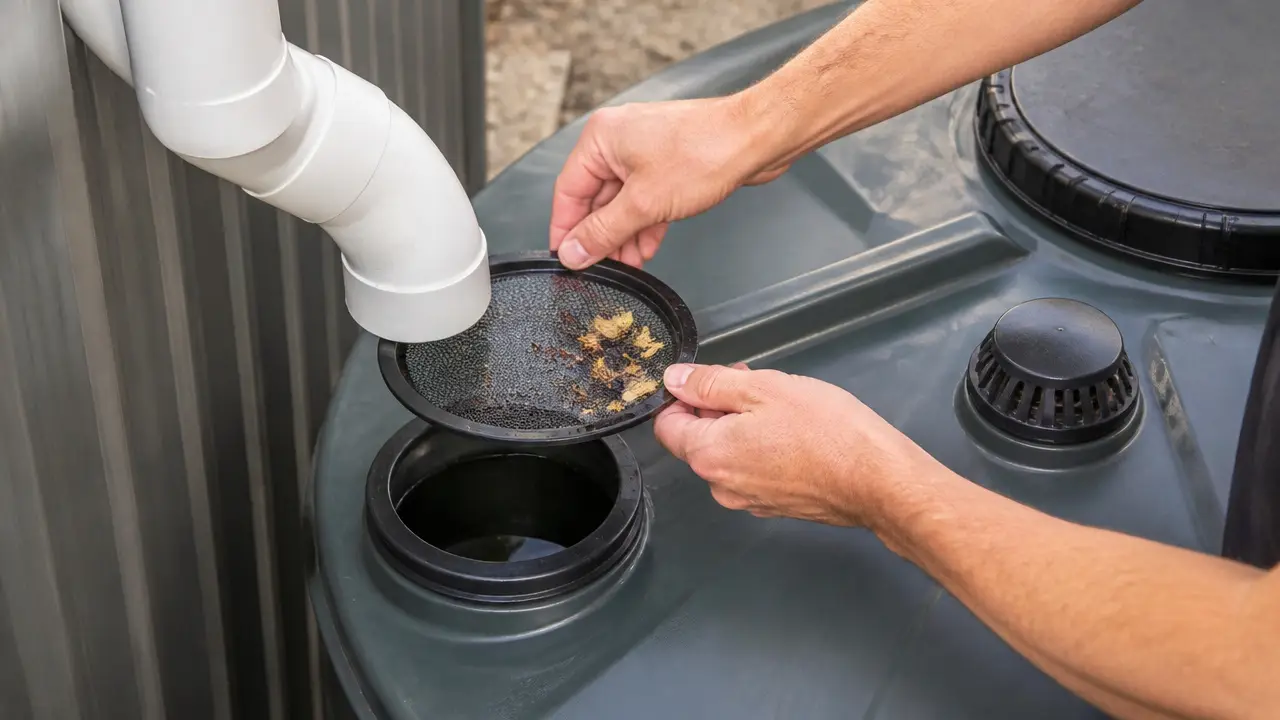
- is blocked by clogged screens or gutters
A first-flush diverter is a device that sends the first portion of roof runoff away from the storage tank. This can help remove some of the dirt and debris washed from the roof at the start of a storm.
For planning, it is better to treat the calculated rainfall amount as an ideal minimum rather than a guarantee.
For example, a calculation showing 0.88 inch of rain may mean roughly 1 inch or somewhat more is needed in your actual system.
How to Calculate Your Own Rainfall Requirement
First, determine how many square feet of roof drain to the barrel.
For a simple rectangular roof section:
Length × width = catchment area
Then calculate how much water one inch of rain could provide:
Catchment area × 0.623 = gallons per inch of rain
Finally:
Alongside the fill rate of a 50-gallon rain barrel, compare available volume relative to demand and refill timing.
55 ÷ gallons per inch = inches of rain needed
For example, with 250 square feet of catchment:
250 × 0.623 = 155.75 gallons per inch
Then:
55 ÷ 155.75 = 0.35 inch
About 0.35 inch of rain could theoretically fill the barrel if it starts empty.
Do You Measure the Roof Flat or Along the Slope?
For a simple rainfall estimate, use the horizontal footprint of the roof, not the sloped surface measurement.
Rainfall is measured as a depth falling on a horizontal area. A steep roof does not collect extra rainfall simply because its sloped surface is larger.
If you know the building's footprint and the roof section draining to your downspout, you can usually make a useful estimate without climbing onto the roof.
Avoid unnecessary roof access. Measuring from the ground, using building plans, or estimating from known wall dimensions is safer.
A 55-Gallon Barrel Can Fill Faster Than You Think
Small rain barrels often fill long before a storm ends.
For example, a 500-square-foot roof section can theoretically produce about 312 gallons from one inch of rain. A 55-gallon barrel represents only a small part of that runoff.
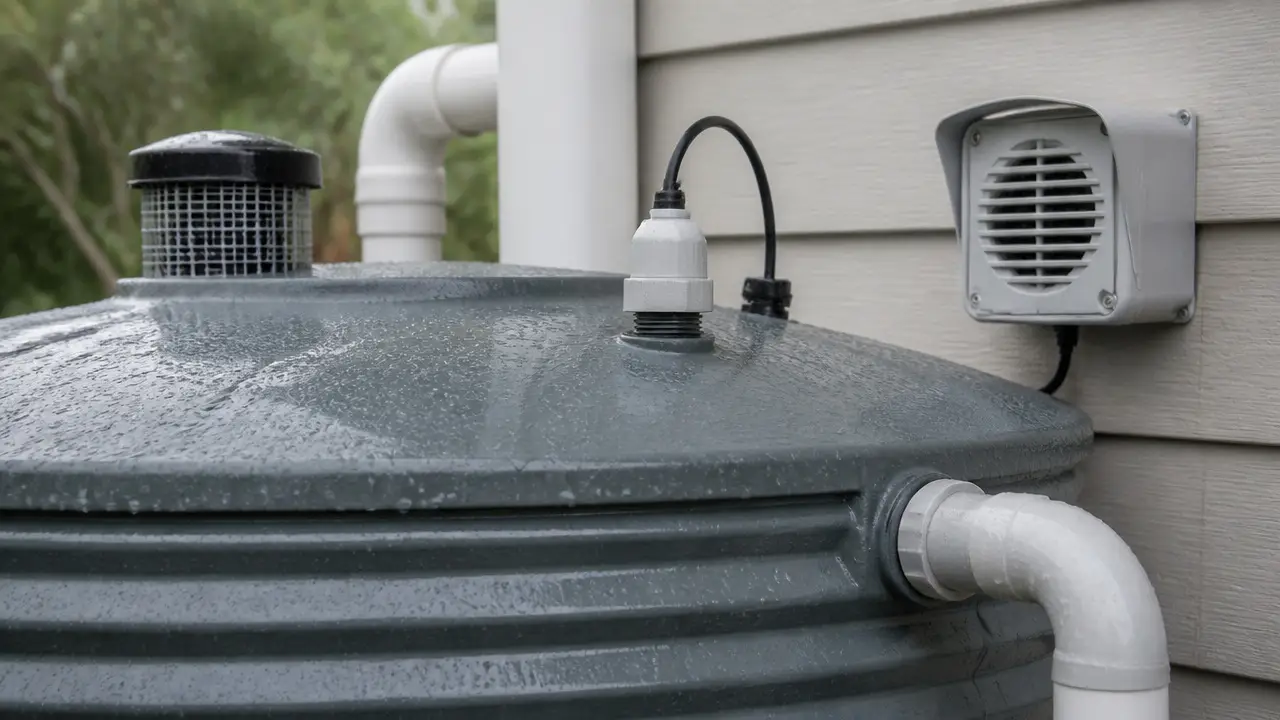
This is why a rain barrel needs a working overflow.
The overflow should carry excess water to a suitable drainage location rather than allowing it to spill beside the foundation. Keep the overflow route clear and check it periodically for leaves and debris.
If your barrel repeatedly fills early in storms, adding more storage may make sense. Multiple barrels or a larger tank can capture more runoff, but the tanks, connections, foundation, overflow, and available space all need to work together.
Remember How Heavy a Full Barrel Is
Water weighs about 8.3 pounds per gallon.
The water alone in a full 55-gallon barrel weighs roughly:
55 × 8.3 = about 457 pounds
The barrel and fittings add more weight.
Place the barrel on a firm, stable, level base that can support the load. Be especially careful with raised stands. Increasing the barrel height can improve gravity flow, but it also raises a very heavy container off the ground.
Frequently Asked Questions
Will 1 inch of rain fill a 55-gallon rain barrel?
Often, yes. If at least about 100 square feet of roof drains to the barrel, one inch of rain could provide enough runoff to fill it under typical conditions. A larger catchment area requires even less rainfall.
How much water does 1 inch of rain produce on a roof?
One inch of rain produces about 0.623 gallon per square foot of horizontal catchment area before collection losses. A 100-square-foot roof section could therefore receive about 62 gallons.
How much rain fills a 55-gallon barrel from a 200-square-foot roof?
The theoretical amount is about 0.44 inch. Actual rainfall needed may be higher because some water is lost before reaching the barrel.
Can a quarter-inch of rain fill a rain barrel?
Yes, if enough roof drains to it. A quarter-inch of rain on 400 square feet of roof represents roughly 62 gallons before losses, which may be enough to fill a 55-gallon barrel depending on collection efficiency.
Should I use my entire roof area in the calculation?
Only if the entire roof drains to the barrel. Most barrels connect to one downspout, so calculate the portion of roof feeding that downspout.
Does roof slope increase the amount of rainwater collected?
Not for this basic calculation. Use the roof's horizontal footprint. A steeper roof has more surface area, but rainfall depth is based on horizontal area.
What happens when a 55-gallon rain barrel becomes full?
Additional runoff must leave through an overflow or bypass system. The overflow should direct water to a suitable drainage area and away from places where it could cause erosion, flooding, or foundation problems.
Is water from a rain barrel safe to drink?
Do not assume roof runoff is potable, meaning safe for drinking. Roof materials, animal waste, dust, microbes, and other contaminants can enter collected water. Drinking-water use requires suitable collection and treatment, ongoing maintenance, current laboratory testing, and compliance with applicable local requirements.