As an affiliate, we may earn a commission from qualifying purchases. We get commissions for purchases made through links on this website from Amazon and other third parties.
A 50-gallon rain barrel can fill surprisingly fast. How quickly it fills depends mostly on how much roof drains into the barrel and how much rain falls.
As a general rule, 1 inch of rain on 100 square feet of roof produces about 62 gallons of water before losses. That means a 50-gallon barrel connected to even a small roof section can fill during one moderate rainstorm.
How Much Rain Does It Take to Fill a 50-Gallon Rain Barrel?
A useful rainwater collection formula is:
Gallons collected = roof area in square feet × rainfall in inches × 0.623
The 0.623 number comes from the amount of water that falls on one square foot during one inch of rain.
Using that formula, here is approximately how much rainfall could theoretically fill a 50-gallon barrel:
| Roof area draining to barrel | Rain needed for 50 gallons |
|---|---|
| 100 sq. ft. | 0.80 inch |
| 200 sq. ft. | 0.40 inch |
| 500 sq. ft. | 0.16 inch |
| 1,000 sq. ft. | 0.08 inch |
These numbers assume every drop reaches the barrel. Real systems collect less because some water stays on the roof, gets diverted by a first-flush device, splashes out, leaks from connections, or remains in gutters and downspouts.
Example: A Barrel Connected to 500 Square Feet of Roof
Suppose one section of your roof measures 500 square feet.
With 0.25 inch of rain:
500 × 0.25 × 0.623 = about 78 gallons
That is more than enough water to fill a 50-gallon barrel in theory.
Even after normal collection losses, a barrel connected to this much roof area could easily fill during a short rain.
This is why barrel capacity often matters more than roof size. Most homes have enough roof area to collect far more water than a single barrel can hold.
Roof Area Makes a Big Difference
You do not usually use the entire roof area when sizing a rain barrel.
What matters is the part of the roof that drains into the specific downspout connected to the barrel.
For example, a house might have a 1,600-square-foot roof divided among four downspouts. If the drainage is roughly even, one downspout might receive runoff from about 400 square feet.
With 400 square feet of catchment:
- 0.10 inch of rain produces about 25 gallons before losses.
- 0.20 inch produces about 50 gallons.
- 0.50 inch produces about 125 gallons.
A 50-gallon barrel could therefore reach capacity well before a half-inch rainstorm ends.
Roof drainage is not always divided evenly. Roof shape, valleys, gutters, and downspout placement can send much more water toward one downspout than another.
Rainfall Intensity Also Matters
Total rainfall tells you how much water is available. Rainfall intensity tells you how quickly that water arrives.
A slow rain may take several hours to fill the barrel.
A heavy downpour can send the same amount of water through the downspout in a much shorter period.
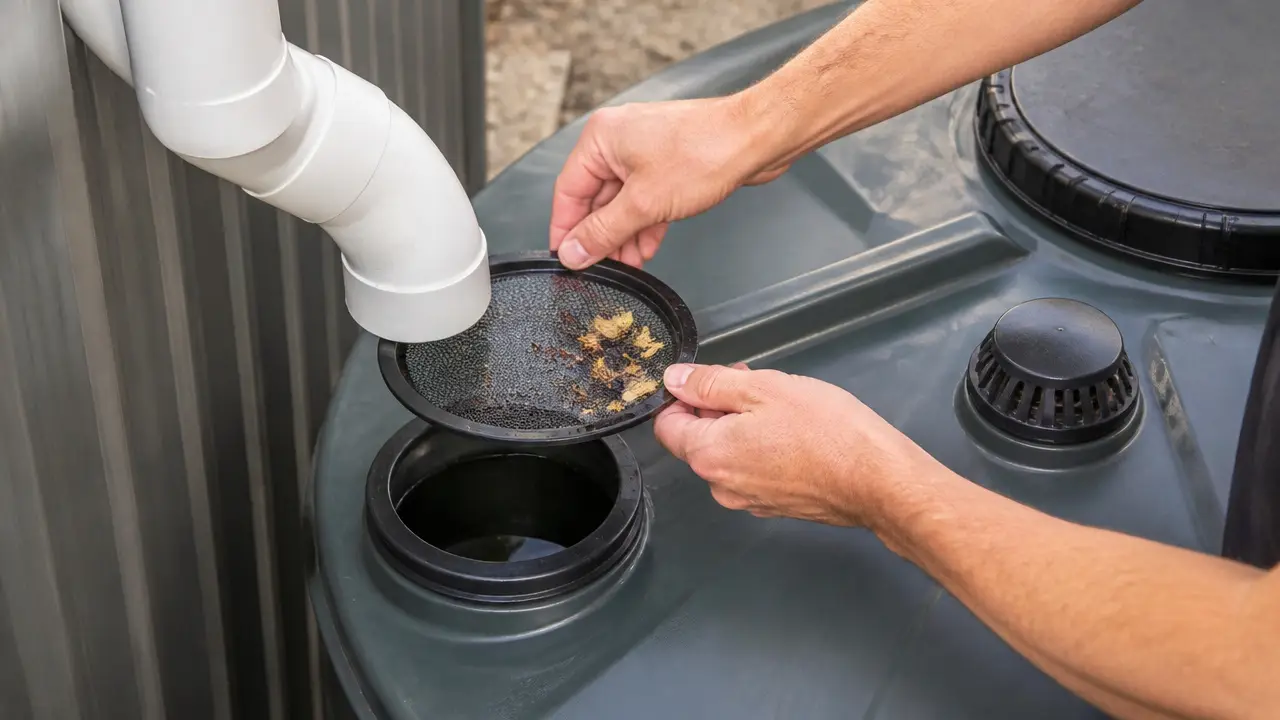
Your system must be able to handle that incoming flow. A small diverter, clogged screen, dirty gutter, or narrow connection can restrict flow and cause some water to bypass the barrel.
Heavy rain also makes a properly planned overflow especially important.
Why a 50-Gallon Barrel May Fill Faster Than You Expect
A roof is a large collection surface.
One inch of rain falling on 1,000 square feet represents roughly 623 gallons of water before collection losses.
A 50-gallon barrel stores only a small part of that amount.
For many homes, the limiting factor is not whether enough rain falls. It is whether there is enough storage capacity.
If your barrel routinely fills and overflows early in a storm, you may benefit from additional storage. Depending on the system, that could mean connecting another rain barrel or moving to a larger tank.
Make sure any connected barrels have fittings and hoses sized for the expected flow. Water will not necessarily move between barrels quickly enough if the connecting line is too restrictive.
Account for Real-World Collection Losses
The rainfall formula gives theoretical collection volume. Your actual collection will usually be lower.
Water can be lost through:
- Roof wetting at the beginning of a storm
- Gutter and downspout leaks
- Splashing
- Screens and debris
- A first-flush diverter
- Overflow before water can enter the barrel
- Restricted downspout diverters or fittings
A first-flush diverter sends away the first portion of roof runoff, which may contain more dust, leaves, pollen, and other debris.
Do not assume that every gallon falling on your roof reaches storage.
Make Sure the Overflow Can Handle a Full Barrel
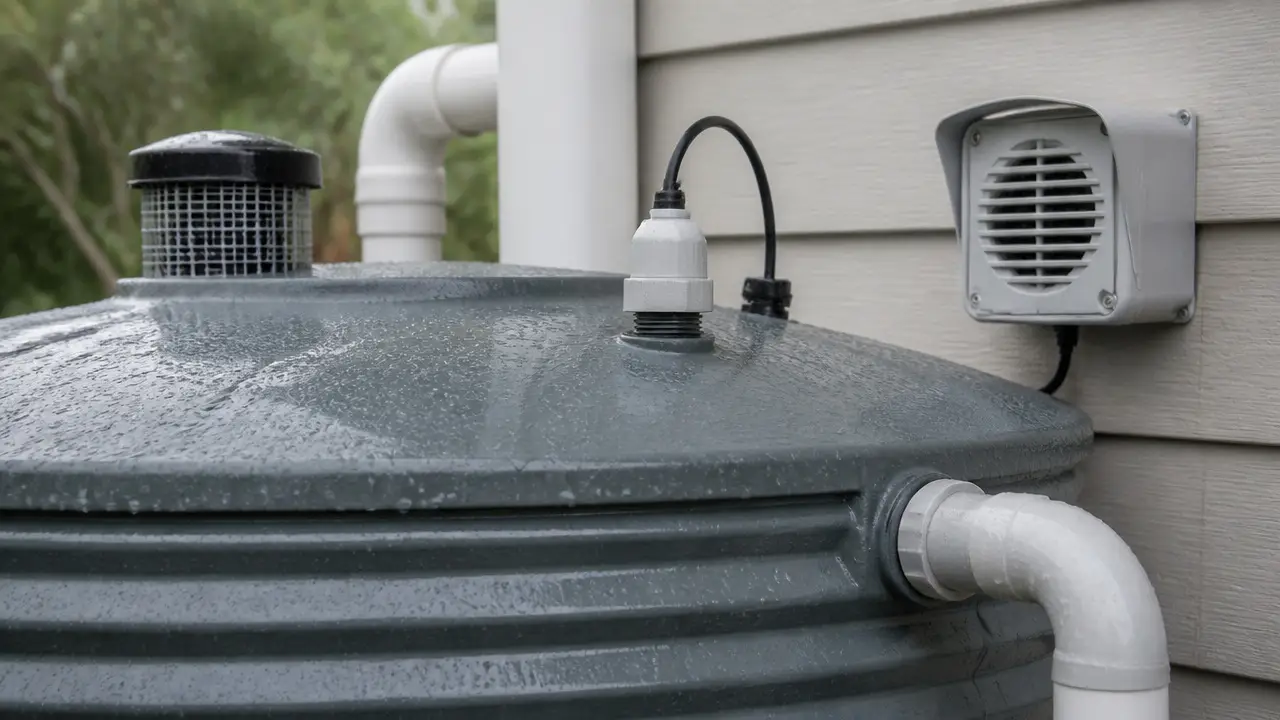
Once a 50-gallon barrel is full, every additional gallon needs somewhere to go.
That can happen quickly during a strong storm.
Examine rainfall needed to fill a 50-gallon barrel to evaluate service access for sediment removal and odor prevention.
The overflow should direct excess water away from places where it could cause problems, such as:
- House foundations
- Basement walls
- Crawl spaces
- Walkways
- Neighboring property
- Areas prone to erosion
Do not simply cap a full barrel and leave the downspout with nowhere to drain.
A rain barrel also needs a stable, level base. Fifty gallons of water weighs more than 400 pounds, not including the weight of the barrel itself. The support must be able to carry that load safely.
Should You Add More Rainwater Storage?
If your 50-gallon barrel regularly fills early in storms, adding storage may let you capture more of the available runoff.
Before increasing capacity, think about how much water you actually use.
For example, a gardener who empties the barrel between storms may get good use from several connected barrels. A barrel that stays full for weeks may not need additional storage.
Also consider:
- Available space
- Stable support
- Overflow routing
- Connection sizes
- Mosquito screening
- Ease of cleaning
- Winter freezing conditions
In freezing climates, exposed barrels, hoses, fittings, and valves may need seasonal draining or other freeze protection appropriate for the system.
How to Estimate Your Own Fill Time
You can make a useful estimate in three steps.
1. Find the roof area draining to the barrel
Measure the approximate horizontal footprint of the roof section feeding the connected downspout.
For a simple rectangular section:
Length × width = catchment area
You do not normally need to measure along the roof slope for basic rainfall collection estimates.
2. Check the expected rainfall
Use rainfall depth in inches.
Then calculate:
Roof area × rainfall × 0.623 = theoretical gallons
3. Compare that amount with your available barrel space
If your 50-gallon barrel already contains 20 gallons, it only has about 30 gallons of remaining capacity.
A rainfall event that could produce 60 gallons will not give you 60 gallons of usable storage unless the barrel is emptied or connected to additional capacity.
A Full Barrel Does Not Mean the Water Is Safe to Drink
How quickly the barrel fills does not tell you anything about water quality.
Roof runoff can pick up bird droppings, dust, roofing material, insects, microorganisms, and other contaminants.
Untreated rain-barrel water is generally best treated as non-potable water, meaning water not intended for drinking, unless it is part of a properly designed and maintained potable-water system.
Using rainwater for drinking requires much more than collecting it in a barrel. It involves suitable collection materials, prefiltration, treatment appropriate to the hazards, current laboratory testing, ongoing maintenance, and compliance with applicable local requirements.
Frequently Asked Questions
Can a 50-gallon rain barrel fill during one rainstorm?
Yes. In many installations, it can fill during a fairly small storm. A barrel receiving runoff from 500 square feet of roof theoretically needs only about 0.16 inch of rain to receive 50 gallons before collection losses.
How much water does 1 inch of rain produce?
One inch of rain on one square foot produces about 0.623 gallon. On 100 square feet, that is about 62 gallons before collection losses.
How much roof area do I need for a 50-gallon rain barrel?
There is no single required roof size. Even 100 square feet of roof can theoretically produce about 62 gallons during one inch of rain. Larger catchment areas simply fill the barrel with less rainfall.
Why isn't my rain barrel filling even when it rains?
Possible causes include a clogged gutter, blocked downspout, poorly positioned diverter, leaking connection, dirty inlet screen, or a roof section that drains somewhere else. Start by safely checking the parts that can be inspected from ground level. Avoid unsafe roof or ladder work.
What happens when a 50-gallon rain barrel gets full?
Water must leave through an overflow or return to the normal drainage path. A properly routed overflow helps keep excess water away from foundations and other areas where concentrated runoff could cause damage.
Can I connect two 50-gallon rain barrels together?
Yes, if the barrels and fittings are suitable for the setup. The connection must allow water to move between the barrels fast enough for the incoming flow, and the system still needs a safe overflow once both barrels are full.
How long will 50 gallons of stored rainwater last?
That depends on how quickly you use it. If you use 5 gallons per day, 50 gallons would last about 10 days. If irrigation uses 20 gallons per day, it would last only about two and a half days. Actual usable volume may also be slightly less than the barrel's stated capacity.