As an affiliate, we may earn a commission from qualifying purchases. We get commissions for purchases made through links on this website from Amazon and other third parties.
A 55-gallon drum can fill from much less rain than many people expect when it is connected to a roof. The exact amount depends on the roof area draining into the drum.
As a theoretical estimate, 1 inch of rain on 1 square foot of roof produces about 0.623 gallons of water. Real systems collect less because some water stays on the roof, splashes out, misses the gutter, or is diverted by a first-flush device.
For example, a 55-gallon drum connected to 100 square feet of roof would need about 0.88 inch of rain to fill under ideal conditions.
How to Calculate the Rain Needed
Use this formula:
Rain needed in inches = 55 ÷ (roof area in square feet × 0.623)
The 0.623 figure is the approximate number of gallons produced by 1 inch of rain falling on 1 square foot.
Here are some theoretical examples:
| Roof area draining to drum | Rain needed for 55 gallons |
|---|---|
| 50 sq. ft. | 1.77 inches |
| 100 sq. ft. | 0.88 inch |
| 200 sq. ft. | 0.44 inch |
| 500 sq. ft. | 0.18 inch |
| 1,000 sq. ft. | 0.09 inch |
These numbers assume that every drop reaching the catchment area makes it into the drum. Actual collection will normally be lower.
A Typical Roof Can Fill a Drum Quickly
A small roof section can collect a surprising amount of water.
Suppose 200 square feet of roof drains into your downspout. During a half-inch rainfall, the theoretical collection would be:
200 × 0.5 × 0.623 = 62.3 gallons
That is already more than a 55-gallon drum can hold.
In practice, you may collect somewhat less. Even so, a half-inch storm could easily be enough to fill the drum if the gutters and downspout direct most of that roof runoff into it.
This is why overflow control is important. Once the drum is full, additional rain needs somewhere safe to go.
Why Your Actual Collection Will Be Lower
The calculation above gives the maximum amount of rainwater available from the roof. It does not guarantee that all of it reaches your drum.
Some water can be lost because of:
- Wetting of the roof surface
- Gutter leaks or overflow
- Splashing
- Water left in gutters and pipes
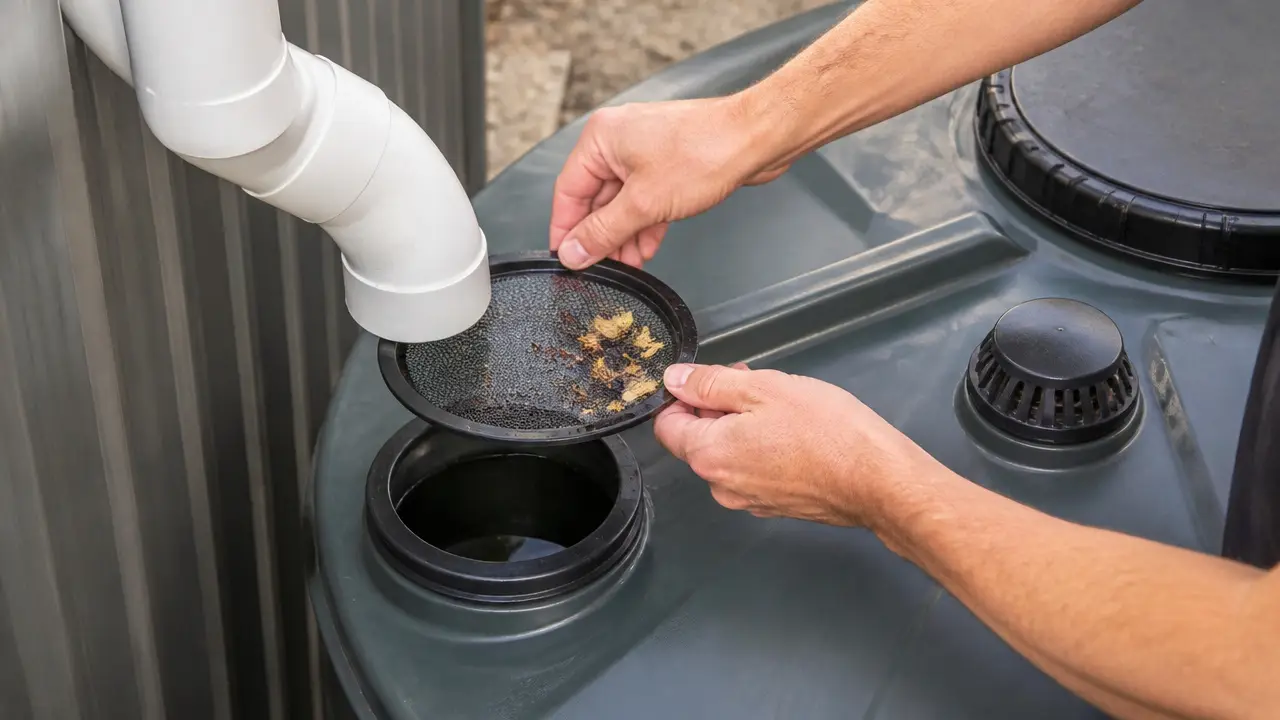
- Debris screens
- A first-flush diverter
- An imperfect downspout connection
- Wind during rainfall
A first-flush diverter sends the first portion of roof runoff away from the storage tank. This can help remove some dust, leaves, droppings, and other debris washed from the roof, but it also reduces the amount stored.
For planning, treat the 0.623-gallon figure as a theoretical maximum rather than the amount you will always capture.
The Roof Area Matters More Than the Drum Size
Rainfall depth alone does not tell you whether your drum will fill.
For example, 0.25 inch of rain may barely add water to a drum with a very small catchment area. The same storm can overflow a drum connected to a large roof.
The important relationship is:
Rainfall × catchment area = available rainwater
If you know the roof area that feeds your downspout, you can make a much better estimate.
Only Count the Roof That Drains to That Downspout
Do not automatically use the square footage of your entire house.
A roof may have several slopes and several downspouts. If your 55-gallon drum is attached to only one downspout, calculate the area of the roof sections feeding that downspout.
For a simple rectangular roof section:
Roof catchment area = length × width
Use the horizontal roof footprint for a basic rainfall-yield estimate rather than trying to increase the area because of roof slope.
What If Rain Falls Directly Into the Drum?
With converting rainfall depth to gallons per square foot, you can coordinate measures that prevent blocked or overflowing gutters.
If you leave a drum outside with no roof or other catchment surface, it will collect much more slowly.
Only rain falling through the open top enters the drum. Because the opening is small compared with even a modest section of roof, filling 55 gallons this way would require a very large accumulated rainfall depth.
The exact amount depends on the surface area of the opening. You can calculate it with the same basic principle:
Rain needed = 55 gallons ÷ collection area
A roof, tarp, shed, or other suitable catchment area greatly increases how much water can be collected from each storm.
An uncovered drum also creates problems with debris, mosquitoes, animals, and contamination. Rainwater storage should normally have a secure cover and screened openings where appropriate.
Plan for Overflow Before the Drum Fills
A 55-gallon drum can fill during a fairly modest storm when connected to a useful roof area.
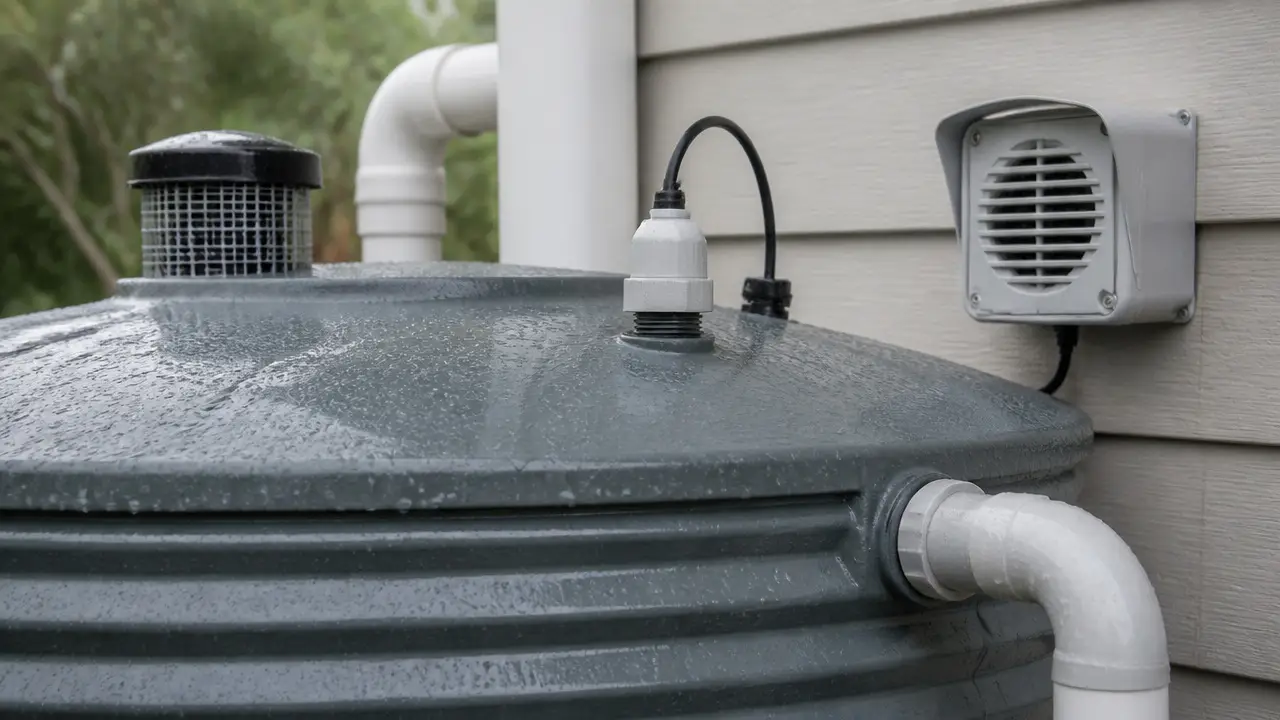
The overflow should direct excess water away without causing problems around:
- House foundations
- Walkways
- Neighboring property
- Erosion-prone soil
- Electrical equipment
- Other structures
Do not simply seal every opening in the drum. Water entering a full container must have a controlled way to leave.
If several drums are connected together, make sure the connecting fittings and overflow line can handle the incoming water. A small connection can restrict flow even when there is plenty of storage capacity available.
Remember That 55 Gallons Is Heavy
A full 55-gallon drum contains roughly 459 pounds of water, before adding the weight of the container and fittings.
It needs a stable, level base that can safely support the load.
Be especially careful if you want to raise the drum to improve gravity flow. Higher water provides more pressure, but an elevated drum also creates a larger structural load and a greater consequence if the support fails.
Collected Rainwater Is Not Automatically Drinking Water
Roof runoff can pick up dirt, animal droppings, microorganisms, roofing residues, and other contaminants.
A screen or simple filter can remove some debris, but it does not establish that the water is safe to drink.
For drinking-water use, treat the system as a whole. Collection materials, prefiltration, treatment, storage conditions, maintenance, current laboratory testing, and applicable local requirements all matter.
A basic 55-gallon rain drum is commonly better suited to suitable non-potable uses, meaning uses that do not require drinking-quality water, such as garden watering where appropriate.
Frequently Asked Questions
Will half an inch of rain fill a 55-gallon drum?
It can. If about 200 square feet of roof drains into the drum, half an inch of rain provides a theoretical 62.3 gallons. Real collection will be somewhat lower, but the drum could still fill during that storm.
How much rain does a 100-square-foot roof need to fill 55 gallons?
Under ideal conditions, about 0.88 inch. Actual rainfall needed may be higher because rainwater collection systems have losses.
How many gallons does 1 inch of rain produce?
One inch of rain produces about 0.623 gallons per square foot of catchment area. A 100-square-foot roof therefore receives about 62.3 gallons during a 1-inch rainfall before collection losses.
Can a 55-gallon drum overflow during one storm?
Yes. A drum connected to a moderate or large roof area can fill quickly. Install a suitable overflow route before using the system.
Should I use my whole roof area in the calculation?
Only if the whole roof drains into the downspout supplying the drum. Otherwise, calculate the portion of the roof that feeds that particular downspout.
Does a first-flush diverter reduce how much water reaches the drum?
Yes. A first-flush diverter sends some of the initial roof runoff away from storage. That reduces collected volume but can help keep some of the first debris washed from the roof out of the drum.
Can I drink water collected in a 55-gallon rain drum?
Do not assume roof runoff is safe to drink. Drinking-water use requires a suitable collection and treatment system, proper maintenance, current laboratory testing, and compliance with applicable local requirements.