As an affiliate, we may earn a commission from qualifying purchases. We get commissions for purchases made through links on this website from Amazon and other third parties.
One inch of rain on 1 square foot of roof produces about 0.623 gallons of water before collection losses.
That means 1 inch of rain on a 1,000-square-foot roof equals about 623 gallons of potential rainwater.
A simple rule of thumb is:
1 inch of rain × 1 square foot of roof ≈ 0.62 gallons
Rainfall-to-Gallons Formula
Use this formula to estimate how much rain falls on your roof:
Gallons = roof area (sq. ft.) × rainfall (inches) × 0.623
For 1 inch of rain, the formula becomes:
Gallons = roof area × 0.623
Here are some examples:
| Roof catchment area | Water from 1 inch of rain |
|---|---|
| 100 sq. ft. | 62 gallons |
| 200 sq. ft. | 125 gallons |
| 500 sq. ft. | 312 gallons |
| 750 sq. ft. | 467 gallons |
| 1,000 sq. ft. | 623 gallons |
| 1,500 sq. ft. | 935 gallons |
| 2,000 sq. ft. | 1,246 gallons |
| 2,500 sq. ft. | 1,558 gallons |
| 3,000 sq. ft. | 1,869 gallons |
These numbers describe the amount of rain falling on the catchment area. You normally will not get every gallon into your tank.
Why One Inch Equals About 0.623 Gallons Per Square Foot
One inch of rain over one square foot has a volume of:
1 sq. ft. × 1/12 ft. = 0.0833 cubic feet
One cubic foot holds about 7.48 gallons.
So:
0.0833 × 7.48 ≈ 0.623 gallons
This is why the 0.623 number is useful when sizing rain barrels, IBC totes, and larger cisterns.
For quick estimates, you can round it to 0.62 gallons per square foot per inch of rain.
How to Measure Your Roof Catchment Area
For a basic rainwater estimate, use the horizontal footprint of the roof area that drains to your collection system.
For a simple rectangular section:
Length × width = catchment area in square feet
For example, a roof section with a 40-foot length and a 25-foot horizontal width has:
40 × 25 = 1,000 square feet
One inch of rain over that area gives a theoretical volume of:
1,000 × 0.623 = 623 gallons
You do not normally need to increase the area because the roof is sloped. Rainfall depth is measured against a horizontal area.
Count Only the Roof That Feeds Your Tank
A 2,000-square-foot house does not necessarily provide 2,000 square feet of catchment to one tank.
Suppose half of the roof drains toward the front of the house and half toward the back. If your rain tank is connected only to a rear downspout, only the roof sections feeding that downspout should be included.
Follow the gutters and downspouts to see which part of the roof actually supplies the storage tank.
How Much Water Would Different Rainfall Amounts Produce?
Rainfall does not have to total a full inch. The same formula works for smaller or larger storms.
For a 1,000-square-foot catchment:
| Rainfall | Theoretical water volume |
|---|---|
| 0.1 inch | 62 gallons |
| 0.25 inch | 156 gallons |
| 0.5 inch | 312 gallons |
| 1 inch | 623 gallons |
| 1.5 inches | 935 gallons |
| 2 inches | 1,246 gallons |
| 3 inches | 1,869 gallons |
For example, if you expect half an inch of rain on an 800-square-foot roof section:
800 × 0.5 × 0.623 = about 249 gallons
That is the potential volume before losses.
You Will Not Collect Every Gallon
The 0.623 formula gives the amount of rain falling on the catchment area. Actual water reaching storage will be lower.
Water can be lost because of:
- Rain that wets the roof before runoff begins
- Water left in gutters and pipes
- Splashing and overflow
- Gutter leaks
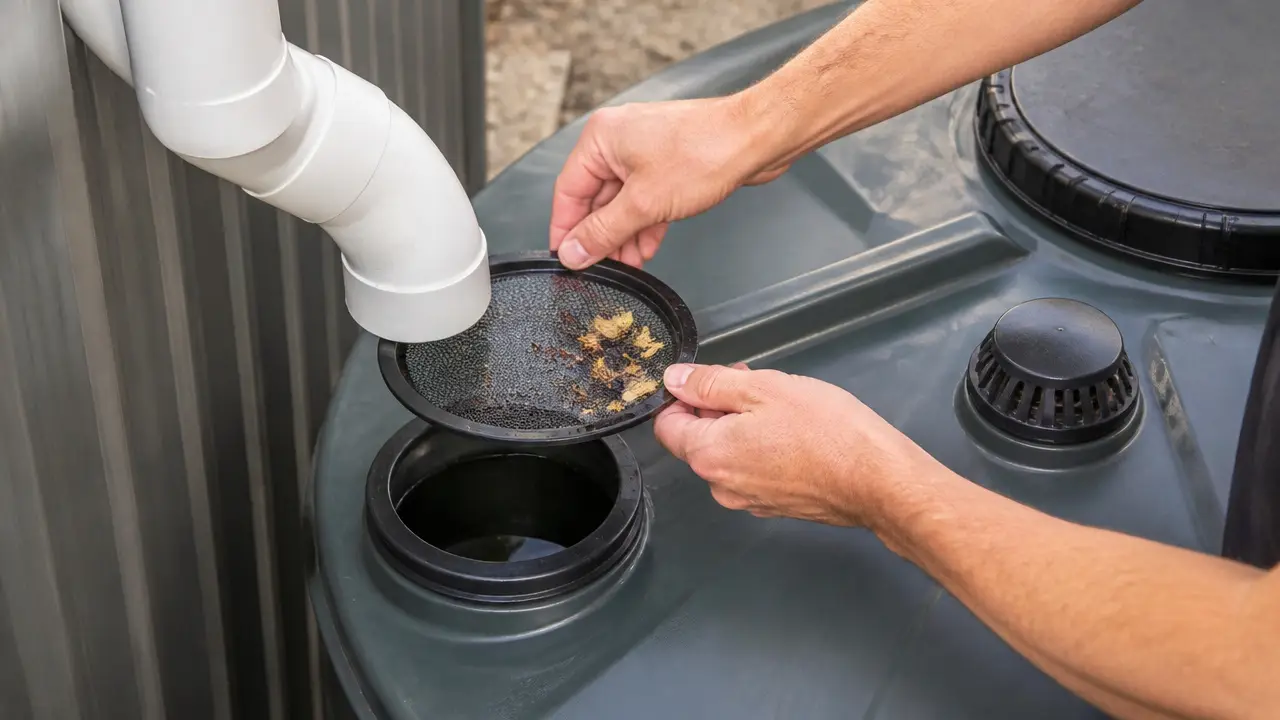
- Clogged screens
- A first-flush system
- Water diverted away from the tank
- An already-full storage tank
A first flush is a device or arrangement that sends the first part of roof runoff away from the tank. This can help keep some roof debris and contamination out of stored water, but it also reduces the amount collected.
If you know the expected collection efficiency of your particular system, you can add it to the calculation:
Collected gallons = roof area × rainfall × 0.623 × collection efficiency
For planning tank capacity, it is better to allow for real-world losses than to assume every theoretical gallon will reach storage.
Example: How Much Rain Can Fill a 55-Gallon Barrel?
The theoretical rainfall needed depends on the roof area feeding the barrel.
Explore per-square-foot yield from an inch of rain to understand roof discharge and the drainage capacity on site.
With a 100-square-foot catchment:
100 × 0.623 = 62.3 gallons per inch
So, theoretically, slightly less than one inch of rain could provide enough runoff to fill a 55-gallon barrel.
A much larger roof can fill the barrel surprisingly quickly.
A 500-square-foot catchment receives about:
500 × 0.623 = 312 gallons from one inch of rain
A 55-gallon barrel can therefore overflow well before a one-inch storm is over.
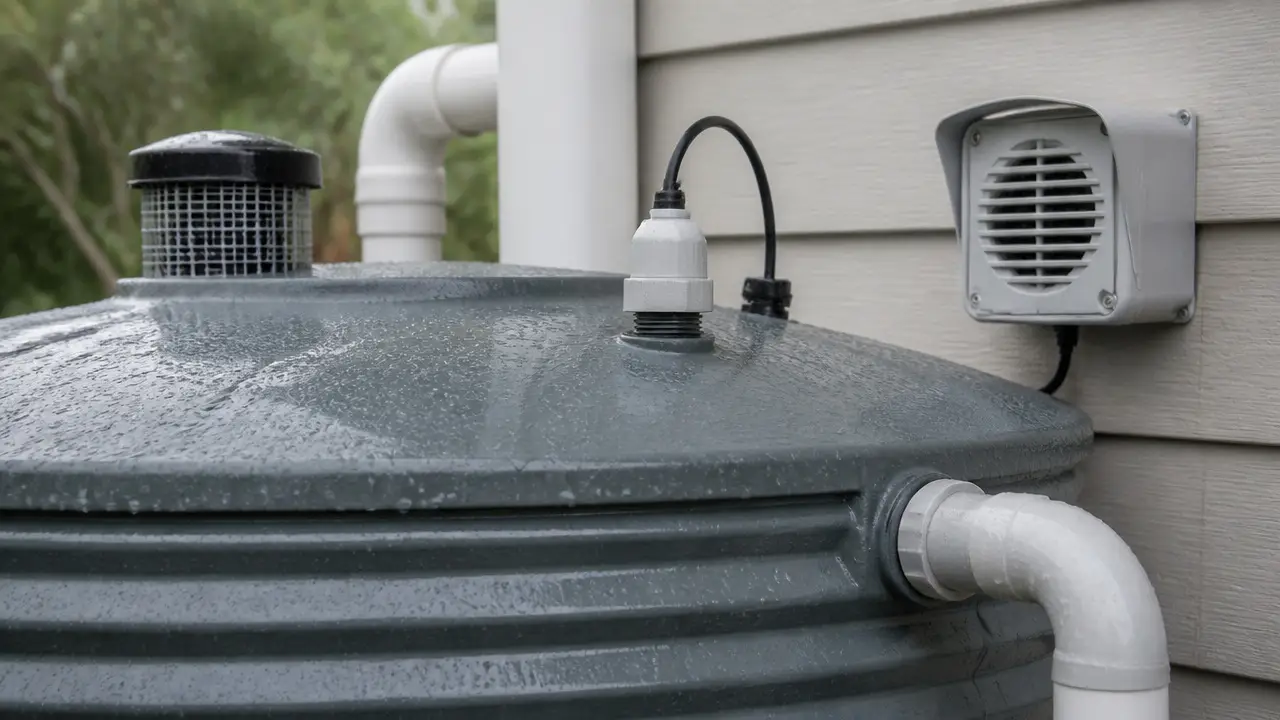
This is why a safe overflow path is important. Overflow should be directed somewhere that will not damage the foundation, flood a building, or erode the ground.
Example: How Much Rain Can Fill a 275-Gallon IBC Tote?
Suppose an IBC tote receives water from 500 square feet of roof.
One inch of rain provides a theoretical:
500 × 0.623 = about 312 gallons
That is already more than the capacity of a 275-gallon tote.
In a real system, collection losses reduce the amount reaching the tote. Even so, a moderate storm can fill a tote when it is connected to a large roof area.
The tote needs a properly sized overflow route. It should also sit on a stable, level base that can support its full weight. Water weighs about 8.34 pounds per gallon, so large containers become very heavy when full.
Use Storage Capacity and Water Demand Together
Knowing how many gallons fall on the roof is only one part of sizing a rainwater system.
Also consider:
- How much rain normally falls during the periods you plan to collect
- How much roof area actually feeds the tank
- How much storage capacity you have
- How much water you use between rain events
- Whether the tank regularly fills and overflows
- Whether there are long periods with little rain
A large roof connected to a small barrel may produce far more water than you can store. A large tank connected to a small catchment may take several storms to fill.
The useful goal is not simply to collect the most water possible. It is to match the catchment, storage capacity, and intended water use.
Rainfall Volume Does Not Tell You Water Quality
The rainfall calculation only estimates quantity. It says nothing about whether the collected water is suitable for a particular use.
Roof runoff can pick up dirt, leaves, animal waste, roofing material residues, microorganisms, and other contaminants.
Stored rainwater used for garden irrigation has different water-quality concerns than water intended for household or drinking-water use.
Do not assume roof-collected rainwater is safe to drink because it looks clear. Drinking-water use requires a suitable collection and treatment system, proper maintenance, current laboratory testing, and compliance with applicable local requirements.
Frequently Asked Questions
How many gallons is 1 inch of rain on a 1,000-square-foot roof?
About 623 gallons of rain falls on a 1,000-square-foot horizontal catchment during a one-inch rainfall.
Actual collection will be lower because some water is lost before it reaches the tank.
How many gallons is 1 inch of rain on a 2,000-square-foot roof?
The theoretical volume is:
2,000 × 0.623 = about 1,246 gallons
Only count the portion of the roof that drains into your rainwater collection system.
How much water does 1 inch of rain produce per square foot?
About 0.623 gallons per square foot.
For a quick calculation, using 0.62 gallons is usually convenient.
How many gallons does half an inch of rain produce?
Multiply the roof area by 0.5 and then by 0.623.
For example, half an inch of rain on a 1,000-square-foot catchment equals about 312 gallons before losses.
Do I use the actual sloped roof area?
For a basic rainfall-yield calculation, use the roof's horizontal projected catchment area, not the larger surface area created by the roof slope.
Also count only the sections that drain toward the gutters and downspouts connected to your tank.
Why does my rain barrel collect less than the calculation says?
The formula calculates potential rainfall volume. Some water stays on the roof, remains in gutters, goes through a first-flush diversion, leaks or splashes out, or bypasses the tank.
Your storage container may also become full before the rain ends.
Can one inch of rain fill a rain barrel?
Often, yes. A 100-square-foot catchment receives about 62 gallons from one inch of rain before losses, which is already more than the capacity of many small rain barrels.
Larger roofs can fill a barrel with much less than one inch of rain.