As an affiliate, we may earn a commission from qualifying purchases. We get commissions for purchases made through links on this website from Amazon and other third parties.
For most household water storage, a 3-layer or 4-layer water tank can be a good choice, but the number of layers alone does not tell you whether a tank is strong or safe.
A well-made 2-layer tank can be better than a poorly made 5-layer tank. What matters more is the tank's material, wall thickness, UV protection, structural design, intended water use, and certification.
What Do Water Tank Layers Mean?
Many plastic water tanks are made from polyethylene. Manufacturers may build the tank wall from several layers, with each layer serving a different purpose.
A common setup may include:
- An outer layer for sunlight and UV protection
- A structural layer that gives the tank strength
- A light-blocking layer that helps reduce sunlight entering the tank
- An inner layer intended for contact with stored water
The exact construction varies by manufacturer. There is no universal rule saying that every 3-layer or 4-layer tank uses the same materials or provides the same performance.
Because of this, comparing tanks only by layer count can be misleading.
Is a 3-Layer Water Tank Good?
A properly made 3-layer tank is usually suitable for normal outdoor household water storage.
A typical three-layer design may use:
- An outer UV-resistant layer
- A middle structural or light-blocking layer
- An inner water-contact layer
This arrangement can provide a useful balance of strength, sunlight protection, and water protection.
For storing rainwater for gardening, washing, irrigation, or other non-potable uses, a good-quality 3-layer polyethylene tank is often enough.
For drinking-water storage, layer count is not enough. The tank must be specifically suitable for potable water, and the complete collection and treatment system must also be designed for drinking-water use.
Is a 4-Layer Water Tank Better?
A 4-layer tank may add another layer for insulation, strength, color, or light blocking.
That can be useful, especially in areas with strong sunlight or high outdoor temperatures. However, four layers do not automatically make a tank better.
For example, a thick, well-designed 3-layer tank may be stronger than a thin 4-layer tank.
Check what each layer actually does rather than assuming that more layers mean better quality.
What About 5-Layer or 6-Layer Tanks?
Some manufacturers sell tanks with five or more layers.
Extra layers may be marketed for:
- Better UV resistance
- Improved insulation
- Greater stiffness
- Reduced light penetration
- A cleaner inner surface
These features can be useful, but the layer number should not be your main buying decision.
A tank still needs enough wall thickness and structural strength to hold thousands of pounds of water without excessive bulging or deformation.
Remember that water is heavy. One US gallon weighs about 8.34 pounds. A 1,000-gallon tank therefore holds roughly 8,340 pounds of water, not including the tank itself.
The base and tank structure matter much more than an impressive layer count.
How Many Layers Should You Choose?
For most uses, this is a practical guide:
| Tank use | What to look for |
|---|---|
| Small rainwater storage | Good-quality 2- or 3-layer tank may be enough |
| Outdoor household water storage | 3 or more well-designed layers are common |
| Hot, sunny location | Strong UV protection and good light blocking |
| Irrigation storage | Structural strength and correct fittings matter most |
| Long-term outdoor storage | UV resistance, wall thickness, warranty, and proper installation |
| Drinking-water storage | Tank specifically approved or certified for potable-water contact |
Do not choose a tank simply because one seller advertises more layers than another.
Wall Thickness Matters More Than Layer Count
Two tanks can both have four layers but have very different wall thicknesses.
The thicker tank may resist:
- Bulging
- Cracking
- Deformation
- Damage around fittings
- Stress from repeated filling and emptying
Unfortunately, manufacturers do not always describe wall thickness in the same way. Tank walls can also be thicker in some areas than others.
Look for a tank made for its stated capacity and installation method rather than relying on a single thickness measurement.
UV Protection Is Important for Outdoor Tanks
Polyethylene can slowly degrade when exposed to sunlight unless it is properly protected.
Outdoor tanks should be made with UV-stabilized material designed for long-term outdoor exposure.
This is especially important when the tank will sit:
- In full sun
- On an exposed property
- Beside a house
- Near a garden
- At a cabin or off-grid site
A greater number of layers does not guarantee better UV protection. Check the manufacturer's specifications.
Light Blocking Helps Control Algae
Algae need light to grow.
A water tank that blocks sunlight from reaching the stored water can make algae growth less likely. Dark or opaque structural layers are often used for this reason.
However, an opaque tank does not eliminate maintenance.
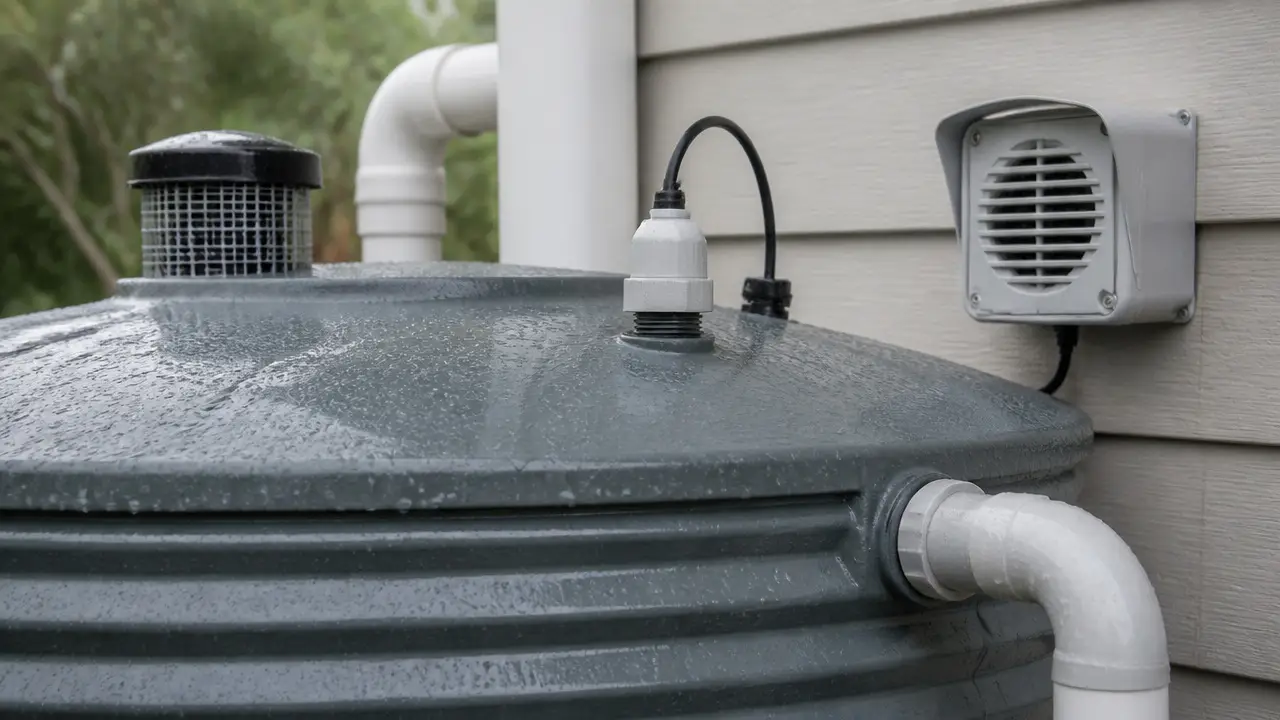
Alongside a suitable water storage tank for home use, understand overflow capacity and ventilation for long-term storage.
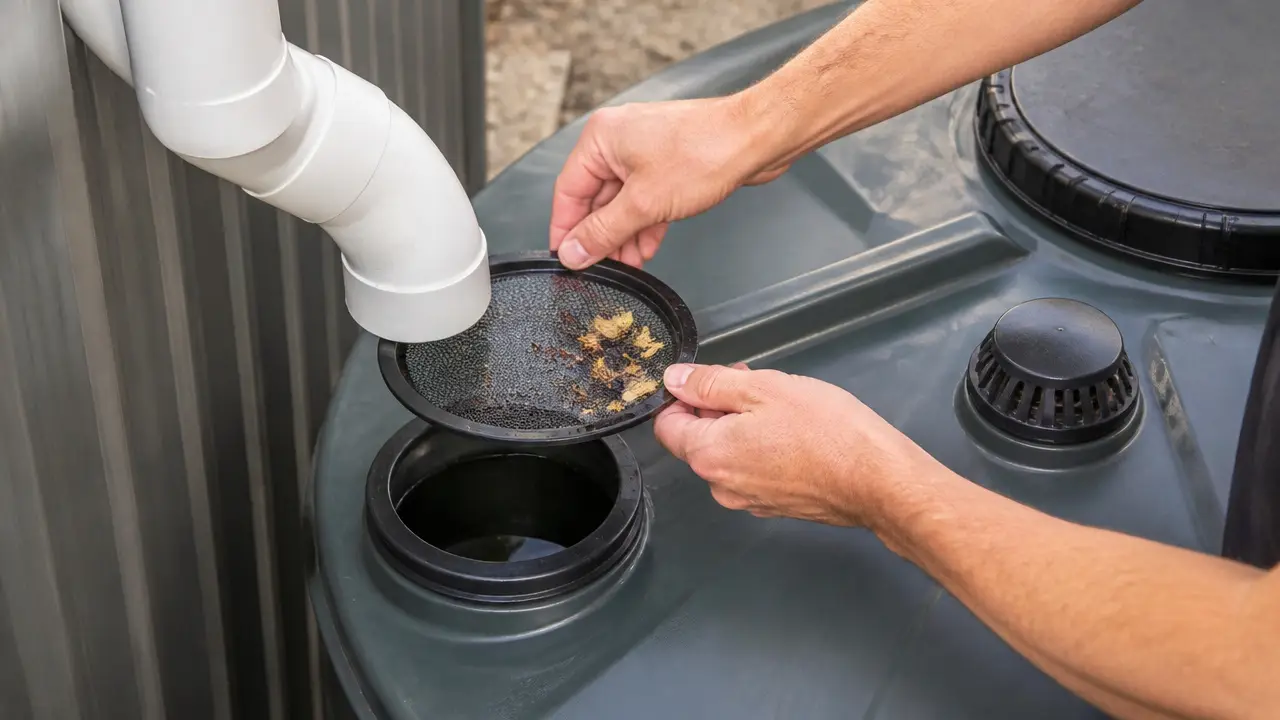
Organic material can still enter through roof runoff, tank openings, damaged screens, or dirty plumbing.
For a rainwater system, use suitable inlet screening and keep leaves, insects, and debris out of the tank.
A first-flush diverter can also help remove some of the dirt washed from a roof at the beginning of a rainfall event. It diverts the first portion of runoff before cleaner water enters the tank.
The Inner Layer Matters for Drinking Water
If the stored water may be used for drinking, cooking, or other potable purposes, do not assume that a tank is suitable just because it has a white or smooth inner layer.
Potable means suitable for drinking.
The tank material should be specifically identified as suitable for potable-water contact under standards or requirements applicable where you live.
The rest of the rainwater system matters too. Roof runoff can contain dirt, animal waste, microorganisms, metals, chemicals, and other contaminants.
A potable rainwater system may require appropriate collection surfaces, prefiltration, treatment, current laboratory testing, maintenance, and compliance with local health and plumbing requirements.
Adding more tank layers does not make untreated rainwater safe to drink.
Check the Tank Fittings Too
A strong tank can still cause problems if its connections are poorly designed.
Check the locations and sizes of the:
- Inlet
- Outlet
- Overflow
- Drain
- Vent
For rainwater harvesting, the overflow should be able to safely handle incoming water when the tank becomes full.
The outlet should also match the pipe, pump, or irrigation system you plan to use.
Some tanks use a bulkhead fitting, which is a sealed fitting installed through the tank wall so a pipe or valve can connect without leaking.
Avoid drilling extra holes unless the tank manufacturer allows it. Poorly positioned fittings can weaken the wall or create leaks.
The Base Is Just as Important as the Tank
Even a high-quality multi-layer tank can fail if it sits on a poor foundation.
The tank needs a level, stable base capable of carrying its full weight.
Uneven support can put extra stress on the bottom and sidewalls.
Follow the tank manufacturer's base requirements. Large tanks may require an engineered concrete pad or another prepared foundation.
Be especially careful with elevated tanks. Raising hundreds or thousands of gallons creates major structural loads and should not be treated like a simple DIY platform project.
What Is the Best Number of Layers for a Rainwater Tank?
For a typical outdoor rainwater system, a well-made 3-layer tank is often a sensible starting point.
Consider a tank with more layers when those additional layers provide a feature you actually need, such as improved UV protection or light blocking.
But compare these factors before comparing layer numbers:
- Tank material
- UV resistance
- Wall strength
- Tank capacity
- Light blocking
- Intended water use
- Fitting locations
- Installation requirements
- Manufacturer specifications
- Potable-water suitability, when required
The best tank is the one designed for your storage volume, climate, installation, and intended water use.
Frequently Asked Questions
Is a 3-layer water tank enough?
A good-quality 3-layer polyethylene tank is usually suitable for normal outdoor water storage. Check its UV resistance, structural design, installation requirements, and intended use rather than relying only on the number of layers.
Is a 4-layer tank better than a 3-layer tank?
Not necessarily. A 4-layer tank may offer additional insulation, light blocking, or structural features, but a well-made 3-layer tank can be stronger than a poorly made 4-layer tank.
Is a 5-layer water tank worth it?
It may be if the additional layers provide useful features for your climate or installation. Ask what each layer actually does. Extra layers by themselves do not guarantee greater strength or longer life.
Which layer water tank is best for sunlight?
Choose a tank specifically designed for outdoor use with good UV stabilization and strong light blocking. The manufacturer's UV specifications matter more than whether the tank has three, four, or five layers.
Does a multi-layer tank stop algae?
An opaque, light-blocking tank can reduce the conditions that encourage algae growth, but it cannot guarantee an algae-free tank. Keep roof debris, insects, sediment, and other contamination out of the system and clean it as needed.
Can I drink water stored in a 3-layer tank?
Only if the tank is specifically suitable for potable-water contact and the water itself has been collected, treated, tested, and maintained appropriately. The number of tank layers does not determine whether water is safe to drink.
Is a thicker water tank better?
Adequate wall thickness is important because the tank must withstand the weight and pressure of stored water. However, tank shape, material, reinforcement, manufacturing quality, and proper installation also affect strength.