
As an affiliate, we may earn a commission from qualifying purchases. We get commissions for purchases made through links on this website from Amazon and other third parties.
Best Overall
Best Heavy-Duty 1 Inch
Best 3/4 Inch
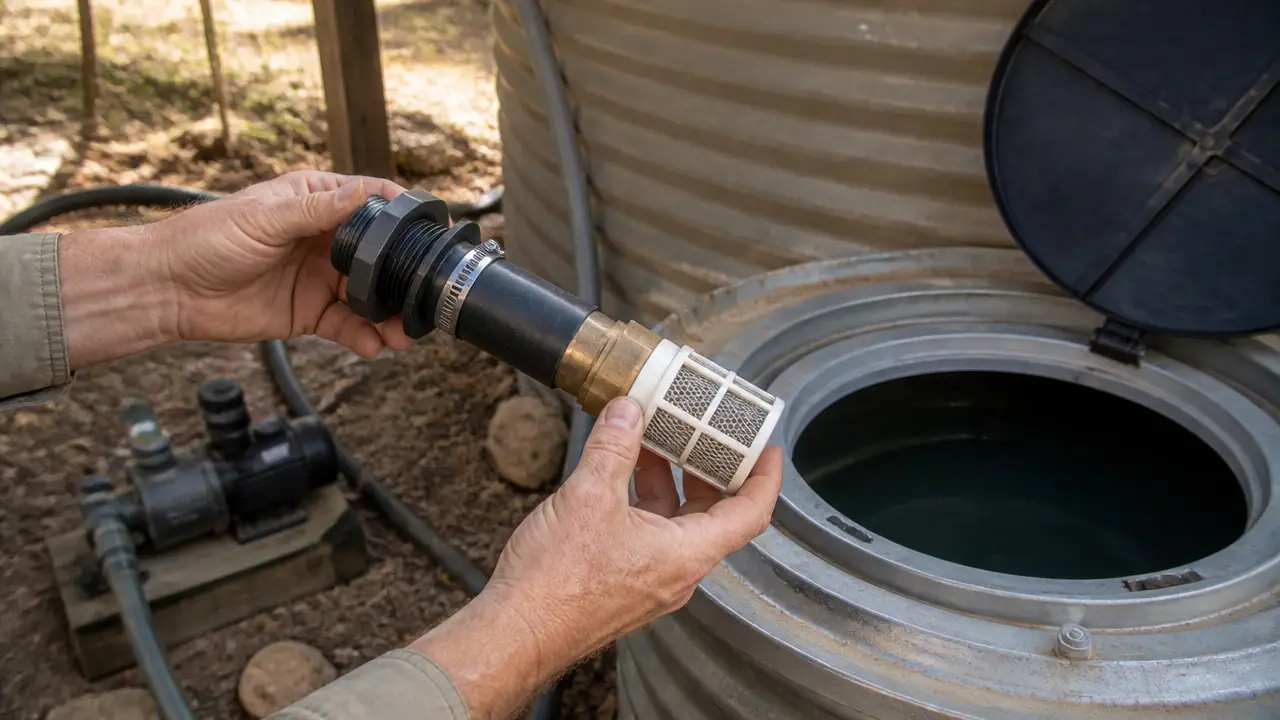
A foot valve sits at the submerged end of a pump suction line. It combines a one-way valve with an inlet screen, helping keep the suction pipe full after the pump stops while blocking larger debris from entering the line. That can make a jet or surface pump easier to prime and reduce the amount of water that drains back into the tank, pond, or other source.
The valve needs to match the suction line exactly. A one-inch foot valve belongs on a one-inch threaded suction connection unless a properly sized adapter is part of the design. A 3/4-inch valve creates a smaller flow path and is better suited to a line designed around that size. Avoid reducing the suction side merely because a smaller valve is convenient; suction restrictions can hurt pump performance.
Four products were prepared for this topic, but one 1-inch valve had no distinct safe role beyond duplicating the other 1-inch choices and lacked usable product-specific customer notes. The three below provide clearer differences in connection, construction, and field use without adding a filler pick.
Foot Valves at a Glance
| Product | Best For | Key Strength | Main Tradeoff |
|---|---|---|---|
| Merrill 710 Series | General 1-inch pump suction | 1-inch female connection, spring-loaded seal, screened inlet | Needs airtight suction fittings to hold prime reliably |
| Boltigen 1 Inch NPT | Heavy-duty 1-inch use | NPT thread, brass body, spring check, screened inlet | Material and dimension fields conflict, so those details are omitted |
| PNXKTXO 3/4 Inch | Smaller suction lines | 3/4-inch connection with integrated filter screen | It is NPT-style plumbing, not direct garden-hose thread, and product warns against drinking-water use |
Best Overall: Merrill 710 Series 1 Inch Brass Foot Valve
1 / 3
Merrill 710 Series 1 Inch Brass Foot Valve

Connection
1 in female NPT
Maximum Working Pressure
200 PSI
Design
Spring-loaded screened foot valve
The Merrill 710 Series is the strongest all-around choice for a one-inch suction line because its key pump-side details are clear: a one-inch female threaded connection, spring-loaded check action, and screened inlet. The valve is intended to hold prime while keeping larger debris out of the pump suction.
Its poppet uses an abrasion-resistant O-ring to create the seal when flow stops. The brass body is presented as lead-free and IAPMO certified. A 200 PSI maximum working-pressure figure gives the valve plenty of structural margin for ordinary pump systems, although suction-side operation normally sees very different pressure conditions from a high-pressure discharge line.
A foot valve can only hold prime when every suction connection is airtight. One apparent valve problem in product-specific use turned out to be loose hose clamps upstream. That is a useful lesson for rainwater pumps: if prime keeps disappearing, inspect the entire suction path before blaming the foot valve alone.
Why It Works
- The one-inch female connection fits a common surface-pump suction size.
- Spring-loaded closure helps retain water in the suction line after shutdown.
- The inlet screen blocks larger debris before it reaches the pump.
- A replaceable, accessible threaded valve is easier to service than a buried improvised check.
What To Keep In Mind
- Every hose clamp, union, and threaded suction joint must stay airtight.
- Keep the screen far enough above tank sediment that it does not sit in settled debris.
- Do not size the suction line from the valve alone; follow the pump's inlet requirement.
- In freezing climates, drain seasonal suction plumbing before trapped water can freeze.
Best Heavy-Duty 1 Inch: Boltigen NPT Foot Valve
2 / 3
Boltigen 1 Inch NPT Brass Foot Valve

Connection
1 in NPT
Maximum Working Pressure
16 bar
Design
Spring check with screened inlet
The Boltigen is another one-inch option, but it stands out for a clearly identified tapered NPT connection and strong product-specific use in dirty-water pump setups. The spring check allows forward suction flow while closing when the pump stops, and the perforated screen keeps larger particles away from the valve opening.
Its stated working pressure is 16 bar, and the valve uses a hex-shaped body section that gives a wrench a controlled place to grip during installation. That matters because twisting on a screen or rounded body can damage the valve before the pump ever runs.
Product-specific use includes a shallow-well pump drawing from a creek and a reclaim-water installation where the valve continued holding water despite dirty conditions. The prepared material and overall dimension fields conflict, so this guide leaves those disputed details out. The one-inch NPT connection and spring-foot-valve function are the safer reasons to choose it.
Why It Works
- A one-inch tapered NPT connection gives a clear plumbing standard.
- The screened inlet suits raw-water suction where larger particles are present.
- Hex flats make installation and removal easier with a wrench.
- Product-specific use supports its role in demanding, debris-prone water sources.
What To Keep In Mind
- Material and body-dimension details are omitted because the prepared fields conflict.
- The screen is coarse protection, not a substitute for downstream filtration.
- Periodically inspect the screen when the source contains mud, leaves, or organic matter.
- Keep the valve submerged during pump operation so the suction line does not pull air.
Best 3/4 Inch: PNXKTXO Foot Valve
3 / 3
PNXKTXO 3/4 Inch Brass Foot Valve

Connection Size
3/4 in
Maximum Operating Pressure
1600 kPa
Use
Agricultural irrigation pump suction
The PNXKTXO is the clear choice when the pump suction system is already designed around a 3/4-inch threaded line. The integrated spring check helps retain prime, and the inlet screen keeps larger material from entering the suction hose or pipe.
Its prepared connection size is 3/4 inch on both sides of the valve assembly. That should not be confused with 3/4-inch garden-hose thread. Product-specific fit notes point out that a garden hose needs a proper NPT-to-GHT adapter rather than being screwed directly onto the valve.
This product also carries a clear warning against use in drinking-water systems. That makes it best suited to irrigation, garden transfer, and other non-potable rainwater jobs. The material and overall dimension fields conflict, so those disputed details are not used here.
Why It Works
- The 3/4-inch size fits smaller pump suction systems designed around that diameter.
- A screened spring-check design combines prime retention and coarse debris control.
- The valve is positioned for agricultural and irrigation pump use.
What To Keep In Mind
- It is not direct garden-hose thread; use the correct NPT-to-GHT adapter when needed.
- The product warns against drinking-water-system use.
- Material and body dimensions are omitted because the prepared fields conflict.
- A 3/4-inch suction line may be too restrictive for a pump designed for a larger inlet.
How to Choose a Foot Valve
Match the Pump Inlet Size
Suction plumbing should normally be at least as large as the pump inlet unless the pump maker specifies otherwise. Reducing the line can increase friction loss and make priming harder.
Use a foot valve with the correct thread standard and enough open screen area for the pump's flow. A valve that looks physically large can still be restrictive if its internal passage is small.
Keep the Valve Submerged but Off the Bottom
The foot valve needs to stay underwater while the pump runs, but placing it directly on the tank or pond bottom exposes the screen to settled sediment. Suspend it above the bottom where it can draw cleaner water without pulling air from the surface.
The right height depends on tank depth, normal low-water level, and how much sediment accumulates.
Make the Suction Side Airtight
Surface pumps can lose prime through tiny air leaks that never drip water outward. Threaded fittings, hose clamps, cracked suction hose, pump seals, and the foot valve itself are all possible leak points.
Use suction-rated hose where flexible line is needed. Thin garden hose can collapse under vacuum even when its fittings do not leak.
Keep the Screen Clean
Leaves, algae, stringy debris, and sediment can block the inlet. A clogged foot valve reduces pump flow and can contribute to cavitation or loss of prime.
Build the suction intake so the foot valve can be lifted for inspection without entering a tank or confined space.
Plan for Winter
A foot valve intentionally keeps water in the suction line. That is useful during the season but creates trapped water during freezing weather. Seasonal systems need a way to drain or remove the suction assembly safely.
Foot Valve vs Inline Check Valve
A foot valve belongs at the water-source end of a suction line and includes a screen. An inline check valve is installed within plumbing and usually has no suction strainer. Both prevent reverse flow, but their placement and debris-handling roles are different.
Using a normal inline check at the end of a dirty-water suction line leaves the pump without an inlet screen. Using a fine foot-valve screen in a high-debris source can also create too much restriction. Match the component to the location.
Frequently Asked Questions
What does a foot valve do on a rainwater pump?
It helps keep the suction line full when the pump stops and screens out larger debris at the water intake. That can make a surface pump easier to keep primed.
Does a submersible pump need a foot valve?
Usually not in the same way a surface suction pump does because the pump itself is underwater. Follow the submersible pump maker's check-valve requirements for the discharge line.
How deep should a foot valve be in a rainwater tank?
Keep it submerged below the lowest normal operating water level but raised above settled sediment. The exact position depends on tank shape, outlet use, and how much debris collects on the bottom.
Can a foot valve be too small?
Yes. A valve smaller than the pump suction line can restrict flow and increase suction loss. Match the valve and line to the pump inlet requirements.
Why does my pump keep losing prime with a new foot valve?
Air may be entering through another suction connection, hose clamp, cracked hose, pump seal, or threaded fitting. The valve itself can also leak if debris prevents it from closing.
Can a foot valve filter rainwater for drinking?
No. Its screen only blocks larger debris at the pump intake. Drinking-water use requires suitable treatment, maintenance, and current testing for the entire rainwater system.
For a valve used inside the plumbing rather than at the suction intake, check valves for rainwater pumps cover inline options. Automatic pump controllers handle pump start-and-stop logic, while pressure tanks for rainwater systems reduce cycling after the pump is pressurized.