As an affiliate, we may earn a commission from qualifying purchases. We get commissions for purchases made through links on this website from Amazon and other third parties.
Some water filters can remove total dissolved solids (TDS), but many common filters cannot. Sediment filters, activated carbon filters, and most ultrafiltration systems do little to lower dissolved salts and minerals. Reverse osmosis, distillation, and deionization can reduce TDS much more effectively.
A TDS reading is useful, but it is not a water safety score. Low-TDS water can still contain germs or harmful chemicals. This is especially important with collected rainwater.
What Does TDS Mean?
TDS stands for total dissolved solids. These are substances that have dissolved into the water instead of floating in it as visible particles.
TDS can include dissolved:
- Calcium
- Magnesium
- Sodium
- Potassium
- Chloride
- Sulfate
- Bicarbonate
- Other minerals and salts
- Small amounts of dissolved organic material
TDS is usually reported in milligrams per liter (mg/L) or parts per million (ppm). For ordinary water testing, these numbers are often treated as roughly equivalent.
The World Health Organization describes TDS mainly as dissolved inorganic salts plus small amounts of organic matter. Current WHO drinking-water guidance does not set a health-based guideline value for TDS itself. High TDS can still affect taste, scaling, and how useful the water is for certain purposes.
In the United States, the EPA lists 500 mg/L as a secondary drinking-water standard for TDS. Secondary standards deal mainly with things such as taste, odor, staining, and scaling rather than serving as a general health limit.
Why Many Water Filters Do Not Remove TDS
A normal water filter catches particles. Dissolved solids are different.
Imagine mixing sand and salt into water. A fine sediment filter may catch the sand. The salt dissolves into tiny charged particles called ions and passes through many ordinary filters with the water.
A filter's micron rating describes the approximate size of particles it can catch. A smaller micron number means the filter can catch smaller particles. But simply making a particle filter finer does not mean it will remove dissolved salts.
Removing TDS usually requires a process that separates dissolved ions from water, not just a screen that traps dirt.
Which Water Filters Remove TDS?
| Treatment method | Effect on TDS | Main point |
|---|---|---|
| Sediment filter | Little or none | Removes dirt, rust, sand, and other particles |
| Activated carbon | Usually little | Helps with some tastes, odors, chlorine, and certain organic chemicals |
| Ultrafiltration | Usually little | Removes very small particles and some microorganisms but lets many dissolved salts pass |
| Nanofiltration | Can reduce some TDS | Removes certain dissolved substances, especially some hardness-related ions |
| Reverse osmosis | Yes | Removes many dissolved salts and other dissolved substances |
| Distillation | Yes | Separates water by boiling and condensing it |
| Deionization | Yes | Uses ion-exchange media to remove charged dissolved substances |
| Water softener | Not generally | Exchanges hardness minerals for other ions rather than removing all dissolved solids |
| UV disinfection | No | Uses ultraviolet light to control microorganisms; it does not remove dissolved minerals |
The exact result depends on the water chemistry and the treatment system. No treatment method should be assumed to remove every possible contaminant.
Sediment Filters
A sediment filter does not normally lower TDS.
It is designed to remove suspended material such as:
- Roof grit
- Rust
- Sand
- Silt
- Tank sediment
This can make water look clearer without changing the dissolved mineral level.
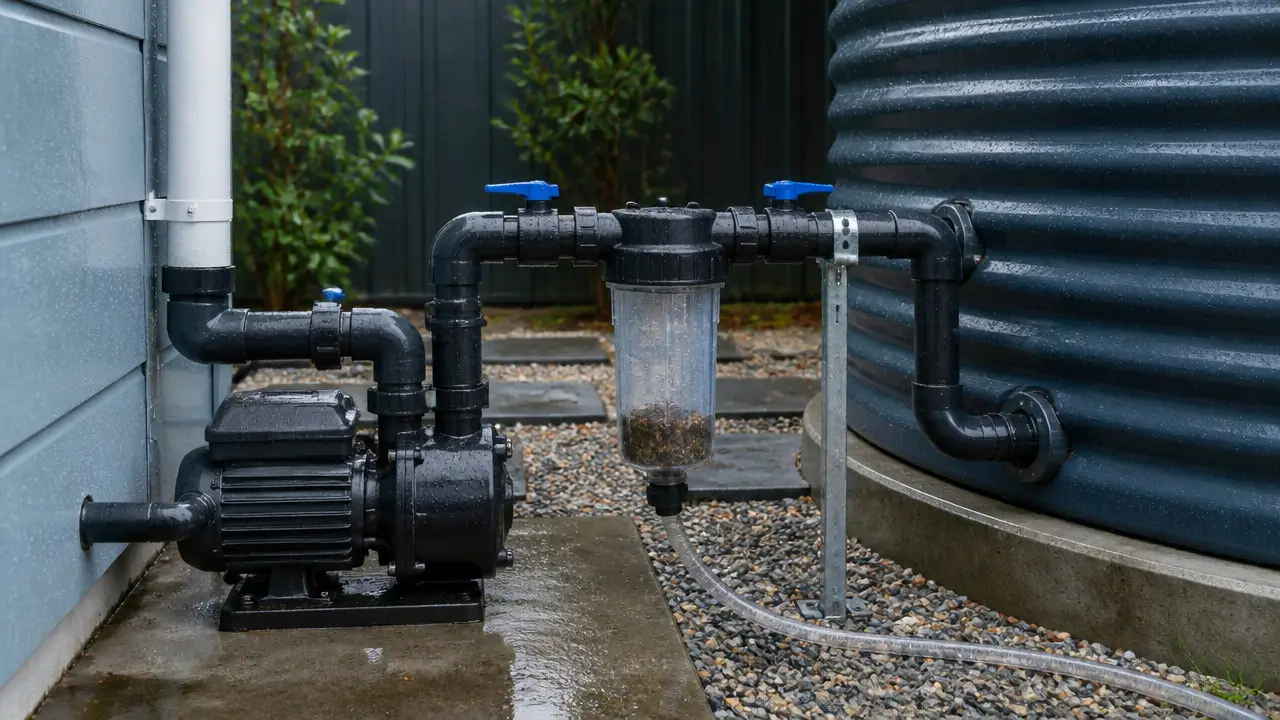
Sediment filtration is still useful in rainwater systems. It can protect pumps, valves, finer filters, and later treatment stages.
Activated Carbon Filters
Activated carbon usually does not make a large change in TDS.
Carbon can adsorb certain chemicals. Adsorption means substances stick to the surface of the carbon. Carbon is commonly used to improve taste and odor and to reduce specific chemicals when the filter is designed for them.
However, common dissolved salts such as sodium, calcium, magnesium, and chloride usually remain in the water.
This means a pitcher or refrigerator filter may improve the taste while leaving the TDS reading nearly unchanged. The CDC also notes that many common activated-carbon filters are mainly intended to improve taste and smell.
Ultrafiltration
Ultrafiltration uses a very fine membrane. It can remove particles and certain microorganisms.
However, dissolved salts are small enough to pass through most ultrafiltration membranes. The CDC specifically notes that ultrafiltration does not remove chemicals in the same way that reverse osmosis does.
So ultrafiltration should not be chosen just because you want a lower TDS number.
Nanofiltration
Nanofiltration can reduce some dissolved minerals and salts.
It sits between ultrafiltration and reverse osmosis in how it separates substances. It can be useful for reducing hardness and some dissolved contaminants, but its TDS reduction depends heavily on the membrane and the chemistry of the water.
EPA guidance notes that nanofiltration can remove hardness and several other dissolved substances.
Reverse Osmosis
Reverse osmosis, usually called RO, is one of the most common household methods for reducing TDS.
An RO system pushes water through a semi-permeable membrane. Water passes through more easily than many dissolved salts and other contaminants. The remaining concentrated water is sent to a reject or drain line.
The CDC lists sodium, chloride, calcium, magnesium, nitrate, and several other dissolved substances among those that RO may remove or reduce. The exact performance depends on the system and the contaminant.
RO systems normally need prefilters to protect the membrane. They also need enough water pressure and regular maintenance.
Do not choose an RO system only by looking for the lowest possible TDS reading. Check what specific contaminants the system is designed and certified to reduce.
Distillation
Distillation can also lower TDS significantly.
A distiller heats water until it becomes vapor. That vapor is then cooled back into liquid water. Many dissolved minerals and salts stay behind.
The CDC lists sodium, sulfate, calcium, magnesium, nitrate, lead, arsenic, and several other substances among those distillation can remove. However, some volatile chemicals may require additional treatment because they can evaporate along with water.
Distillation also uses energy and usually produces water slowly.
Deionization
Deionization uses special ion-exchange resins to capture electrically charged dissolved substances.
It can produce very low-TDS water. This is useful for some laboratory, aquarium, industrial, and special water-treatment uses.
Deionization alone should not be treated as a complete drinking-water system. Some contaminants are not ionic, and the process does not by itself provide a full answer for microbial safety.
Do Water Softeners Remove TDS?
A normal water softener does not remove TDS in the same way an RO system does.
Water softeners mainly deal with hardness, which comes largely from calcium and magnesium. The softener exchanges those ions for sodium or, in some systems, potassium ions.
With EPA guidance for TDS in drinking water, you can compare a maintenance response tied to verified water-quality trends.
The hardness drops, but dissolved ions are still present.
This means softened water may have almost the same TDS even though it forms much less scale.
If your problem is hard-water scale, a softener may make more sense than trying to remove all TDS. If your problem is high salt content, a softener is not the same solution as reverse osmosis.
Does a TDS Meter Tell You Whether Water Is Safe?
No.
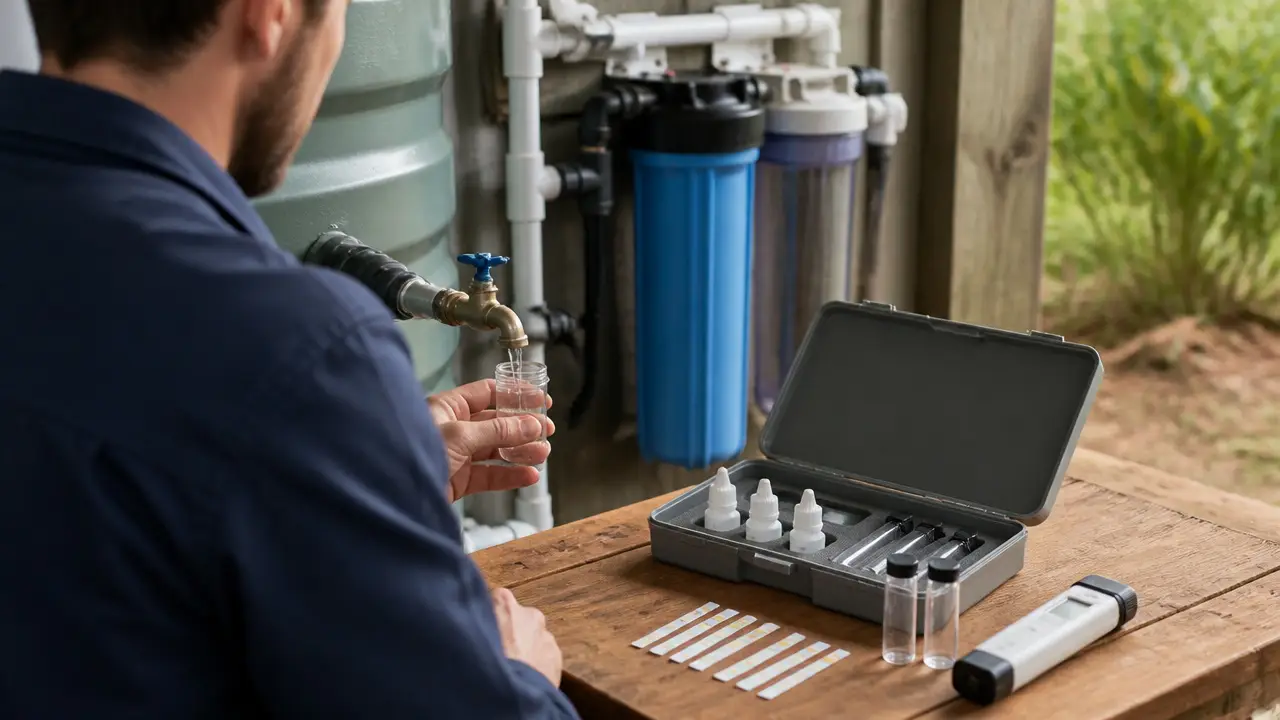
Most inexpensive TDS meters do not directly weigh every dissolved substance in the water. They measure electrical conductivity and use that measurement to estimate TDS.
Water containing more dissolved ions normally conducts electricity better. But the relationship depends on which ions are present. USGS guidance notes that conductivity is useful for estimating dissolved solids, but there is no single conversion that is exact for every type of water.
A TDS meter also cannot tell you what is dissolved in the water.
For example, two water samples can both read 200 ppm while containing very different minerals and chemicals.
A TDS meter also does not give you a complete test for:
- Bacteria
- Viruses
- Parasites
- Pesticides
- Many organic chemicals
- Specific metals
- Individual salts
- Other health-related contaminants
That is why the CDC recommends testing water for the actual contaminants of concern and choosing treatment that is designed to address those contaminants.
What TDS Means in a Rainwater System
Collected rainwater often starts with less dissolved mineral content than groundwater because it has not spent years moving through mineral-rich soil and rock.
But a low TDS reading does not make roof runoff safe to drink.
Rainwater can pick up contaminants from:
- Roofing materials
- Gutters
- Dust
- Bird and animal droppings
- Leaves and organic debris
- Air pollution
- Tank surfaces
- Plumbing and fittings
Some of these contaminants may barely affect a TDS meter.
For example, rainwater from a cistern could show a very low TDS number and still require treatment for microorganisms.
If rainwater is intended to be potable, meaning treated and managed for drinking, treat it as a whole-system water-quality job. The collection surface, first-flush or debris controls, storage tank, plumbing, filtration, disinfection or other treatment, maintenance, laboratory testing, and applicable local requirements all matter.
A first-flush device diverts some of the earliest roof runoff so that part of the dirt collected between rains does not immediately enter the storage tank. It can help reduce contamination entering the system, but it does not make the remaining water automatically safe to drink.
When Does Lowering TDS Make Sense?
There is no reason to remove dissolved minerals simply because a meter shows a number above zero.
Treatment should solve a real water problem.
Lowering TDS may make sense when laboratory testing or water use shows problems such as:
- Excess dissolved salts
- Unpleasant mineral or salty taste
- Specific dissolved contaminants that the treatment system can remove
- Scaling in equipment
- Water that is too saline for a particular irrigation use
- A need for low-mineral process water
The correct treatment depends on what is causing the TDS.
For example, RO might make sense for salty drinking water. A water softener may make more sense if the main problem is hardness and scale. Sediment filtration may be all that is needed for non-potable garden water with tank debris but acceptable dissolved salt levels.
Using TDS to Check an RO System
A TDS meter can be useful for checking changes in an RO system over time.
Measure the untreated feed water and the RO product water under similar conditions. You can calculate the change with:
TDS reduction (%) = (feed TDS − treated TDS) ÷ feed TDS × 100
For example, this can help you spot a large change in membrane performance.
Do not use a universal percentage as proof that the system is working safely. Compare the results with the system manufacturer's stated operating limits and maintenance instructions.
A rising product-water TDS reading may point to membrane wear, changing feed water, pressure problems, or another system issue. It does not tell you whether bacteria or a particular chemical is present.
The Bottom Line
Water filters do not all remove TDS.
Standard sediment and carbon filters usually leave most dissolved minerals and salts in place. Ultrafiltration also allows many dissolved ions to pass. Reverse osmosis, distillation, deionization, and some nanofiltration systems can reduce TDS because they are designed to separate dissolved substances from water.
More important, TDS should not be used as a simple measure of drinking-water safety. A low number does not prove that water is clean or potable, and a higher number does not automatically mean the water is unsafe.
Choose treatment based on your water source, intended use, and the specific substances you need to control.
Frequently Asked Questions
Does a carbon filter lower TDS?
Usually not by much. Activated carbon can remove certain tastes, odors, chlorine, and specific organic chemicals, but most dissolved salts and minerals pass through it.
Does reverse osmosis remove TDS?
Yes. Reverse osmosis can remove many dissolved salts and minerals, so it normally produces a much lower TDS reading than the incoming water. Actual performance depends on the membrane, water pressure, feed-water chemistry, and system condition.
Is zero TDS water safe to drink?
A zero or very low TDS reading does not prove that water is safe to drink. A TDS meter does not provide a complete test for microorganisms or many harmful chemicals. Drinking-water decisions should be based on appropriate testing and treatment for the contaminants that may be present.
Does boiling water reduce TDS?
Normal boiling does not reduce TDS. As water evaporates, dissolved minerals stay behind, so the remaining water may become more concentrated. Distillation is different because it collects and condenses the water vapor in a separate container.
Does a water softener reduce TDS?
Usually not in a meaningful way. A softener exchanges hardness minerals such as calcium and magnesium for other ions. It changes the mineral balance rather than removing most dissolved solids.
Is low-TDS rainwater safe to drink?
Not necessarily. A low TDS result says little about bacteria, viruses, parasites, or many chemicals that may enter rainwater from a roof, gutter, tank, or plumbing. Rainwater intended for drinking needs a suitable collection and treatment system, current laboratory testing, maintenance, and compliance with applicable local requirements.
Should I install an RO system just because my TDS is high?
Not automatically. Find out what is causing the high TDS and what you want to use the water for. Hardness, salinity, and specific dissolved contaminants may require different treatment. Water testing can help identify the right approach before you add equipment.