As an affiliate, we may earn a commission from qualifying purchases. We get commissions for purchases made through links on this website from Amazon and other third parties.
Best Overall
Best Fast-Flow Bottle
Best Emergency Straw
Portable water filters are useful when you need a small treatment stage away from the main rainwater system. They can live in an emergency kit, travel bag, vehicle, or camping setup, and several can connect directly to a squeeze pouch or common threaded bottle.
Their small size can also create false confidence. A hollow-fiber trail filter is not the same thing as a complete rainwater drinking-water system. Most products here are designed around bacteria, protozoa, sediment, and similar suspended hazards. They should not automatically be treated as virus, chemical, heavy-metal, or dissolved-contaminant treatment unless the product has specific supported performance for that hazard.
For roof-collected rainwater, use these filters only after thinking about the full collection path. Screens, first-flush control, sediment removal, suitable disinfection or purification, and current water testing may all be needed depending on how the water will be used.
Portable Water Filters at a Glance
| Product | Best For | Key Strength | Main Tradeoff |
|---|---|---|---|
| Sawyer Squeeze | Best overall portable setup | Versatile 0.1-micron hollow-fiber filter with squeeze, bottle, and gravity options | Pouches and seals can leak or wear |
| Katadyn BeFree 1L | Fast bottle-style filtering | Claimed flow up to 2 L/min from a collapsible 1-liter flask | Flask pinholes and seal failures show up in product-specific use |
| LifeStraw Personal | Simple emergency backup | Very simple direct-drink format with no separate pump | Less useful for filling containers or treating group quantities |
| Sawyer MINI | Small inline kit | Compact 2-ounce filter with pouch, straw, and 28 mm bottle compatibility | Slower, smaller format and thread/seal fit still matter |
| Membrane Solutions S1 | Backup straw with bottle option | 0.1-micron straw with 28 mm threaded-bottle compatibility | Must be protected from freezing after use |
Best Overall: Sawyer Squeeze Water Filtration System
1 / 5
Sawyer Squeeze Water Filtration System

Membrane
0.1 micron hollow fiber
Weight Claim
2 oz
Bottle Fit
28 mm threads
The Sawyer Squeeze is the most flexible portable option in this group. Its 0.1-micron hollow-fiber filter can be used with the included squeeze pouch, common 28 mm threaded bottles, a drinking straw, or an inline/gravity arrangement. That gives it more ways to fit an emergency or travel setup than a straw-only filter.
The filter is presented for bacteria, protozoa, cysts, sediment, and microplastic reduction. It is not the virus-removal pick in this roundup. For rainwater, that means it can be a useful fine filtration stage, but it should not be treated as the only treatment step when the source or intended use calls for broader microbial or chemical control.
The main weak point is the accessory system rather than the membrane concept. Product-specific use includes leaking pouches, worn or misplaced seals, and a damaged backflushing syringe. The 28 mm thread standard is useful, but a bottle or bag still needs to match correctly and seal before you depend on it.
Backflushing is part of ownership. Sediment-heavy rainwater can slow a hollow-fiber membrane, so screening and prefiltering dirty water before it reaches the Squeeze helps maintain flow and reduces cleaning work.
Why It Works
- The 0.1-micron hollow-fiber format has a clear portable filtration role.
- It works with a squeeze pouch, 28 mm bottles, a straw, or compatible gravity arrangements.
- The filter itself is small enough for emergency kits and travel bags.
- Backflushing gives you a practical way to restore flow after sediment buildup.
What To Keep In Mind
- Inspect pouches, caps, washers, and the backflush tool before a trip or emergency.
- Bottle compatibility depends on the 28 mm thread match and a good seal.
- It is not presented here as a virus purifier.
- Do not rely on the large service-life claim as a replacement schedule; actual source-water quality and maintenance determine useful life.
Best Fast-Flow Bottle: Katadyn BeFree 1L
2 / 5
Katadyn BeFree 1L

Container
1 L collapsible flask
Membrane
0.1 micron hollow fiber
Flow Claim
Up to 2 L/min
The Katadyn BeFree is the easiest pick when you want the filter and drinking container in one compact unit. The collapsible one-liter flask packs flat when empty, while the hollow-fiber membrane is rated at 0.1 micron and has a stated flow of up to two liters per minute.
That fast-flow bottle format is useful for a person moving between stored water and points of use. You fill the flask, reinstall the filter cap, and drink or squeeze water through the membrane without carrying a separate pump or clean-water bag.
The tradeoff is the soft flask. Product-specific reports include pinholes and seal failures, including failures on first use. A portable bottle filter is only useful if the dirty-water container remains intact, so test the flask at home, inspect seams and the cap, and keep it away from sharp hardware.
Katadyn presents the BeFree for sediment and fine-particle filtration through its hollow-fiber membrane. As with the other microfilters here, do not extend those claims to unsupported virus or dissolved-chemical treatment.
Why It Works
- The one-liter flask and filter form a self-contained personal system.
- Up to 2 L/min stated flow is quick for a compact hollow-fiber bottle.
- The collapsible flask takes little room when empty.
- Cleaning is field-friendly compared with cartridge housings that need tools.
What To Keep In Mind
- Inspect the flask for pinholes before relying on it.
- Keep the soft bottle away from sharp gear and abrasion.
- The stated 1,000-liter filter life is a maximum claim, not a guaranteed interval in dirty rainwater.
- Pretreat cloudy rainwater to reduce membrane fouling.
Best Emergency Straw: LifeStraw Personal Water Filter
3 / 5
LifeStraw Personal Water Filter

Membrane
Microfiltration
Use
Direct drinking
Service Claim
Up to 4,000 L
The LifeStraw Personal is the simplest option here. There is no squeeze bag to manage, no pump, and no multi-part gravity kit. You place the intake end in the source and drink through the filter.
That simplicity makes it well suited to an emergency kit where compact backup capability matters more than filling pots, bottles, or a family-size reservoir. The membrane claims cover bacteria, parasites, microplastics, dirt, sand, and cloudiness. The stated service capacity is up to 4,000 liters with proper use and maintenance.
The limitation is the same feature that makes it simple: it is primarily a direct-drink tool. If you need several liters for cooking, washing, storage, or multiple people, a squeeze or gravity system is more practical.
For collected rainwater, a straw filter also does not solve upstream contamination by itself. It should not be assumed to address every chemical, metal, virus, or dissolved contaminant that roof runoff may carry.
Why It Works
- Minimal setup makes it useful as a true backup filter.
- No bottle thread or pump is required for direct use.
- Its membrane has supported bacteria and parasite reduction claims.
- The narrow form is easy to store in a vehicle or emergency bag.
What To Keep In Mind
- It is awkward for filling clean-water containers.
- Do not use a personal straw as proof that untreated stored rainwater is broadly safe.
- Follow cleaning and storage instructions so the membrane remains usable.
- Protect used hollow-fiber filters from freezing.
Best Compact Inline Filter: Sawyer MINI
4 / 5
Sawyer MINI Water Filtration System

Membrane
0.1 micron hollow fiber
Weight Claim
2 oz
Bottle Fit
28 mm threads
The Sawyer MINI takes the same general hollow-fiber approach as the Squeeze in a smaller package. The kit includes the MINI filter, a squeeze pouch, a short straw, and a cleaning plunger. It can also connect to standard 28 mm disposable bottles or compatible hydration tubing.
Choose it when packing size matters more than having the more comfortable flow and handling of a larger squeeze system. Its bacteria, protozoa, and fine-particle role is useful for emergency and travel filtration, but it does not add a broader purification category simply because it is small and portable.
Thread and seal fit deserve attention. Product-specific use includes leakage when a bottle did not mate correctly with the filter threads. Test the exact bottle or pouch you plan to carry and keep spare washers with the kit.
Why It Works
- The filter weighs about two ounces and takes very little pack space.
- It works with a pouch, straw, common 28 mm bottles, or compatible inline tubing.
- The cleaning plunger supports backflushing in the field or at home.
- Its format is useful when you want a backup filter in several kits.
What To Keep In Mind
- Match bottle threads carefully and inspect the seals before relying on the connection.
- Small squeeze systems can be slower and less convenient for group quantities.
- Read the instructions and inspect every accessory before leaving home.
- Keep the membrane from freezing once it has been wetted.
Best Simple Backup With Bottle Compatibility: Membrane Solutions S1
5 / 5
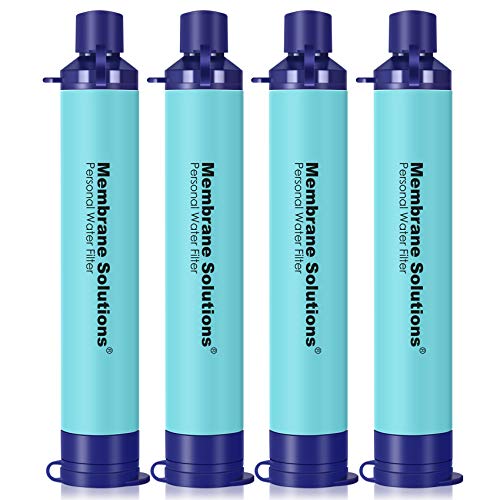
Membrane Solutions Personal Water Filter Straw S1
Pore Size Claim
0.1 micron
Bottle Fit
28 mm threaded bottle
Flow Claim
Up to 500 mL/min
The Membrane Solutions S1 combines a straw-style filter with 28 mm bottle compatibility. That gives you a little more flexibility than a direct-drink-only straw while keeping the system compact and non-electric.
The product presents a 0.1-micron pore size, a flow claim of up to 500 milliliters per minute, and a stated service capacity of up to 5,000 liters. It can be backflushed through the threaded inlet cap. The prepared dimensions contain conflicting signals, so this guide does not rely on an exact length claim.
The most important ownership warning is freezing. Product-specific use notes that the filter can freeze and stop working in cold conditions. Once a hollow-fiber filter has been wetted, freezing can damage the internal fibers even when the housing looks fine. In cold weather, keep a used filter warm and follow the manufacturer's storage guidance.
Why It Works
- The 28 mm threaded inlet can work with common compatible bottles.
- Backflushing gives you a way to maintain flow.
- The 0.1-micron membrane has a clear fine-filtration role.
- It is small enough for emergency storage or travel.
What To Keep In Mind
- Exact dimensions are omitted because the prepared product fields conflict.
- A compatible bottle is easier to use than drinking directly from an awkward source.
- Protect the filter from freezing after it has been used.
- The filter does not lower TDS and should not be treated as dissolved-contaminant treatment.
How to Choose a Portable Water Filter for Rainwater
Decide Whether You Need Filtration or Purification
A microfilter and a purifier are not synonyms. Hollow-fiber trail filters commonly target bacteria, protozoa, sediment, and similar suspended hazards. Virus treatment requires a product with supported virus-reduction performance or another suitable treatment stage.
Roof runoff can also contain metals, chemicals, roofing residues, bird or animal waste, and very fine dissolved contaminants. A portable membrane does not automatically address those hazards.
Choose the Water-Handling Format First
A straw is compact but mainly serves one person drinking directly. A filter bottle is convenient for personal use. A squeeze filter is more versatile because you can fill a clean bottle or use it inline. For several people or repeated liters, a gravity system is usually easier than squeezing every batch.
Choose the format based on how you will actually move water, not just on the filter's maximum service-life number.
Inspect Bottle Threads and Seals
Several filters here use 28 mm bottle threads, but not every bottle is identical and soft pouches can wear. Test the exact bottle, pouch, gasket, and cap combination you plan to use.
Carry spare washers when the system depends on them. A tiny seal failure can make a good membrane frustrating or unusable in the field.
Pretreat Sediment Before Fine Membranes
Rainwater that contains roof grit, algae, leaf fragments, or settled tank sediment can clog a portable membrane quickly. Use inlet screening, settling, or a coarse prefilter first when possible.
Cleaner feed water usually means better flow, less backflushing, and a more predictable service interval.
Protect Hollow-Fiber Filters From Freezing
A wet hollow-fiber filter can retain water internally. If that water freezes, expansion may damage the fibers. The damage may not be visible.
In freezing conditions, keep a used filter warm and follow the maker's storage instructions. If you suspect it froze after wetting, do not assume the membrane is still intact.
Where Portable Filters Fit in a Rainwater System
Portable filters make the most sense as a point-of-use or backup stage. A typical rainwater system may still need roof screening, first-flush diversion, covered storage, sediment control, appropriate disinfection or purification, and maintenance before water reaches the portable filter.
For non-drinking uses such as garden watering, the fine portable filters in this guide may be unnecessary. For drinking, cooking, or other higher-risk uses, match treatment to the actual hazards and use current water testing to assess performance.
A filter's outdoor or emergency marketing does not change that principle. The source water and the complete treatment train determine whether the finished water is appropriate for the intended use.
Common Portable Filter Problems
Slow Flow
Fine membranes collect sediment. If flow drops, follow the approved cleaning or backflushing method. Do not force excessive pressure through a soft pouch or membrane.
Leaking Pouches or Bottles
Check seams, washers, caps, and thread engagement before blaming the filter. Carrying a compatible backup bottle can keep a filter usable if a soft pouch fails.
Cross-Contamination
Keep dirty-water containers and filter inlets away from clean bottle mouths and outlets. A good membrane cannot help if untreated water gets onto the clean side after filtration.
Freeze Damage
Protect a wetted hollow-fiber filter from freezing. This is especially important for emergency kits stored in vehicles, unheated sheds, or winter packs.
Assuming One Filter Removes Everything
A 0.1-micron membrane is not a universal treatment claim. Virus reduction, dissolved chemicals, metals, salts, taste, and odor need their own supported treatment approaches.
Final Recommendations
The Sawyer Squeeze is the best all-around portable choice because it works with several water-handling formats and has a practical backflushing routine. The Katadyn BeFree 1L is better when fast personal bottle-style filtering matters most, while the LifeStraw Personal is the simplest emergency backup.
The Sawyer MINI earns its place when minimum pack size matters, and the Membrane Solutions S1 is a useful straw-style backup with common bottle-thread compatibility. None of them should be treated as a complete answer to rainwater drinking-water safety on their own. Match the filter to the actual hazards, keep the collection system clean, and use suitable treatment and current testing for the intended water use.
Frequently Asked Questions
Can I drink rainwater through a Sawyer Squeeze or LifeStraw?
A portable filter can reduce specific hazards covered by its supported claims, but roof-collected rainwater can contain hazards that a basic microfilter does not address. Drinking-water use should be based on the complete treatment system, source conditions, and current water testing.
Is 0.1 micron enough for rainwater?
It is useful for many suspended particles and microorganisms addressed by hollow-fiber microfilters, but micron size alone does not prove removal of viruses, dissolved chemicals, metals, or salts.
Which portable filter is easiest to use?
For a self-contained personal setup, the Katadyn BeFree is simple because the flask and filter stay together. For maximum connection flexibility, the Sawyer Squeeze is more versatile. For pure emergency simplicity, the LifeStraw Personal has the fewest parts.
Do portable water filters remove viruses?
Do not assume they do. The portable microfilters in this roundup are selected mainly for bacteria, protozoa, sediment, and related filtration roles. Use a product or additional treatment stage with supported virus-reduction performance when virus control is required.
How often should I backflush a portable filter?
Follow the manufacturer's instructions and clean it when flow falls or after dirty-water use. Rainwater with visible sediment will usually require more frequent maintenance than clear source water.
Can I leave a used filter in my car during winter?
A wetted hollow-fiber filter can be damaged if residual water freezes. Protect it from freezing or follow the manufacturer's cold-weather storage instructions.
Do these filters remove TDS?
Do not expect hollow-fiber portable filters to lower total dissolved solids. Dissolved salts and minerals require a different treatment process when they are a concern.