As an affiliate, we may earn a commission from qualifying purchases. We get commissions for purchases made through links on this website from Amazon and other third parties.
Best Overall
Best 3-Inch First Flush
Best for IBC Totes
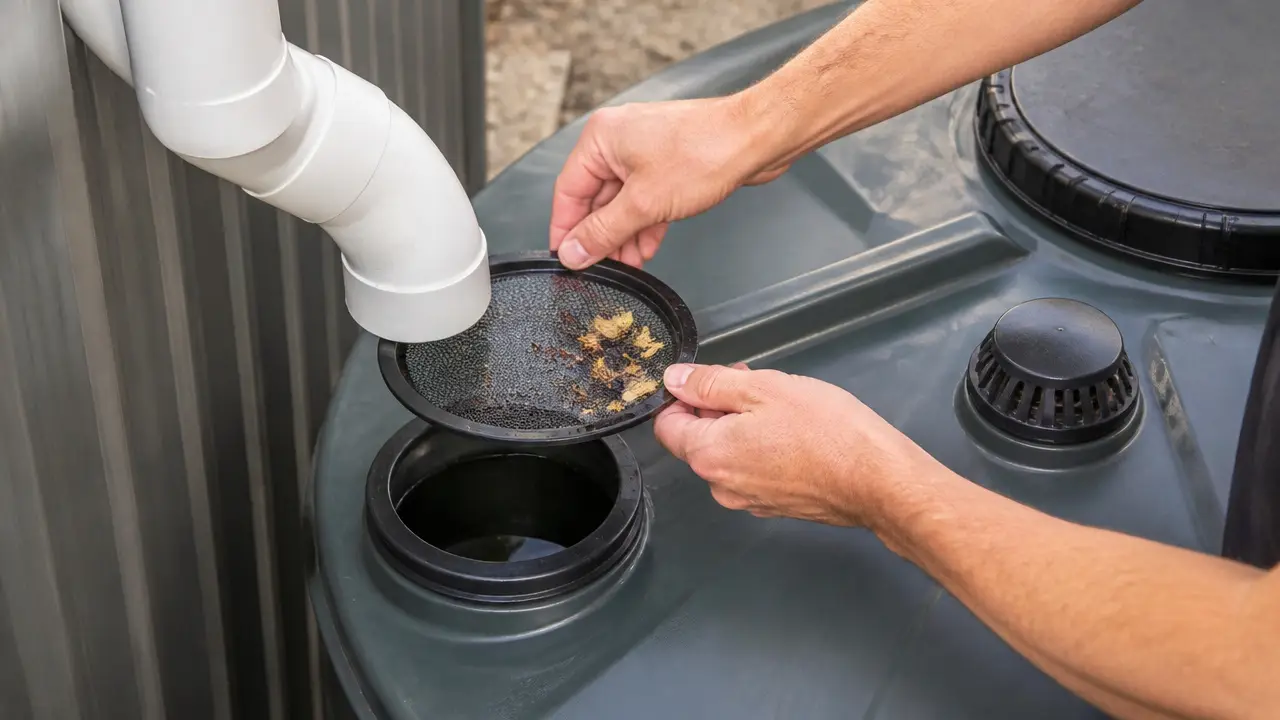
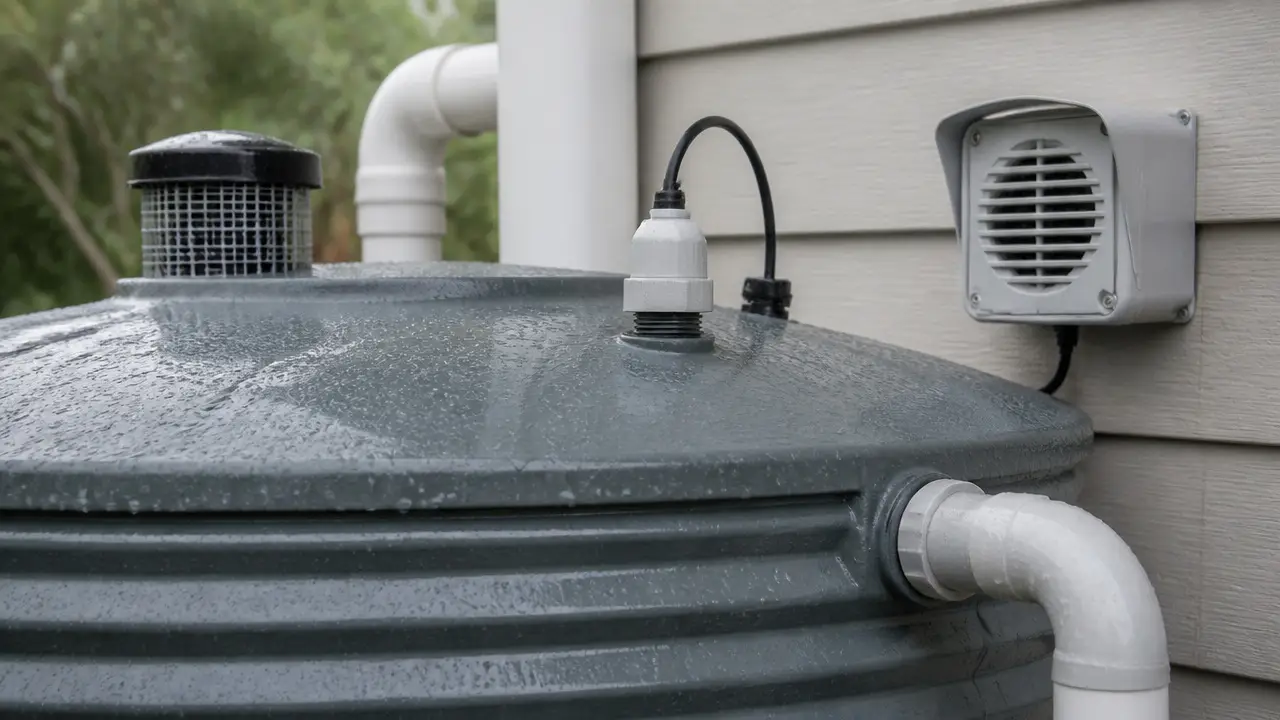
A good rainwater pre-filter keeps the worst roof debris out before water reaches the storage tank. That reduces sediment, organic matter, screen cleaning, and the load on finer filters later in the system.
“Pre-filter” can mean several different things. A leaf screen catches solid debris in the downspout. A first-flush diverter sends the dirtiest initial roof runoff into a separate chamber. An IBC lid filter screens water right at the tank opening. These products are not interchangeable, so the right choice depends on where you need the first barrier.
For most systems, coarse screening comes first. First flush can then divert the initial runoff when the roof and local conditions justify it. A tank inlet screen adds another layer at storage. None of these stages should be treated as complete treatment for drinking water.
Rainwater Pre-Filters at a Glance
| Product | Best For | Main Strength | Main Tradeoff |
|---|---|---|---|
| Rain Harvesting Leaf Eater Advanced | Rectangular downspouts | 955-micron angled screen sheds leaves before storage | Round PVC connections often need adapters |
| Rain Harvesting 3-Inch First Flush Diverter | 3-inch round pipe systems | Diverts initial runoff and drains automatically | You supply the chamber pipe and must match pipe standards carefully |
| DVECUE IBC Tote Lid Filter | Direct IBC tank inflow | Washable mesh built into a tote-lid assembly | Included pipe connection is an odd fit for common U.S. PVC |
| Rain Harvesting 4-Inch First Flush | Larger 4-inch systems | First-flush chamber for higher-volume round pipe | Pipe-size compatibility and missing-part complaints require careful checking |
Put the Pre-Filter Where It Solves the Actual Problem
If leaves and roof debris are the main issue, stop them at the downspout. A coarse screen is easy to inspect and keeps organic material out of the tank.
If the first minutes of a storm carry visible roof dust, bird droppings, pollen, or other contaminants, a properly sized first-flush stage can divert that initial runoff before normal collection begins. The diversion volume should be based on the roof and system design, not guessed from the size of the chamber alone.
If the tank is an IBC tote receiving water through its top lid, an inlet filter can catch coarse material immediately before storage. It is still better to remove leaves farther upstream so the lid filter does not become the only debris barrier.
A Downspout Screen That Stops Leaves Before the Tank
1 / 4
Rain Harvesting Leaf Eater Advanced

Screen
955 micron stainless steel
Downspout Fit
2 x 3 in and 3 x 4 in rectangular
Base
Swiveling
Stage
Pre-storage debris screening
The Leaf Eater Advanced is the strongest general pre-filter because it removes debris before water enters the storage side of the system. Its 955-micron stainless-steel screen sits at a steep angle so leaves and larger debris can fall away rather than remaining flat across the inlet.
It is designed around common 2-by-3-inch and 3-by-4-inch rectangular downspouts. The swiveling base helps route the filtered water toward vertical or horizontal pipework, which is useful when the tank inlet does not sit directly under the downspout.
Fit becomes less simple when the system uses round PVC. Product-specific use includes successful rectangular-downspout installations but also several PVC adaptations that needed flexible couplings or other plumbing work. Buy it for rectangular downspout screening, not as a universal round-pipe fitting.
Why It Works
- 955-micron screen catches leaves and larger roof debris early.
- Steep screen angle helps debris shed from the face.
- Fits two common rectangular residential downspout sizes.
- Swiveling base gives more routing flexibility toward storage.
What To Keep In Mind
- Round PVC often requires additional adapters.
- Keep the screen visible and reachable for cleaning.
- This is coarse filtration, not microbial or dissolved-contaminant treatment.
A 3-Inch First-Flush Stage for Initial Roof Runoff
2 / 4
Rain Harvesting 3-Inch First Flush Diverter

Pipe Fit
3 in round
Chamber
User-supplied 3 in pipe
Operation
Ball-and-seat diversion
Drain
Automatic slow release
This Rain Harvesting kit serves a different purpose from the Leaf Eater. Instead of catching leaves on a screen, it diverts the first portion of roof runoff into a separate chamber. A ball-and-seat system closes the chamber after it fills so later rainfall can continue toward storage.
The kit is designed for 3-inch round pipe, and you add the chamber pipe yourself. That lets the diversion volume be adjusted through chamber length, which is useful when the system designer has calculated how much initial runoff should be discarded.
Pipe compatibility needs attention. Product-specific use shows confusion between downpipe fittings, pressure pipe, and common PVC dimensions. Do not buy pipe until you have matched the exact fitting standard and measured the components in hand.
Why It Works
- Separates dirty initial roof runoff from later collection.
- Ball-and-seat operation does not depend on an electric controller.
- Chamber length can be adjusted to the planned diversion volume.
- Slow-release drain resets the chamber between rain events.
What To Keep In Mind
- The chamber pipe is not included.
- 3-inch pipe standards can differ enough to create fit problems.
- Inspect the drain washer and flow path so the chamber resets properly.
An IBC Lid Filter for Direct Tank Entry
3 / 4
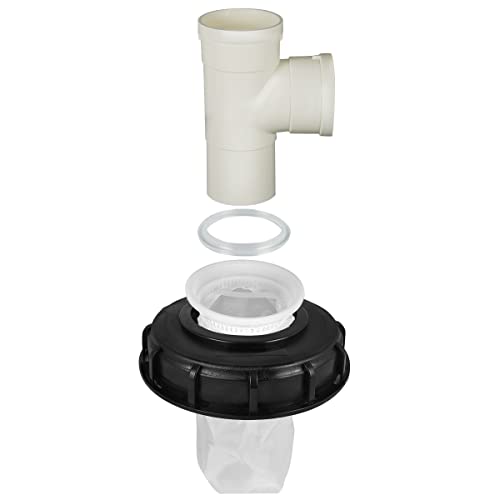
DVECUE IBC Tote Lid Filter
Tank Interface
IBC tote lid
Filter
Washable nylon mesh
Pipe Fit
2.95 in product claim
Use
Coarse tank-inlet screening
The DVECUE kit puts the pre-filter directly on an IBC tote lid. That is convenient when the collection pipe enters through the top of the tote and you want a removable screen at the final storage opening. The nylon mesh can be removed, rinsed, and reused when it fills with debris.
The tank-side fit is the strongest part of the product-specific use. Several users found the lid itself suited their IBC totes. The pipe connection is the weak point: the supplied tee and nominal 2.95-inch interface do not match common U.S. 3-inch PVC cleanly, which can force adapters or improvised connections.
The mesh can also clog quickly if it receives all roof debris. Pair it with upstream leaf control so this screen becomes a final coarse barrier rather than the first place leaves and grit are stopped.
Why It Works
- Integrates a washable screen into the IBC lid.
- Easy to remove and rinse when sediment or debris builds.
- Gives a clear final barrier before water enters the tote.
- Useful when the collection pipe terminates directly at the IBC top.
What To Keep In Mind
- Included pipe fitting does not match standard U.S. PVC reliably.
- Fine mesh can clog quickly without upstream screening.
- Inspect the lid seal and inlet connection for leaks and bypass gaps.
A 4-Inch First-Flush Diverter for Larger Pipe
4 / 4
Rain Harvesting 4-Inch First Flush With Catch-All Tee

Pipe Fit
4 in round
Inlet
4 in
Outlet
4 in
Chamber
User-supplied 4 in pipe
The 4-inch Rain Harvesting kit is the larger-pipe version for systems moving more roof flow through round downpipe. It includes the Catch-All Tee and first-flush hardware, while the chamber itself is made from a user-supplied length of 4-inch pipe.
A slow-release drain lets the chamber empty after the rain event, and the chamber length can be chosen for the intended first-flush volume. This makes it a system-design component rather than a fixed-capacity filter.
The installation risk is fit and completeness. Product-specific use includes missing float balls, valves, adapters, loose O-rings, and confusion between different 4-inch pipe standards. Inventory the kit before cutting pipe, and dry-fit every connection before permanent assembly.
Why It Works
- Built for larger 4-inch round collection pipe.
- First-flush chamber diverts initial roof runoff before storage.
- Catch-All Tee directs the initial flow into the diversion chamber.
- Automatic drain prepares the system for the next rainfall.
What To Keep In Mind
- Check every included part before starting installation.
- Different 4-inch pipe standards can create fit problems.
- A first-flush diverter complements screening; it does not replace leaf and tank-inlet filters.
Pre-Filter, First Flush, or Both?
A leaf screen and a first-flush diverter solve different problems. The screen removes physical debris. First flush diverts a chosen volume of the initial runoff. Using both can reduce what reaches the tank, especially under tree cover or on roofs that collect dust between storms.
A tank inlet screen adds a final barrier but should not carry the entire debris load by itself. The farther upstream large material is removed, the less often storage screens and downstream filters need cleaning.
Common Pre-Filter Problems
The Screen Overflows During Heavy Rain
A clogged or undersized screen can restrict collection. Clean it and make sure the flow path and downspout size suit the roof drainage load.
PVC Fittings Do Not Match
Nominal pipe sizes and fitting standards can differ. Dry-fit parts before permanent installation and use the proper adapters rather than forcing mismatched plastic together.
The First-Flush Chamber Never Resets
Inspect the slow-release drain for debris. The ball or sealing mechanism should move freely. A chamber that stays full cannot perform the next first flush correctly.
The IBC Filter Clogs Too Quickly
Move coarse debris removal upstream. A tote-lid screen lasts longer when leaves and twigs are already stopped at the gutter or downspout.
Water Bypasses the Screen
Look for gaps around the rim, loose lids, or poorly aligned pipework. Water that runs around the filter defeats the pre-filtration stage.
Frequently Asked Questions
What is a rainwater pre-filter?
It is an early-stage device that removes or diverts contaminants before water reaches storage or finer downstream filters. Examples include leaf screens, first-flush diverters, and tank-inlet screens.
Is a first-flush diverter a filter?
It does not filter water through media. It diverts the initial roof runoff into a separate chamber so later runoff can continue toward storage.
What micron screen should I use before a rainwater tank?
The right screen depends on roof debris, flow, and downstream filtration. Coarse screens should pass storm flow without clogging while removing leaves and larger material.
Do I still need a tank inlet screen if I have a downspout filter?
A second screen can provide useful backup and insect exclusion at storage. It should not be the only defense against large roof debris.
How often should a rainwater pre-filter be cleaned?
Inspect after heavy leaf fall, windstorms, and the first few storms after installation. Clean whenever debris buildup begins to restrict flow or creates bypass around the screen.
Does pre-filtered rainwater become safe to drink?
No. Pre-filtration reduces debris and initial runoff contamination, but drinking-water use requires suitable treatment, local requirements, and current testing for the whole system.
Keeping the gutters clean reduces the load on every downstream stage, so gutter cleaning tools are a useful first maintenance step. For broader coarse and plumbing-stage filtration choices, rainwater filters compares screens, spin-down filters, and cartridge housings. At the storage opening, rain barrel screens cover inlet mesh and larger screen options. And if the roof-to-storage connection itself still needs a diverter package, rainwater harvesting kits compares common downspout collection kits and fit limits.