As an affiliate, we may earn a commission from qualifying purchases. We get commissions for purchases made through links on this website from Amazon and other third parties.
You can drink filtered rainwater only when the whole collection and treatment system is designed for drinking water. Running roof runoff through a basic filter does not automatically make it safe to drink.
Rainwater can pick up bacteria, parasites, chemicals, metals, dust, animal waste, and other contaminants from the air, roof, gutters, pipes, and storage tank. The CDC recommends regular testing for germs and chemicals if rainwater is used for drinking or cooking.
For drinking water, think beyond the filter itself. You need suitable collection materials, clean storage, treatment that matches the contaminants present, disinfection when needed, regular maintenance, and current water testing.
Why Filtering Rainwater Is Not Always Enough
"Filtering" can mean many different things.
A simple screen may stop leaves. A sediment filter may catch dirt. An activated carbon filter may improve taste and remove certain chemicals. A reverse osmosis system can remove a much wider range of contaminants.
None of those statements means that every filter makes rainwater safe to drink.
Different treatment methods remove different germs and chemicals. The CDC recommends testing the water and choosing treatment specifically for the contaminants you need to remove. More than one type of treatment may be needed.
This matters because rainwater can become contaminated at several points before it reaches your glass.
Contamination can start before the rain reaches your roof
Rain can collect dust, smoke, and airborne particles as it falls.
Once it reaches your roof, it may also pick up:
- Bird and animal droppings
- Dirt and pollen
- Roofing debris
- Metals from roofing, gutters, or plumbing
- Chemicals from roofing or storage materials
The first rain after a long dry period can carry especially large amounts of material from the roof.
The tank can also affect water quality
Water can become contaminated after collection if the storage system allows insects, animals, dirt, sunlight, or dirty equipment to enter.
Sediment can also build up over time.
A drinking-water system therefore needs to control contamination from the roof all the way to the tap.
What a Drinking-Water Rainwater System May Include
There is no single treatment setup that is right for every rainwater system. Water quality, roof materials, local conditions, intended use, and test results all affect the design.
A typical system may include several stages.
1. Roof and gutter controls
Start by reducing contamination before the water reaches the tank.
Keep gutters reasonably clean and use screens where appropriate to keep out leaves and large debris.
The materials that contact the water also matter. Roofing, gutters, pipes, sealants, fittings, and storage materials should be suitable for the intended water use.
2. A first flush diverter
A first flush diverter sends the first portion of runoff from a storm away from the storage tank.
That first runoff often carries more dirt, droppings, dust, and other material from the roof.
A first flush system can improve incoming water quality, but it is only a prefiltration step. It does not make the remaining rainwater safe to drink by itself.
3. Protected storage
The storage tank should limit entry of debris, insects, animals, and outside contamination.
It should also be maintained and cleaned as needed.
Keeping the tank protected does not replace treatment. It simply gives your treatment equipment better-quality water to work with.
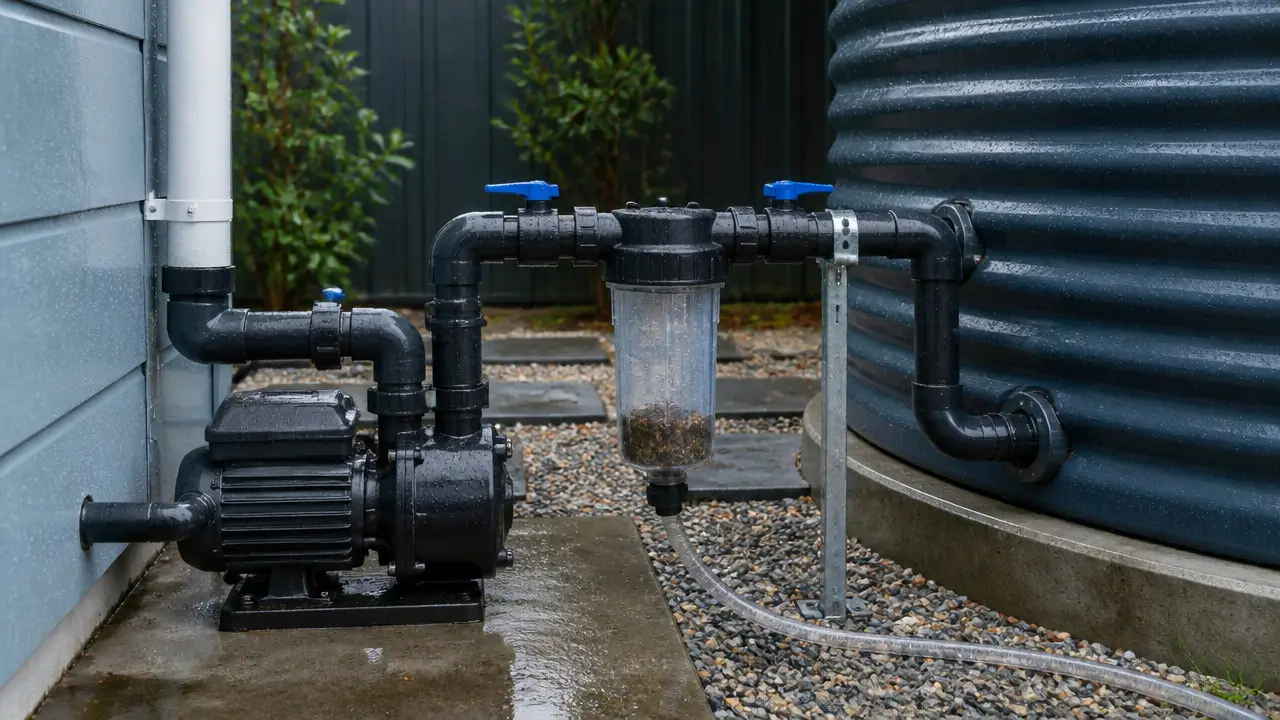
4. Sediment filtration
A sediment filter removes suspended particles such as grit and fine dirt.
Filters are often rated in microns. A micron is one-thousandth of a millimeter. A smaller micron rating generally means the filter catches smaller particles.
But micron size alone does not tell you whether a filter produces safe drinking water.
A sediment filter can make water clearer while leaving germs and dissolved chemicals behind.
5. Treatment for specific contaminants
Additional treatment depends on what is actually in the water.
For example, a system may use activated carbon for certain chemicals, tastes, or odors. Reverse osmosis may remove a broader range of dissolved substances as well as microorganisms, depending on the system and how it is operated.
The CDC notes that reverse osmosis can remove parasites, bacteria, and viruses and can reduce various chemicals, but treatment claims depend on the specific system.
Do not assume that a filter removes a contaminant simply because the water passes through it. Check what the treatment unit is designed and certified to reduce.
6. Disinfection
Filtration and disinfection perform different jobs.
Filtration physically removes certain particles, germs, or dissolved substances depending on the technology.
Disinfection is intended to kill or deactivate harmful microorganisms.
Drinking-water systems may use methods such as ultraviolet light or properly controlled chemical disinfection. Municipal treatment systems also use disinfection as an important treatment stage.
UV systems have operating requirements. Cloudy water and poor maintenance can reduce performance, so adequate prefiltration is important.
Chemical disinfection also requires correct equipment, dosing, contact time, and monitoring. This is one area where professional help may be appropriate.
Can I Just Use a Carbon Filter?
Not if the goal is to establish that collected rainwater is safe to drink.
Activated carbon can be useful for certain tastes, odors, and chemicals. It is not a complete treatment system for every possible microbial and chemical hazard.
Understanding health risks from drinking raw rainwater helps assess a treatment standard based on the final water application.
A countertop pitcher or refrigerator filter designed mainly to improve tap-water taste should not be treated as a complete rainwater treatment system.
The same rule applies to any single filter: find out exactly what it is designed to remove and compare that with your water-quality testing.
Does Boiling Filtered Rainwater Make It Safe?
Boiling is very effective against disease-causing microorganisms. CDC guidance describes boiling as the best household method for killing germs when water safety is uncertain.
However, boiling does not remove every chemical contaminant.
Water suspected of containing fuel, toxic chemicals, or radioactive material cannot be made safe simply by boiling or disinfecting it. A different water source should be used instead.
That is why boiling is not a substitute for understanding the source water.
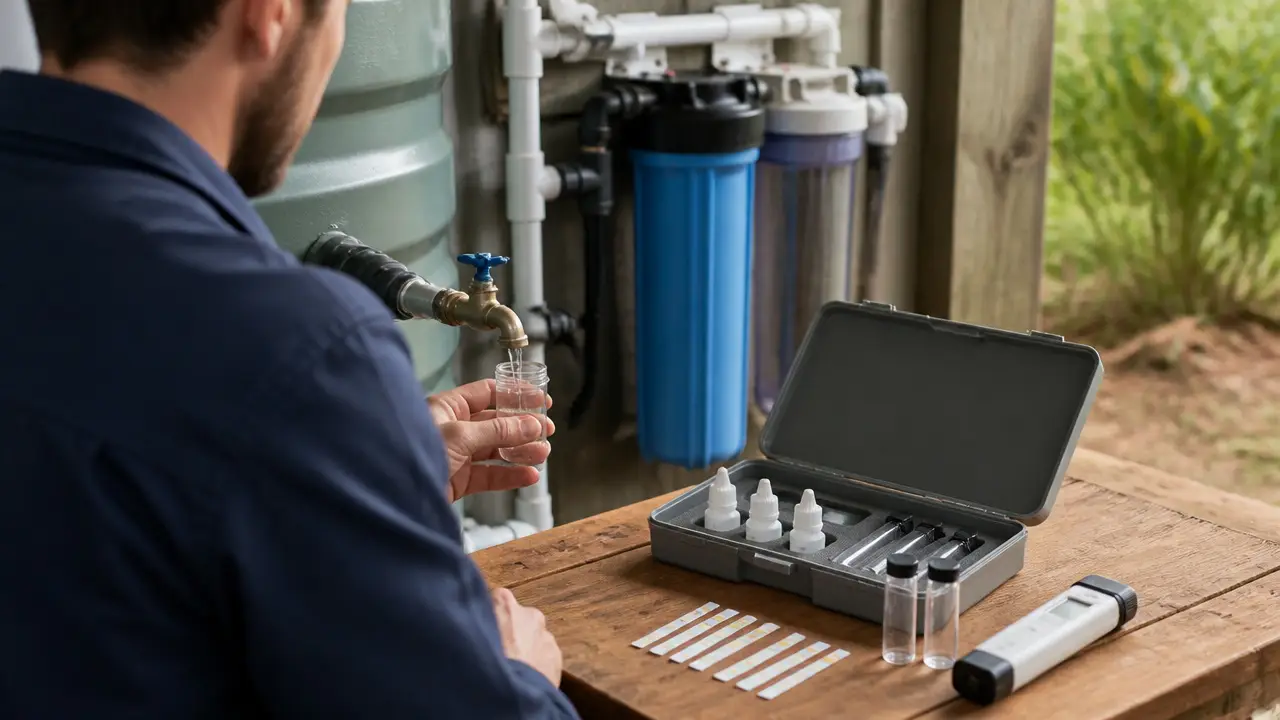
Should I Test Rainwater Before Drinking It?
Yes.
If rainwater will be used for drinking, cooking, or other uses where it may be swallowed, regular laboratory testing should be part of the system.
The CDC specifically recommends testing drinking rainwater for both germs and chemicals and contacting the local health department for advice about what to test.
What needs testing depends partly on your location and collection system. Roof materials, nearby pollution sources, plumbing materials, and local environmental conditions can change what contaminants are worth checking.
A simple home meter cannot provide a complete safety assessment.
For example, a total dissolved solids meter measures the amount of dissolved material that affects electrical conductivity. It cannot tell you whether dangerous bacteria, viruses, lead, pesticides, or other specific contaminants are present.
Likewise, clear-looking water is not proof that the water is safe.
Test the Treated Water, Not Just the Tank
Testing untreated tank water can help you understand what your treatment system must handle.
For drinking purposes, however, testing water at the point where you actually drink it is also important. This can help identify whether the complete collection, treatment, plumbing, and storage system is producing acceptable water.
Testing should be repeated because conditions change.
A clean result from one sample does not guarantee that the water will remain the same after another storm, maintenance problem, filter failure, animal contamination event, or long storage period.
Maintenance Is Part of Water Treatment
Even a well-designed treatment system can stop working properly if it is neglected.
Maintenance may include:
- Cleaning roof collection components when needed
- Checking screens and first flush equipment
- Inspecting the tank for contamination
- Replacing filter cartridges on schedule or when required
- Cleaning filter housings correctly
- Servicing UV or other disinfection equipment
- Checking pumps, pipes, seals, and fittings
- Preventing untreated water from bypassing treatment
- Keeping records of maintenance and water tests
Do not install treatment equipment and assume it will continue working indefinitely.
Keep Rainwater Separate From Public Drinking-Water Plumbing
If a home has both harvested rainwater and a public water supply, the systems should not be connected in a way that allows rainwater to flow backward into drinking-water pipes.
This is known as cross-connection risk.
The CDC recommends keeping rainwater from entering plumbing that carries treated drinking water.
Plumbing requirements vary by location. If harvested rainwater will connect to household plumbing, check current local plumbing and health requirements and use a qualified professional where required.
When Filtered Rainwater Is Better Kept Non-Potable
Potable means suitable for drinking. Non-potable means water that is not intended for drinking.
If you do not have a drinking-water treatment and testing program, keeping collected rainwater non-potable is the simpler approach.
Depending on local rules and water quality, harvested rainwater is often used for jobs such as landscape irrigation or other uses that reduce the chance of swallowing it.
The CDC recommends using public tap water or bottled water instead of rainwater for drinking, cooking, brushing teeth, rinsing produce, and similar uses when possible.
A Practical Way to Decide
Before drinking harvested rainwater, work through the whole system rather than asking whether one particular filter is "good enough."
You should be able to answer these questions:
- Are the roof, gutters, pipes, fittings, and tank suitable for the intended use?
- Is contamination reduced before water enters storage?
- Is the tank protected and properly maintained?
- Have you tested the untreated water for relevant germs and chemicals?
- Is each treatment stage designed for the contaminants found?
- Is there an appropriate method for controlling microorganisms?
- Has the treated water been tested?
- Can you maintain and monitor the system reliably?
- Does the installation meet current local health and plumbing requirements?
If you cannot answer those questions confidently, use a known safe drinking-water source instead.
For a household rainwater system that will supply drinking water regularly, getting advice from your local health department, an accredited drinking-water laboratory, and a qualified water-treatment professional is a sensible step.
Frequently Asked Questions
Can you drink rainwater after running it through a filter?
Possibly, but filtration alone does not establish that rainwater is safe to drink. The system needs treatment suited to the germs and chemicals present, along with safe collection, storage, maintenance, and regular testing.
Is rainwater safe to drink straight from the sky?
Do not assume it is. Rainwater can collect particles and chemicals from the air and can become contaminated when it contacts a roof, gutters, pipes, or storage equipment.
Will a sediment filter make rainwater drinkable?
No. A sediment filter mainly removes suspended particles. It may make water look cleaner while leaving microorganisms and dissolved chemicals in the water.
Is a carbon filter enough for rainwater?
A carbon filter may reduce certain chemicals, tastes, and odors, but it is not a complete treatment method for every potential contaminant. Treatment should be selected according to water testing and the intended drinking-water use.
Does UV light make rainwater safe to drink?
UV can be an important disinfection stage when correctly designed, operated, and maintained. It does not remove every chemical contaminant and should not be treated as a complete rainwater purification system by itself.
Can I boil filtered rainwater before drinking it?
Boiling can kill disease-causing germs, but it cannot remove all chemical contaminants. If chemical contamination is suspected, boiling does not make the water safe.
How often should drinking rainwater be tested?
Testing should be regular rather than one-time. The exact schedule and contaminants to test for depend on the collection system and local conditions. Ask your local health department or an accredited drinking-water laboratory for appropriate testing guidance.