As an affiliate, we may earn a commission from qualifying purchases. We get commissions for purchases made through links on this website from Amazon and other third parties.
Rainwater does not have a fixed number of days when it is safe to drink. Fresh rainwater can already contain germs or chemicals, and stored rainwater can become contaminated at any time. The CDC says rainwater is not necessarily safe to drink unless the system is designed, treated, maintained, and tested for drinking-water use.
For most homes, the safest choice is to use collected rainwater for non-potable uses such as garden watering unless the system has been set up specifically to produce drinking water. Potable simply means water that is suitable for drinking.
There Is No Safe Drinking Time Limit for Untreated Rainwater
You may hear rules such as "rainwater is good for a week" or "stored rainwater lasts six months." Those rules do not tell you whether the water is safe to drink.
Water collected yesterday could be unsafe if bird droppings washed off the roof and into the tank. Water stored much longer could still meet drinking-water requirements if it came through a suitable collection and treatment system that has been properly maintained and monitored.
The important question is not:
How old is the rainwater?
It is:
Has the water been protected from contamination and properly treated and tested for its intended use?
The CDC recommends regular testing for harmful germs and chemicals when rainwater is used for drinking, cooking, or bathing.
Why Fresh Rainwater May Not Be Safe to Drink
Rain can pick up pollutants while falling through the air. More contamination can enter after the water reaches your roof.
Roof runoff may contain:
- Bird and animal droppings
- Dirt and dust
- Leaves and other organic material
- Insects
- Smoke and airborne particles
- Metals or chemicals from roofing, gutters, pipes, or tanks
A long dry period can make the first rain especially dirty because material has had more time to build up on the roof.
The World Health Organization notes that rainwater can become contaminated during both collection and storage. Rain intended for drinking should therefore receive suitable treatment and disinfection.
Clear-looking water is not proof that it is safe. Many harmful germs and chemicals do not noticeably change its color, smell, or taste.
What Happens as Rainwater Sits in a Tank?
Storage time can affect water quality, but age alone does not determine safety.
A well-designed tank protects water from new contamination. A poorly protected tank can allow contamination to enter soon after collection.
Problems can include:
Sediment buildup
Small particles that pass through screens and filters settle at the bottom of the tank. Over time, this can form a layer of sediment.
Germ growth
Microorganisms can enter with roof runoff or through openings in the tank. Conditions inside the tank and treatment system can affect whether they survive or grow.
Animals and insects getting inside
Unscreened vents, overflows, or tank openings can allow insects and small animals into the system.
Algae growth
Sunlight entering a tank can encourage algae. Drinking-water storage tanks are normally kept closed and protected from light.
New contamination
A damaged screen, loose lid, dirty gutter, animal activity, flood, or other change can affect water that was previously acceptable.
The WHO's current approach to drinking-water safety focuses on preventing and managing risks throughout the whole system rather than assuming water is safe based on storage time alone.
Does Rainwater Become Unsafe After Six Months?
Not automatically.
The CDC does recommend replacing home-stored emergency drinking water every six months when people fill sanitized containers with clean water.
That recommendation should not be confused with untreated roof runoff stored in a rain barrel or cistern.
A sealed emergency container filled with already-safe drinking water is very different from a rainwater tank that receives new runoff from a roof.
So six months is not a general expiration date for harvested rainwater.
What Makes a Rainwater System Suitable for Drinking?
A drinking-water rainwater system needs more than a storage tank and a basic filter.
The exact design depends on the roof, local contamination risks, water quality, household use, and applicable local requirements. A typical system may include several protective stages.
A suitable collection surface
Roof and gutter materials matter because some materials can add unwanted chemicals or metals to the water.
Leaf and debris screening
Screens keep larger debris and animals from entering the system.
A first flush system
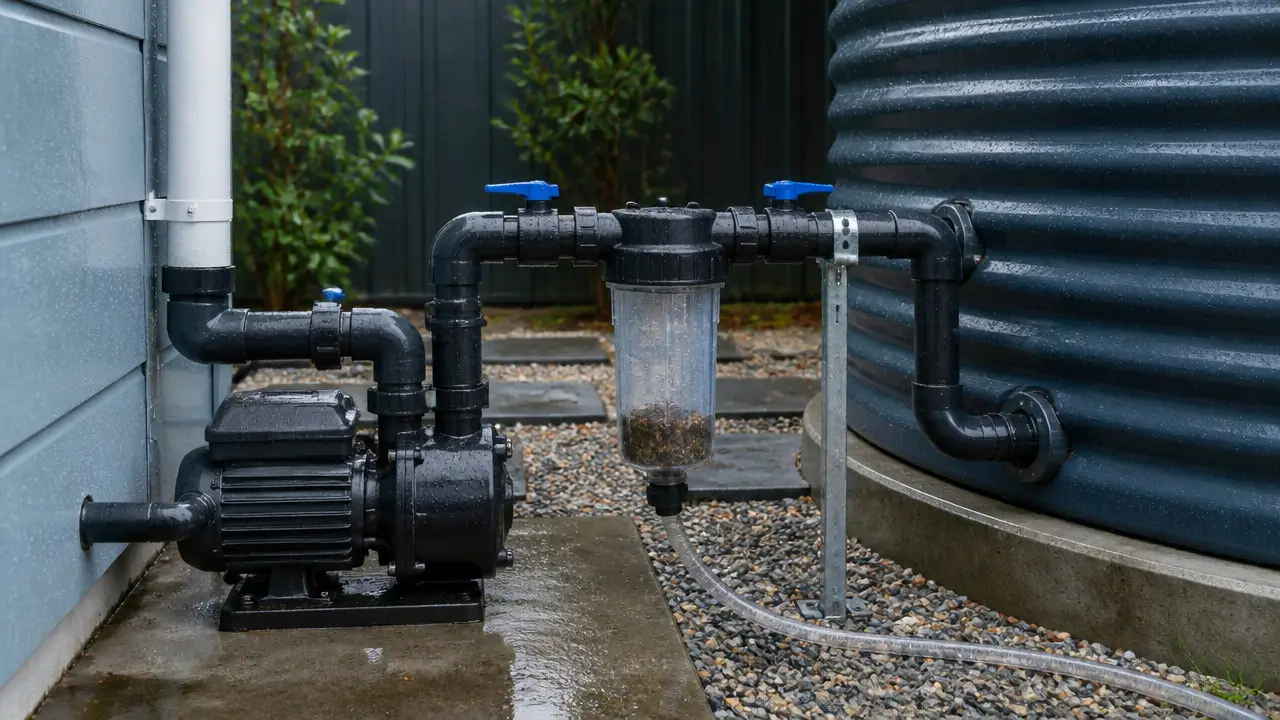
A first flush diverter sends the first part of a rainfall event away from the tank. That first runoff can carry a high amount of dirt, animal waste, and other material that collected on the roof between rains.
Check reasons to avoid untreated rainwater to understand the cleaning or replacement step justified by test evidence.
A first flush improves water quality, but it does not make the remaining water automatically safe to drink.
Protected storage
The tank should prevent insects, animals, surface runoff, dirt, and sunlight from easily entering the stored water.
Suitable treatment
Treatment must match the actual contaminants present. Depending on the water, a drinking-water system may need several stages rather than one filter.
A sediment filter, for example, mainly removes particles. It does not necessarily remove disease-causing microorganisms or dissolved chemicals.
Likewise, UV disinfection can be useful against certain microorganisms when correctly designed and maintained, but it does not remove chemicals. No single treatment device should be assumed to solve every possible rainwater-quality problem.
Regular testing
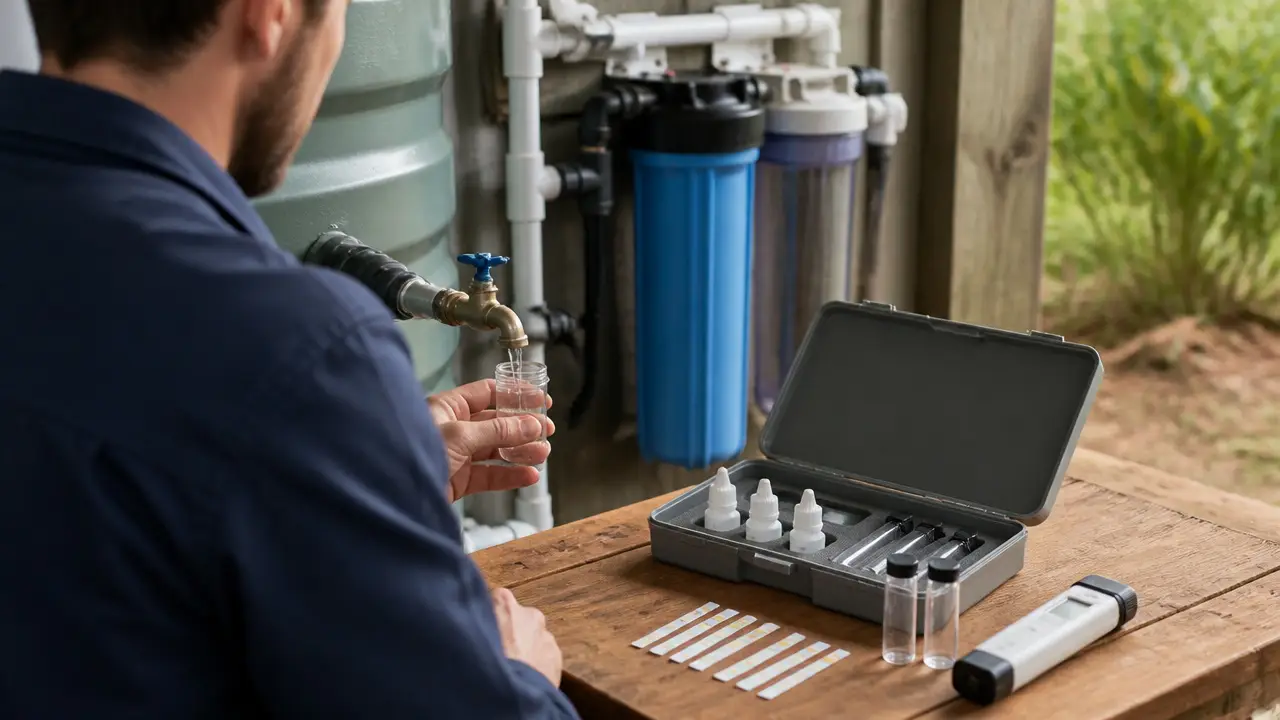
Testing provides information that appearance and taste cannot.
The CDC recommends testing private rainwater supplies at least annually for harmful germs and chemicals and considering additional testing when the water changes in color, taste, or smell. Your local health authority can advise which contaminants are important in your area.
A system used for drinking may need additional testing based on local rules, contamination risks, treatment equipment, and changes to the system.
When Should You Stop Drinking Stored Rainwater?
Do not assume stored rainwater is safe when something has changed in the system.
Stop using it for drinking until the problem has been assessed if:
- The tank has been flooded.
- Animals have entered the tank.
- The lid, screen, vent, or overflow has been damaged.
- The water develops an unusual color, odor, or taste.
- The roof has been painted, treated, repaired, or contaminated.
- Chemicals, smoke, ash, or other pollutants may have reached the collection area.
- The treatment system has failed or missed required maintenance.
- Testing finds harmful germs or chemicals.
- You are unsure whether the collection materials are suitable for drinking-water use.
Floods and major storms can introduce germs and chemicals into cisterns. The CDC advises that affected tanks may need cleaning and disinfection before being returned to use.
Does Boiling Make Old Rainwater Safe?
Boiling can kill many disease-causing microorganisms, but it does not solve every rainwater problem.
It does not reliably remove contaminants such as metals and many other chemicals. Boiling can even increase the concentration of some substances as water evaporates.
That is why boiling alone should not be treated as a complete drinking-water system for questionable roof runoff.
If rainwater is intended as a regular household drinking supply, treatment should be selected after considering both microbial and chemical risks.
How Often Should a Rainwater Tank Be Emptied?
There is no universal schedule that works for every tank.
The CDC specifically recommends regularly emptying simple rain barrels as part of good maintenance. These barrels are usually intended for non-drinking uses.
Larger cisterns may operate continuously instead of being emptied every few days or weeks. Their maintenance schedule depends on tank design, sediment buildup, water source, treatment equipment, climate, and local guidance.
Do not enter a cistern to clean it. Tanks can be confined spaces with serious safety hazards. Use cleaning methods that do not require entry, or hire a qualified professional when interior access is needed.
A Simple Rule for Drinking Rainwater
Do not decide whether rainwater is drinkable by counting how many days it has been stored.
For garden use, a properly screened and maintained rainwater system may be fairly simple.
For drinking, think of the system as a complete path:
roof → prefiltration → protected storage → treatment → testing → ongoing maintenance
The CDC recommends using public-system tap water or bottled water for drinking when possible rather than untreated collected rainwater.
If rainwater will be your regular drinking supply, contact your local health authority or a qualified water-treatment professional. They can help determine what testing and treatment are appropriate for your roof, tank, location, and local requirements.
Frequently Asked Questions
Can I drink rainwater immediately after collecting it?
Not safely based on freshness alone. Newly collected rainwater can contain germs, animal waste, dirt, metals, and chemicals picked up from the air, roof, gutters, or collection system. Rain intended for drinking should be collected, treated, and tested through a suitable drinking-water system.
How long can rainwater stay in a tank?
Rainwater can remain stored for long periods in a properly designed tank, but there is no fixed storage period that guarantees drinking safety. Tank condition, contamination, treatment, testing, and maintenance matter more than the age of the water.
Is rainwater safe to drink after six months?
Six months is not a general safety limit for rainwater. The CDC's six-month replacement recommendation applies to clean emergency drinking water stored in sanitized containers, not untreated roof runoff.
Can I drink rainwater from a rain barrel?
A basic rain barrel should generally be treated as a non-potable water source unless the entire collection, treatment, and testing system has been specifically designed for drinking water. A screen or simple filter alone does not make roof runoff potable.
Does a first flush diverter make rainwater drinkable?
No. A first flush diverter removes some of the dirtiest runoff at the beginning of a storm and can improve collected water quality. It is only one part of a drinking-water system and does not replace treatment or testing.
Can boiling rainwater make it safe?
Boiling can kill many germs, but it does not remove many chemical contaminants or metals. It should not be considered a complete treatment method for roof-collected rainwater when the water quality is unknown.
How often should drinking rainwater be tested?
The CDC recommends testing private rainwater supplies at least once a year for harmful germs and chemicals, with additional testing when conditions or water quality change. Local health officials can advise which tests are appropriate for your area and system.