As an affiliate, we may earn a commission from qualifying purchases. We get commissions for purchases made through links on this website from Amazon and other third parties.
A homemade water filter can remove leaves, dirt, sediment, and some cloudiness from collected rainwater. A simple gravity-fed filter made with a screened inlet, gravel, and washed sand can work well as a prefilter for non-potable water used around the yard.
It is important to know what a homemade filter cannot do. Clear-looking water can still contain bacteria, viruses, parasites, metals, pesticides, or chemicals. Roof runoff can pick up contamination from bird droppings, roofing materials, gutters, dust, and air pollution. CDC guidance says collected rainwater is not automatically safe to drink and should be tested and treated for its intended use.
If you want drinking water, treat the homemade filter as only one early stage of a larger treatment system.
Decide What You Need the Filter to Do
Start with the way you plan to use the water.
For watering ornamental plants, washing outdoor tools, or supplying some drip irrigation systems, the main goal may be removing debris and sediment.
For household uses where people could swallow the water, filtration becomes much more complicated. Different treatment methods remove different contaminants, so there is no single homemade filter that reliably handles every problem.
A simple rainwater system might follow this path:
Roof → gutter screen → first flush diverter → storage tank → sediment filter → intended use
A first flush diverter sends the first part of each rain event away from the tank. That first runoff often carries more dirt, droppings, and other material washed from the roof. CDC recommends considering one as a way to improve collected rainwater quality.
Filtering water before it reaches the storage tank is usually easier than trying to remove a large amount of dirt afterward.
A Simple Homemade Gravity Water Filter
For non-potable rainwater, you can make a basic gravity filter using a food-safe bucket or similar container.
The filter uses layers that catch progressively smaller particles.
What You Will Need
A basic setup can include:
- A clean, food-safe bucket with a lid
- A suitable outlet fitting or bulkhead fitting
- Clean coarse gravel
- Clean finer gravel
- Washed filter sand
- A removable screen or filter cloth
- Food-safe pipe or hose for the outlet
- A second container to catch the filtered water
A bulkhead fitting creates a sealed pipe connection through the wall of a bucket or tank. It is useful because simply pushing a pipe through a drilled hole usually creates a poor seal.
Do not use buckets that previously held fuels, pesticides, solvents, oils, or unknown chemicals.
Do not use barbecue charcoal, fireplace charcoal, or ash as a water-treatment material.
How to Build the Filter
1. Install the Outlet
Install the outlet near the bottom of the filter container.
Use a fitting designed to seal through the container wall. Follow its instructions for hole size, gasket position, and tightening.
The outlet should be high enough that the supporting gravel stays inside the bucket.
Do not rely on glue alone to seal a poorly fitting pipe connection.
2. Add a Support Screen
Place a clean screen or suitable filter fabric over the inside of the outlet area.
Its purpose is to keep gravel and sand from moving into the outlet pipe.
Make sure the material will not collapse against the outlet and completely stop the flow.
3. Add Coarse Gravel
Add a layer of clean coarse gravel over the bottom.
The gravel supports the finer layers above it and gives water room to move toward the outlet.
Wash the gravel before putting it into the filter. Continue rinsing until loose dirt has been removed.
4. Add Finer Gravel
Place smaller washed gravel above the coarse layer.
This transition helps prevent the sand above from dropping into the larger spaces between the bottom stones.
You do not need many different gravel sizes. The goal is simply to support the sand without blocking drainage.
5. Add Washed Sand
Place washed filter sand above the gravel.
Sand traps much of the fine suspended material that passes through the inlet screen. A deeper sand bed generally provides more filtering material, but it also creates more resistance to flow.
Do not use random soil from the yard. It may contain clay, organic material, fertilizers, animal waste, or other contamination.
Sand sold specifically for filtration is easier to use consistently.
6. Protect the Top of the Filter
Place a removable coarse screen above the sand or at the filter inlet.
This catches leaves, insects, roof grit, and other larger material before it reaches the sand.
Making this first screen easy to remove is important. You will clean it much more often than the deeper filter layers.
7. Run Water Through the Filter Before Use
Run clean water through the assembled filter before connecting it to your system.
The first water may contain dust from the sand and gravel. Continue flushing until obvious loose material has cleared.
Check the outlet and container for leaks at the same time.
How Water Should Move Through the System
Gravity filters need an elevation difference.
Water enters near the top, passes downward through the filter material, and leaves through the lower outlet.
The greater the water height above the outlet, the more pressure gravity can provide. This vertical difference is sometimes called head height.
A small bucket filter does not produce the same pressure as a household plumbing system.
This matters if you plan to connect the filter to:
- Long garden hoses
- Drip irrigation
- Sprayers
- Another filter
- A pump
- A storage tank located uphill
Every filter and pipe adds resistance.
The flow rate is the amount of water moving through the system over a period of time. If your filter cannot pass water as quickly as rain enters it, you need an overflow route so water cannot back up into the gutter or spill where it could damage the house.
Where to Put the Filter
There are two common choices.
Before the Storage Tank
Prefiltering before storage keeps more sediment out of your barrel, IBC tote, or cistern.
This can reduce the amount of sludge that eventually collects at the bottom of the tank.
A typical layout is:
Downspout → leaf screen → first flush diverter → homemade sediment filter → tank
The disadvantage is that a slow filter can restrict incoming water during heavy rain.
Always provide a safe overflow route.
After the Storage Tank
Filtering after storage lets the tank receive water quickly.
A typical layout is:
Roof → screen → first flush → tank → filter → garden line
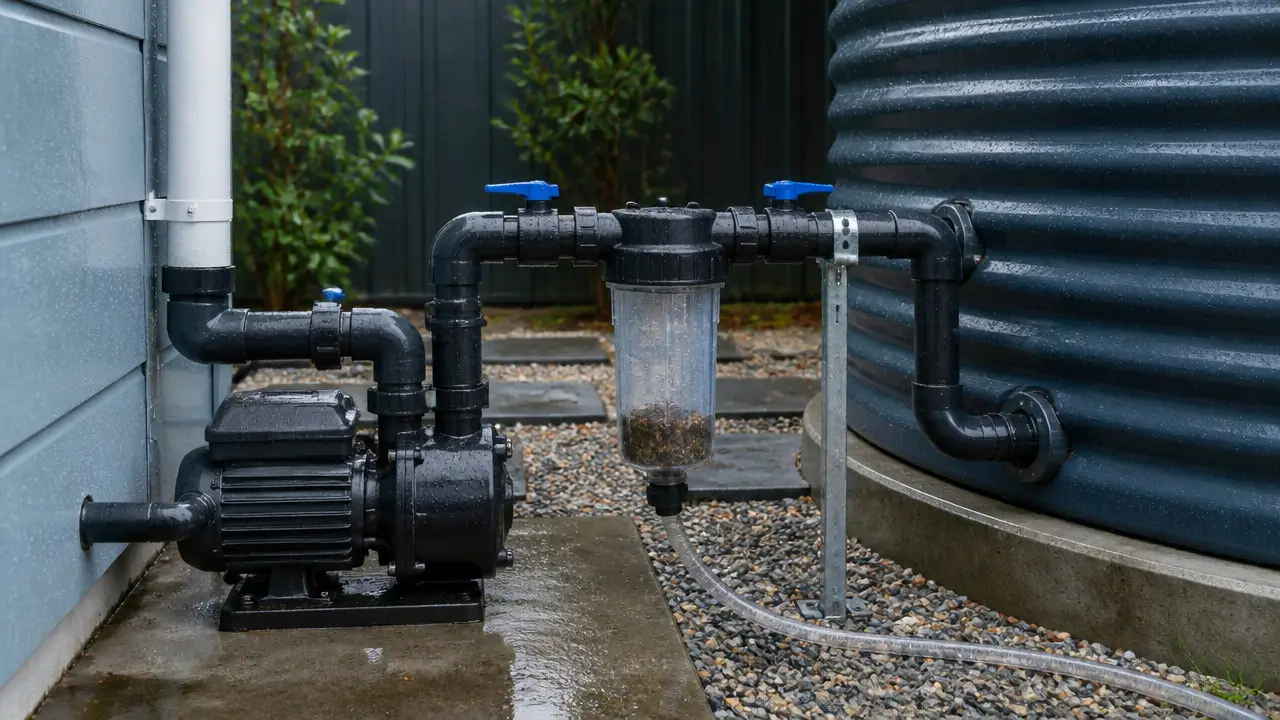
This works well when you mainly want to protect irrigation valves, hoses, or other downstream equipment from sediment.
It does not prevent sediment from collecting inside the tank.
In many systems, using coarse screening before the tank and finer filtration after it is the practical approach.
Do You Need Gravel and Sand for Garden Water?
Not always.
If the water is only being used for ordinary garden watering, a screened collection system may be enough.
Extra filtration is most useful when sediment could clog:
- Small irrigation passages
- Drip emitters
- Valves
- Pump strainers
- Sprayers
Check the irrigation equipment requirements before choosing a filter.
A manufacturer may specify a micron rating. A micron is a very small unit of size. A filter's micron rating describes the approximate size of particles it is designed to catch.
A homemade sand-and-gravel filter does not have a verified micron rating. Do not assume it can replace a manufactured filter where equipment requires a specific filtration level.
What About Activated Carbon?
Activated carbon can be useful in water-treatment systems because its large internal surface area can capture certain substances through a process called adsorption. EPA describes granular activated carbon as a treatment medium used for some drinking-water contaminants.
But simply adding homemade charcoal to a bucket does not turn the filter into a reliable drinking-water purifier.
Consider key facts about the natural filter for rainwater to assess testing choices and treatment needs for the intended application.
Avoid using:
- Charcoal briquettes
- Burned wood from a fireplace
- Charcoal containing lighter fluid
- Ash
- Unknown carbon materials
If activated carbon is needed, use media intended for water treatment and replace it according to its instructions.
Carbon also does not solve every contamination problem. Its usefulness depends on the substance you are trying to remove.
Can a Homemade Filter Make Rainwater Drinkable?
Not by itself.
This is the most important limitation of a homemade water filter.
A sand, gravel, cloth, or carbon filter may make water look much clearer while harmful contaminants remain.
CDC notes that taste, smell, and appearance cannot reliably tell you whether water is safe.
Roof-collected rainwater can contain:
- Bacteria
- Viruses
- Parasites
- Bird and animal waste
- Metals from roofing or plumbing
- Chemicals from roofing materials
- Airborne contaminants
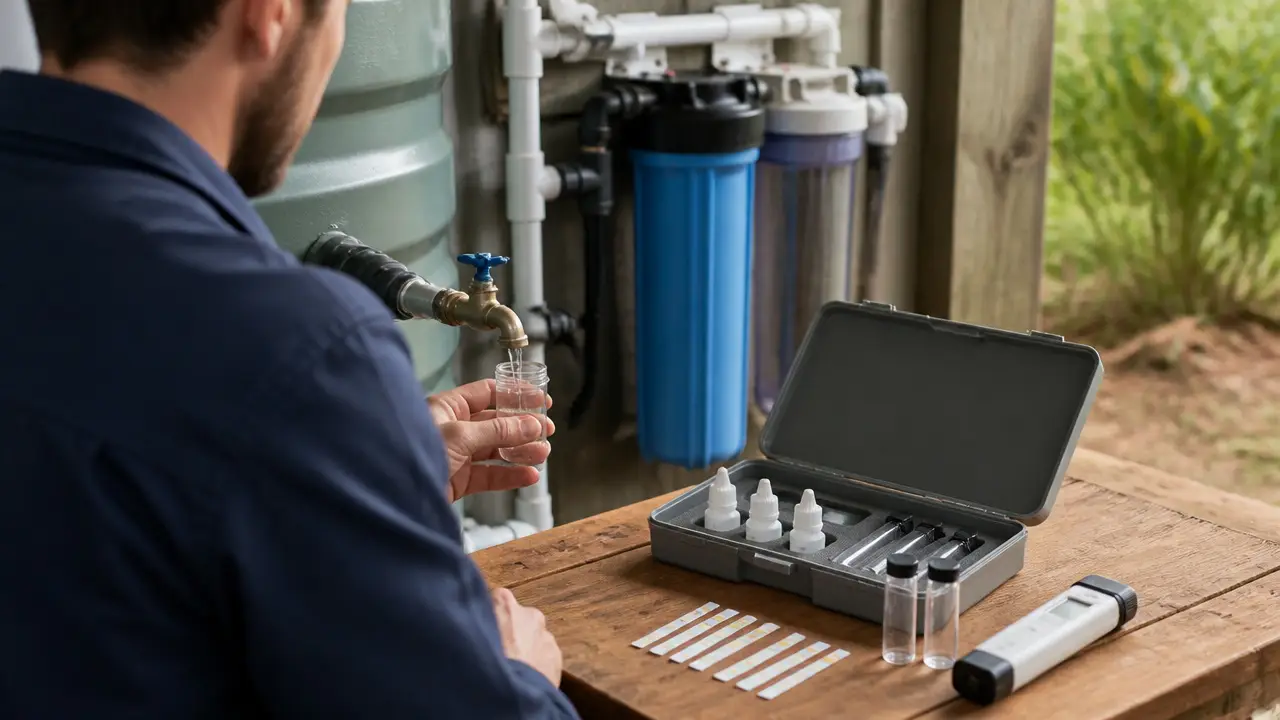
CDC recommends regularly testing rainwater used for drinking, cooking, or bathing and choosing treatment that addresses the specific germs or chemicals present.
A potable system may require several separate stages, such as:
Collection controls → sediment removal → appropriate filtration → treatment for identified chemical contaminants → disinfection → protected storage/distribution
Potable means suitable for drinking.
The exact treatment train depends on the source water and current laboratory test results. Different technologies do different jobs. For example, CDC notes that many common filtration methods do not remove viruses or dissolved chemicals.
Do not choose a drinking-water system only by how clear the filtered water looks.
For drinking-water use, work with your local health department or another qualified water-treatment professional to determine testing and treatment requirements. CDC specifically recommends contacting health authorities about safe rainwater testing and use.
Why Filtering and Disinfection Are Different
Filtration and disinfection are not the same thing.
Filtration physically removes certain particles, organisms, or chemicals depending on the filter.
Disinfection is intended to kill or inactivate microorganisms.
A filter that catches dirt may do very little about viruses. A disinfectant may kill microorganisms but do nothing about lead or many other chemicals.
EPA also warns that boiling or disinfection cannot remove contaminants such as heavy metals, salts, and many chemicals.
That is why drinking-water treatment is usually based on the contaminants actually present rather than adding one filter and assuming the water is safe.
Keep Dirty Water and Filtered Water Separate
A filter can be defeated if treated water becomes contaminated again.
Keep the outlet hose, collection container, and downstream plumbing clean.
Do not allow untreated rainwater to connect directly with household drinking-water plumbing. CDC warns that rainwater can contaminate previously treated water if the two systems are improperly connected.
Where rainwater is connected to household plumbing, local plumbing and health requirements may apply. Check current rules with the appropriate local authority before making that connection.
How to Maintain a Homemade Filter
A homemade filter needs regular attention.
Clean the Inlet Screen
Remove leaves, insects, roof grit, and other debris before the screen becomes blocked.
A clogged inlet can cause overflowing or force water around the filter.
Watch the Flow Rate
If the filter becomes much slower than normal, sediment may be clogging the upper layer.
Do not simply increase pressure to force dirty water through.
Inspect and clean the system instead.
Maintain the Sand
Sediment tends to collect near the top of the sand.
How often the sand needs attention depends on how dirty the incoming water is and how much water passes through the filter.
If cleaning no longer restores normal operation, replace contaminated media.
Keep the Container Covered
Keep the filter covered except where water enters.
This helps prevent:
- Leaves from falling in
- Animals from reaching the water
- Mosquito access
- Sunlight-driven algae growth
Any openings should be appropriately screened.
Inspect Fittings
Check bulkhead fittings, hoses, and seals for leaks.
Also make sure the filter remains stable. A container full of wet sand, gravel, and water becomes heavy.
Place it on a level base that can safely support the load.
Avoid These Common Homemade Filter Problems
Using Dirty Filter Material
Unwashed sand and gravel can add more sediment instead of removing it.
Clean the material before installation.
Making the Filter Too Small
A tiny filter connected to a large roof may not handle storm flow.
Either provide enough filter capacity or allow excess rainwater to bypass safely to an overflow or drainage point.
Using Very Fine Material Everywhere
Finer material does not automatically make a better filter.
If the entire filter is packed with very fine sand, water may move too slowly or stop altogether.
The gravel layers provide support and drainage beneath the finer material.
Forgetting the First Flush
A filter will clog much faster if every leaf, roof particle, and bit of debris reaches it.
Coarse screening and a first flush diverter can reduce the load before water reaches the filter.
Assuming Clear Means Safe
This is especially important with rainwater.
Clear water can still contain germs and dissolved chemicals that you cannot see.
A Practical Filter Setup for a Rain Barrel
For a basic barrel supplying outdoor water, keep the system simple.
One practical arrangement is:
- Install a gutter or downspout screen.
- Use a first flush diverter where appropriate.
- Send rainwater into a covered barrel through screened openings.
- Let heavier sediment settle inside the barrel.
- Draw water from above the very bottom of the barrel.
- Add a removable sediment filter before equipment that can clog.
- Route barrel and filter overflows safely away from the building.
You may not need a bucket full of sand for this type of system.
The best homemade filter is the simplest one that removes the material causing a real problem without creating an unnecessary flow restriction.
Frequently Asked Questions
What is the best material for a homemade water filter?
For basic sediment filtration, a removable screen, washed filter sand, and clean graded gravel can work well. The gravel supports the sand while the sand captures finer suspended particles. The system should be considered a sediment filter rather than a complete water purifier.
Can sand and gravel make rainwater safe to drink?
No. Sand and gravel can remove visible particles and some suspended material, but they cannot establish that rainwater is safe to drink. Drinking-water systems should be based on appropriate treatment, laboratory testing, maintenance, and local health requirements.
Can I use charcoal in a homemade water filter?
Do not use barbecue charcoal, fireplace charcoal, or ash. If carbon treatment is needed, use activated carbon made for water treatment. Even proper activated carbon only addresses certain contaminants and does not make the water automatically potable.
Should I filter rainwater before or after the storage tank?
Both locations can be useful. Coarse filtration before storage helps keep leaves and sediment out of the tank. Finer filtration after storage can protect irrigation equipment and other downstream components. Your required flow rate will help determine the best arrangement.
Why is my homemade water filter running slowly?
The inlet screen or upper sand layer may be clogged with sediment. The filter may also contain material that is too fine, or the available gravity head may be too low. Inspect and clean the filter rather than forcing water through it at higher pressure.
Does boiling filtered rainwater make it safe to drink?
Boiling can kill many disease-causing microorganisms, but it does not remove many chemical contaminants. Roof runoff can contain both germs and chemicals, so boiling filtered rainwater does not provide a complete drinking-water treatment process.
How often should I clean a homemade water filter?
There is no single schedule that fits every system. Check it regularly and clean the inlet whenever debris builds up or flow decreases. Filter maintenance will be more frequent when roof runoff contains large amounts of leaves, pollen, dirt, or sediment.