As an affiliate, we may earn a commission from qualifying purchases. We get commissions for purchases made through links on this website from Amazon and other third parties.
Rain barrels can be a simple way to water grass, but they work best when you match the watering method to the barrel’s low pressure.
Most rain barrels do not create enough pressure to run a normal lawn sprinkler well. For a small patch of grass, a hose, watering wand, or gravity-fed soaker hose may work. For a larger lawn or a sprinkler, you will usually need a pump.
Can You Water Grass With a Rain Barrel?
Yes. Stored rainwater can be used for lawn watering as long as the water has not been contaminated with chemicals or other unsafe materials.
The main challenge is not the water itself. It is pressure and flow.
A rain barrel sitting beside your house relies on gravity. The water pressure depends mostly on how high the water surface is above the hose outlet.
A barrel raised a few feet can provide enough flow for:
- Filling a watering can
- Slowly watering a small lawn area
- Using some watering wands
- Feeding certain low-pressure soaker hoses
It may not provide enough pressure for:
- Impact sprinklers
- Oscillating sprinklers
- Long garden hoses
- Multiple sprinklers
- Large irrigation zones
A small pump can solve many of these problems.
Choose a Watering Method
Start with the size of the area you need to water.
For a Small Patch of Grass
The simplest setup is often:
- Connect a garden hose to the rain barrel outlet.
- Run the hose to the grass.
- Open the barrel valve.
- Water one section at a time.
If the flow is weak, shorten the hose or raise the barrel.
You can also fill a watering can directly from the barrel. This takes more work, but it avoids pressure problems completely.
For a Small Lawn
A gravity-fed hose or suitable low-pressure irrigation line may work.
A soaker hose can sometimes be useful, especially if the barrel is raised. However, not every soaker hose performs well under gravity pressure. Some are designed for normal household water pressure.
Check the hose requirements before connecting it.
For a Larger Lawn
A pump is usually the better choice.
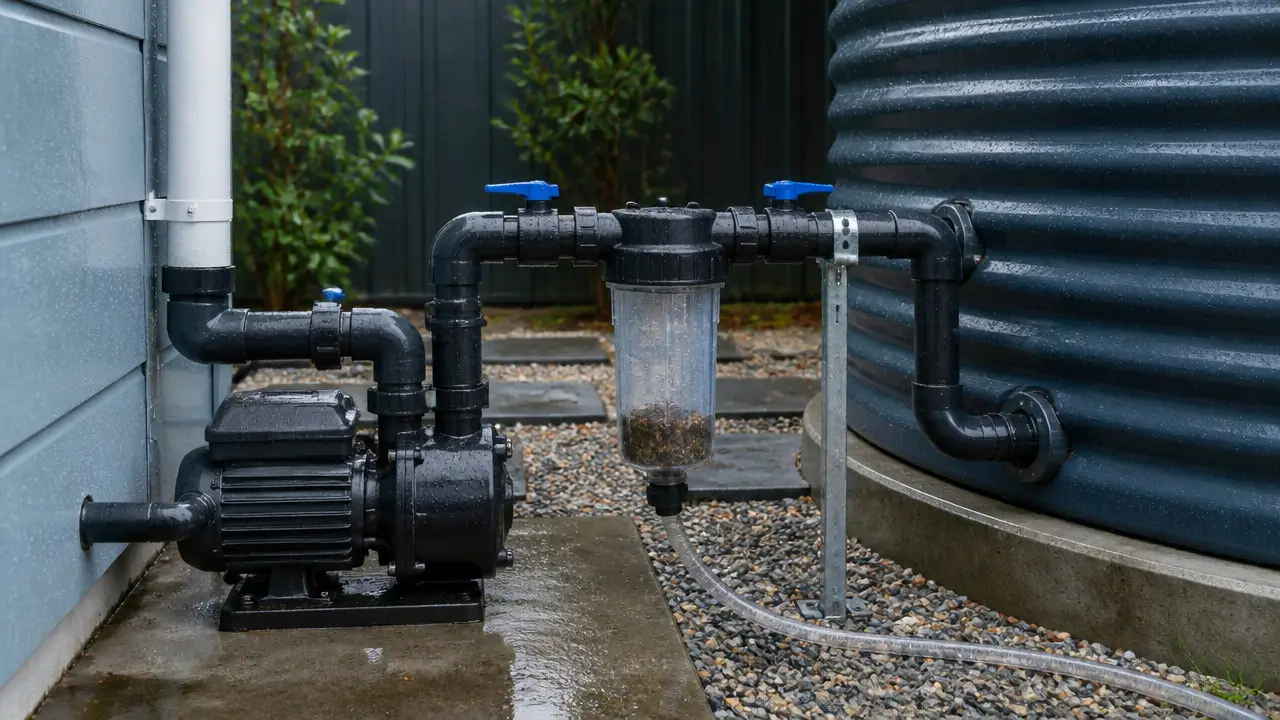
The pump draws water from the barrel and provides the pressure needed for a sprinkler or irrigation system.
You need to match the pump to:
- The sprinkler's required pressure
- The amount of water the sprinkler uses
- Hose length
- Vertical lift
- Connection sizes
- Available power
Do not choose a pump based on pressure alone.
A pump must also provide enough flow rate, which is the amount of water it can move during a set time, such as gallons per minute.
How to Water Grass From a Rain Barrel Without a Pump
Gravity is the easiest option if your lawn is small.
1. Put the Barrel on a Stable Base
Raising the barrel increases the available water pressure.
But remember that water is heavy. A full rain barrel can weigh hundreds of pounds.
Use a level, strong base designed to carry the filled weight. Do not stack a barrel on loose blocks, unstable lumber, or another surface that could tip.
2. Connect a Hose
Attach a hose to the barrel's outlet or spigot.
Make sure the connection fits correctly. Adapters may be needed if the outlet and hose use different thread sizes.
Leaks at the connection waste water and can reduce the already limited gravity flow.
3. Use a Short Hose When Possible
Long, narrow hoses create resistance.
If gravity is your only source of pressure, a shorter hose usually provides better flow than a very long one.
Avoid unnecessary bends, restrictions, and small fittings.
4. Open the Valve Fully
Open the barrel valve and check the flow.
If water only trickles out, the barrel may be too low, the hose may be restricted, or the outlet may contain debris.
5. Move the Hose Around the Lawn
Water one section at a time.
Moving the hose manually is often more practical than trying to operate a conventional sprinkler from gravity pressure.
Try to spread the water over the soil rather than dumping all of it in one place.
How to Use a Pump With a Rain Barrel
A pump gives you much more flexibility.
A basic system may look like this:
Rain barrel → pump → garden hose → sprinkler
Some pumps sit outside the barrel and pull water through an intake hose. Others are submersible and operate inside the water.
Follow the pump manufacturer's installation instructions.
Pay particular attention to:
- Minimum water depth
- Maximum lift
- Maximum pressure
- Flow rate
- Hose size
- Dry-run protection
- Electrical requirements
Head height is another pump specification you may see. It describes how high a pump can move water. Greater vertical lift and longer or narrower hoses reduce the usable flow at the sprinkler.
Protect the Pump From Running Dry
A rain barrel can empty quickly when connected to a pump.
Running some pumps without water can damage them.
A pump with dry-run protection, a float switch, or another suitable control can reduce this risk. Do not assume every pump includes this protection.
Keep electrical plugs, extension connections, and controls protected from water and installed according to the manufacturer's instructions and applicable electrical requirements.
Can You Connect a Sprinkler Directly to a Rain Barrel?
Sometimes, but many ordinary lawn sprinklers will perform poorly.
A household outdoor faucet normally supplies much more pressure than a gravity-fed barrel.
With too little pressure, a sprinkler may:
- Cover only a small area
- Spray unevenly
- Fail to rotate
- Produce large droplets instead of its normal pattern
- Stop working as the barrel empties
A low-pressure irrigation device may work better.
If you want to use a normal lawn sprinkler, a properly sized pump is usually the more dependable setup.
Improve Gravity Flow
If you do not want to use a pump, several changes may help.
Raise the Barrel
More height means more gravity pressure.
Details about using rain barrels for irrigation help assess vessel construction compatible with the expected water use.
Do this only if you can provide a safe, permanent support capable of holding the full barrel.
Use a Larger Outlet
A very small valve or fitting can restrict flow.
A larger outlet can help move water, although it does not create additional pressure.
Shorten the Hose
Every foot of hose adds some resistance.
Keep the run as short and direct as practical.
Keep Screens and Outlets Clean
Leaves, insects, roof grit, and other debris can reduce flow.
Clean the inlet screen and inspect the outlet when you notice a sudden drop in performance.
How Much Lawn Can One Rain Barrel Water?
It depends on:
- Barrel capacity
- How much water is actually stored
- Lawn area
- Soil type
- Weather
- Grass condition
- Recent rainfall
- How deeply you water
Rain barrels are often better for supplemental watering than for supplying an entire lawn through a long dry period.
A large lawn can use much more water than a typical residential barrel holds.
You can stretch your stored supply by focusing on areas that need water most instead of trying to cover the whole yard lightly.
Water Slowly Enough for the Soil to Absorb It
Watch the soil while watering.
If water starts running down a slope, into the street, or across a sidewalk, the application rate is too high for the soil at that moment.
Stop and allow the water to soak in before continuing.
Slow watering can be especially useful on:
- Slopes
- Compacted soil
- Dry soil that initially sheds water
- Heavy clay soil
The goal is to get water into the root zone rather than creating runoff.
Keep Debris Out of the Irrigation System
Rainwater collected from a roof can contain leaves, pollen, grit, insects, roofing particles, and other debris.
Use an inlet screen or other suitable prefiltration before the water enters the barrel.
If you are feeding narrow irrigation tubing or a sprinkler, additional filtration may be useful because small passages can clog more easily.
Clean filters when flow begins dropping rather than allowing debris to build up.
Do Not Let the Barrel Become a Mosquito Source
Keep the barrel covered.
Screen openings that could allow mosquitoes to reach standing water. Check screens regularly for tears, gaps, and poor-fitting edges.
Also make sure overflow plumbing sends excess water away safely without creating persistent puddles.
When to Water the Grass
Water when the lawn needs it rather than simply because the barrel is full.
Early watering can reduce evaporation compared with watering during the hottest part of the day.
Avoid repeatedly keeping the grass surface wet if the soil is already moist.
Natural rainfall should also be counted. If the soil has received enough rain, save the stored water for later.
What to Do When the Barrel Runs Empty
A rain barrel connected to a sprinkler or pump may drain faster than expected.
Before watering, check how much water is available.
If you regularly run out, you may need:
- Additional storage
- A larger tank
- A smaller watering area
- More efficient application
- A different irrigation method
Connecting multiple barrels can increase storage, but the barrels need compatible fittings, secure supports, suitable overflow handling, and a layout that allows water to move between them properly.
Keep Lawn Chemicals Separate From the Barrel
Do not allow fertilizer, pesticides, herbicides, fuel, or other chemicals to enter the rain barrel.
If you use any device that could allow treated water or chemicals to move backward toward the storage tank, use appropriate backflow protection or keep the systems physically separate.
Rainwater used on a lawn does not need drinking-water treatment, but preventing contamination still makes the system easier and safer to manage.
Prepare the System for Freezing Weather
In freezing climates, water left inside hoses, valves, pumps, and exposed fittings can expand and cause damage.
Follow the equipment manufacturer's winter-storage instructions.
Depending on the system, this may mean draining exposed components, disconnecting hoses, storing a pump indoors, or taking the barrel out of service for winter.
Do not assume a closed valve means a fitting is protected from freezing.
A Simple Rain Barrel Lawn Setup
For a small lawn, a practical system can be very simple:
Downspout → screened barrel → outlet valve → short garden hose → grass
If gravity does not provide enough flow, the next step is usually:
Downspout → screened barrel → pump → hose → sprinkler
The first setup is cheaper and simpler to maintain. The second provides much better pressure and gives you more choices for sprinklers and irrigation equipment.
Choose based on the area you need to water rather than trying to make a low-pressure barrel operate equipment designed for household water pressure.
Frequently Asked Questions
Will a rain barrel run a lawn sprinkler?
It may run some low-pressure sprinklers, but many standard lawn sprinklers need more pressure than a gravity-fed barrel can provide. A pump is often needed for a normal sprinkler pattern.
How can I increase pressure from my rain barrel?
Raising the barrel increases gravity pressure. A shorter and less restrictive hose can also improve usable flow. For a larger pressure increase, use a properly sized pump.
Can I attach a garden hose directly to a rain barrel?
Yes, if the barrel outlet and hose connections are compatible. You may need an adapter. Gravity flow through a garden hose is usually much weaker than flow from a household faucet.
Can I use a soaker hose with a rain barrel?
Sometimes. Some soaker hoses work at low pressure, while others require normal household water pressure. Check the manufacturer's operating requirements before relying on gravity.
Do I need to filter rainwater before watering grass?
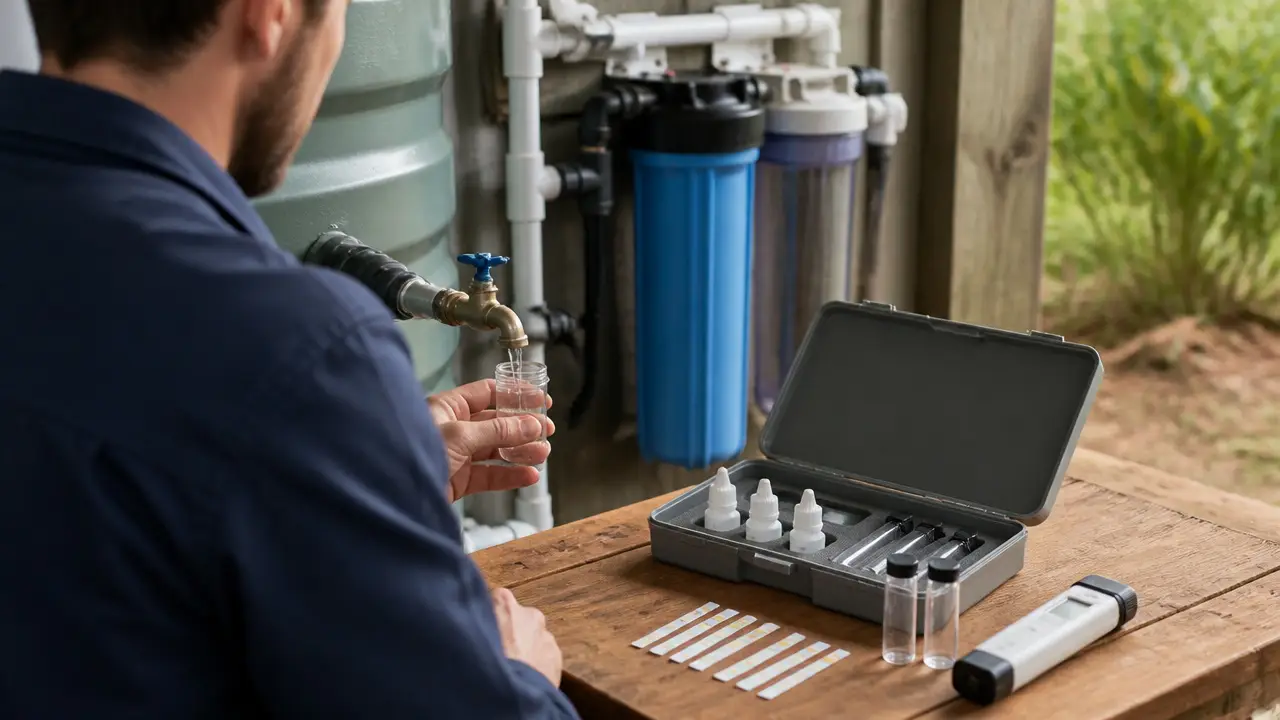
Fine drinking-water filtration is not normally needed for lawn irrigation. However, screening and basic debris filtration can help keep leaves, grit, insects, and roof debris from clogging valves, pumps, hoses, and irrigation equipment.
How do I keep my rain barrel from running dry while using a pump?
Watch the water level and follow the pump manufacturer's minimum-water requirements. A pump with suitable dry-run protection or a float control can help shut the system down before the water level becomes too low.
Is rain barrel water safe for lawns?
Rainwater is commonly used for non-potable irrigation, but roof runoff can pick up contaminants. Avoid collecting water that has been exposed to hazardous chemicals or other known contamination, and keep lawn chemicals from entering the barrel.