As an affiliate, we may earn a commission from qualifying purchases. We get commissions for purchases made through links on this website from Amazon and other third parties.
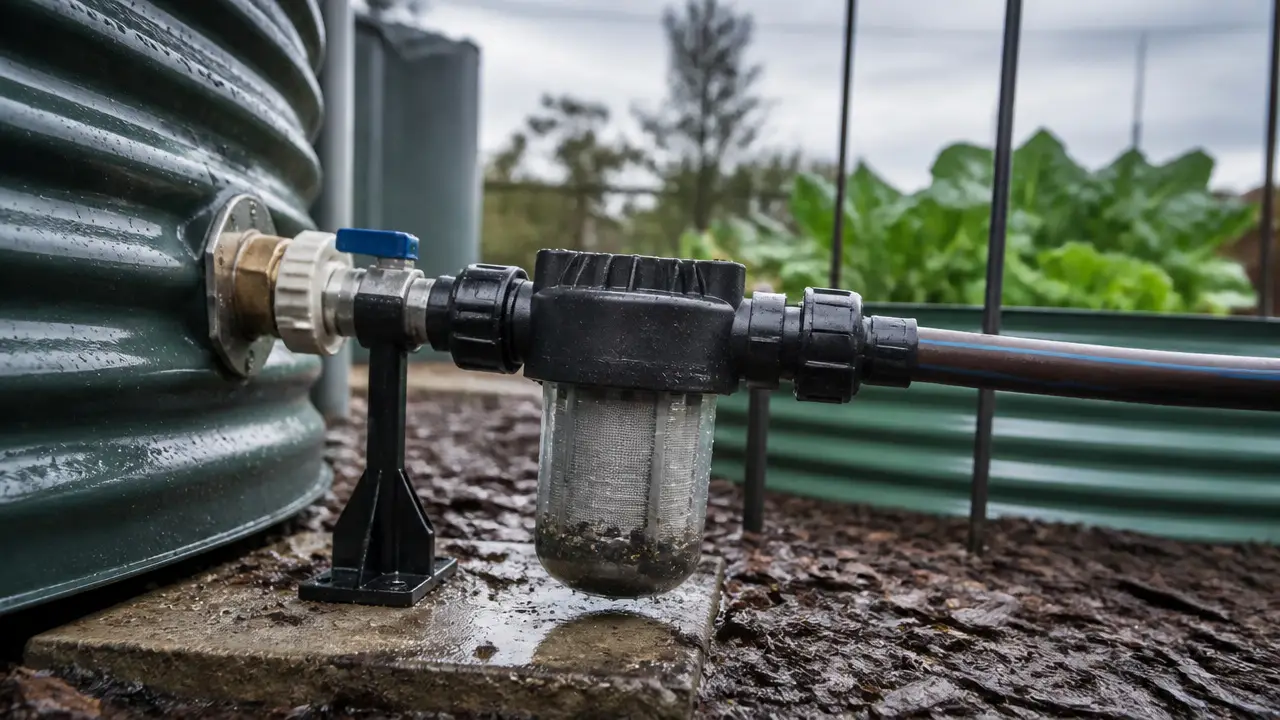
Yes. A regular garden hose can usually be used on a rain barrel, as long as the barrel has a hose-compatible spigot or adapter.
The main limitation is water pressure. A rain barrel normally relies on gravity, so water may move through a garden hose much more slowly than it does from a household outdoor faucet.
How a Regular Hose Works With a Rain Barrel
Most garden hoses use standard garden hose threads. Many rain barrel spigots are made with the same type of connection.
If the hose screws directly onto the barrel's spigot without forcing it, you can usually connect it just like you would to an outdoor faucet.
The basic setup is:
Rain barrel → spigot → garden hose → watering point
No pump is required if gravity provides enough flow for what you want to do.
Before connecting the hose, check that:
- The hose fitting matches the spigot.
- The spigot is securely installed.
- The hose washer is in good condition.
- The barrel is on a stable, level base.
- The hose can run downhill or mostly level when possible.
A missing or damaged hose washer is a common cause of leaks around the connection.
The Biggest Difference Is Water Pressure
A household faucet is connected to a pressurized plumbing system. A basic rain barrel is not.
Water pressure in a rain barrel comes mainly from the height of the water above the hose outlet. This is sometimes called head height.
More height generally means more pressure.
For example, a barrel sitting directly on the ground may produce a weak flow through a long hose. Raising the barrel on a strong platform can improve gravity flow.
However, raising a barrel creates a structural concern. Water is heavy. A full rain barrel can weigh hundreds of pounds, depending on its size.
Use only a stable base that can safely support the full barrel. Do not stack loose blocks, scrap wood, or other unstable materials just to gain pressure.
A Shorter Hose Usually Works Better
A regular hose adds resistance to the water moving through it.
That resistance increases when the hose is:
- Long
- Narrow
- Kinked
- Running uphill
- Connected to restrictive fittings
- Attached to equipment that needs higher pressure
For simple watering, a short hose often works much better than a long one.
If you only need to fill a watering can or water plants a few feet from the barrel, gravity may provide plenty of flow.
If you want to move water across a large yard, the flow may become frustratingly slow.
Can You Use a Spray Nozzle?
You can attach a normal hose nozzle, but results vary.
Many spray nozzles are designed for pressurized household water. With a gravity-fed rain barrel, you may get a weak stream instead of the spray pattern you normally expect.
Simple, low-restriction watering wands or open-ended hoses generally work better with low pressure.
A nozzle will not create pressure. It only controls the water that is already available.
Can You Run a Sprinkler From the Hose?
Usually not very well from a basic gravity-fed rain barrel.
Most lawn sprinklers need more pressure and flow than a barrel sitting a few feet above the ground can provide.
The sprinkler might:
- Spray only a short distance
- Produce an uneven pattern
- Barely operate
- Stop working as the barrel empties
A pump may be needed if you want sprinkler-like performance.
When choosing a pump, pressure and flow requirements need to match the irrigation equipment. Pumps also require suitable plumbing, power, controls, and protection against running dry.
Can You Connect the Hose to Drip Irrigation?
Sometimes, but the drip system must be designed for low-pressure use.
Many standard drip irrigation parts are intended to operate at pressures higher than a gravity-fed rain barrel can provide.
A very simple gravity drip system may work when:
- The barrel is elevated safely.
- The irrigation area is below the barrel.
- The tubing run is fairly short.
- The emitters are suitable for low pressure.
- The water is filtered enough to reduce clogging.
Roof runoff can contain leaves, grit, insects, and other debris. Small irrigation openings can clog easily, so filtration often matters more with drip systems than with an open garden hose.
Does the Hose Diameter Matter?
Yes, especially with gravity-fed water.
A larger inside diameter generally creates less resistance than a smaller one. That can help maintain flow over longer distances.
However, changing hose diameter cannot make up for very little elevation or an undersized barrel outlet.
For attaching a garden hose to a rain barrel, first assess capacity needed to cover demand until the next refill.
The whole path matters:
Barrel outlet → valve → fittings → hose → nozzle or irrigation equipment
The narrowest or most restrictive part of that path can limit flow.
What If the Hose Does Not Fit the Rain Barrel?
Do not force the connection.
Some barrels use pipe threads, proprietary fittings, or simple taps that are not made for standard garden hoses.
You may need an adapter between the barrel fitting and the hose.
If you are adding a new outlet to a barrel, a bulkhead fitting is commonly used. A bulkhead fitting passes through the wall of a tank and creates a sealed connection for plumbing.
The fitting, valve, and adapter must all have compatible thread types and sizes. Parts that look similar are not always interchangeable.
Keep the Hose Below the Water Level
Gravity works best when the hose outlet is below the water surface inside the barrel.
Trying to push water uphill reduces flow. If the end of the hose is substantially higher than the barrel's water level, water may not flow at all.
Remember that the available pressure also falls as the barrel empties.
A hose that works well with a full barrel may have noticeably weaker flow when only a few inches of water remain.
Keep the Barrel Outlet Clean
Sediment often settles at the bottom of a rain barrel. Because the spigot is usually mounted low on the barrel, some of that material can eventually reach the hose.
Check the outlet periodically for:
- Sediment
- Leaf fragments
- Algae buildup
- Insect debris
- Clogged screens
- Restricted valves
Cleaning the barrel and maintaining roof screens or other prefiltration can help prevent flow problems.
A first-flush device may also be part of some systems. A first flush diverts an initial portion of roof runoff that may contain concentrated dirt and debris before later runoff enters storage.
It does not make the stored water automatically safe to drink.
Do Not Assume Hose Water Is Potable
Using a garden hose does not make collected rainwater safe for drinking.
Roof runoff can contain microorganisms, animal waste, roofing residues, dust, metals, and other contaminants. Ordinary rain barrels are commonly used for non-potable purposes, meaning uses that do not require drinking-water quality.
If collected rainwater is intended for drinking, cooking, or another potable use, treat that as a whole-system water-safety issue. Collection materials, storage, prefiltration, treatment, maintenance, current laboratory testing, and local requirements all matter.
A standard garden hose may also not be intended for drinking-water service.
When a Regular Hose Is a Good Choice
A normal garden hose is often all you need for:
- Filling watering cans
- Watering nearby garden beds
- Rinsing garden tools
- Moving water into another non-potable container
- Slowly draining the barrel
- Simple gravity-fed irrigation
For these jobs, start with a short hose and keep the destination below the barrel when possible.
If you need strong spray pressure, long-distance water movement, or pressurized irrigation, a gravity-fed garden hose may not be enough. That is when pump sizing and system design become more important.
Frequently Asked Questions
Can I screw a garden hose directly onto a rain barrel?
Yes, if the barrel's spigot has compatible garden hose threads. Do not force fittings that do not screw together smoothly. An adapter may be needed on some barrels.
Why does water come out of my rain barrel hose so slowly?
Rain barrels normally rely on gravity rather than household water pressure. A long hose, small outlet, low barrel height, uphill run, clogged fitting, or restrictive nozzle can reduce the flow further.
Will raising my rain barrel improve hose pressure?
Yes. Increasing the height of the water above the outlet generally increases gravity pressure. The barrel must be supported by a stable structure designed to carry its full weight.
Can I use a 50-foot garden hose with a rain barrel?
You can, but flow may be slow, especially if the barrel is not elevated or the hose runs uphill. A shorter hose generally works better in a gravity-fed system.
Can I attach a hose nozzle to a rain barrel?
Yes, but many nozzles are designed for higher pressure. You may get a weak stream or poor spray pattern from a gravity-fed barrel.
Do I need a pump to use a garden hose with a rain barrel?
Not for basic gravity watering. A pump may be useful if you need higher pressure, longer-distance water movement, or equipment that has minimum pressure requirements.
Can I leave a hose attached to the rain barrel all the time?
Usually, but inspect the connection for leaks and weather damage. In freezing climates, drain hoses, valves, and exposed plumbing before freezing conditions if your system is not designed to remain in service through winter.