As an affiliate, we may earn a commission from qualifying purchases. We get commissions for purchases made through links on this website from Amazon and other third parties.
Should You Leave Drip Irrigation On All the Time?
No. In most gardens and landscapes, you should not leave drip irrigation running all the time.
Drip irrigation works best when it runs long enough to soak the root zone, then shuts off so the soil can drain and roots can get air. Continuous watering can waste water, keep soil too wet, encourage root problems, and empty a rain barrel or storage tank much faster than expected.
A better approach is to water in scheduled sessions based on the plants, soil, weather, and flow from your drip emitters.
Why Drip Irrigation Should Turn Off Between Waterings
Drip irrigation applies water slowly. That is one of its main advantages.
But slow watering does not mean constant watering.
Plant roots need both water and oxygen. When soil stays saturated for long periods, the small air spaces in the soil can fill with water. Some plants may develop weak roots or root rot.
Continuous irrigation can also cause:
- Water to move below the root zone where plants cannot use it
- Soggy areas around emitters
- Algae or moss on constantly wet surfaces
- Higher water use
- Faster depletion of stored rainwater
- More pump operating time
- Greater wear on pumps and other system parts
- Runoff on heavy or compacted soil
It is usually better to apply enough water to wet the root zone and then allow the soil to dry somewhat before the next cycle.
How Long Should Drip Irrigation Run?
There is no single correct run time.
A system might need to run for 20 minutes, an hour, or several hours depending on the setup. What matters is how much water reaches the roots.
Several factors affect run time.
Emitter Flow Rate
Drip emitters are often rated by how much water they release per hour.
For example, an emitter rated at 1 gallon per hour releases about one gallon during a one-hour run under the conditions for which it was designed.
A 0.5-gallon-per-hour emitter would take about two hours to deliver the same amount.
Actual flow can change if the system pressure is too high or too low, the emitter is clogged, or the tubing layout creates uneven pressure.
Number of Emitters
One plant may have several emitters.
If a tree has four 1-gallon-per-hour emitters, the irrigation system could deliver roughly four gallons to that tree during a one-hour run.
That does not automatically mean one hour is the correct watering time. The tree's size, soil, weather, and root area still matter.
Soil Type
Soil changes how quickly water spreads.
Sandy soil drains quickly. It may need shorter or more frequent watering sessions.
Loamy soil usually holds water while still draining reasonably well.
Clay soil absorbs water slowly and holds it longer. Very long watering sessions can sometimes create puddles or runoff before the water spreads through the soil.
If water begins collecting on the surface, splitting one long watering period into shorter cycles may help.
Plant Type and Root Depth
Shallow-rooted vegetables are different from mature fruit trees.
Small plants may need water closer to the soil surface. Trees and large shrubs usually benefit from water reaching deeper into the root zone.
The goal is not simply to make the surface look wet. You want moisture where the active roots are growing.
How Often Should Drip Irrigation Run?
Watering frequency depends heavily on the plants and conditions.
New seedlings may need moisture more often because their roots are shallow. Established shrubs and trees can often go longer between deep waterings.
Hot weather, wind, and dry soil can increase water demand. Cool or rainy weather can reduce it.
Instead of using the same schedule throughout the year, check the soil.
Dig a small hole away from the emitter after watering. Look at how deep and wide the moisture has moved. If only the top inch or two is damp, the system may need a longer run.
If the soil is still very wet when the next cycle starts, watering may be too frequent.
Using a Timer With Drip Irrigation
A timer is usually much better than leaving the system running continuously.
A basic irrigation timer can open the water supply for a set period and then close it automatically. More advanced controllers can use different schedules for separate irrigation zones.
A timer is especially helpful when your drip system is connected to:
- A household water supply
- A pressurized irrigation line
- A rainwater cistern
- An IBC tote with a suitable pump
- A pumped rain barrel system
However, a timer does not know whether the soil actually needs water unless the system includes other controls.
Seasonal adjustments are still important.
Do not assume a schedule that works in July will also work in October.
Drip Irrigation From a Rain Barrel or Tank
Alongside an easy-to-use drip irrigation system, assess emitter flow under available pressure and pump capacity.
Continuous watering is especially impractical when drip irrigation uses stored rainwater.
A small flow rate adds up quickly.
For example, ten emitters that each release 1 gallon per hour would use about 10 gallons per hour if they are all operating at that rate.
Leaving them on for six hours would use about 60 gallons.
This is why knowing your total irrigation flow matters when choosing a rain barrel, tote, or cistern.
Remember that usable flow can also change as a gravity-fed tank empties. The water pressure from a tank comes partly from head height, which is the vertical distance between the water surface and the outlet or irrigation area.
As the water level drops, available pressure may also drop.
Some drip equipment is designed for low-pressure systems, while other parts require more pressure than a basic rain barrel can provide. Check that the timer, filter, pressure regulator, tubing, and emitters all work within the pressure range of your water source.
Watch for Clogged Emitters
Leaving drip irrigation running longer is not a good solution for clogged emitters.
If some plants are dry while others are getting enough water, inspect the system.
Common problems include:
- Dirt in emitters
- Algae or organic material
- Kinked tubing
- Damaged drip lines
- Low pressure
- Excessive pressure
- Too many emitters on one line
- Uneven elevation
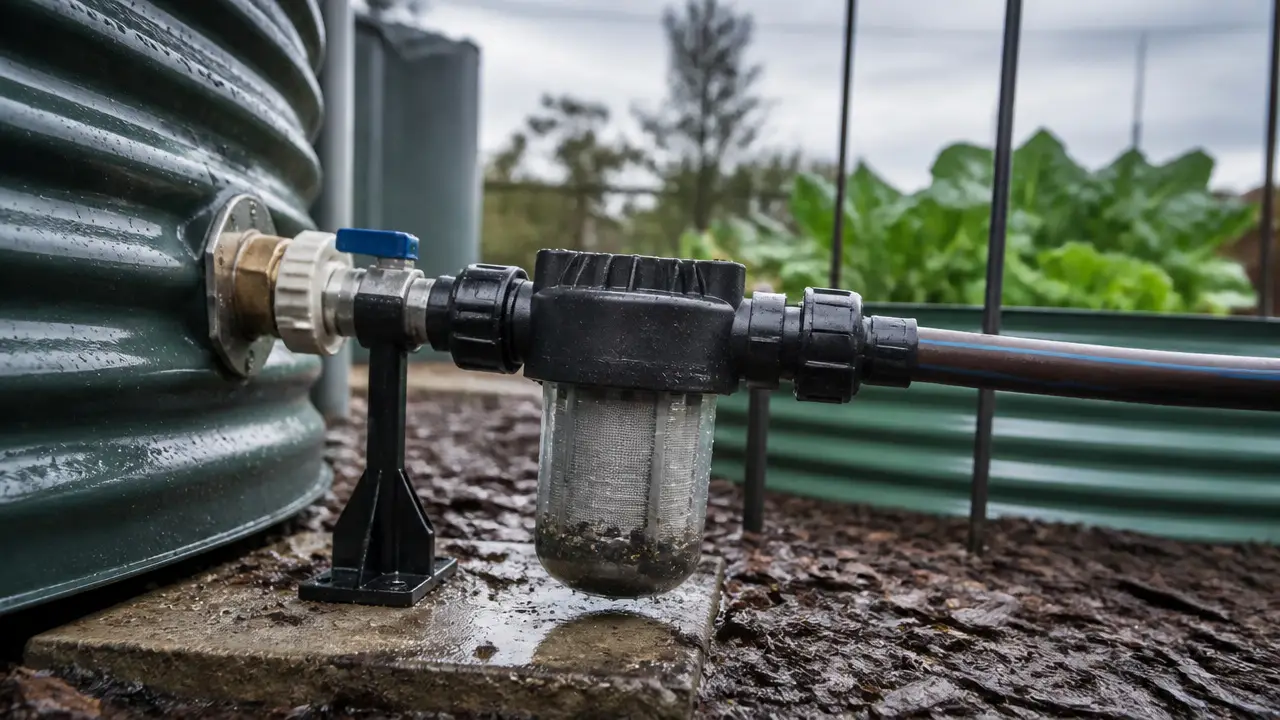
Rainwater systems normally need filtration before water enters small drip emitters.
The filter does not need to make the water drinkable. Its job in an irrigation system is mainly to keep debris from clogging small passages.
Flush drip lines periodically according to the system design, and clean or replace filters when needed.
What About Drip Irrigation During Very Hot Weather?
Hot weather can mean plants need more water, but that does not usually mean leaving irrigation on continuously.
You may need to increase watering frequency, run time, or both.
Check the soil instead of judging only by the surface. The top layer can look dry while there is still plenty of moisture around the roots.
Mulch can also reduce evaporation and help soil stay moist longer between irrigation cycles.
Avoid keeping soil permanently saturated just because temperatures are high.
When Very Long Drip Watering Can Make Sense
Some drip systems do run for several hours at a time.
For example, low-flow emitters around large trees may need long runs so water can penetrate deeply and spread through a large root area.
That is different from running the system 24 hours a day.
Long watering sessions should still have a clear purpose. Check where the water is going and whether the root zone is actually benefiting.
A Simple Way to Set Your Drip Schedule
Start with a reasonable watering session rather than continuous flow.
Then check the soil after watering.
Look at:
- How deep the moisture reached
- How wide the wet area spread
- Whether water pooled or ran off
- How quickly the soil dries afterward
- Whether plants show signs of too much or too little water
Adjust the run time before making large changes to the system.
If water does not penetrate deeply enough, increase the watering time. If the soil stays soggy for long periods, shorten the run time or increase the time between watering days.
For a rainwater-fed system, also watch the tank level so irrigation demand does not regularly exceed your available stored water.
Frequently Asked Questions
Can I run drip irrigation for several hours?
Yes. Long watering periods can be appropriate for low-flow emitters, deep-rooted plants, or large trees. The correct time depends on emitter flow, soil, and root depth. Several hours of controlled watering is different from leaving the system on continuously.
Is it better to drip water every day?
Not always. Seedlings and container plants may need frequent watering, while established plants may do better with deeper, less frequent watering. Check soil moisture instead of automatically watering every day.
Can drip irrigation overwater plants?
Yes. Drip irrigation can overwater plants if it runs too long or too often. Slow application does not prevent soil from becoming saturated.
Should drip irrigation run overnight?
It can, but overnight watering is not automatically better. Early morning is often convenient because temperatures are cooler and you can check the system afterward. The best schedule also depends on local conditions and plant needs.
How do I know if my drip irrigation runs long enough?
Check the soil below the surface after watering. The moisture should reach the active root zone rather than only wetting a small patch at the surface.
Will leaving drip irrigation on damage a pump?
Continuous operation can increase pump run time and wear. Whether a pump can handle long operation depends on its design, water supply, cooling, controls, and operating limits. Pumps should also be protected from running dry when connected to a rainwater tank.
Do I need a filter for drip irrigation using rainwater?
Usually, yes. Stored rainwater can contain small pieces of organic material, sediment, and other debris that can clog drip emitters. Choose filtration that is compatible with the emitter manufacturer's requirements and maintain it regularly.