As an affiliate, we may earn a commission from qualifying purchases. We get commissions for purchases made through links on this website from Amazon and other third parties.
Drip irrigation can save water and deliver it close to plant roots, but it is not the best choice for every yard, crop, water source, or irrigation setup. It can clog, takes more planning to install, and needs regular inspection.
For gardeners using stored rainwater, drip irrigation can work very well. The system still needs enough flow, suitable pressure, clean enough water, and connections that match the tank, pump, filter, and drip tubing.
Why Drip Irrigation Is Popular
Drip irrigation moves water through small tubing and releases it slowly near plants. Depending on the system, water may come through individual emitters, dripline with built-in outlets, or small distribution tubes.
This has several useful benefits.
- Less water lands on paths and unused soil.
- Plant leaves can stay drier.
- Water can be placed close to roots.
- Weeds between rows may receive less water.
- Irrigation can run slowly instead of flooding the soil at once.
- A properly designed system can work well with rainwater tanks and cisterns.
Those advantages make drip irrigation a good fit for vegetable beds, shrubs, orchards, raised beds, and other planted areas.
But those same small passages that control water so well also create some of drip irrigation's biggest problems.
Drip Irrigation Can Clog
Drip emitters have very small openings. Dirt, algae, mineral deposits, insects, and other debris can block them.
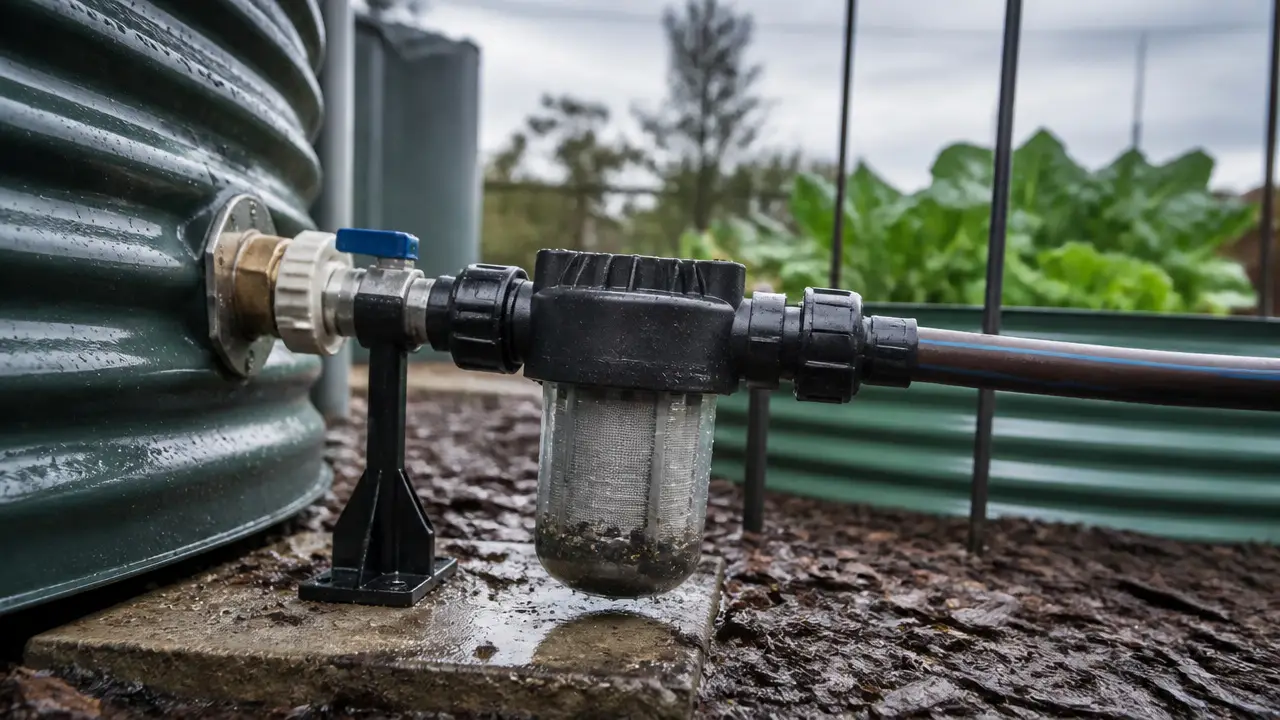
This matters even more when the water comes from a rain barrel or rainwater tank. Roof runoff may carry small pieces of leaves, roofing material, dust, pollen, and other debris into storage.
A leaf screen or first-flush device can reduce some contamination before it enters the tank, but stored water may still need filtration before entering drip tubing.
A first flush device diverts some of the first runoff from a roof. That early runoff often carries more dirt and debris than water collected later in the storm.
The correct filter depends on the drip equipment being used. Do not assume that one filter size works with every emitter. Check the irrigation manufacturer's requirements for filtration and operating pressure.
Installation Takes More Planning Than a Hose
A garden hose is simple. Connect it, turn on the water, and point it where needed.
Drip irrigation requires more design work.
A typical setup may include:
- A water source
- A shutoff valve
- A filter
- A pressure regulator when needed
- Main tubing
- Smaller branch tubing or dripline
- Fittings
- Emitters
- End caps or flush points
A rainwater-fed system may also need a pump if gravity cannot provide enough pressure or flow.
Every extra fitting is another place where something can leak, disconnect, or become blocked.
This does not make drip irrigation difficult. It simply means the system works best when it is planned rather than assembled randomly.
Low Water Pressure Can Be a Problem
People sometimes assume drip irrigation will always work from a rain barrel because it uses water slowly. That is not necessarily true.
Drip systems still have operating limits.
A barrel raised above the garden creates some pressure because of the height difference between the water surface and the outlet. This vertical difference is often called head height.
More head height generally provides more pressure. As the water level drops, however, the available pressure may also decrease.
Some gravity-designed drip systems can operate at low pressure. Other emitters and irrigation equipment are designed for much higher pressure from household plumbing or a pump.
If pressure is too low, plants at the beginning of the line may receive water while plants farther away receive very little.
A pump can solve some pressure problems, but it introduces more equipment, power requirements, controls, and maintenance.
Large Areas Can Be Harder to Design
Drip irrigation works especially well when water needs to reach specific plants.
It can become more complicated over a large area.
Long runs of tubing create friction, which reduces available pressure. Large numbers of emitters also increase the total amount of water the system must supply.
This is where flow rate becomes important. Flow rate is the amount of water moving through the system over a period of time.
A water source must provide enough flow for every emitter running at the same time.
Large systems are often divided into separate watering zones. Each zone operates independently so the water supply does not have to serve the entire property at once.
Drip Lines Need Regular Inspection
Drip irrigation is not maintenance-free.
Because the water comes out slowly, a clogged emitter may not be obvious from across the yard. A plant can receive little or no water while the rest of the system appears to be operating normally.
Lines should be checked for:
- Clogged emitters
- Loose fittings
- Kinks
- Cracked tubing
- Animal damage
- Roots or garden tools damaging buried lines
- Uneven watering
- Leaks
- Blocked filters
Filters also need cleaning or replacement according to their design.
Some systems should be flushed periodically so sediment does not build up inside the tubing.
Plants Do Not Always Stay in the Same Place
Drip irrigation works best when watering points match plant locations.
That is easy with permanent shrubs, fruit trees, or perennial beds. It can be less convenient in a vegetable garden that changes every season.
A row that held tomatoes this year may contain closely spaced greens next year. Emitters placed for one crop may not suit the next one.
Gardeners may need to move tubing, add emitters, close unused outlets, or install new dripline as planting layouts change.
For a frequently rearranged garden, overhead watering or a movable hose may sometimes be simpler.
Drip Irrigation Does Not Water Everything Equally
Different plants need different amounts of water.
A young tree, a tomato plant, and a row of lettuce should not automatically receive the same irrigation schedule just because they share the same system.
Soil also matters.
Water spreads differently through sandy soil than through heavier soil. Closely spaced emitters may be useful in one bed while wider spacing works better elsewhere.
A good drip system matches emitter layout and watering time to the plants and soil rather than simply running one line past everything.
Drip Irrigation Is Not Ideal for Every Use
Some situations are easier to water another way.
Lawns
Dripline can be installed for turf, but conventional sprinklers are often easier to design, inspect, and adjust for an existing lawn.
Newly Seeded Areas
Seeds and very young plants may need moisture across a broad soil surface. Widely spaced drip emitters may leave dry areas between watering points.
Container Gardens
Drip systems can work very well for containers, but small pots may require careful emitter sizing and frequent checks. A failed emitter can cause a container to dry quickly.
Frequently Changed Garden Beds
Movable hoses or sprinklers may be more convenient when beds are constantly rearranged.
Drip Irrigation Can Be Damaged Easily
Alongside watering a garden from a rain barrel, compare tank material choices for the intended end use.
Small irrigation tubing is light and flexible. That makes installation easy, but it also makes the tubing easier to damage.
Problems can come from:
- Lawn mowers
- String trimmers
- Shovels
- Rodents
- Pets
- Foot traffic
- Sun exposure
- Garden tools
Tubing hidden under mulch is less visible, which can protect it from sunlight and foot traffic. It can also make leaks and damage harder to spot.
Freezing Weather Adds Another Problem
Water left inside irrigation tubing, filters, valves, pumps, and other components can freeze.
Frozen water expands. That can damage fittings or other parts of the system.
Cold-climate systems may need seasonal shutdown and winter preparation. The correct approach depends on the equipment and layout.
Rainwater systems may need additional protection because storage tanks, exposed pipes, pumps, and filters can also be affected by freezing.
Do not assume that flexible drip tubing makes the entire irrigation system freeze-proof.
Why Some Gardeners Prefer Sprinklers
Sprinklers cover a large area with relatively little tubing.
They can be useful for:
- Lawns
- Seed beds
- Broad ground covers
- Large planting areas
- Temporary watering
Their main disadvantage is that some water may land where it is not needed. Wind can move the spray, and evaporation can reduce the amount reaching the soil.
Sprinklers can still be the simpler choice when even surface coverage matters more than precise watering around individual plants.
Why Some People Still Water by Hand
Hand watering requires time, but it has one major advantage: the gardener can see exactly what is happening.
A person holding a hose can give extra water to a dry plant and skip soil that is already wet.
Hand watering can make sense for:
- Small gardens
- A few containers
- New plantings
- Plants with very different water needs
- Gardens that change often
The tradeoff is that consistent watering depends on someone being available to do it.
When Drip Irrigation Makes the Most Sense
Drip irrigation is especially useful when plants stay in predictable locations and water can be delivered directly to their root areas.
Good candidates include:
- Raised vegetable beds
- Rows of vegetables
- Shrub beds
- Fruit trees
- Berry plants
- Greenhouses
- Large groups of containers
- Gardens supplied by stored rainwater
The best system is not simply the one that uses drip tubing. It is one where the water source, pressure, flow, filtration, tubing, emitters, and plant needs all work together.
Using Drip Irrigation With Rainwater
Stored rainwater can be a useful irrigation source, but the irrigation equipment needs to match the storage system.
Start by looking at the entire water path:
Roof or collection surface → storage tank → outlet → filter → pump or gravity supply → irrigation tubing → plants
A problem anywhere along that path can affect the drip system.
Check the Tank Connection
Rain barrels, IBC totes, and cisterns may use different outlet sizes and fittings.
A bulkhead fitting is a fitting that creates a sealed connection through the wall of a tank. It is commonly used for tank outlets.
Avoid forcing mismatched pipe threads or tubing sizes together. Adapters should match the actual fitting types used by the tank and irrigation equipment.
Check Available Pressure
Determine whether the system is intended for gravity operation or requires a pump.
A tank sitting slightly above the garden may provide enough pressure for some low-pressure irrigation systems but not others.
Filter the Water
Rainwater used for drip irrigation should be kept free of enough debris to protect the emitters.
Clean gutters and inlet screens also help reduce the amount of material entering storage.
Make Sure Enough Water Is Available
Drip irrigation can reduce wasted watering, but it cannot create water.
Stored volume depends on rainfall, roof collection area, tank capacity, previous water use, and real-world collection losses.
During a long dry period, even an efficient irrigation system may empty a small rain barrel quickly.
Is Drip Irrigation Worth It?
For many gardens, yes.
Drip irrigation can provide controlled watering with less overspray and can pair well with stored rainwater. But it works best when the system is properly filtered, matched to the available pressure and flow, and checked regularly.
It is less attractive when the garden changes constantly, the water contains a lot of debris, the system cannot provide suitable pressure, or the user wants something that requires almost no maintenance.
The goal is not to use drip irrigation everywhere. It is to use the watering method that fits the plants, water source, site, and amount of maintenance you are willing to do.
Frequently Asked Questions
Is drip irrigation better than sprinklers?
Neither method is always better. Drip irrigation is often useful for watering specific plants or rows. Sprinklers can be simpler for lawns, seed beds, and other broad areas that need even surface coverage.
Can drip irrigation run directly from a rain barrel?
Some drip systems are designed for very low-pressure or gravity-fed operation, but many are not. The barrel's height, water level, tubing layout, total flow demand, and emitter requirements all affect performance.
Does drip irrigation need a filter?
Many drip systems need filtration because their small water passages can clog. This is especially important with stored rainwater, which may contain sediment and organic debris. Follow the filtration requirements for the specific irrigation equipment being used.
Do I need a pressure regulator for drip irrigation?
It depends on the system and water source. Household plumbing or some pumps may provide more pressure than certain drip components are designed to handle. Gravity-fed systems may have the opposite problem and provide too little pressure. Use the operating limits specified for the equipment.
How do I know if a drip emitter is clogged?
Inspect the system while it is operating. Compare water output from emitters along the line and look for plants or soil that remain unusually dry. Filters and tubing may also need inspection or flushing.
Can I use drip irrigation in winter?
Drip irrigation can be used where conditions allow, but water left in exposed irrigation components may freeze in cold climates. Seasonal systems may require winter preparation based on the equipment, installation, and local temperatures.
Does drip irrigation save rainwater?
It can reduce water placed on paths, bare ground, or other unwanted areas. Actual savings depend on system design, watering schedule, leaks, plant needs, soil, and maintenance. A poorly maintained drip system can still waste water.