As an affiliate, we may earn a commission from qualifying purchases. We get commissions for purchases made through links on this website from Amazon and other third parties.
Drip irrigation can save water by putting moisture close to plant roots, but it is not trouble-free. The five main disadvantages are clogging, frequent maintenance, higher setup effort, pressure and flow problems, and damage to exposed tubing.
These problems do not make drip irrigation a bad choice. They simply mean the system must match your water source, garden layout, and willingness to maintain it.
1. Drip Emitters Can Clog
Clogging is one of the most common problems with drip irrigation.
A drip emitter releases water through a very small opening. Dirt, sand, rust, algae, mineral deposits, or organic debris can block that opening. Once an emitter becomes partly clogged, one plant may receive much less water than the plants around it.
The risk depends partly on the water source.
Municipal water is often relatively clean, but debris can still enter a system during installation or repairs. Well water may contain sediment or minerals. Stored rainwater can contain small particles, algae, insects, or organic matter if the collection and storage system does not control them.
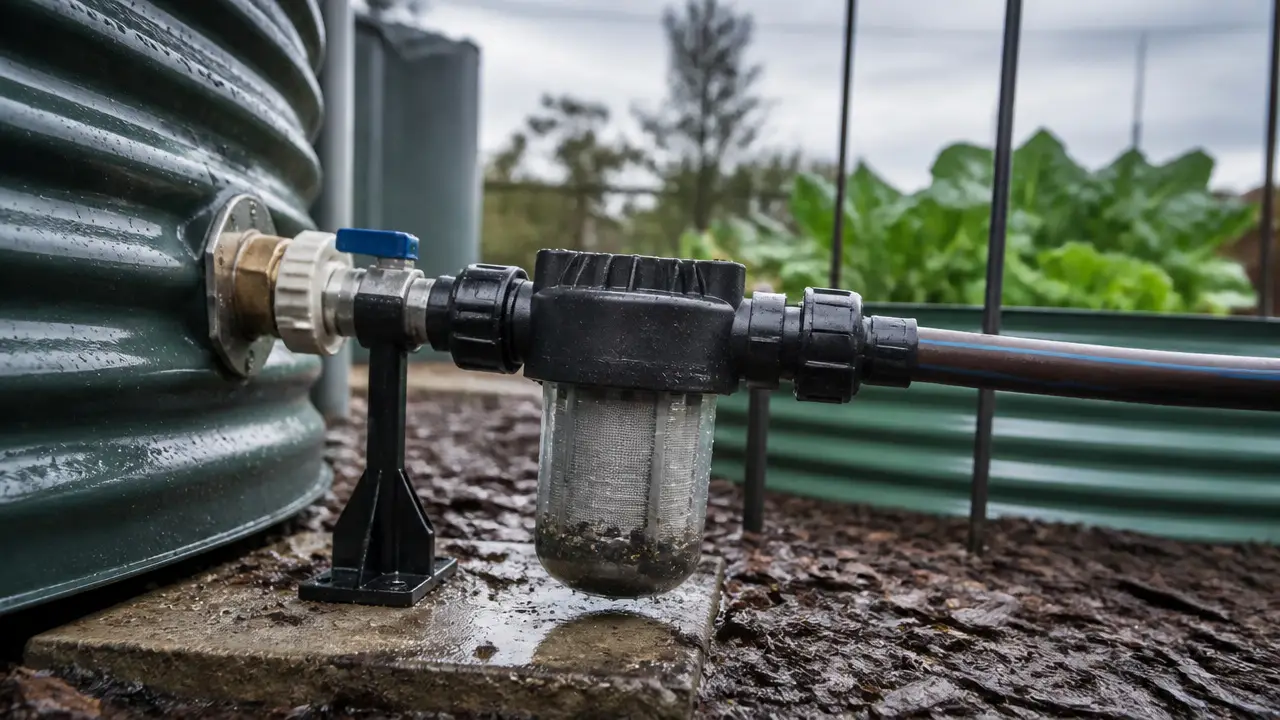
A filter installed before the drip lines helps protect the emitters. The filter must also be cleaned or replaced as needed.
Some systems specify a particular micron rating for filtration. A micron is a very small unit used to describe particle size. A lower micron rating generally means the filter catches smaller particles. Follow the requirements for the emitters you are using rather than choosing a filter size at random.
Flushing the lines periodically is also important. This helps remove sediment before it builds up inside the tubing.
2. Drip Irrigation Needs Regular Maintenance
Drip irrigation is easy to overlook because much of the system operates quietly near the ground.
That does not mean it is maintenance-free.
You may need to:
- Clean the filter.
- Flush drip lines.
- Check emitters for blockages.
- Look for leaks or loose fittings.
- Replace damaged tubing.
- Move emitters as plants grow.
- Check pressure regulators and valves.
- Drain or protect the system before freezing weather.
A broken sprinkler is usually easy to notice because water sprays into the air. A blocked drip emitter can be harder to see.
Plants may begin wilting before you realize that one section of the system has stopped receiving enough water.
It helps to inspect the soil near several emitters while the system is running. Do not assume that water is reaching every plant just because water is flowing into the main line.
Maintenance becomes especially important when using collected rainwater. Stored rainwater may carry sediment or biological material into small irrigation passages unless the system includes suitable screening and filtration.
3. Installation Can Be More Complicated Than Simple Hand Watering
A small garden can sometimes be watered with little more than a hose and watering wand.
Drip irrigation requires more planning.
A typical system may include:
- A water connection
- A valve
- A backflow device where required
- A pressure regulator
- A filter
- Main tubing
- Smaller distribution tubing
- Emitters or dripline
- Connectors and end caps
The exact parts depend on the water source and system design.
Tubing also needs to be routed so plants receive enough water without creating unnecessarily long runs or poorly supplied branches.
This can become more complicated in large gardens, raised-bed layouts, slopes, orchards, or systems supplied by rain barrels and storage tanks.
Gravity-Fed Systems Need Extra Planning
Connecting drip irrigation to a rain barrel or tank does not automatically mean the system will work properly.
Drip equipment needs adequate water pressure and flow.
Pressure is the force pushing water through the system.
Flow rate is the amount of water moving through the system over a given time, such as gallons per minute.
A raised rain barrel creates pressure because the water surface is above the irrigation line. But that pressure may still be much lower than the pressure provided by a household water supply.
Some emitters and pressure regulators will not operate properly at very low pressure.
For gravity-fed rainwater irrigation, choose components designed for the pressure available from the tank. A pump may be needed when the storage tank cannot provide enough pressure or flow for the planned irrigation layout.
4. Uneven Pressure Can Cause Uneven Watering
Drip irrigation works best when water reaches emitters at suitable and reasonably consistent pressure.
Problems can occur when lines are too long, tubing is undersized, too many emitters are connected to one zone, or the water source cannot supply enough flow.
Elevation also matters.
On sloping land, emitters at different heights can experience different pressures. This can affect how much water they release.
Pressure-compensating emitters can reduce some of these differences within their operating range, but they cannot fix every poor system design.
Gravity-fed systems can be especially sensitive to elevation. A small change in height may matter much more when the system starts with low pressure.
Before building a large system, check:
- Available water pressure
- Available flow
- Tubing size
- Emitter flow requirements
- Total number of emitters
- Length of each irrigation run
- Changes in elevation
Dividing a large garden into several watering zones can sometimes solve problems caused by trying to operate too many emitters at once.
5. Tubing and Emitters Can Be Damaged
Evaluate key facts about common drip irrigation mistakes to assess watering-zone arrangement under variable elevation.
Most drip systems place at least some tubing near the soil surface. That makes the system vulnerable to physical damage.
Tubing may be damaged by:
- Garden tools
- Lawn equipment
- Animals
- Foot traffic
- Sun exposure
- Falling branches
- Rodents
- Freezing conditions
Small distribution tubes can also be pulled loose accidentally while weeding or harvesting.
Leaks can waste water and reduce pressure farther down the line. A large leak may prevent some emitters from operating properly.
Tubing should be routed where it is unlikely to be cut or stepped on. Stakes, clips, mulch, or other suitable supports can help keep lines in place, depending on the installation.
Be cautious when burying tubing deeply just to protect it. Buried leaks and clogged emitters can be harder to find and repair. Use tubing according to the manufacturer's installation guidance.
In freezing climates, water left inside exposed components may freeze and expand. Seasonal systems may need to be drained or otherwise winterized according to their design.
Are the Disadvantages of Drip Irrigation Worth It?
For many gardens, the benefits still outweigh the disadvantages.
Drip irrigation can put water close to plant roots while limiting unnecessary watering between rows or beds. It also avoids much of the leaf wetting caused by overhead sprinklers.
However, drip irrigation works best for someone willing to inspect and maintain the system.
It may be a good choice when:
- Plants are arranged in predictable rows or beds.
- Water needs to be delivered close to individual plants.
- The water source can provide suitable pressure and flow.
- Filtration can be installed when needed.
- You are willing to check emitters and tubing regularly.
A simpler watering method may make more sense for a very small garden or an area that changes layout frequently.
Using Drip Irrigation With Rainwater
Drip irrigation can work well with stored rainwater, but compatibility matters.
Start by looking at the complete path the water follows:
Roof or collection surface → storage tank → outlet → filter → pump or gravity supply → irrigation tubing → emitters
Each part affects the next.
Debris that reaches the tank can eventually reach the irrigation filter. A small tank outlet can restrict flow. A low tank may not produce enough pressure. A pump that is too large can create more pressure than the drip system is designed to handle.
Do not assume a rain barrel will operate a standard household-pressure drip kit correctly.
For a gravity-fed setup, check the operating pressure required by the emitters, valves, filters, and other components. Low-pressure equipment is often necessary.
Also provide a way to clean the filter and flush the irrigation lines. Those two maintenance steps can prevent many problems caused by stored rainwater.
How to Reduce Drip Irrigation Problems
Most disadvantages become easier to manage when they are considered before installation.
Use filtration appropriate for your water source and emitters. Keep tubing runs within the limits of the system design. Avoid putting too many emitters on one line. Regulate pressure when the supply pressure is higher than the drip equipment requires.
After installation, watch the plants and the irrigation system together.
Check for wet soil near emitters, dry areas, leaking fittings, damaged tubing, and changes in flow. Flush lines and service filters before small problems turn into blocked sections.
For systems involving pumps, household plumbing connections, electrical equipment, or complex pressure controls, follow equipment instructions and applicable local plumbing and electrical requirements. Use qualified help when the work goes beyond a simple garden irrigation setup.
Frequently Asked Questions
What is the biggest disadvantage of drip irrigation?
Clogging is one of the biggest disadvantages. Drip emitters have small passages that can be blocked by sediment, algae, mineral buildup, or other debris. Proper filtration and periodic flushing help reduce the problem.
Does drip irrigation require a lot of maintenance?
It usually requires more inspection than many people expect. Filters need cleaning, lines may need flushing, and emitters should be checked for clogs or damage. Tubing and fittings can also develop leaks.
Can drip irrigation work from a rain barrel?
Yes, but only if the components can operate with the pressure and flow available from the barrel. Many standard drip components are designed for higher pressure than a simple gravity-fed barrel can provide.
Why are some plants getting less water from my drip system?
Possible causes include clogged emitters, low supply pressure, excessive line length, insufficient flow, elevation differences, leaks, or too many emitters operating on the same zone.
Do drip irrigation systems need filters?
Filtration is commonly needed because small emitter passages can clog easily. The appropriate filter depends on the water source and the requirements of the irrigation equipment.
Can drip irrigation freeze?
Water left inside tubing, valves, filters, or other components can freeze in cold climates. Systems exposed to freezing conditions may need seasonal draining or other winter protection suitable for their design.
Is drip irrigation better than sprinklers?
Neither method is best for every situation. Drip irrigation is useful when water needs to be placed close to plant roots. Sprinklers may be easier for lawns or areas requiring broad coverage. Water source, plant layout, pressure, maintenance, and climate should guide the choice.