As an affiliate, we may earn a commission from qualifying purchases. We get commissions for purchases made through links on this website from Amazon and other third parties.
For most home drip irrigation systems, morning is the better default, but evening watering can also work well. Drip irrigation puts water near the roots instead of spraying the leaves, so the exact time of day matters less than it does with sprinklers.
The bigger goal is to give plants the right amount of water before the root zone becomes too dry. Recent guidance from Penn State Extension notes that morning versus afternoon timing has little consistent effect on drip irrigation efficiency. Soil moisture, watering frequency, and the amount applied are usually more important.
Why Morning Is Usually the Best Choice
Early morning is a simple, reliable time to run drip irrigation.
Temperatures are usually cooler. Wind is often lighter. The soil has time to absorb water before the hottest part of the day.
Morning watering also gives you a chance to notice problems. You may see a broken line, clogged emitter, leak, or plant that is not getting enough water before the day becomes hot.
General irrigation guidance often favors early morning because cooler conditions reduce evaporation.
For a garden timer, a schedule shortly before or around sunrise is often a practical starting point.
That does not mean you need to run the system at one exact hour. The correct schedule depends more on your plants, soil, weather, and emitter output.
Is Evening Drip Irrigation Bad?
Usually not.
Evening watering is much less of a concern with drip irrigation than with sprinklers.
Sprinklers wet leaves. If those leaves stay wet for much of the night, some plant diseases can become more likely. Morning sprinkler irrigation gives leaves more time to dry.
A properly working drip system mainly wets the soil around the roots. The leaves stay relatively dry, so this particular drawback of evening watering is reduced. Penn State specifically notes that drip and soaker systems can be used later in the day because they avoid wetting the foliage.
Evening can therefore be a reasonable choice when:
- Morning watering does not fit your schedule.
- Your plants need water after a very hot day.
- Your irrigation timer is easier to operate at night.
- Your drip emitters keep foliage dry.
- Local watering restrictions favor evening hours.
Cool evening conditions can also reduce evaporation.
Morning vs. Evening Drip Irrigation
| Factor | Morning | Evening |
|---|---|---|
| Evaporation | Low | Low |
| Leaf-disease concern with true drip irrigation | Low | Low |
| Easy to inspect system while running | Usually easier | Often harder |
| Water available before daytime heat | Yes | Water is stored in soil overnight |
| Good general choice | Yes | Yes |
| Best default for most gardens | Usually | Good alternative |
Morning gets a slight advantage mainly because it prepares the root zone for the coming day and makes system problems easier to spot.
But the difference is small enough that you should not leave thirsty plants waiting just because it is not morning.
With Drip Irrigation, Soil Moisture Matters More Than the Clock
A timer tells you when the irrigation starts. It does not tell you whether your plants actually need water.
Check the soil instead.
The root zone is the area of soil containing most of the roots that take up water. Your goal is to wet this area without constantly soaking the soil or sending large amounts of water below the roots.
Penn State's current drip-irrigation guidance recommends basing irrigation primarily on root-zone moisture, plant needs, weather, and the amount of water being applied.
For example, two gardens using the same drip line may need very different schedules.
Sandy soil drains quickly and may need shorter, more frequent watering.
Clay soil holds water longer and may need longer gaps between irrigation.
A newly planted vegetable bed may also need a different schedule from established shrubs with deeper roots.
How Long Should You Run Drip Irrigation?
There is no useful universal number of minutes.
A 20-minute run could be plenty for one system and far too little for another.
You need to know the flow rate of the emitters. Flow rate means how much water an emitter releases over a set amount of time. It is commonly listed in gallons per hour or liters per hour.
Suppose an emitter delivers 1 gallon per hour. Running it for 30 minutes delivers about half a gallon, assuming it is operating at its intended pressure and is not clogged.
But that still does not tell you whether half a gallon is enough. You also need to consider:
- Plant type and size
- Number of emitters per plant
- Soil type
- Root depth
- Temperature
- Sun exposure
- Recent rainfall
- Mulch
- Plant growth stage
Check the soil after watering. You want the water to reach the active roots rather than only dampening the top inch of soil.
Avoid Frequent, Very Shallow Watering
Running drip irrigation for a few minutes every day may look efficient, but it can leave most of the root zone dry.
For many established plants, deeper watering with enough time between sessions for soil conditions to change is more useful than constantly wetting the surface. Oregon State Extension recommends watering deeply enough to reach the root area rather than relying on frequent shallow irrigation.
There are exceptions. Seedlings, containers, very sandy soils, and shallow-rooted crops may need more frequent irrigation.
Use the soil as your guide rather than following a fixed rule.
What About Drip Irrigation During Very Hot Weather?
During hot weather, plants may use water faster than usual.
Review home-garden watering automation options to compare irrigation requirements against expected collection volume.
Morning watering works especially well because the root zone contains moisture before afternoon temperatures peak.
However, do not wait until the next morning if the soil is already too dry and plants clearly need water. Drip irrigation can be run later in the day because little water normally touches the foliage.
You may need to change either:
- How often the system runs
- How long each watering lasts
Do not automatically increase both. Check how deeply the water is moving first.
A thick layer of suitable mulch can also slow soil evaporation and help keep soil moisture more stable.
Should You Run Drip Irrigation in the Middle of the Day?
You can, but it is rarely the first choice.
Hot conditions can increase evaporation from exposed soil. Midday may also be when plant water demand is highest.
Still, drip irrigation loses much less water to the air than overhead sprinklers because the water is released close to the soil.
If plants need water during a hot afternoon, watering them is usually better than waiting many hours just to follow a morning schedule.
For an automatic system, however, morning or evening normally makes more sense.
Using Rainwater With Drip Irrigation
Drip irrigation can work well with stored rainwater, but the water source changes some system-planning details.
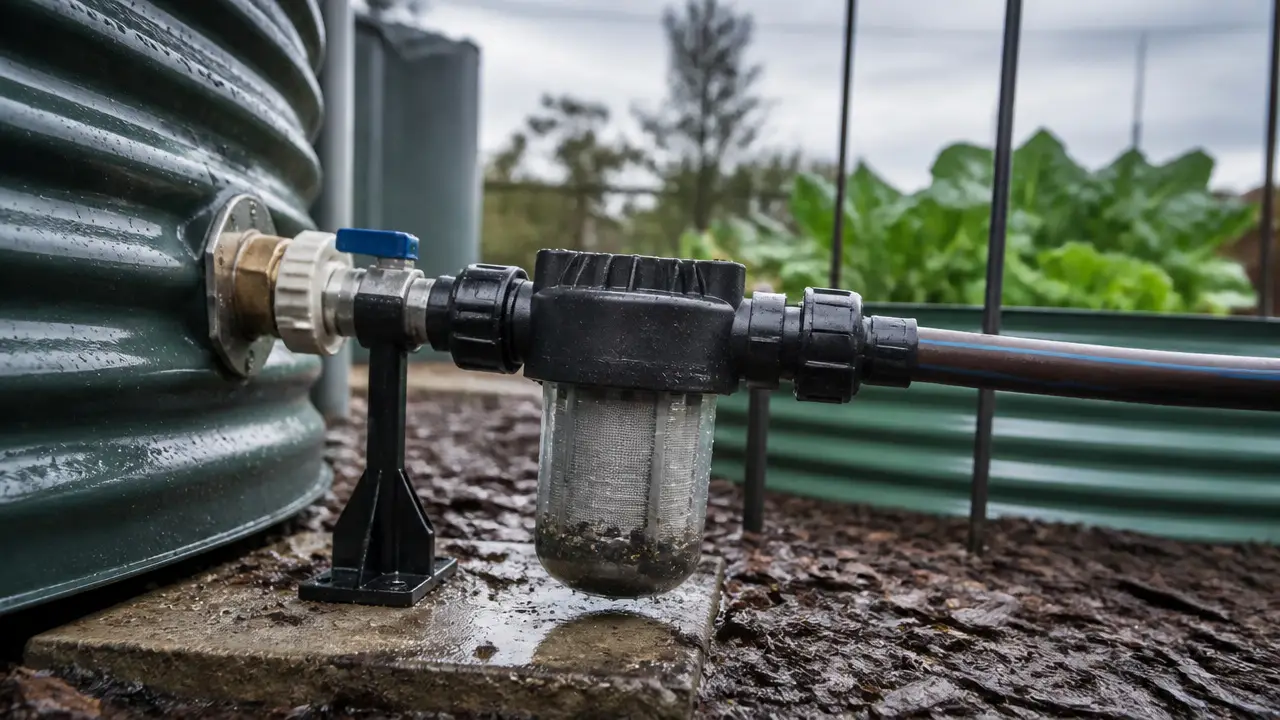
Rain barrels and tanks can contain small particles that eventually clog narrow drip passages. A suitable filter upstream of the irrigation tubing can help protect emitters.
Check the filter regularly. A dirty filter can reduce flow throughout the system.
You must also consider pressure.
A raised rain barrel produces pressure because the water surface is higher than the outlet. This difference in height is called head height. More head height generally means more available pressure.
Some drip equipment is designed for normal household water pressure and may perform poorly from a low-pressure gravity-fed barrel. Make sure the emitters, filter, valves, timer, and pressure equipment can all operate together.
Morning versus evening will not fix a system that has too little pressure or flow.
If You Use Collected Roof Water
Timing is only one part of safe irrigation.
Roof runoff can pick up dirt, bird droppings, animal waste, roofing debris, and other contaminants. Collected rainwater should not be assumed to be clean or drinkable.
For edible gardens, drip irrigation has an advantage because it can apply water near the soil instead of spraying it directly over leaves, fruits, and vegetables. Extension guidance for agricultural water also favors irrigation methods that reduce water contact with edible portions of crops when water quality is a concern.
That does not make untreated roof runoff automatically safe for every garden use. Follow current local health and agricultural guidance, especially where harvested rainwater may contact food crops.
A Practical Drip-Irrigation Schedule
For a typical home garden, start with this approach:
- Choose morning as your normal watering period. Around dawn is a convenient target.
- Check soil moisture before watering. Do not irrigate simply because the timer says to if the root zone is still adequately moist.
- Run the system long enough to wet the root zone. Check the soil afterward instead of guessing from surface appearance.
- Watch each emitter occasionally. Look for clogs, leaks, damaged tubing, or uneven flow.
- Adjust for weather. Reduce irrigation after useful rainfall and increase it when plants genuinely need more water during hot, dry periods.
- Use evening when needed. With true drip irrigation that keeps foliage dry, evening watering is normally a reasonable alternative.
The best schedule is not the one with the perfect clock time. It is the one that keeps adequate moisture where the roots can use it without wasting water or keeping the soil constantly saturated.
Frequently Asked Questions
Is 6 a.m. a good time to run drip irrigation?
Yes. Early morning is usually a good time because temperatures are cooler and the root zone receives water before daytime heat increases plant demand.
Is it okay to run drip irrigation at night?
Yes, in many cases. Proper drip irrigation mainly wets the soil instead of the foliage, so nighttime watering does not have the same leaf-wetness concern as overhead sprinklers.
Is morning better than evening for vegetable gardens?
Morning is a good default, but evening drip irrigation can also work. Correct soil moisture, emitter flow, and watering duration matter more than choosing between morning and evening.
Should drip irrigation run every day?
Not necessarily. Daily watering may be appropriate for some seedlings, containers, shallow-rooted plants, or very fast-draining soils. Other plants may do better with longer gaps between watering. Check moisture in the root zone rather than assuming a daily schedule is necessary.
Can I run drip irrigation during the afternoon?
Yes. Drip irrigation can be used during the afternoon when plants need water. For routine scheduling, morning or evening usually offers cooler conditions and lower evaporation.
How do I know whether I am running my drip system long enough?
Check how deeply the soil is moist after irrigation. The water should reach the plant's active root area. Also consider the flow rate and number of emitters serving each plant.
Does a rain barrel change when I should run drip irrigation?
Usually not. Morning remains a good default. More important issues with a rain-barrel system are available pressure, emitter compatibility, filtration, stored water volume, and keeping the system from clogging.