As an affiliate, we may earn a commission from qualifying purchases. We get commissions for purchases made through links on this website from Amazon and other third parties.
Tomatoes do best with deep, steady watering rather than frequent light watering. A useful starting point is to run drip irrigation 30 to 90 minutes per session, two or three times per week, but the correct time depends on your emitter flow rate, soil, weather, plant size, and rainfall.
The better way to set a timer is to work from how much water your drip system actually delivers. A 1-gallon-per-hour emitter supplies twice as much water in one hour as a 0.5-gallon-per-hour emitter. Tomatoes generally need about 1 to 2 inches of water per week, including rainfall.
How Long Should Drip Irrigation Run for Tomatoes?
There is no single runtime that works for every tomato garden.
For established tomato plants, this table gives a simple starting point when using one emitter per plant:
| Emitter flow | 30 minutes | 1 hour | 2 hours |
|---|---|---|---|
| 0.5 gallon per hour | 0.25 gal | 0.5 gal | 1 gal |
| 1 gallon per hour | 0.5 gal | 1 gal | 2 gal |
| 2 gallons per hour | 1 gal | 2 gal | 4 gal |
Drip emitters commonly come in flow rates such as 0.5, 1, 2, and 4 gallons per hour. Flow rate means how much water an emitter releases during a set amount of time.
Instead of assuming that tomatoes always need an hour of irrigation, check the emitter label and calculate the amount delivered.
Use this simple formula:
Runtime in hours = gallons you want to apply ÷ total emitter flow in gallons per hour
For example, if you want to deliver 1 gallon:
- One 0.5-gph emitter needs about 2 hours.
- One 1-gph emitter needs about 1 hour.
- One 2-gph emitter needs about 30 minutes.
- Two 1-gph emitters together need about 30 minutes.
Two emitters around a large tomato plant can also spread moisture through a wider part of the root zone instead of keeping one small spot wet.
How Much Water Do Tomato Plants Need?
A common guideline for tomatoes is about 1 to 2 inches of water per week, depending on soil, rainfall, temperature, and plant growth. Consistent soil moisture is especially important once plants are setting and filling fruit.
One inch of water over one square foot is about 0.62 gallon. This conversion is useful when sizing irrigation for a garden bed.
For example, suppose one tomato plant occupies about 4 square feet of bed space.
At 1 inch of water per week:
4 sq. ft. × 1 inch × 0.623 = about 2.5 gallons
At 1.5 inches:
4 × 1.5 × 0.623 = about 3.7 gallons
This is only a planning example. A plant's actual need can be higher or lower because roots do not stay within an exact square, rain may supply part of the water, and soil holds water differently.
The goal is not to hit an exact gallon number every week. The goal is to keep the main root zone evenly moist without leaving it constantly saturated.
A Practical Drip Schedule for Tomatoes
For established tomatoes in garden soil, splitting weekly irrigation into two or three deeper sessions usually works better than giving a small amount every day. University extension guidance also recommends thorough irrigation rather than repeated shallow watering.
A starting schedule might look like this:
With 1-gph emitters
Run the system for roughly 45 to 90 minutes per watering, two or three times per week, then check the soil.
With 2-gph emitters
You may only need 20 to 45 minutes per watering to deliver a similar amount.
With 0.5-gph emitters
A session could last 1 to 2 hours or longer because water is being released more slowly.
These are starting points, not fixed rules. Your system may need very different runtimes.
The flow coming from an emitter matters more than the number shown on the irrigation timer.
Adjust the Runtime for Your Soil
Soil type changes how quickly water moves and how long it remains available to tomato roots.
Sandy soil
Sandy soil drains quickly. Water can move below the root zone before plants have time to use it.
You may need:
- Shorter watering sessions
- More frequent irrigation
- Regular soil checks during hot weather
For example, three moderate sessions may work better than one very long weekly session.
Loam
Loam usually holds water while still draining reasonably well.
Two or three deeper irrigation sessions each week are often a practical starting point.
Clay soil
Clay absorbs and drains water slowly.
Long irrigation runs can sometimes cause water to pool or spread along the surface before soaking deeply.
If this happens, split a long watering period into shorter cycles. Allow time between cycles for water to soak downward.
Do not keep clay soil constantly wet. Tomato roots need both moisture and air.
Check the Soil Instead of Relying Only on the Timer
A timer cannot tell whether yesterday's rain soaked the garden or whether a clogged emitter stopped watering one plant.
Check the soil periodically.
A few hours after irrigation, dig carefully beside the plant without cutting major roots. The soil should be moist well below the surface, not just wet in the top inch.
If only the surface is moist, increase the amount applied or lengthen the watering session.
If the soil remains soggy for a long time, shorten the runtime or water less often.
Tomatoes benefit from water reaching deeper into the soil. Utah State University Extension recommends deep, infrequent irrigation rather than shallow watering.
Change the Schedule as Tomato Plants Grow
A small transplant does not use water at the same rate as a large tomato plant covered with leaves and fruit.
Newly transplanted tomatoes
New plants have small root systems.
Keep the soil around the root ball consistently moist while the plant becomes established. Avoid applying a large amount far beyond the area that young roots can reach.
Growing plants
As roots and leaves expand, increase the wetted area and the amount applied.
If you use adjustable emitters or individual emitters, you may eventually need a second emitter on opposite sides of a large plant.
Fruiting plants
Reviewing practical considerations for you leave drip irrigation on all the time helps compare emitter flow under available pressure and pump capacity.
Large plants carrying tomatoes generally use more water than small plants. Warm weather, wind, low humidity, and heavy fruit production can increase water demand.
During very hot or windy periods, vegetables can require more water than their normal weekly amount.
Do not respond to every hot afternoon by soaking the garden, though. Tomato leaves may droop temporarily during extreme midday heat even when the soil still contains adequate moisture.
Check the soil before adding water.
Reduce Irrigation After Rain
Rainfall should normally count toward your weekly water goal when the soil surface is open or covered with water-permeable mulch.
If your garden receives a useful soaking rain, reduce or skip the next drip cycle.
Penn State Extension recommends subtracting rainfall from irrigation needs when rainfall can enter the bed.
A rain gauge makes this much easier.
Remember that a brief shower may wet leaves and the top layer of soil without putting much water into the tomato root zone.
Mulch Can Change How Often You Need to Water
A layer of organic mulch helps slow evaporation from the soil.
Materials such as straw or other suitable garden mulch can help the root zone stay moist longer between irrigation cycles.
Place the drip line under the mulch when practical. This sends water directly toward the soil and reduces surface evaporation.
Mulch does not eliminate the need to check moisture. It may simply let you run irrigation less often.
Keep Tomato Moisture Consistent
Tomatoes can have problems when soil moisture swings repeatedly from very dry to very wet.
One concern is blossom-end rot, which appears as a dark, leathery area on the bottom of the fruit. Water stress and large soil-moisture fluctuations can interfere with calcium movement into developing fruit.
Drip irrigation helps because it can apply water slowly and directly to the root zone.
The goal is consistent moisture, not constantly wet soil.
Running drip irrigation every day simply because you have an automatic timer can create problems in poorly drained soil.
Make Sure Every Emitter Is Actually Working
Drip irrigation uses small openings, so sediment can restrict flow.
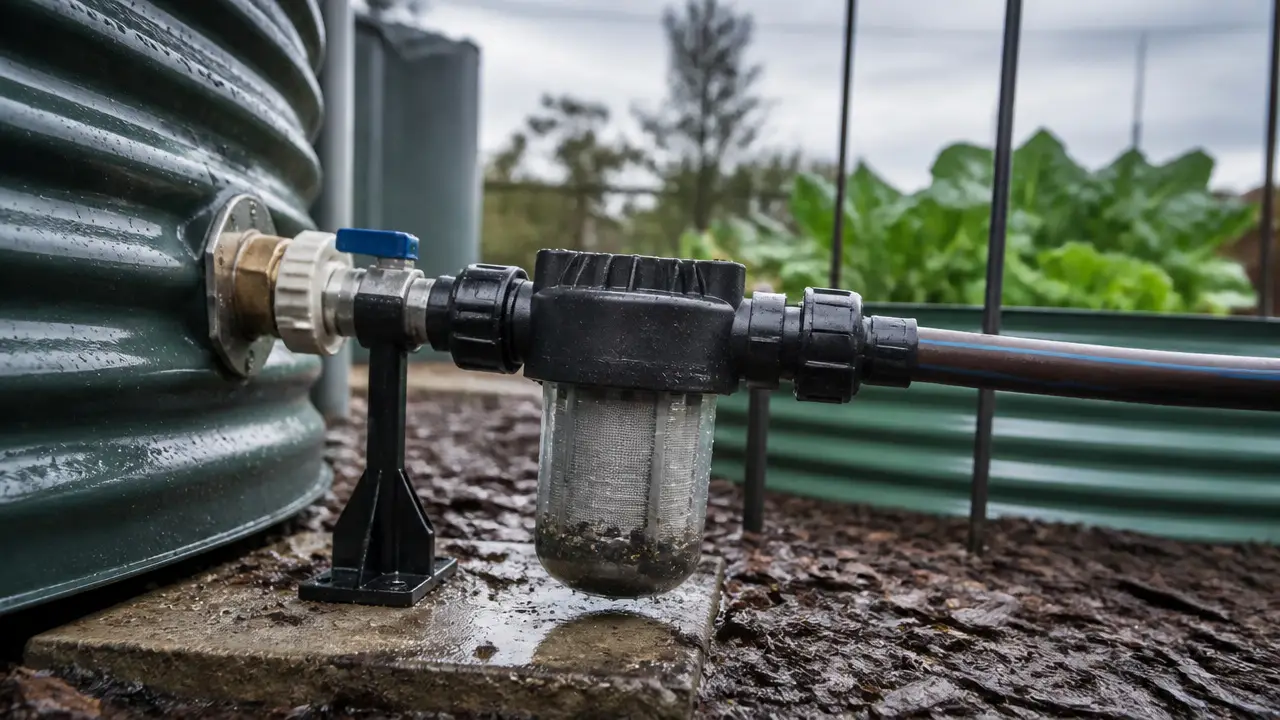
This matters even more when the irrigation supply comes from a rain barrel or rainwater tank. Fine debris that gets through the collection system can eventually reach emitters.
A basic drip system commonly uses a filter to catch particles before they enter small irrigation passages.
Periodically:
- Watch each emitter while the system is running.
- Look for unusually dry plants.
- Check for clogged emitters.
- Check fittings and tubing for leaks.
- Flush drip lines as appropriate for your system.
- Clean or service the irrigation filter when needed.
One tomato plant wilting while nearby plants look healthy can indicate a local flow problem rather than a need to increase the runtime for the whole zone.
Using Rainwater for Tomato Drip Irrigation
Stored rainwater can work well for garden irrigation when the collection and delivery system is set up for that use.
The main challenge with drip irrigation is often not water quality for the plant but keeping debris out of small emitters.
A rainwater irrigation setup may include:
- Gutter screening or another debris-control stage
- A covered storage tank or rain barrel
- A pump if gravity does not provide enough flow and pressure
- A filter suitable for the irrigation equipment
- A pressure regulator if required by the drip system
- Distribution tubing
- Emitters or dripline
Check the pressure and flow needs of the specific drip components. A rain barrel sitting only a few feet above the garden may not provide enough pressure for every type of pressure-regulated emitter.
Also remember that stored rainwater supply can change quickly. A long irrigation cycle may empty a small barrel before every plant receives the intended amount.
Measure Your Actual Drip Output
If you are unsure what an emitter is delivering, measure it.
Place a container under an emitter for a known amount of time. Measure the water collected, then calculate the hourly rate.
For example, if an emitter supplies 1 quart in 15 minutes:
- 1 quart × 4 = 4 quarts per hour
- 4 quarts = 1 gallon
The actual flow is therefore about 1 gallon per hour.
This test can also identify pressure problems or partly clogged emitters.
Test emitters near both the beginning and end of a long drip line. Large differences may indicate that the system needs adjustment.
The Best Runtime Is the One That Wets the Root Zone Properly
For most tomato gardens, start with a moderate, deep watering two or three times per week rather than watering for a few minutes every day.
Then adjust the timer using three things:
- Emitter flow rate
- Soil moisture below the surface
- Weather and rainfall
A 30-minute irrigation cycle could be plenty with a high-flow emitter and too little with a low-flow emitter.
Once you know your emitter output, calculating the runtime becomes simple:
Runtime = desired water volume ÷ emitter flow
Use that number as your starting point. Then let the soil tell you whether the schedule needs adjustment.
Frequently Asked Questions
Is 30 minutes of drip irrigation enough for tomatoes?
Sometimes. A 2-gph emitter delivers about 1 gallon in 30 minutes, while a 0.5-gph emitter delivers only about a quarter gallon. Check the emitter flow rate and soil moisture instead of relying on 30 minutes as a universal rule.
Should I run tomato drip irrigation every day?
Usually not for established tomatoes growing in normal garden soil. Deeper watering two or three times per week often encourages a better wetted root zone. Sandy soil, containers, seedlings, and unusually hot weather may require more frequent watering.
How many gallons per hour should a tomato drip emitter be?
There is no required flow rate. Common drip emitters include 0.5-, 1-, and 2-gph models. A lower-flow emitter simply needs to run longer to deliver the same amount of water.
Should drip irrigation run in the morning or evening?
Morning is a practical time because plants enter the warmer part of the day with available soil moisture. Drip irrigation also keeps most water off the foliage, so timing is less critical than with overhead sprinklers.
How can I tell if tomatoes are getting too much water?
Check the soil several inches below the surface. Soil that remains saturated or soggy for long periods can mean irrigation is too frequent, too long, or the site drains poorly. Do not diagnose irrigation problems from leaf appearance alone.
How deep should drip irrigation water tomatoes?
The goal is to wet a useful part of the tomato root zone rather than only the soil surface. Check beneath the surface after irrigation. If only the top inch or two becomes wet, increase the amount applied or adjust emitter placement.
Does rain count toward tomato irrigation needs?
Yes, when rainfall actually enters the garden bed. Reduce irrigation after meaningful rain instead of automatically running the normal weekly schedule. A rain gauge can help you track how much water the garden received.