As an affiliate, we may earn a commission from qualifying purchases. We get commissions for purchases made through links on this website from Amazon and other third parties.
Keeping a greenhouse watered while you are away is usually easiest with an automatic drip system fed by a tap, rainwater tank, or other reliable water source. The goal is to deliver small amounts of water directly to the root zone on a schedule, with enough stored water to last for the full trip.
Do not rely on a single untested timer or a few extra-deep waterings before you leave. Set the system up early, run it for several days, and check that every plant is getting the right amount.
Choose a Watering Method That Can Run Without You
The best setup depends on how long you will be gone, how many plants you have, and whether the greenhouse has pressurized water.
For most greenhouses, the main choices are:
- Drip irrigation connected to a tap
- Drip irrigation supplied by a rainwater tank or cistern
- Gravity-fed drip lines from an elevated container
- Self-watering pots or capillary mats
- A temporary helper for plants that need special care
Drip irrigation is usually the most practical option for a greenhouse with many pots or beds. It puts water close to the roots and wastes less water than spraying the entire greenhouse.
Use Drip Irrigation for Longer Trips
A basic automatic drip system includes a water source, timer or controller, tubing, and drip emitters.
Each emitter releases water slowly near a plant.
This matters in a greenhouse because plants can dry quickly during hot weather. A controlled drip system can water more often without soaking foliage or flooding the floor.
Connect the system to a pressurized tap
If your greenhouse has access to a household water supply, a hose timer can open the water automatically at scheduled times.
The system may also need:
- A filter to keep small emitters from clogging
- A pressure regulator if the drip equipment requires lower pressure
- Main tubing sized for the length and flow of the system
- Smaller branch tubing leading to individual plants
Check that every fitting matches. Garden hose threads, irrigation tubing, pipe threads, and tank outlets are not automatically compatible.
Use stored rainwater carefully
A rainwater tank can also supply greenhouse irrigation.
For plants that do not need potable water, stored rainwater can be a useful irrigation source when it has been collected and stored appropriately.
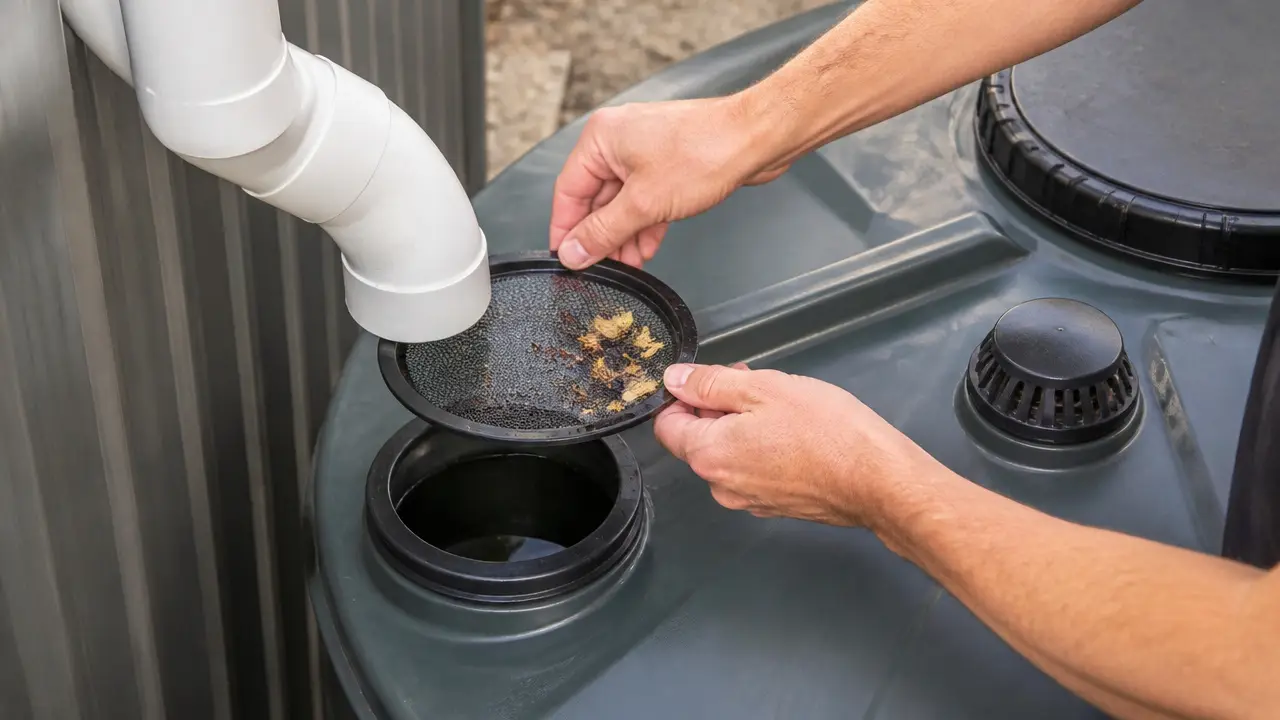
Keep roof debris and sediment out of the irrigation system as much as practical. A leaf screen, suitable prefiltration, and an irrigation filter can reduce emitter clogging.
Remember that roof runoff is not automatically clean water. Avoid spraying questionable stored water over edible plant parts when a drip system can deliver it directly to the soil instead.
Check Whether Your Rainwater Tank Holds Enough Water
Before leaving, estimate how much water the greenhouse will use.
A simple planning formula is:
Daily water use × number of days away = minimum expected water requirement
For example, if your greenhouse currently uses about 15 gallons per day and you will be gone for seven days:
15 gallons × 7 days = 105 gallons
That is only a starting point.
Actual water use can rise because of:
- Hotter weather
- Larger plants
- Fruiting crops
- Small containers
- Strong greenhouse ventilation
- Dry growing media
Do not assume rain will refill the tank while you are away. A greenhouse roof or nearby collection roof only produces useful runoff when enough rain actually falls.
Leave a reasonable reserve rather than planning to drain the tank completely.
Be Careful With Gravity-Fed Rainwater Systems
A raised barrel or tank can sometimes operate a simple drip system without a pump, but gravity provides much less pressure than a household tap.
Water pressure increases as the water surface gets higher above the outlets. This vertical difference is often called head height.
A barrel only a short distance above the greenhouse floor may not provide enough pressure for equipment designed for normal household water pressure.
Long tubing, small fittings, filters, and many emitters can reduce flow even more.
If you use gravity:
- Choose irrigation parts designed to work at low pressure.
- Keep unnecessary restrictions to a minimum.
- Test the emitters while the tank is full.
- Test them again when the tank is partly empty.
Flow can change as the water level drops.
Do not place a heavy water tank on a weak bench or improvised platform. Water is heavy, and an elevated tank needs stable structural support.
Add a Pump When Gravity Is Not Enough
A pump may be useful when your storage tank sits at ground level or when the irrigation system needs more pressure.
A suitable setup may include:
- Pump
- Intake screen or filter
- Irrigation filter
- Pressure control
- Timer or irrigation controller
- Dry-run protection
Dry-run protection helps stop the pump if the tank runs out of water. Running some pumps without water can damage them.
Pump selection depends on both flow and pressure.
Flow rate is how much water moves through the system over a certain period.
You also need to consider the height the pump must lift the water and the resistance created by tubing, fittings, filters, and irrigation equipment.
Electrical equipment used around a greenhouse should be installed and protected appropriately for wet locations. Bring in a qualified electrician when the installation goes beyond normal plug-in equipment.
Water Plants According to Their Needs
Giving every greenhouse plant the same amount of water can cause problems.
A large tomato plant in a small pot may use much more water than a young herb growing nearby.
You can divide the greenhouse into watering zones based on plant needs.
For example:
Heavy-water users
These may need more frequent irrigation or higher-flow emitters.
Examples can include large fruiting vegetables growing in containers.
Moderate-water users
These can often share a normal drip schedule when their container sizes and growing media are similar.
Low-water users
Plants that prefer drier conditions may need their own line, smaller emitters, or manual watering before and after the trip.
Do not try to solve every difference by running the entire system longer. That can overwater some plants while trying to keep others alive.
Group Pots Before You Leave
Moving similar plants together makes automatic watering much easier.
Group plants according to:
- Container size
- Sun exposure
- Water needs
- Type of growing medium
You can also move very thirsty plants away from the hottest part of the greenhouse if doing so will not harm their light requirements.
Avoid making major growing-condition changes on the day you leave. Plants may react differently than expected.
Reduce Water Loss Without Keeping the Greenhouse Too Damp
The irrigation system has less work to do when water loss is controlled.
Useful steps can include:
- Adding suitable mulch to large pots or beds
- Removing standing water that serves no useful purpose
- Providing normal greenhouse ventilation
- Using established shading methods during very hot periods
Do not seal the greenhouse tightly just to conserve water. Excess heat and humidity can create different problems.
Planning around automatic plant watering while away helps understand upkeep requirements that affect future reliability.
If you use automatic vents, fans, or shade systems, test them along with the irrigation system before leaving.
Consider Self-Watering Containers for Individual Plants
Self-watering containers can work well when only a few plants need unattended care.
These containers usually hold a water reservoir below the growing medium. Moisture moves upward toward the root zone as the plant uses it.
They can reduce watering frequency, but reservoir size still limits how long the system can operate.
Test each container under normal greenhouse conditions before relying on it during a trip.
Capillary Mats Can Work for Small Pots
A capillary mat is an absorbent surface that stays wet and allows pots to draw moisture upward through drainage holes.
This can work for seedlings and smaller containers when:
- The growing medium can wick water effectively
- Pots make good contact with the mat
- A dependable water reservoir keeps the mat wet
Capillary watering is less suitable for every crop and container type. Test it before leaving.
Avoid Depending on Improvised Bottle Watering
Upside-down bottles and similar homemade watering devices can sometimes help a single pot for a short period.
They are less dependable for unattended greenhouse watering because flow may change with:
- Soil texture
- Hole size
- Air entering the bottle
- Roots
- Temperature
- Position of the container
They are better treated as a small backup method than as the main watering system for a greenhouse full of plants.
Test the Whole System Before Your Trip
Automatic watering should be treated as a system, not just a timer.
Set it up several days before leaving.
Run the system during normal greenhouse conditions and check every plant.
Look for:
- Dry pots
- Overwatered pots
- Clogged emitters
- Leaking connections
- Kinked tubing
- Loose fittings
- Low tank levels
- Poor pressure at the end of long lines
- Timer problems
- Pump cycling problems
Measure how much water the system actually uses during a normal day. That number is much more useful for planning tank capacity than guessing.
Clean Filters and Emitters
Small drip passages can clog easily.
Before leaving:
- Clean the water-source screen.
- Clean or replace irrigation filter elements as appropriate.
- Flush irrigation lines if the system allows it.
- Check emitters for even flow.
- Remove visible sediment from accessible components.
If you use rainwater, sediment control is especially important. Fine debris that passes through the collection system can eventually collect in irrigation filters and emitters.
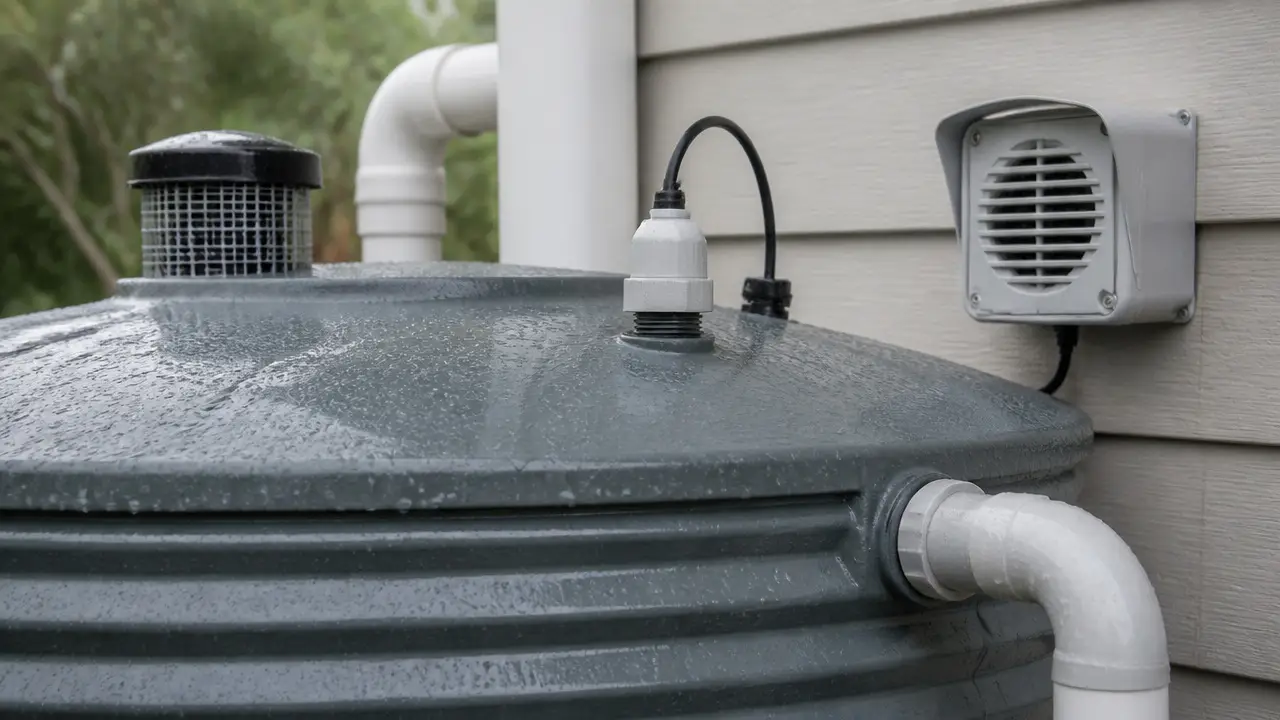
Check the Rainwater Tank Before Leaving
If stored rainwater supplies the greenhouse, inspect the entire water path.
Check:
- Tank water level
- Tank lid
- Inlet screening
- Overflow
- Outlet
- Filter
- Pump, if used
- Irrigation tubing
- Drip emitters
Make sure the overflow can carry excess water away safely if rain occurs while you are gone.
Do not block an overflow simply because you want to preserve storage capacity. The tank needs a safe route for excess water.
Plan for Hot Weather
A greenhouse can become much hotter than the outdoor air.
Before leaving during warm weather, consider what happens if temperatures rise above normal.
A watering schedule that works during mild conditions may not supply enough water during a hot spell.
Plants in small pots are usually at greater risk because they have less stored moisture around their roots.
Where practical, combine automatic watering with normal greenhouse temperature controls such as ventilation and shading.
Do Not Overwater Before You Leave
Giving plants a very heavy soaking before a trip does not replace a reliable watering plan.
Excess water can leave roots poorly aerated and can create drainage problems.
Water normally, then let the automatic system maintain suitable moisture.
The goal is consistency rather than flooding the greenhouse before departure.
Have Someone Check the Greenhouse When Possible
Even a well-tested automatic system can develop a problem.
For longer trips, having someone inspect the greenhouse can provide an extra layer of protection.
They may only need to check that:
- The tank still contains water
- The pump is operating
- The timer is running
- Plants are not wilting
- No tubing has come loose
- The greenhouse is not unusually hot
- Water is not pooling where it should not
Leave simple instructions rather than asking someone unfamiliar with the system to adjust pumps, pressure settings, electrical equipment, or complicated valves.
A Simple Setup for Many Home Greenhouses
A practical unattended watering arrangement often looks like this:
Water source → filter → timer or controller → pressure control if needed → main irrigation tubing → branch lines → drip emitters
For a rainwater system that needs pumping, it may instead look like:
Collection roof → debris control → storage tank → pump → irrigation filter → controller → drip system
The exact equipment depends on the available water pressure, tank location, greenhouse size, and plant needs.
The most important step is testing the complete setup under realistic conditions before you leave.
Frequently Asked Questions
How long can greenhouse plants go without watering?
There is no single safe number of days. It depends on plant size, container size, temperature, humidity, growing medium, and plant type. Some small greenhouse pots can dry very quickly during hot conditions. Plan around actual water use rather than assuming plants can last a certain number of days.
What is the best way to water a greenhouse while on vacation?
For many greenhouses, an automatic drip irrigation system is the most dependable option. It can deliver water directly to each plant from a tap or properly planned storage tank.
Can I use a rain barrel to water my greenhouse automatically?
Yes, a rain barrel can supply greenhouse irrigation if it holds enough water and the irrigation equipment can operate with the available pressure. Gravity-fed systems may need low-pressure emitters. Larger systems may require a pump.
How big should my water tank be while I am away?
Measure or estimate the greenhouse's daily water use and multiply it by the number of days you will be gone. Then allow extra capacity for hotter weather and other real-world variation. Do not depend on future rainfall to refill the tank unless another reliable water source is available.
Will a hose timer work with a rain barrel?
Many ordinary hose timers are designed for pressurized water and may not work correctly at the low pressure produced by a rain barrel. Check the operating-pressure requirements of the timer and the irrigation equipment before building the system around it.
Should greenhouse irrigation run every day?
Not necessarily. Watering frequency depends on the plants, growing medium, pot size, greenhouse temperature, and emitter output. Some plants may need frequent short watering periods, while others need less frequent watering. Test the schedule before leaving.
What happens if my rainwater tank runs dry?
Gravity-fed irrigation will stop. A pumped system may also stop, and a pump without suitable dry-run protection could potentially be damaged. Size the available storage conservatively and use appropriate pump protection where needed.
Should I ask someone to check the greenhouse?
For longer trips, it is a useful backup even when the greenhouse has automatic watering. A quick inspection can catch an empty tank, loose hose, clogged emitter, failed timer, pump problem, or unexpected heat before plants are badly affected.