As an affiliate, we may earn a commission from qualifying purchases. We get commissions for purchases made through links on this website from Amazon and other third parties.
A rain barrel should not be sealed or expected to hold every storm. Once it fills, the extra water needs a safe path away from the barrel and your home.
The most reliable way to keep a rain barrel from causing an overflow problem is to install a properly sized overflow outlet near the top of the barrel. Send that overflow water through a hose or pipe to a safe drainage area. You can also use a downspout diverter that automatically sends excess water back into the downspout when the barrel is full.
Why Rain Barrels Overflow
A rain barrel has limited storage. Even a large barrel can fill quickly when a roof sends a lot of runoff into it.
The amount of water entering the barrel depends on:
- The roof area feeding the downspout
- How much rain falls
- How full the barrel was before the storm
- How quickly you use or drain stored water
- How much water the inlet and overflow can handle
Once the water reaches the top, it has to go somewhere.
Without a controlled overflow, water may spill over the rim, run down the side of the barrel, soften the soil under its base, or collect near the foundation.
The goal is therefore not to prevent excess water from existing. It is to control where that water goes.
Install an Overflow Outlet Near the Top
A dedicated overflow outlet is one of the simplest ways to manage a full rain barrel.
The outlet should sit near the top of the barrel but below the lid or other openings where uncontrolled spilling could occur.
A typical setup includes:
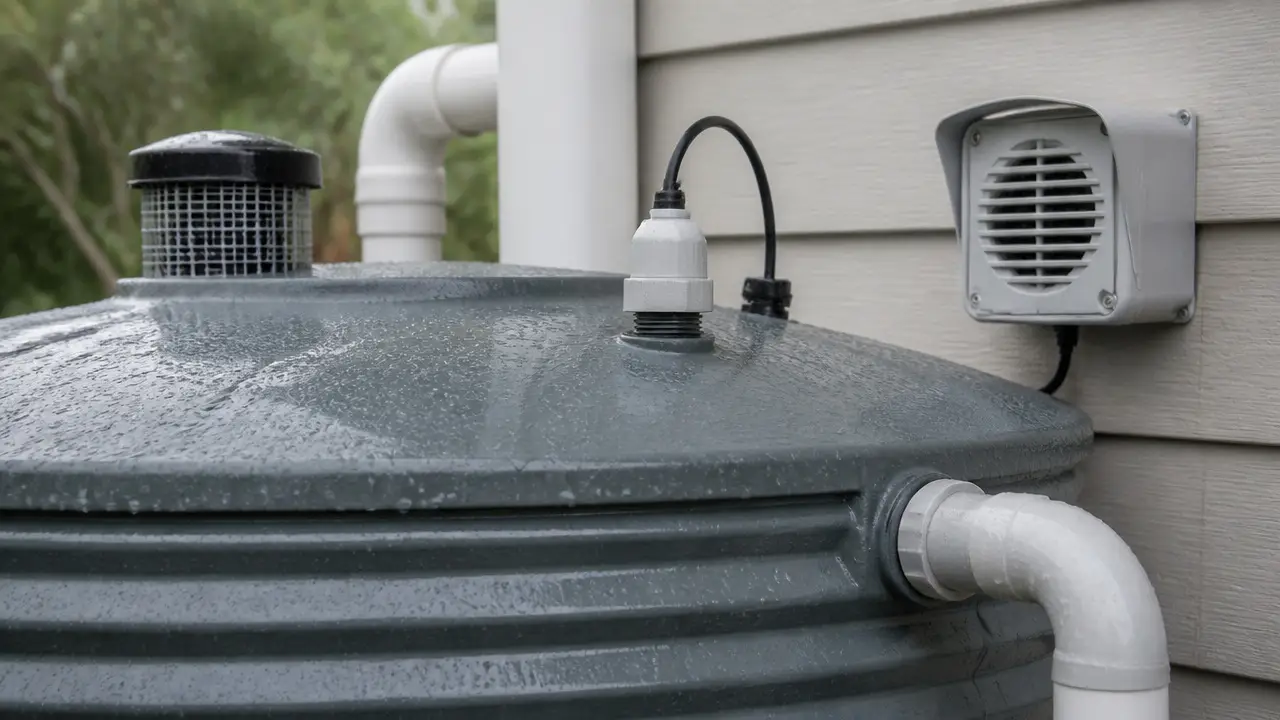
- An opening through the barrel wall
- A watertight fitting
- An overflow hose or pipe
- A safe discharge location
A bulkhead fitting is a fitting that passes through the wall of a tank or barrel and creates a sealed connection. It is often easier to connect securely than simply pushing a hose through a drilled hole.
The overflow connection should be large enough to carry incoming stormwater without creating a major bottleneck. A very small overflow tube may work during light rain but fall behind when the downspout is delivering water quickly.
Keep the Overflow Path as Free-Flowing as Possible
An overflow system works best when water can leave the barrel easily.
Avoid long runs of narrow tubing, sharp bends, crushed hose, and sections that rise significantly above the outlet. Each one can restrict flow.
For a simple gravity overflow:
- Use a reasonably large hose or pipe.
- Keep bends gentle.
- Run the line downhill when possible.
- Support flexible hose so it does not sag and trap water.
- Check that leaves and insects are not blocking the outlet.
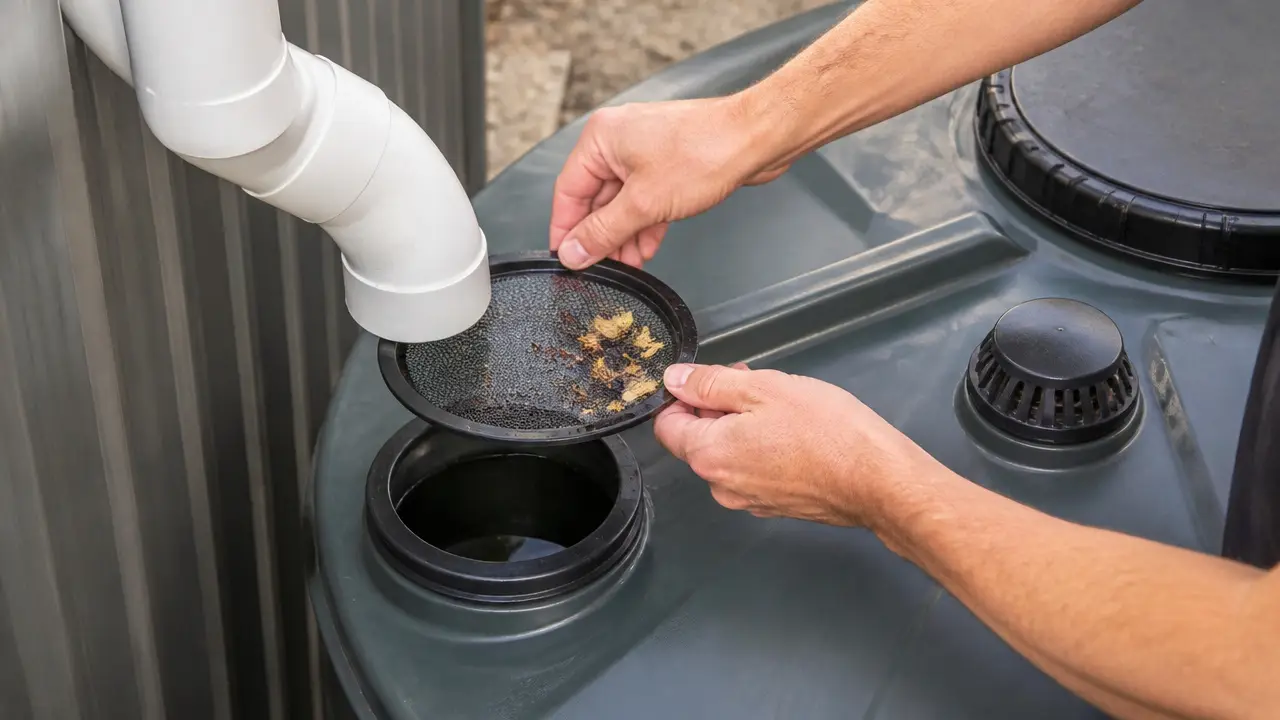
A screen can help keep mosquitoes and debris out, but it also needs occasional cleaning. A clogged screen can reduce overflow capacity.
Send Overflow Water Somewhere Safe
Getting water out of the barrel is only half the job. It also needs a suitable place to go.
Depending on the property, overflow may be directed toward:
- A landscaped area that can absorb water
- A rain garden
- An approved drainage point
- Another storage barrel or tank
- The original downspout drainage route
Do not discharge large amounts of water directly against a foundation.
Also consider what happens during a very heavy storm. An area that handles a small overflow may become saturated when several barrels of water arrive quickly.
Local drainage rules can differ, especially where runoff could affect neighboring property, sewer systems, or public areas. Check local requirements before changing an established drainage route.
Consider a Downspout Diverter
A downspout diverter can make overflow management simpler.
A diverter sends some downspout water into the barrel. With certain designs, once the barrel reaches the correct water level, additional runoff continues through the downspout instead of entering the barrel.
This can reduce the amount of separate overflow plumbing needed.
However, the diverter must be installed at the correct height and according to its design. The barrel inlet, diverter, and water level work together.
A diverter is especially useful when the existing downspout already drains to a suitable location.
Connect a Second Barrel for More Storage
Another option is to connect two or more rain barrels.
This increases storage capacity, but it does not eliminate the need for an overflow route. Eventually, the last barrel can fill too.
Barrels can be connected near the top so excess water flows from one barrel into the next.
They can also be connected near the bottom so their water levels tend to equalize. Bottom connections require reliable fittings because a leak there can drain much of the stored water.
Whatever arrangement you use, provide a final overflow outlet from the system.
For example:
Downspout → Barrel 1 → Barrel 2 → Safe overflow area
The final outlet should be able to handle excess water after every barrel is full.
Empty Some Water Before Expected Rain
Leaving unused capacity in the barrel gives the next storm somewhere to go.
If the barrel is already nearly full and you expect more rain, you can use stored water for suitable non-potable purposes such as garden irrigation.
Non-potable means water that is not intended for drinking.
Do not simply open the spigot and allow the barrel to drain next to your foundation. Send the water somewhere that can safely receive it.
Regular water use helps, but it should supplement a proper overflow system rather than replace one.
Make Sure the Barrel Is Level and Stable
Overflow problems can become worse when a barrel leans.
If the barrel is tilted, water may reach one side of the lid or inlet before it reaches the intended overflow fitting.
Place the barrel on a firm, level base that can support its full weight. Water is heavy, so even a common household rain barrel can weigh several hundred pounds when full.
Do not place a barrel on a weak, unstable, or improvised platform.
Check the base occasionally for settling or erosion, particularly if overflow water passes nearby.
Keep the Inlet Clear
Evaluate routing downspout runoff into a rain barrel to assess available conveyance for the expected roof discharge.
Leaves, roof debris, and sediment can restrict both the inlet and overflow system.
Inspect:
- Downspout screens
- Inlet screens
- Diverters
- Overflow screens
- Hoses
- Pipe openings
Clean them whenever debris starts to restrict flow.
If you use a first-flush diverter, maintain that as well. A first-flush device diverts some of the initial roof runoff away from storage because that runoff can carry a higher load of roof debris and contaminants.
A first-flush system can improve water management, but it is not an overflow device unless the system is specifically designed to serve both purposes.
Make Sure the Lid Is Not Acting as the Overflow
Water regularly pouring from around the lid is a sign that the intended overflow route may not be keeping up.
Possible causes include:
- No dedicated overflow outlet
- An overflow fitting that is too restrictive
- A blocked hose
- A clogged screen
- Poor outlet placement
- A kinked overflow line
- A downstream drainage point that is backed up
Occasional emergency spilling during an unusually intense storm can still happen in some systems. The area around the barrel should therefore be able to tolerate some water without damaging the house or undermining the barrel.
Do Not Seal a Rain Barrel Completely
A rain barrel should not become a sealed pressure vessel.
Water entering and leaving the container changes the amount of air inside. The barrel needs a suitable way for air to move while still limiting insect and debris entry.
Use covered or screened openings as appropriate rather than trying to make an ordinary rain barrel airtight.
What If the Overflow Cannot Keep Up?
If water reaches the top faster than it leaves through the overflow, inspect the whole path rather than only the barrel.
Start with the simplest checks:
- Look for a clogged overflow screen.
- Check for a kinked or crushed hose.
- Make sure water is not being forced uphill.
- Look for sediment or debris inside the fitting.
- Check whether the discharge end is submerged or blocked.
- Consider whether the overflow line is too restrictive for the incoming flow.
The amount of runoff from a roof can be much greater than it appears when watching a rain barrel during light rain.
As a useful estimate, 1 inch of rain falling on 1 square foot of roof represents about 0.623 gallons of water before losses.
That means a 500-square-foot roof section receiving 1 inch of rain represents roughly:
500 × 0.623 = 311.5 gallons
Not all of that will necessarily reach the barrel because of splash, wetting, diversion, and other losses. But the example shows why a typical barrel can fill during one storm.
Should You Add a Larger Rain Barrel Instead?
More storage can reduce how often the system reaches full capacity, but it does not replace an overflow system.
Choose additional storage when you can actually use the extra water and have a safe location for the added weight and space requirements.
If your only problem is water spilling beside the house, improving the overflow route may be simpler than adding a much larger tank.
For a larger cistern or multi-tank installation, overflow planning becomes even more important because larger collection areas can produce substantial flows.
Prepare the System for Freezing Weather
In freezing climates, trapped water can freeze inside hoses, pipes, valves, and fittings.
Expansion from freezing water can damage components.
Seasonal preparation may include draining exposed lines, disconnecting parts of the collection system, or bypassing the barrel during winter. The right approach depends on the barrel, plumbing arrangement, and local climate.
Do not assume an overflow hose is protected simply because it is open at one end. Low spots can hold water after the rest of the hose appears empty.
A Simple Reliable Setup
For many homes, a practical arrangement looks like this:
Downspout → screened inlet or diverter → rain barrel → large overflow connection → safe drainage area
If you need more storage:
Downspout → Barrel 1 → Barrel 2 → final overflow → safe drainage area
Keep the system accessible enough to inspect and clean. A complicated overflow arrangement that cannot be checked easily is more likely to develop unnoticed blockages.
A rain barrel will eventually fill during a large enough storm. Good design gives that extra water a controlled path instead of trying to prevent overflow entirely.
Frequently Asked Questions
How do I stop water from pouring over the top of my rain barrel?
Install a dedicated overflow outlet near the top of the barrel and route it to a safe drainage area. If an overflow already exists, check it for clogged screens, kinked hose, undersized connections, or other restrictions.
Where should a rain barrel overflow hose go?
Send it somewhere that can safely receive stormwater, such as a suitable landscaped area, rain garden, approved drainage point, or the original downspout drainage route. Avoid releasing large amounts of water beside the foundation.
Can I connect the rain barrel overflow back to the downspout?
Often, yes, if the drainage arrangement is suitable. A properly designed downspout diverter can also send excess runoff back through the downspout automatically. Follow the diverter design and local drainage requirements.
Will adding a second rain barrel prevent overflowing?
It will provide more storage and delay overflow, but eventually both barrels can fill. The last barrel should still have a safe overflow outlet.
Why does my rain barrel overflow even though it has an overflow hose?
The hose or fitting may be clogged, kinked, too restrictive, routed uphill, or blocked at the discharge end. Incoming water may also be arriving faster than the overflow system can carry it away.
How high should the overflow outlet be on a rain barrel?
Place it near the maximum intended water level, usually close to the top of the barrel while leaving enough space for the fitting and lid arrangement. Exact placement depends on the barrel and any downspout diverter being used.
Should I drain my rain barrel before a storm?
Using some stored water before rain creates extra storage capacity and can reduce how much overflow occurs. However, you should still have a working overflow system because the barrel can eventually fill.