As an affiliate, we may earn a commission from qualifying purchases. We get commissions for purchases made through links on this website from Amazon and other third parties.
A rain barrel overflow gives extra water a safe path out when the barrel is full. Without one, water may spill around the lid, soak the foundation, wash away soil, or leak through openings that were not meant to carry water.
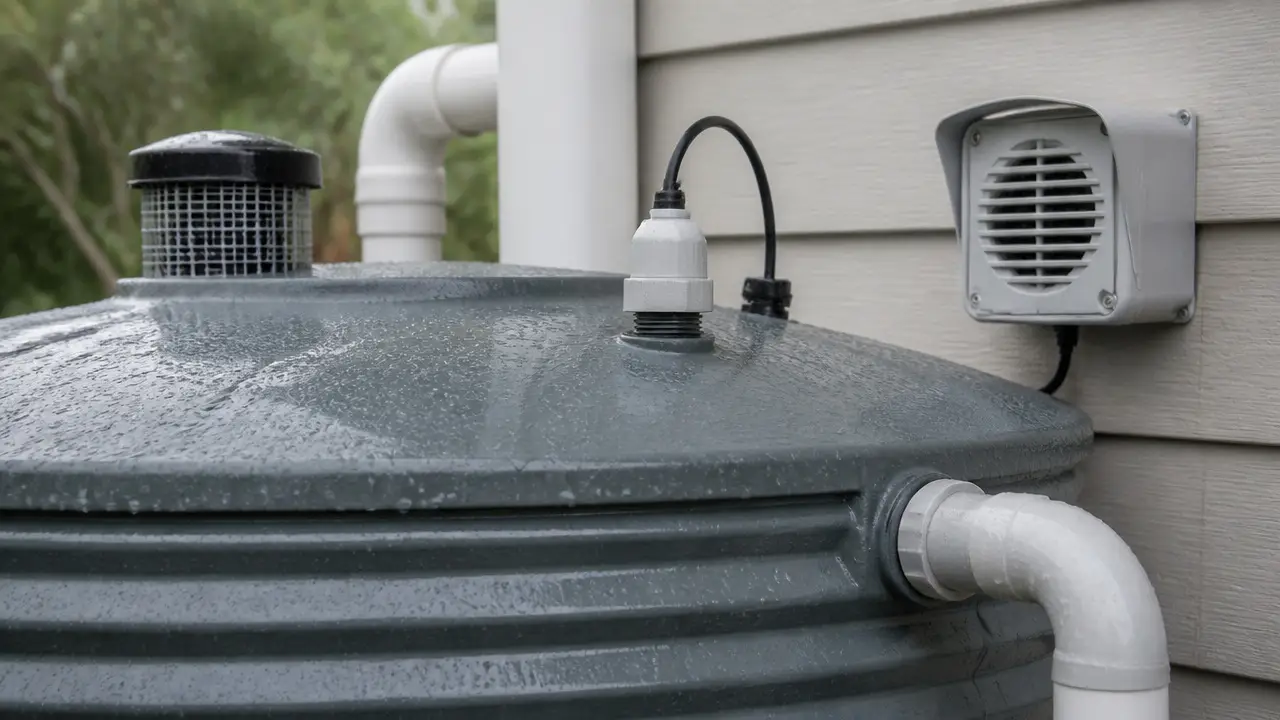
A basic overflow uses a watertight fitting installed near the top of the barrel. A hose or pipe then carries excess water to a safe discharge point.
What a Rain Barrel Overflow Does
Once the water reaches the overflow opening, incoming rain leaves through that outlet instead of continuing to raise the water level.
A good overflow should:
- Handle water as quickly as it enters the barrel.
- Stay below the barrel's lid or other weak openings.
- Direct water away from buildings.
- Keep mosquitoes and debris from entering.
- Remain easy to inspect and clean.
The overflow is especially important when a downspout sends roof runoff directly into the barrel.
What You Need
The exact parts depend on your barrel and the way you want to route the water. A typical setup uses:
- A bulkhead fitting or another fitting made for tank walls.
- A hose or pipe that fits the overflow connection.
- A hole saw sized for the fitting.
- A drill.
- Mosquito-resistant screen where insects could enter.
- Pipe supports or clamps if the discharge line is long.
A bulkhead fitting is a fitting that passes through the wall of a tank. A gasket seals around the hole so water can pass through the fitting without leaking around it.
Avoid assuming that ordinary plumbing fittings will seal correctly through a curved barrel wall. A fitting designed for tanks is usually easier to seal reliably.
Where to Put the Overflow
Install the overflow high on the side of the barrel, but below the lid and other openings that could leak.
The goal is to establish a maximum normal water level.
Before drilling, check the inside and outside of the barrel. Make sure the fitting will not interfere with:
- The lid.
- Internal screens.
- Downspout connections.
- Handles or ribs molded into the barrel.
- Another barrel placed beside it.
Choose a reasonably flat section of the barrel wall whenever possible. A heavily curved or molded area can make it harder for the gasket to seal.
Do not place the overflow so high that the water must reach the lid before it begins draining.
How to Add an Overflow to a Rain Barrel
1. Decide Where the Overflow Water Will Go
Plan the discharge route before cutting the barrel.
Good destinations may include a suitable garden area, drainage swale, existing approved stormwater route, or another rain barrel.
Do not simply point the overflow beside the house. Repeated roof runoff can saturate soil near the foundation.
Also consider whether the discharge could:
- Wash soil away.
- Flood a walkway.
- Run onto a neighbor's property.
- Create standing water.
- Freeze across a walking surface.
Local drainage rules can affect where stormwater may be discharged.
2. Choose an Overflow Large Enough for the Incoming Water
The outlet should not become a bottleneck during heavy rain.
A small garden hose may move water too slowly if a large roof area drains into the barrel. The barrel could then fill faster than the overflow can empty it.
There is no single overflow diameter that works for every installation. Required capacity depends on factors such as:
- Roof area draining to the barrel.
- Rain intensity.
- Downspout size.
- Inlet restrictions.
- Hose or pipe diameter.
- Length and slope of the overflow line.
As a practical rule, avoid reducing a large rainwater inlet to a very small overflow unless the original downspout system has another reliable route for excess water.
Some downspout diverters automatically send excess water back through the downspout once the barrel fills. If your system works this way, follow the diverter manufacturer's layout instead of adding plumbing that interferes with that function.
3. Mark the Hole
Place the fitting against the barrel and confirm its position.
Remember that the center of the fitting determines where water begins entering the overflow. The barrel's operating water level will normally rise roughly to the bottom portion of the opening before water begins draining freely.
Check that you can access both sides of the wall if your fitting requires a nut on the inside.
4. Drill the Opening
Empty the barrel before drilling.
Use the hole size required by the fitting rather than guessing from the nominal pipe size. The hole needed for a bulkhead fitting is usually larger than the pipe passage through it.
Drill slowly and keep the hole clean. Remove plastic shavings before assembling the barrel.
Do not climb onto an unstable barrel or drill while the container is full of water.
5. Install the Bulkhead Fitting
Follow the fitting manufacturer's gasket arrangement.
Usually, a gasket seals against one side of the tank wall while a nut tightens the fitting from the other side. Gasket location varies by fitting design, so do not automatically add extra washers or sealants.
Tighten enough to compress the gasket evenly.
Overtightening can deform a thin plastic barrel, squeeze a gasket out of position, or damage the fitting.
6. Connect the Overflow Hose or Pipe
Attach the discharge line securely to the fitting.
Route it continuously toward the discharge point where possible. Low spots can hold water, collect sediment, or freeze.
A long flexible hose may need support so its weight does not pull sideways on the barrel fitting.
Try to avoid unnecessary sharp bends. Every restriction makes it harder for water to leave quickly.
7. Protect the Opening From Mosquitoes
Any opening connected to stored rainwater can become an insect entry point.
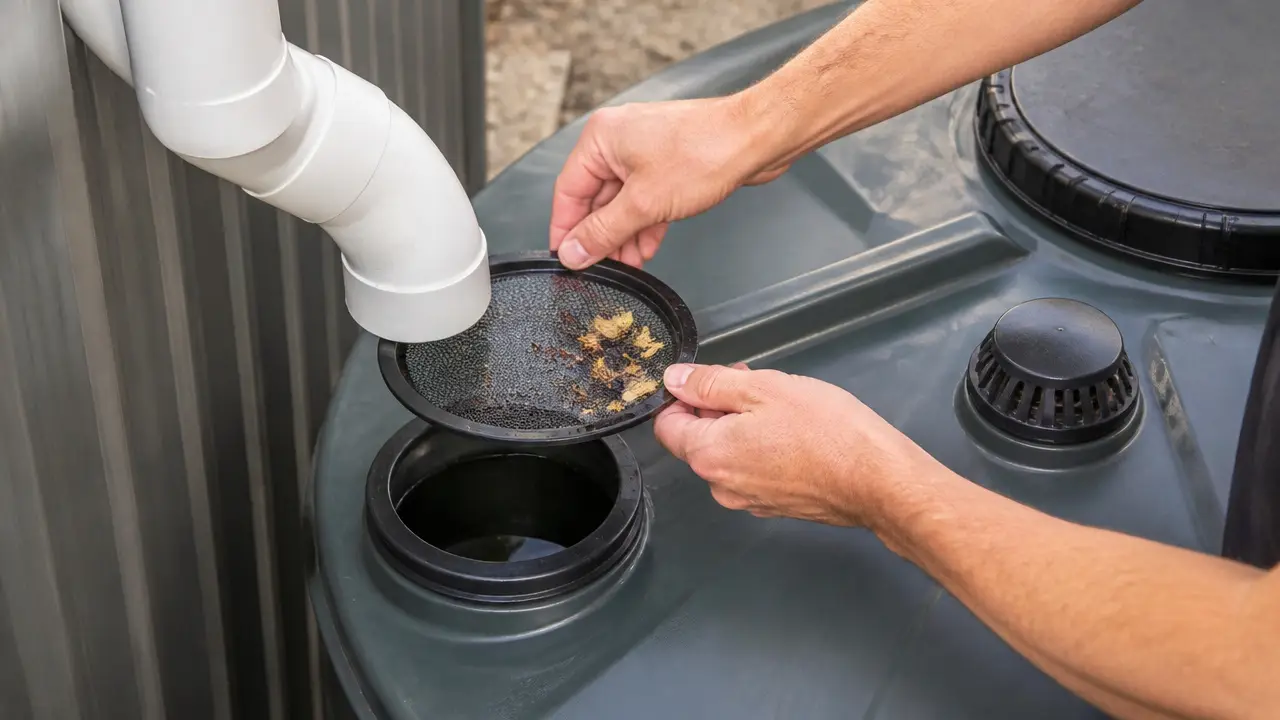
Use fine insect screening or a screened fitting where appropriate. Make sure the screen does not become so clogged with debris that it blocks the overflow.
Screening still needs inspection and cleaning.
8. Test the Overflow
Do not wait for the first major storm to find out whether the connection works.
Regarding ways to manage a full rain barrel, evaluate tank venting and overflow control during extended storage.
Add water to the barrel until it reaches the overflow.
Watch for:
- Leaks around the bulkhead fitting.
- Water backing up toward the lid.
- Slow drainage.
- Sagging overflow hose.
- Water pooling at the discharge point.
- Loose connections.
A hose test confirms that the fitting drains, but it may not prove that the overflow can handle runoff from an intense storm. Check the system during rainfall when it is safe to do so.
Where Should the Overflow Water Go?
The best discharge point depends on the property.
For garden use, the overflow can sometimes lead to a planted area that can accept the extra water without becoming waterlogged. Spread the flow if concentrated discharge would cause erosion.
Keep runoff away from foundations unless the drainage system was specifically designed to handle it there.
If you already have a functioning downspout drainage route, directing overflow back into that system may make sense when the plumbing arrangement and local requirements allow it.
Never permanently block the original drainage path unless the rainwater system has enough overflow capacity to handle storms after the storage is already full.
A full rain barrel provides almost no additional storm storage. Once it is full, nearly all additional roof runoff still needs somewhere to go.
Adding an Overflow Between Two Rain Barrels
An overflow can also feed a second barrel.
One common arrangement is:
- Roof runoff enters the first barrel.
- An upper connection carries water to the second barrel.
- The final barrel has an overflow leading to a safe discharge point.
The connecting line must be large enough to transfer incoming water without causing the first barrel to overflow elsewhere.
The barrels also need stable, level support. Water is heavy, so do not place connected barrels on weak or uneven stands.
If you connect barrels near their bottoms instead, the connection acts differently. Water levels tend to equalize between the barrels rather than waiting for one barrel to fill before transferring water.
Either arrangement still needs a final overflow route.
Overflow Problems to Watch For
Water Comes Out Around the Lid
The overflow may be too small, blocked, poorly positioned, or unable to drain quickly enough.
Check the screen, hose, bends, and outlet before assuming the barrel itself is leaking.
The Bulkhead Fitting Leaks
Common causes include:
- A rough or oversized hole.
- A gasket installed incorrectly.
- A fitting placed over a sharply curved surface.
- A loose fitting.
- Excessive tightening that distorted the barrel.
Empty the water below the fitting before attempting repairs.
The Overflow Hose Stays Full
The hose may sag below its discharge point.
Standing water is not always a problem, but it can collect debris and can be troublesome in freezing climates. Supporting the hose to maintain drainage can help.
Water Erodes the Ground
Concentrated overflow from a roof can move a surprising amount of water during a storm.
Extend the line or use an appropriate method of spreading the discharge across a larger stable area.
Overflow Considerations in Freezing Climates
Do not assume an overflow hose will remain protected simply because the barrel has been drained.
Water can remain trapped in fittings, low sections of hose, and valves. When that water freezes, it expands and can damage parts.
Before freezing weather, follow the winterizing method appropriate for your system. This may include draining the barrel and disconnecting or draining exposed hoses and fittings.
If the downspout normally feeds the barrel, make sure winter runoff and snowmelt still have a safe drainage path after the barrel is taken out of service.
Keep the Overflow Clear
Check the overflow as part of normal rain barrel maintenance.
Pay particular attention to:
- Mosquito screens.
- Leaves and roof debris.
- Sediment around the opening.
- Kinked hoses.
- Loose fittings.
- Damage from freezing.
- Soil erosion at the outlet.
Inspecting it before periods of heavy rain is more useful than discovering a blockage after the barrel has already overflowed.
Frequently Asked Questions
How high should a rain barrel overflow be?
Put it near the top of the barrel but below the lid and other openings that could leak. The overflow should establish a safe maximum water level before water reaches vulnerable parts of the barrel.
What size should a rain barrel overflow be?
It must be large enough to remove water at about the rate the barrel can receive it during heavy rainfall. Roof area, rainfall intensity, inlet size, pipe length, bends, and slope all affect the required capacity. Avoid using a very small hose for a barrel receiving unrestricted flow from a large downspout.
Can I use a garden hose for the overflow?
Sometimes, especially on systems with limited incoming flow. However, a garden hose can restrict drainage considerably compared with a larger pipe. If the barrel receives direct flow from a downspout, verify that the hose can keep up or provide another path for excess runoff.
Can rain barrel overflow go into the garden?
It can when the location can accept the water without flooding, erosion, or drainage problems. Remember that overflow may continue for the rest of a storm once the barrel is full, so the garden must handle more than a few extra gallons.
Can I connect the overflow to another rain barrel?
Yes. An upper overflow connection can send water into another barrel. The last barrel should still have its own overflow leading to a safe drainage point.
Why is my rain barrel overflowing from the top instead of the overflow pipe?
The overflow pipe may be blocked, undersized, kinked, too flat, or installed too high. A clogged insect screen can also restrict flow. Inspect the entire outlet route while the barrel is safely accessible.
Does a rain barrel overflow need a screen?
Openings that give insects access to stored water should be screened appropriately. The screen also needs regular cleaning because trapped debris can reduce overflow capacity.