As an affiliate, we may earn a commission from qualifying purchases. We get commissions for purchases made through links on this website from Amazon and other third parties.
A rain barrel that overflows will spill water wherever the excess can escape. If the overflow is not controlled, that water can pool beside the house, wash out the barrel base, damage siding, erode soil, or create muddy areas.
Overflow itself is normal. A rain barrel has limited capacity, so it will eventually fill during a large or long storm. The important part is giving the extra water a safe path away from the barrel and your foundation.
Why Rain Barrels Overflow
A rain barrel overflows when water enters faster than the barrel can store or release it.
For example, a 55-gallon barrel may fill quickly during a heavy storm. Roofs collect more water than many people expect. Even a small section of roof can send dozens of gallons into a barrel during one rainfall.
Once the barrel is full, every additional gallon has to go somewhere.
A properly designed system sends that water through an overflow fitting or back into the original downspout.
What Happens If the Overflow Is Not Controlled?
An uncontrolled overflow may simply run down the side of the barrel. That may seem harmless, but repeated storms can cause several problems.
Water Can Collect Near the Foundation
This is usually the biggest concern.
If the barrel sits next to the house, overflowing water may soak the soil beside the foundation. Poor drainage can also send water toward a basement, crawlspace, or low doorway.
The overflow should normally discharge somewhere that already handles stormwater safely.
Do not assume a few feet of hose automatically solves the problem. The discharge point still needs to drain away from the building.
The Barrel Base Can Wash Out
Rain barrels are heavy when full.
Water weighs about 8.3 pounds per gallon. A 55-gallon barrel therefore holds roughly 460 pounds of water, before counting the barrel itself.
If overflow repeatedly runs underneath the barrel, it can erode soil or gravel supporting the base. The barrel may begin to lean or become unstable.
The barrel should sit on a firm, level base that will not soften or wash away when wet.
Soil and Mulch Can Erode
A concentrated stream from an overflow outlet can dig into loose soil.
It may:
- wash mulch away
- create small channels
- expose plant roots
- move gravel
- create muddy spots
A splash block, suitable drain path, or properly routed overflow hose can help spread or direct the water.
Water May Damage Nearby Surfaces
Repeated overflow against siding, fences, wood structures, or exterior equipment can cause problems over time.
Keep the discharge away from materials that should not stay wet.
Mosquito Problems Can Develop Nearby
The water inside a properly screened rain barrel should be protected from mosquitoes entering through openings.
However, overflow that creates standing puddles nearby can provide separate mosquito breeding areas.
The goal is not just to keep mosquitoes out of the barrel. Water leaving the barrel should also drain instead of sitting for days.
How a Rain Barrel Overflow Should Work
Most rain barrels use one of two basic overflow methods.
Overflow Outlet
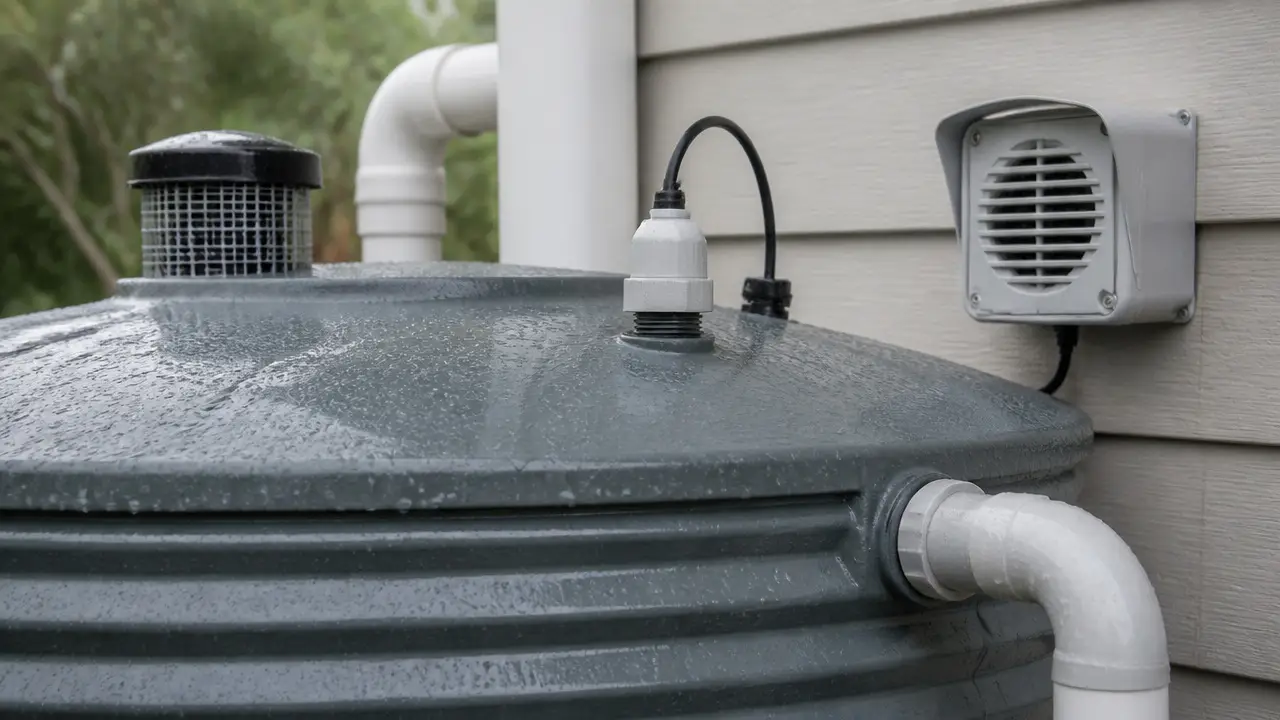
An overflow fitting is installed near the top of the barrel. Once the water reaches that level, excess water flows through the fitting and into a hose or pipe.
The overflow line should:
- be large enough to carry incoming stormwater
- stay free of leaves and debris
- slope so water can drain
- discharge somewhere safe
- avoid creating standing water
A very small overflow opening can become a bottleneck during heavy rain.
Downspout Diverter
Some rain barrel systems use a diverter installed in the downspout.
The diverter sends water into the barrel while it is filling. Depending on the system design, once the barrel reaches its intended level, additional roof runoff continues through the downspout instead of spilling from the barrel.
This can be useful when the existing downspout already drains water to a suitable location.
The diverter, barrel connection, and downspout must be installed as the system manufacturer intends. Different diverter designs handle a full barrel differently.
Where Should Overflow Water Go?
Send overflow somewhere that can safely accept stormwater.
Possible destinations include:
- an existing downspout drainage path
- a suitable landscaped area
- a rain garden designed for runoff
- another rain barrel or storage tank
- an approved stormwater drainage system
For the effects when the tank is too full, first understand tank venting and overflow control during extended storage.
Where you can legally discharge stormwater depends on local drainage and plumbing rules.
Avoid directing overflow toward:
- the house foundation
- neighboring property
- sidewalks where water may create a slipping hazard
- areas that already stay wet
- septic system components
- electrical equipment
- places where erosion is likely
Watch the system during a strong rainfall at least once. You may discover drainage problems that are not obvious when installing it on a dry day.
Can You Connect a Second Rain Barrel?
Yes. A second barrel can increase storage capacity.
Barrels may be connected so water moves from one container to another as the first fills. However, connecting barrels does not remove the need for a final overflow path.
Eventually, every barrel in the system can become full.
The last container still needs a safe way to handle additional roof runoff.
Connections also need to be large enough for the expected flow. A narrow hose between barrels may transfer water too slowly during heavy rain, causing the first barrel to overflow even when the second still has room.
What If Water Comes Out Around the Lid?
Water coming from around the lid usually means the incoming flow is exceeding the barrel's ability to drain through its normal overflow.
Check for:
- A clogged overflow opening.
- A kinked or blocked overflow hose.
- An overflow hose that runs uphill.
- Leaves or debris inside the fitting.
- An overflow connection that is too restrictive for the incoming flow.
Also make sure the lid and inlet screen are installed correctly.
Do not seal every opening simply to stop water from escaping. The barrel still needs a safe overflow route.
Should You Empty the Barrel Before Every Storm?
Usually not.
A rain barrel is meant to store rainwater between storms. You can use stored water for suitable non-potable purposes such as garden irrigation, depending on the collection surface and intended use.
Using some of the stored water before another storm creates additional storage capacity, but you should still assume the barrel may become completely full.
A functioning overflow system is necessary even if you regularly use the water.
Check the Overflow as Part of Routine Maintenance
Overflow fittings are easy to forget because they may remain dry between storms.
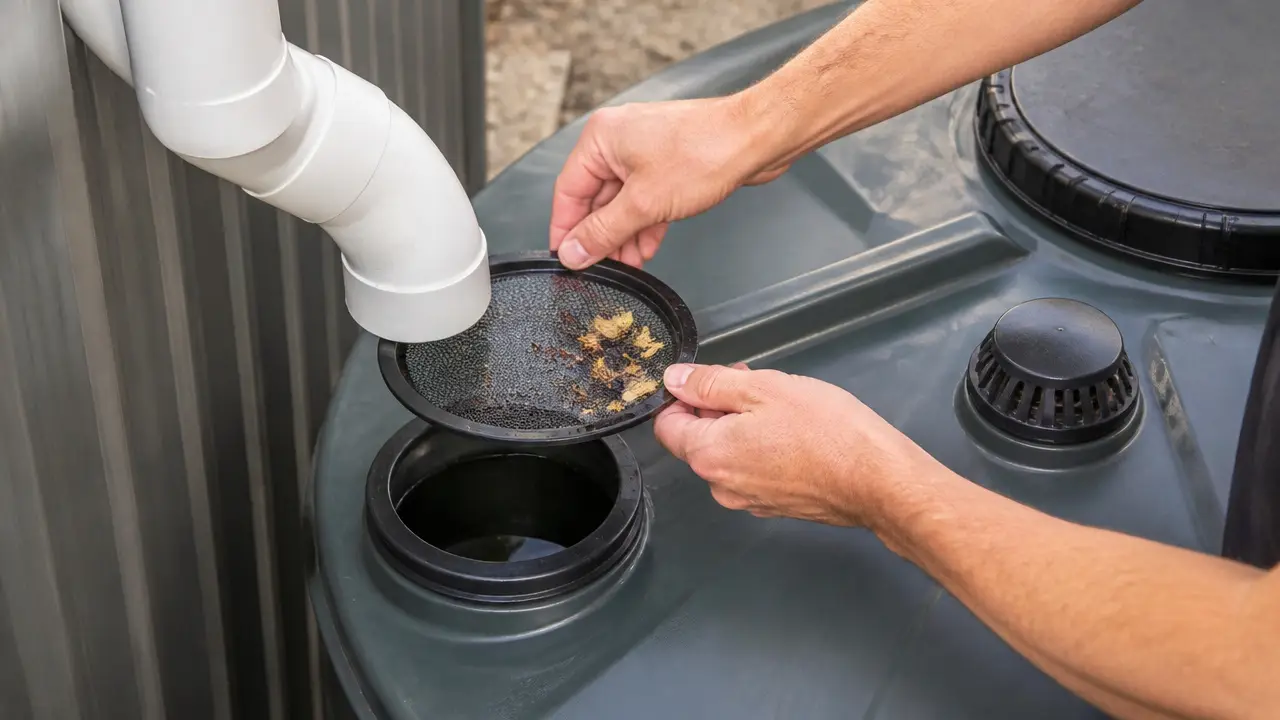
Inspect them periodically, especially after leaves, seeds, roof debris, or insects have been moving through the gutter system.
Check that:
- the inlet screen is clear
- the overflow opening is clear
- hoses have not collapsed or kinked
- connections are secure
- the discharge area has not eroded
- the barrel remains level
- the base remains firm
Also check the system before periods of heavy rainfall.
In freezing climates, follow an appropriate winter setup for the barrel, downspout, hoses, and fittings. Water trapped in fittings or hoses can freeze and damage components.
The Main Rule: Plan for a Full Barrel
A rain barrel filling completely is not a failure. It means the storage capacity has been used.
The problem starts when there is no planned route for the next gallon of water.
Treat overflow as part of the rainwater system rather than as an emergency outlet. Give excess water a clear path away from the foundation, keep the outlet free of debris, and make sure the barrel remains on a stable base.
Frequently Asked Questions
Is it normal for a rain barrel to overflow?
Yes. Any rain barrel can fill during enough rainfall. A properly installed system should safely route excess water through an overflow outlet or back through the downspout.
Can an overflowing rain barrel damage my foundation?
It can contribute to drainage problems if overflow repeatedly soaks the ground beside the foundation. Route excess water toward a suitable drainage area away from the building.
How do I stop my rain barrel from overflowing?
You generally should not try to prevent overflow completely. Instead, provide a properly sized overflow path. You can also add more storage, but the final barrel still needs an overflow outlet.
Why is my rain barrel overflowing when it is not full?
The overflow or connection between barrels may be restricted. Check for clogged fittings, kinked hoses, poor hose slope, or connections that cannot move water fast enough.
Can I connect the rain barrel overflow to another barrel?
Yes. Additional barrels can increase storage capacity. Make sure the connecting fittings can transfer enough water and provide a safe overflow route from the final barrel.
Where should a rain barrel overflow hose drain?
It should discharge to a location that can safely handle stormwater without causing foundation problems, erosion, standing water, or drainage onto neighboring property. Local drainage rules may also apply.
Does a rain barrel need an overflow if it has a downspout diverter?
It depends on the diverter design. Some systems are designed to return excess water to the downspout once the barrel reaches its intended level. Install and maintain the system according to how that particular diverter handles a full barrel.