As an affiliate, we may earn a commission from qualifying purchases. We get commissions for purchases made through links on this website from Amazon and other third parties.
When your rain barrel is full, the extra water needs a safe place to go. The best setup uses an overflow outlet that carries excess water away from the house, just like a normal downspout would.
You can also use some of the stored water before the next storm or add more storage if the barrel fills often. What you should not do is simply block the overflow. Water will still arrive from the roof, and it can spill beside the foundation or back up where you do not want it.
What Happens When a Rain Barrel Gets Full?
A rain barrel can only hold its rated volume. Once it reaches that point, every additional gallon entering the barrel has to leave somewhere.
A surprisingly small section of roof can produce a lot of runoff during a strong storm. This means a barrel may fill long before the rain stops.
A properly designed system sends that extra water through an overflow connection. The overflow may lead to:
- The original downspout drainage path
- A suitable lawn or garden area
- A rain garden
- Another rain barrel
- A larger storage tank
- Another approved drainage location
The correct destination depends on your property, soil, drainage, and local requirements.
Make Sure the Overflow Can Handle the Water
The overflow is one of the most important parts of a rain barrel.
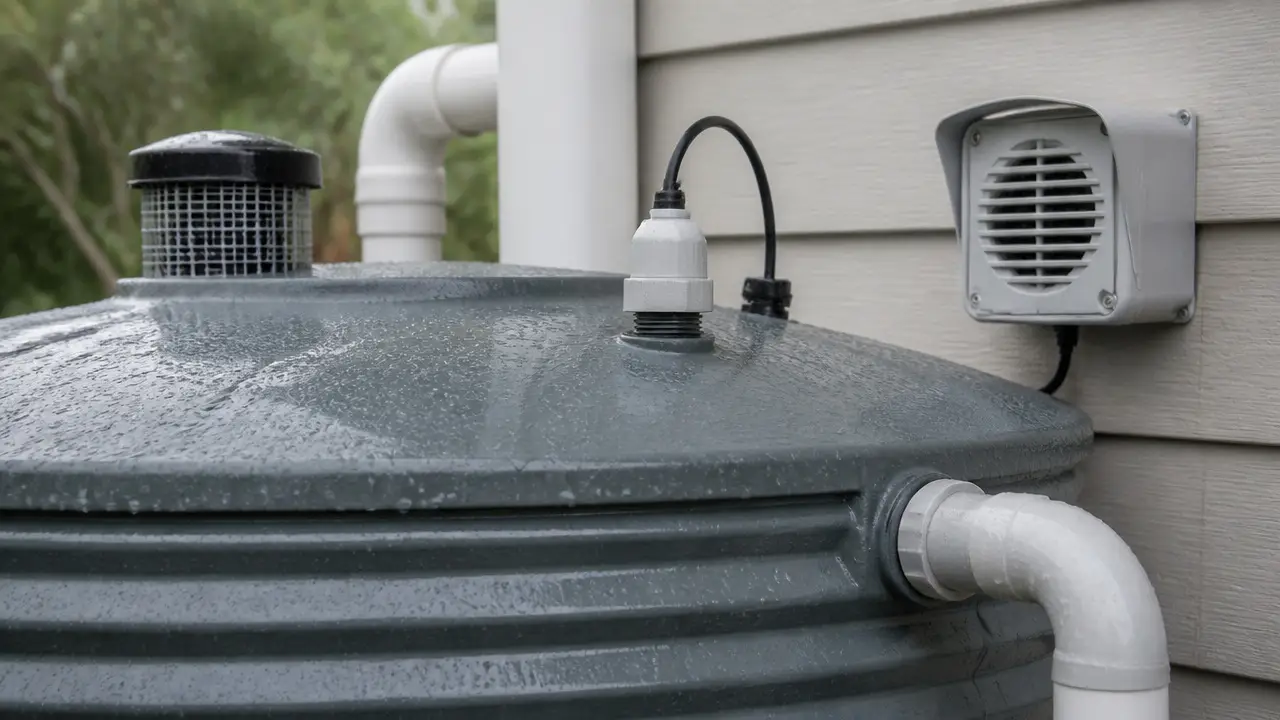
It should be large enough and positioned high enough on the barrel to let incoming water escape before it spills over the top. A tiny hose can become a bottleneck during heavy rain.
Keep the overflow opening and hose free of:
- Leaves
- Roof grit
- Algae
- Insects
- Dirt
- Kinks or crushed sections
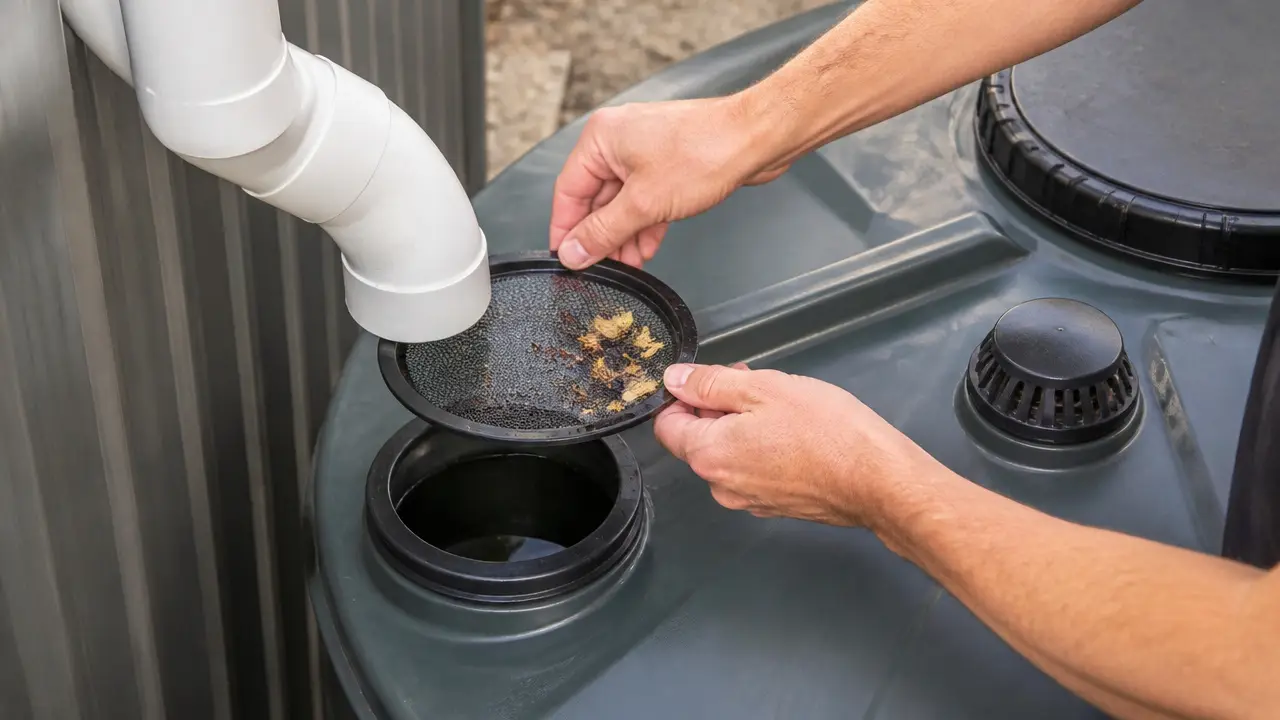
An insect-resistant screen can help keep mosquitoes and debris from entering through the opening, but the screen also needs occasional cleaning so it does not restrict flow.
Do Not Send Overflow Next to the Foundation
A rain barrel may collect water from a downspout that previously carried runoff several feet away from the building.
If you install a barrel and let its overflow dump directly beside the house, you can create a drainage problem that did not exist before.
Route overflow to a location where water can drain without causing problems around:
- Foundations
- Crawl spaces
- Basements
- Walkways
- Neighboring property
- Septic systems
- Slopes that may erode
Do not assume that simply adding a short overflow hose is enough. Watch what happens during an actual storm and make sure the discharge area can accept the flow.
Use Some Water Before the Next Rain
If rain is expected and your barrel is already full, using some stored water creates space for new runoff.
Common non-potable uses include watering:
- Trees
- Shrubs
- Ornamental plants
- Garden beds, where appropriate
- Container plants
"Non-potable" means the water is not intended for drinking.
Stored roof runoff can contain bird droppings, dust, roofing debris, microorganisms, metals, and other contaminants. Do not assume rain barrel water is safe to drink or use in other ways that require potable water.
If the plants do not currently need water, do not overwater them simply to empty the barrel. Sending controlled water to another suitable landscape area may be better.
Connect a Second Rain Barrel
If your barrel regularly fills during modest storms, adding another barrel can increase useful storage.
The barrels can be connected so water moves from the first barrel into the second. The exact arrangement depends on the barrel design.
Common approaches include:
Top-to-top connections
A connection near the top allows the first barrel to fill before excess water moves into the next barrel.
This is simple, but water stored in the barrels may not drain evenly.
Bottom connections
Connecting barrels near their bottoms can allow the water levels to rise and fall together.
These systems need reliable watertight fittings. A bulkhead fitting is a fitting that passes through the wall of a tank and creates a sealed connection for a pipe or hose.
Low connections also create a larger leak if a fitting fails, so they need careful installation and support.
Keep an overflow on the final barrel
Adding another barrel does not eliminate the need for overflow protection.
Once every connected barrel is full, incoming roof runoff still needs a safe drainage path.
Consider a Larger Storage Tank
If several rain barrels fill repeatedly and you can use much more water, a larger tank or cistern may make more sense.
Before increasing storage, consider whether you actually have a use for the water. Bigger storage only helps if you eventually draw the water down.
Also account for the weight.
Water weighs about 8.3 pounds per U.S. gallon. A 55-gallon barrel therefore holds roughly 460 pounds of water, not including the barrel itself. Larger tanks can weigh thousands of pounds when full.
Storage containers need a stable, level base that can safely support the load. Large tanks, elevated tanks, structural platforms, and difficult sites may require professional planning.
You Can Redirect the Downspout When the Barrel Is Full
Some rain barrel systems use a downspout diverter rather than sending the entire downspout directly into the barrel.
A properly designed diverter can send water into the barrel while there is room and allow excess runoff to continue through the normal downspout when the barrel is full.
This can be useful when you want to preserve the home's existing drainage path.
Factor in routing downspout runoff into a rain barrel to evaluate surface losses when estimating collectible runoff.
The parts need to be installed at the correct height and used as intended. Do not assume every downspout diverter automatically handles overflow in the same way.
Should You Leave the Rain Barrel Full?
A full barrel is not automatically a problem if the system has:
- A secure lid
- Screened openings
- A working overflow
- Stable support
- A safe overflow destination
However, stored water should not simply be ignored for months.
Check the barrel periodically for sediment, odors, algae, damaged screens, leaks, and blocked fittings. Roof debris can settle at the bottom and eventually interfere with valves or water quality.
Standing water should also be protected from mosquito access. Keep lids closed and openings properly screened.
What If Water Is Pouring Over the Top?
Water spilling over the rim usually means something is wrong with the overflow system.
Check for simple problems first:
- Look for leaves or debris blocking the overflow opening.
- Check whether the overflow hose is kinked or crushed.
- Make sure the hose outlet is not submerged or plugged with soil.
- Check screens for accumulated debris.
- Confirm that connected barrels can actually transfer water between them.
If everything is clear but the barrel still overflows during storms, the overflow route may not have enough capacity for the amount of roof runoff entering the barrel.
Do not climb onto a wet roof to troubleshoot the system during a storm. Inspect roof-level components only when conditions are safe.
Do You Need a Bigger Overflow Pipe?
Possibly.
An overflow that works during light rain may not keep up with a heavy downpour. The amount of water arriving depends mainly on:
- Roof area draining into the barrel
- Rainfall intensity
- Gutter and downspout capacity
- Inlet restrictions
- Overflow size and routing
The overflow should not become the narrow point that causes the barrel to spill.
If you are changing downspout drainage, tying into underground drainage, or dealing with repeated flooding near the building, consider having a drainage professional evaluate the system.
What About a First-Flush Diverter?
A first-flush diverter separates some of the first roof runoff from the water entering storage.
The beginning of a rain event may wash accumulated dust, leaves, droppings, and other debris from the roof. A first-flush device is intended to divert part of that initial runoff.
It is not the same thing as an overflow.
A system can have both:
- A first-flush device on the incoming water
- An overflow outlet for excess water after the barrel fills
Neither device makes roof runoff automatically safe for drinking.
Full Rain Barrels in Freezing Weather
Cold climates require additional planning.
A barrel that is full or partly full can be damaged when water freezes and expands. Hoses, valves, fittings, and pumps can also crack.
Many rain barrel systems in freezing climates are drained and disconnected for winter, with the downspout returned to its normal drainage route.
The correct winter setup depends on the barrel, plumbing arrangement, local temperatures, and manufacturer instructions. Do not rely on a barrel being flexible enough to survive freezing while full.
The Best Long-Term Setup
A rain barrel should be planned as part of the home's drainage system, not just as a container under a downspout.
When the barrel fills, excess water should automatically go somewhere safe without requiring you to run outside during a storm.
A practical setup usually has:
- Enough storage for the amount of water you actually use
- A secure and screened barrel
- A reliable overflow connection
- An overflow route away from the building
- Accessible fittings for inspection and cleaning
- A plan for freezing weather where needed
If you frequently run out of storage, either use the collected water more often or increase storage. If you rarely use the water, simply adding more barrels may not solve the underlying problem.
Frequently Asked Questions
Should I empty my rain barrel before it rains?
You do not have to empty it completely. Creating some empty space lets you capture more of the next rainfall. If the barrel is already full, a working overflow should safely handle additional runoff.
Can I let a full rain barrel overflow onto the ground?
Only if the discharge location can safely accept the water. Avoid releasing large amounts of water beside foundations, onto walkways, toward neighboring property, or into areas where it may cause erosion or drainage problems.
Can I connect two rain barrels together?
Yes. Barrels can be connected near the top or bottom depending on the system design. The fittings must be watertight, and the final barrel still needs a safe overflow route.
Why does my rain barrel overflow even though it has an overflow hose?
The overflow opening, hose, or screen may be clogged or too restrictive. A kinked hose or blocked outlet can also slow drainage. If the parts are clear, the overflow may not have enough capacity for heavy roof runoff.
Can I cap the overflow when the barrel is full?
No. Incoming water still needs an escape path. Blocking the overflow can cause water to spill from the barrel, back up into the collection system, or discharge where it can cause damage.
Is water from a full rain barrel safe to drink?
Do not assume it is. Roof runoff can contain biological and chemical contaminants. Drinking-water use requires a suitable collection system, appropriate treatment, current laboratory testing, regular maintenance, and compliance with applicable local requirements.
Should I leave my rain barrel full over winter?
Not where freezing could damage the barrel or fittings unless the system is specifically designed for those conditions. Many systems are drained and disconnected before freezing weather.