As an affiliate, we may earn a commission from qualifying purchases. We get commissions for purchases made through links on this website from Amazon and other third parties.
Yes. A 5-gallon bucket can work well for a small drip irrigation system, especially for a few plants, raised beds, or container gardens.
The simplest setup uses gravity. You place the bucket above the plants, connect drip tubing near the bottom, and let the water flow through emitters or small outlets. The main limit is pressure. A bucket does not create the same pressure as a faucet or irrigation pump, so the system must be designed for low-pressure gravity flow.
How a 5-Gallon Bucket Drip System Works
Water pressure increases when the bucket is higher than the drip line.
This height difference is called head height. It means the vertical distance between the water surface in the bucket and the irrigation outlet.
A bucket sitting directly on the ground may not provide enough pressure for some drip emitters. Raising it on a sturdy platform can improve flow.
Keep in mind that the pressure slowly drops as the bucket empties because the water level gets lower.
For this reason, bucket systems work best when:
- The irrigation run is short.
- There are only a few emitters.
- The emitters can operate at very low pressure.
- The bucket is placed above the plants.
- The tubing does not have major restrictions or clogs.
What You Need
A basic system may include:
- A clean 5-gallon bucket with a lid.
- A bulkhead fitting or other watertight outlet.
- Flexible irrigation tubing.
- Low-pressure drip emitters or small open drip lines.
- A shutoff valve.
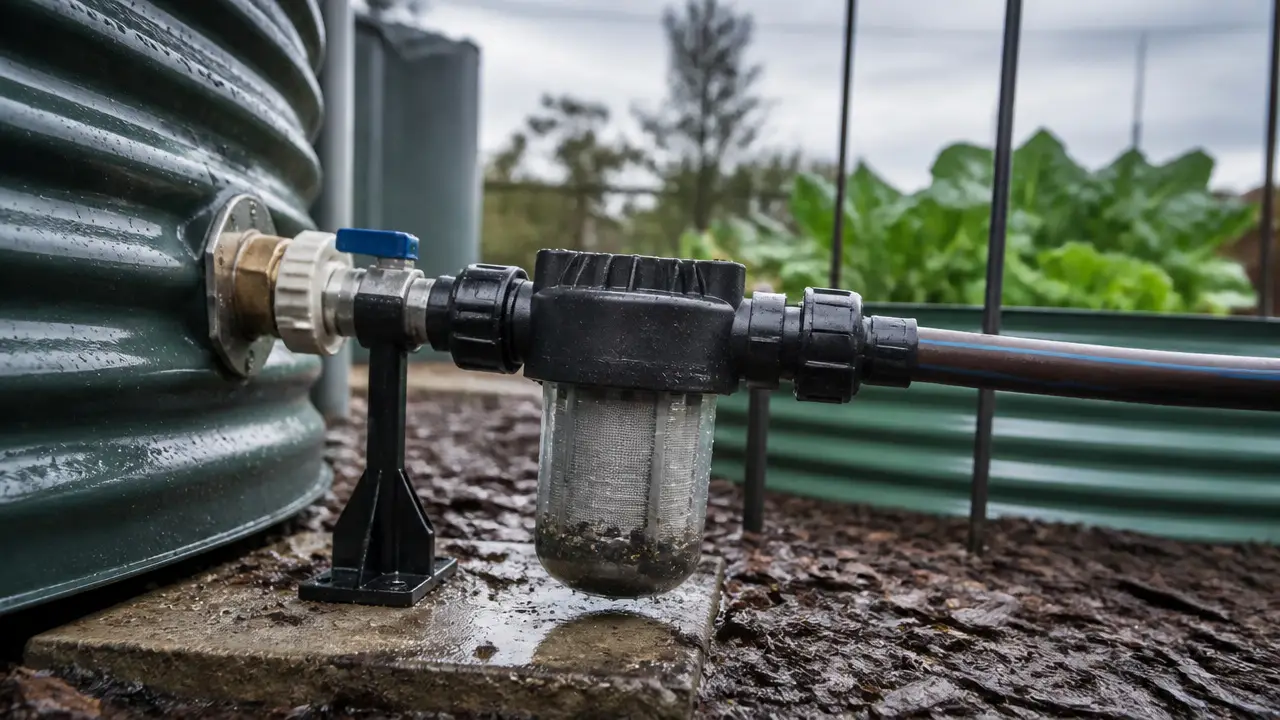
- A small filter or screen.
- A sturdy bucket stand.
A bulkhead fitting passes through the wall of the bucket and creates a sealed connection for tubing or a valve.
Install the outlet near the bottom of the bucket, but leave a little space below it. Sediment can settle there instead of flowing directly into the drip line.
Raise the Bucket for Better Flow
Gravity-fed drip systems usually work better when the bucket is elevated.
You do not need extreme height for a small garden, but adding vertical distance can make the flow more reliable. The important point is that the bucket must be supported safely.
Five gallons of water weighs more than 40 pounds before you include the bucket, fittings, or stand.
Use a wide, stable platform that cannot easily tip. Do not place a full bucket on an unstable chair, narrow shelf, loose stack of blocks, or other weak support.
Not Every Drip Emitter Will Work
This is one of the biggest problems with bucket irrigation.
Many drip irrigation parts are made for pressurized water from a faucet or pump. They may barely drip, flow unevenly, or stop completely when connected to a gravity-fed bucket.
Pressure-compensating emitters can be especially unsuitable if they require more pressure than the bucket can provide.
Look for irrigation parts intended for:
- Gravity-fed systems.
- Rain barrels.
- Low-pressure irrigation.
- Very low operating pressure.
Another option is to use simple small outlets rather than conventional pressure-regulated emitters.
The goal is not just to make water come out. You want reasonably even watering from the first plant to the last.
Keep the Drip Line Short
A 5-gallon bucket is best for a small irrigation area.
Long tubing, many branches, narrow fittings, and numerous emitters all increase resistance to flow. The last plants on the line may receive much less water than the first ones.
For a few containers or a short raised bed, this may not be a problem.
For several garden beds or a large row of plants, a larger tank or pressurized irrigation system is usually a better fit.
Add a Filter or Screen
Small drip openings clog easily.
This matters even more if you fill the bucket with collected rainwater. Roof runoff can contain dirt, leaf pieces, insects, pollen, and other debris.
A simple screen at the bucket opening helps keep larger material out. A suitable irrigation filter before the drip line can protect smaller openings.
Filters still need cleaning. A clogged filter can reduce the already-low pressure of a gravity system.
Can You Use Rainwater?
Yes. Collected rainwater can be useful for drip irrigation when it is suitable for the plants and intended use.
Try to keep roof debris and sediment out of the irrigation system. A covered container also helps reduce debris, algae growth, and mosquito access.
Water collected from some roof surfaces may contain contaminants. Be more cautious when irrigating edible crops, especially plants where the water may contact the portion you plan to eat.
Drip irrigation helps because it usually applies water near the soil rather than spraying it over leaves and produce.
How Long Will 5 Gallons Last?
That depends on the total flow from your drip outlets.
You can estimate runtime with:
Runtime = bucket volume ÷ total flow rate
For example, suppose four outlets together release 2 gallons per hour.
A 5-gallon bucket would theoretically last:
5 gallons ÷ 2 gallons per hour = 2.5 hours
Actual runtime may differ because gravity pressure drops as the bucket empties.
It is often better to measure your real system instead of relying only on emitter labels.
Place containers beneath the outlets, run the system for a set amount of time, and compare how much water each outlet delivers.
Put a Lid on the Bucket
Look closely at recommended gravity-fed drip irrigation kits for tanks and barrels to verify reserve capacity for likely demand and collection rates.
A lid is useful even if the water is only being used for irrigation.
It helps keep out:
- Leaves.
- Dirt.
- Animals.
- Insects.
- Mosquitoes.
- Sunlight that can encourage algae.
Do not seal the bucket completely airtight. Air must be able to enter as water leaves, or flow can slow or stop.
Any vent opening should be screened so insects cannot enter.
Should You Put the Outlet at the Very Bottom?
Usually, placing it slightly above the bottom is more practical.
A small space beneath the outlet gives sediment somewhere to settle.
You can periodically empty and clean the bucket rather than sending that material into the irrigation tubing.
If you install a fitting through the bucket wall, make sure the area is flat enough for the gasket to seal properly.
Check for leaks before placing the bucket on its permanent stand.
Can You Use a Timer?
Possibly, but choose carefully.
Many standard irrigation timers depend on normal household water pressure. They may not open or operate correctly with a gravity-fed bucket.
A timer specifically designed for low-pressure or gravity-fed irrigation is a better match.
Also remember that a timer cannot provide water after the bucket is empty.
If the system needs dependable automatic watering for several days, a larger reservoir may make more sense.
Common Problems
Water barely comes out
The bucket may be too low, the tubing may be too restrictive, or the emitters may require more pressure.
Try raising the bucket safely and checking whether the irrigation parts are suitable for gravity flow.
Some plants get more water than others
The line may be too long, or the emitters may not perform evenly at low pressure.
Shortening the system or using fewer outlets may help.
Emitters keep clogging
Check the bucket for sediment and add or clean the filter.
Collected rainwater often needs better debris control before entering small irrigation openings.
Flow stops before the bucket is empty
Make sure the container can admit air as water leaves.
Also check for clogged tubing, a blocked filter, or an outlet positioned higher than expected.
The bucket empties too quickly
Reduce the number of outlets or use lower-flow irrigation components.
For larger watering needs, moving to a bigger reservoir is usually easier than trying to stretch 5 gallons too far.
When a 5-Gallon Bucket Makes Sense
A bucket drip system is a good fit for:
- Patio containers.
- A few tomato or pepper plants.
- Small raised beds.
- Seedling areas.
- Temporary garden setups.
- Small greenhouse benches.
- Places without a nearby hose connection.
It is less suitable for large gardens, long irrigation runs, or systems that need steady pressure.
Frequently Asked Questions
How high should a 5-gallon bucket be for drip irrigation?
The bucket should be high enough to give the system reliable gravity flow. More vertical height creates more pressure. Start with a stable elevated position and test the actual flow before relying on the system. Make sure the support can safely hold more than 40 pounds of water.
Can I connect regular drip emitters to a bucket?
Sometimes, but many regular emitters are designed for higher pressure than a gravity-fed bucket provides. Low-pressure or gravity-compatible irrigation parts are more reliable.
How many plants can a 5-gallon bucket water?
There is no fixed number. It depends on plant water needs, emitter flow, weather, soil, and how often you refill the bucket. A bucket is usually best for a small group of plants rather than an entire garden.
Can I put the bucket directly on the ground?
You can, but the water pressure may be very low. Raising the bucket above the drip line usually improves flow.
Do I need a filter?
A filter or screen is strongly recommended when using small drip openings. It is especially useful with rainwater because small pieces of debris can quickly clog emitters.
Can I leave the bucket uncovered?
A cover is better. It helps keep out debris, insects, animals, and sunlight. Make sure the bucket still has a screened way for air to enter as water drains.
Can I use a 5-gallon bucket drip system while I am away?
It can provide temporary watering, but five gallons may not last long enough for extended trips. Test the real runtime first. For longer unattended watering, a larger reservoir and dependable low-pressure control system may be more suitable.