As an affiliate, we may earn a commission from qualifying purchases. We get commissions for purchases made through links on this website from Amazon and other third parties.
Yes. You can hook a garden hose to a rain barrel if the barrel has a suitable spigot or threaded outlet. The main issue is pressure. A rain barrel uses gravity, so water may flow much more slowly than it does from a household faucet.
How a Hose Connects to a Rain Barrel
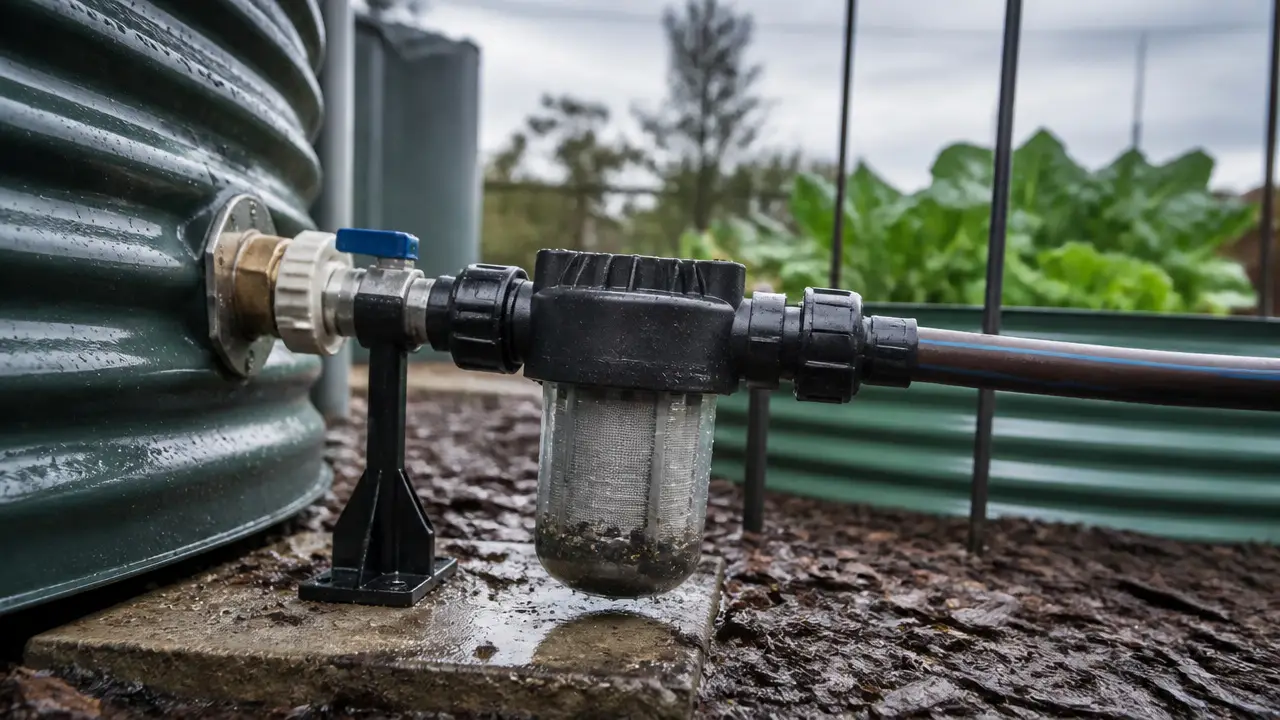
Most rain barrels have an outlet near the bottom of the barrel. This outlet may have a spigot, valve, or threaded fitting.
A standard garden hose can connect directly when the outlet has standard garden-hose threads. If the threads are a different size or type, you will need an adapter.
A basic setup looks like this:
Rain barrel → shutoff valve or spigot → hose → watering point
Make sure each connection fits correctly. Do not force two fittings together if the threads do not match. That can damage plastic fittings and cause leaks.
Connecting a Hose Step by Step
- Check the barrel outlet for a spigot or threaded connection.
- Make sure the hose fitting matches the outlet.
- Add the correct adapter if the threads are different.
- Make sure any required washer or gasket is in place.
- Hand-tighten the hose connection.
- Open the valve slowly and check for leaks.
Avoid overtightening plastic fittings. A damaged fitting can be harder to repair than a small leak.
How Much Pressure Will a Rain Barrel Provide?
A rain barrel does not normally create the pressure you get from municipal water. Gravity provides the pressure.
The higher the water surface is above the end of your hose, the more pressure you have. Raising the barrel on a strong platform can improve flow, but only modestly.
A barrel sitting just above ground level may work well for:
- Filling watering cans
- Slowly watering plants
- Feeding a short garden hose
- Supplying some gravity-fed drip systems
It may not provide enough pressure for sprinklers, spray nozzles, or irrigation equipment designed for household water pressure.
Hose Length Matters
A long hose adds resistance to water flow. Small hoses, narrow fittings, filters, and many connectors can reduce flow even more.
If water barely comes out of a long hose, try a shorter hose first. That helps you determine whether the problem is low gravity pressure rather than a blocked outlet.
Can You Raise the Barrel for More Pressure?
Yes, but the support must be strong enough.
Water is heavy. A full rain barrel can weigh hundreds of pounds. Place it on a level, stable base designed to hold the full weight of the barrel and water.
Do not stack the barrel on loose blocks, unstable furniture, or a platform that can tip.
Even with a raised barrel, gravity pressure remains fairly low. Raising it a few feet can improve flow, but it will not make the barrel behave like a pressurized household faucet.
When Would You Need a Pump?
A pump may be useful when you need more pressure or want to move water farther.
For example, you may need a pump to:
- Run certain sprinklers
- Use a spray nozzle effectively
- Send water uphill
- Move water through a long hose
- Supply an irrigation system that requires more pressure
The pump needs to match the required flow, pressure, power source, and water quality.
Rain barrel water can contain leaves, grit, and other debris. A suitable inlet screen or prefilter can help protect a pump and irrigation equipment. Never assume a pump can handle dirty water unless it is designed for that use.
Adding a Hose Connection to a Barrel Without One
If your barrel does not have an outlet, a fitting can sometimes be installed near the bottom.
A common option is a bulkhead fitting. This is a fitting that passes through the wall of a tank and seals around the hole. A valve or hose adapter can then attach to it.
Installing one requires drilling the correct-size hole and creating a reliable watertight seal. The exact fitting depends on the barrel material and wall thickness.
Before drilling, make sure the barrel is suitable for storing water and has not previously held unsafe chemicals.
Guidance on using a regular hose on a rain barrel helps evaluate long-term tank ventilation with dependable overflow handling.
Also leave the fitting high enough above the very bottom that heavy sediment is less likely to enter the hose.
Keep the Outlet From Clogging
Roof runoff can carry grit, leaves, insects, and other debris into a rain barrel.
Use a screened inlet and clean the barrel as needed. If the hose flow suddenly becomes weak, check:
- The barrel's water level
- The outlet valve
- The hose connection
- The hose for kinks
- Screens or filters for clogs
- Sediment around the barrel outlet
Cleaning these areas often restores gravity flow.
Can You Use a Rain Barrel Hose for a Garden?
Usually, yes. Garden watering is one of the most common uses for stored rainwater.
Remember that roof runoff is generally treated as non-potable water, meaning it is not considered drinking water. The roof, gutters, animals, debris, and storage conditions can all affect its quality.
Avoid assuming that water from a rain barrel is safe for drinking just because it looks clear.
Plan for Overflow and Mosquito Control
Connecting a hose does not replace the barrel's overflow system. Your barrel still needs a safe way to handle water once it becomes full.
Route overflow away from foundations and other areas where excess water could cause problems.
Keep barrel openings screened so mosquitoes cannot easily reach standing water. Make sure lids and screens remain secure after working on hose fittings.
Protect the Hose and Barrel in Freezing Weather
If your area freezes, water trapped inside valves, fittings, or hoses can expand and damage them.
Follow the barrel manufacturer's cold-weather guidance. Depending on the setup and climate, this may include disconnecting hoses, draining exposed fittings, or taking the barrel out of service for winter.
Do not rely on a closed valve alone to protect a water-filled fitting from freezing.
Frequently Asked Questions
Can I connect a normal garden hose to a rain barrel?
Yes, if the barrel outlet has standard garden-hose threads. Otherwise, you can often use the correct threaded adapter between the barrel outlet and hose.
Why does water come out of my rain barrel hose so slowly?
Rain barrels normally depend on gravity instead of household water pressure. A low water level, long hose, clogged fitting, narrow connection, or kink can reduce the flow further.
Will a rain barrel run a sprinkler?
Sometimes, but many sprinklers require more pressure than a gravity-fed barrel can provide. A suitable pump may be necessary.
Does raising a rain barrel increase water pressure?
Yes. Raising the water level above the hose outlet increases gravity pressure. However, a raised barrel still produces much less pressure than most household plumbing systems.
Can I leave a hose connected all the time?
You can in suitable conditions, but check the connection for leaks and protect it from freezing weather. A hose left in a position lower than the barrel can also drain water whenever the valve is open.
Can I install a hose fitting in a plastic barrel?
Often, yes. A properly sized bulkhead fitting can create a sealed outlet through the barrel wall. The barrel must be structurally suitable, and the fitting must match its material and wall thickness.
Do I need a filter before connecting a hose?
Not always for simple watering, but screening debris before it enters the barrel helps prevent clogged valves and hoses. Pumps and small irrigation emitters may need additional filtration.
Is rain barrel water safe to drink through a hose?
Do not assume it is. Roof-collected rainwater can contain microbes, chemicals, and other contaminants. Drinking-water use requires a suitable collection and treatment system, proper maintenance, current laboratory testing, and compliance with applicable local requirements.