As an affiliate, we may earn a commission from qualifying purchases. We get commissions for purchases made through links on this website from Amazon and other third parties.
Yes, you can use a soaker hose with a rain barrel. The main issue is water pressure.
A rain barrel uses gravity instead of a pump. That usually gives much less pressure than an outdoor faucet. A short soaker hose may work well if the barrel is raised above the garden, but a long hose may barely seep at the far end.
How a Soaker Hose Works With a Rain Barrel
A soaker hose has many tiny pores that let water slowly seep into the soil. Most are normally connected to a pressurized outdoor faucet.
A rain barrel is different. Water leaves the barrel because gravity pushes it downward. The higher the water surface is above the hose, the more pressure you have.
This height difference is called head height.
For example, a barrel sitting on a sturdy raised stand will usually feed a soaker hose better than a barrel sitting directly on the ground.
The water level matters too. A full barrel produces more pressure than the same barrel when it is almost empty.
Will Gravity Provide Enough Pressure?
Sometimes.
Gravity creates about 0.43 psi of pressure for every foot of vertical height between the water surface and the hose.
That means a rain barrel with only a few feet of head height produces very little pressure compared with a household faucet.
This does not automatically mean the system will fail. Soaker hoses can release water at low pressure, but performance varies by hose design.
With a gravity-fed setup, you may notice:
- Faster soaking near the barrel.
- Less water reaching the far end.
- Slower watering as the barrel empties.
- Poor performance with long hoses.
- Very little flow if the hose runs uphill.
A soaker hose designed for low-pressure or gravity-fed watering is usually a better match than one that expects normal household water pressure.
Raise the Rain Barrel Safely
Raising the barrel can improve flow because it increases head height.
However, water is heavy. A full rain barrel can weigh several hundred pounds. Larger tanks can weigh much more.
Use a stand that is designed for the loaded weight and place it on a firm, level base. Do not stack loose blocks, scrap wood, or other unstable materials just to gain extra pressure.
A modest increase in height may improve a gravity system, but raising a barrel several feet simply to create faucet-like pressure is usually not practical or safe.
Keep the Soaker Hose Short
Shorter runs usually work better with a rain barrel.
A long soaker hose has more resistance, and water pressure falls as it moves through the system. With low gravity pressure, that can leave the far end of the hose nearly dry.
Instead of connecting one very long hose, consider watering smaller sections separately.
For example, you could connect the barrel to one garden bed, water it, then move the connection to another bed.
If you use several branches, do not assume the barrel can supply all of them evenly at the same time. Dividing a small gravity flow among several hoses can make each one work poorly.
Avoid Running the Hose Uphill
Keep the soaker hose at or below the barrel outlet when possible.
Gravity-fed systems work best when water travels downhill. A rise in the garden line uses some of the available head height.
Small changes in elevation that barely matter with a pressurized faucet can make a noticeable difference when using a rain barrel.
Check the Barrel Outlet and Fittings
The soaker hose is only one part of the flow path.
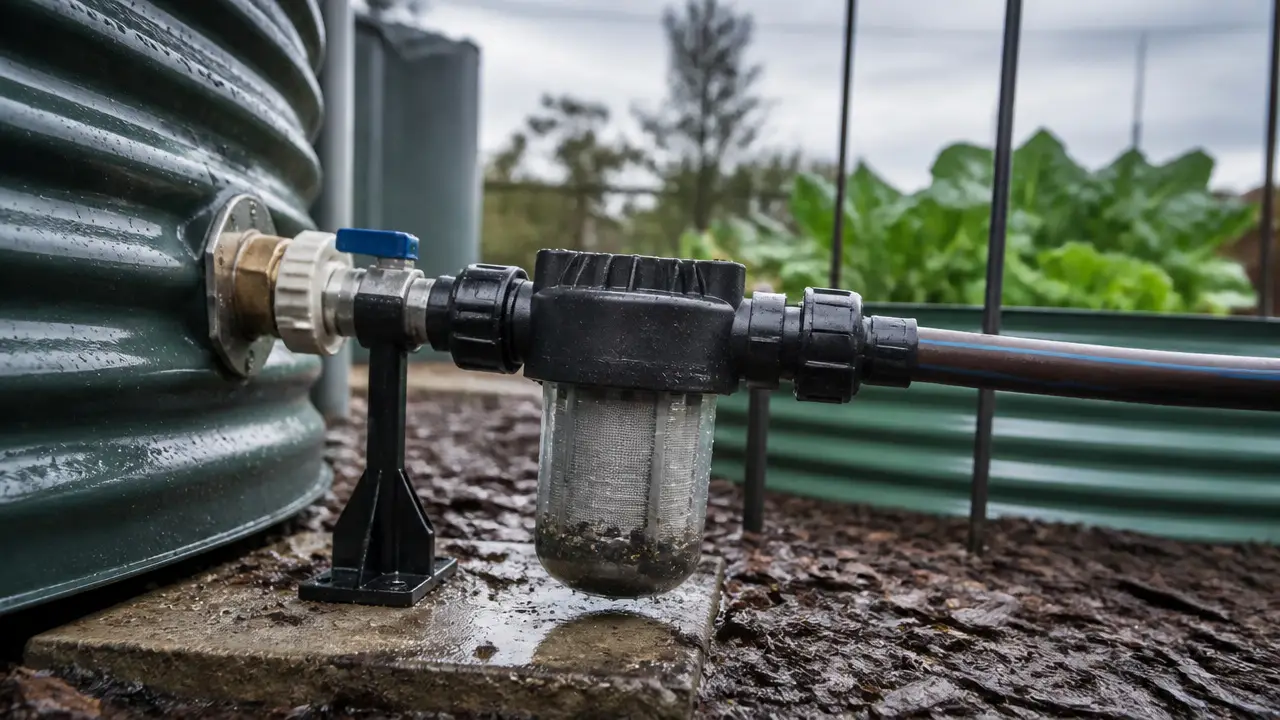
A small valve, narrow fitting, clogged screen, or restrictive adapter can reduce an already-low gravity flow.
Check the entire path:
Rain barrel → outlet → valve → fittings → supply hose → soaker hose
Use fittings that match the barrel and hose without creating unnecessary restrictions.
A leaking connection also wastes water and can reduce the amount reaching the garden.
If the barrel uses a bulkhead fitting, that simply means a fitting that passes through the barrel wall and creates a sealed connection for a valve or pipe.
You May Need to Remove a Pressure Regulator
Some soaker-hose systems include a pressure regulator for use with household faucets.
A regulator limits high incoming pressure. That can be useful on a normal water line, but a rain barrel already has very low pressure.
A regulator may restrict gravity flow too much.
Check the hose manufacturer's instructions before removing anything. Some hose systems use special fittings that are part of their intended setup.
Filter Out Debris Before the Hose
Rainwater can carry leaves, grit, roof particles, insects, and other debris into a barrel.
Small particles can eventually block fittings or the pores in a soaker hose.
Use a suitable inlet screen and keep the barrel clean. A simple sediment screen or filter ahead of the irrigation line may also help when clogging is a problem.
Do not use very fine filtration unless the system needs it. Fine filters can create extra resistance, which matters when you have very little pressure available.
Clean screens and filters as needed rather than waiting until flow stops.
Test the System Before Setting Up the Whole Garden
A simple test can tell you more than guessing about pressure.
Explore improving flow from a gravity-fed barrel to evaluate capacity margins for reliable long-duration service.
Connect a short section of soaker hose and fill the barrel. Open the valve fully and watch the hose for several minutes.
Check whether water appears along the entire hose.
Then check it again as the barrel level drops.
You want to know whether the hose still waters evenly enough when the barrel is half full or lower. A system that works only when the barrel is completely full may not be very useful in regular watering.
How Long Should You Run the Soaker Hose?
There is no single correct watering time.
It depends on:
- Soil type.
- Hose flow.
- Barrel water level.
- Hose length.
- Garden slope.
- Plant needs.
- Recent rainfall.
- Weather.
Gravity-fed soaker hoses can run much more slowly than the same hose connected to a faucet.
Check the soil instead of watering by the clock alone. After watering, dig into the soil near the plants and see how deeply the moisture has reached.
The goal is usually to wet the root area without creating runoff or keeping the soil constantly soggy.
Should You Connect the Soaker Hose Directly to the Barrel?
You can, but a short regular garden hose between the barrel and soaker hose is often more convenient.
A typical layout is:
Rain barrel → shutoff valve → short supply hose → soaker hose
The supply hose carries the water to the bed without releasing it. The soaker hose then spreads the water through the planting area.
This lets you keep the barrel near a downspout rather than putting it directly beside the plants.
Remember that long supply hoses, narrow fittings, and elevation changes can still reduce gravity flow.
Would Drip Irrigation Work Better?
It can.
Some low-pressure drip systems are specifically designed for gravity-fed tanks or barrels. They may provide more controlled watering than a conventional soaker hose.
However, not every drip emitter works well at rain-barrel pressure. Many irrigation components are designed for pressurized water.
Check the required operating pressure before choosing emitters, timers, filters, or other irrigation parts.
A simple gravity-compatible drip system can be a good choice when you need to water individual plants rather than soak an entire bed.
Do You Need a Pump?
Usually not for a small garden near the barrel.
Try a simple gravity setup first if:
- The garden is close to the barrel.
- The hose is short.
- The ground is fairly level or downhill.
- Slow watering is acceptable.
A pump may make sense when you need to move water farther, run longer irrigation lines, overcome elevation changes, or operate equipment that requires more pressure.
Adding a pump also adds electrical, plumbing, pressure, and dry-run concerns. The pump must be suitable for the water source and irrigation system. Outdoor electrical equipment should be installed and protected appropriately for wet conditions.
For a basic rain barrel and nearby raised bed, gravity is usually the simpler place to start.
Keep Rainwater Use in Perspective
Collected rainwater can contain material washed from the roof, gutters, and collection system.
Using it for ornamental plants and many garden irrigation tasks is different from treating it as drinking water. Do not assume water from a rain barrel is potable, which means safe for drinking.
For edible gardens, reduce contact between stored roof runoff and the edible parts of plants when practical. A soaker hose can help because it applies water near the soil instead of spraying it over leaves, fruit, and vegetables.
Also consider your roofing material, possible contaminants, local conditions, and local rules when deciding how collected rainwater should be used.
A Simple Setup That Usually Works Best
For a small gravity-fed garden system:
- Put the rain barrel on a stable, load-rated base.
- Keep the garden below or close to the barrel outlet.
- Use a full-size, unrestricted outlet where practical.
- Keep the supply line reasonably short.
- Start with a short section of soaker hose.
- Avoid unnecessary pressure regulators or restrictive fittings unless required.
- Keep debris out of the barrel and irrigation line.
- Test watering along the entire hose.
- Check performance again when the barrel is partly empty.
- Add more hose only if the available flow remains adequate.
The simplest system is often the most dependable.
Frequently Asked Questions
Can a soaker hose work without water pressure?
A soaker hose still needs some pressure to move water through it. A raised rain barrel provides a small amount of pressure through gravity. Whether that is enough depends on the hose, its length, elevation, and the barrel's water level.
How high should a rain barrel be for a soaker hose?
There is no single required height. More vertical distance between the water surface and the hose creates more pressure. About one foot of head height provides roughly 0.43 psi. Raise a barrel only on a stable structure designed to carry its full weight.
Why does only the beginning of my soaker hose get wet?
The system may not have enough pressure to push water along the entire hose. A long hose, clogged filter, restrictive fitting, low barrel level, or uphill section can make the problem worse. Try a shorter hose and check the flow path for restrictions.
Can I connect several soaker hoses to one rain barrel?
You can, but several hoses may divide the available flow so much that none waters evenly. Gravity systems have limited pressure and flow. Watering one section at a time often works better.
Can I use a timer with a rain barrel and soaker hose?
Possibly, but many hose timers need more pressure than a gravity-fed barrel provides. Check the timer's required operating pressure before using it. A timer that works on a household faucet may not work reliably on a rain barrel.
Is a drip hose better than a soaker hose for a rain barrel?
A low-pressure drip system can be a better choice when you want controlled watering at individual plants. Make sure the emitters and other parts are designed to work at the low pressure available from a gravity-fed tank.
Should I leave the end of the soaker hose open?
Normally, the end is capped during watering so water seeps through the hose rather than simply flowing out the end. Some systems allow you to open the end periodically to flush debris. Follow the hose manufacturer's instructions.