As an affiliate, we may earn a commission from qualifying purchases. We get commissions for purchases made through links on this website from Amazon and other third parties.
Yes. Rainwater can be filtered with anything from a simple debris screen to a multi-stage treatment system. The right filter depends on what you plan to do with the water.
For potable use, whether rainwater should be filtered before drinking is a separate safety decision from basic debris removal.
For a rain barrel used to water a garden, a screen and sediment filter may be enough. Water used for toilets, laundry, or drip irrigation may need finer filtration and sometimes disinfection. Rainwater intended for drinking needs a much more careful approach. A single filter does not automatically make roof runoff safe to drink.
Rainwater can pick up bird droppings, dust, roofing chemicals, metals, and other contaminants as it moves across a roof and through gutters. The CDC recommends choosing treatment based on the germs and chemicals actually present in the water.
What Kind of Filter Can You Use for Rainwater?
Several types of filters can be used in the same rainwater system. Each does a different job.
| Filter or treatment stage | Main job | Common use |
|---|---|---|
| Leaf screen or gutter screen | Stops leaves, insects, and large debris | Almost any rainwater system |
| Downspout filter | Removes larger debris before storage | Rain barrels and tanks |
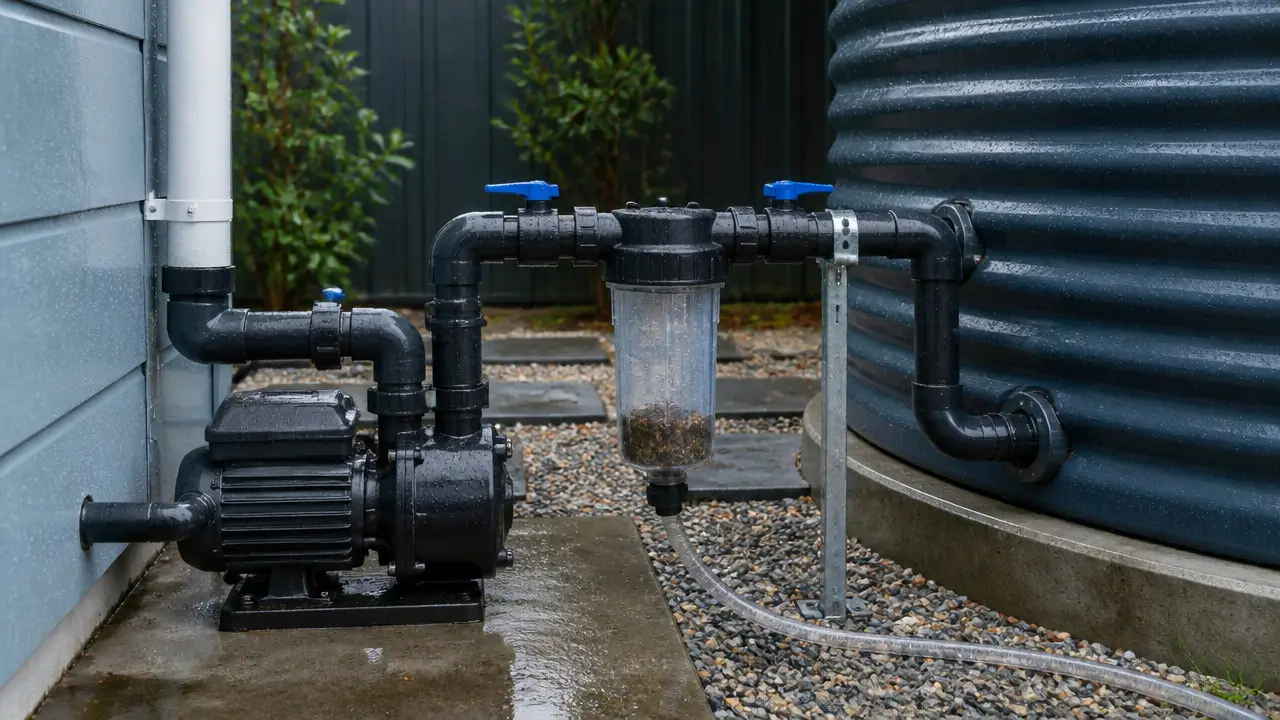
| Sediment filter | Removes dirt and small suspended particles | Pumps, irrigation, household reuse |
| Activated carbon filter | Can reduce some tastes, odors, and chemicals | Water used around the house |
| Membrane filtration | Removes much smaller particles and some germs, depending on type | Higher-level treatment |
| Reverse osmosis | Removes germs and certain dissolved chemicals | Drinking-water treatment systems |
| UV treatment | Inactivates germs in suitably clear water | Often used after filtration |
These stages are not interchangeable. For example, a sediment cartridge may make cloudy water look much clearer while doing little about dissolved chemicals or viruses.
Likewise, an activated carbon filter is usually not a substitute for disinfection. The CDC notes that many common carbon filters are mainly intended to improve taste and odor or reduce specific chemicals rather than remove germs.
Start With a Screen Before the Water Reaches the Tank
The easiest debris to remove is debris that never reaches your rain barrel or cistern.
A basic system often starts with a screen at the gutter, downspout, tank inlet, or a combination of these locations. The screen can keep out:
- Leaves
- Twigs
- Insects
- Seeds
- Large pieces of roof debris
This protects the tank and reduces the amount of material that settles on the bottom.
The inlet should also be screened against mosquitoes. The CDC specifically recommends screening rainwater collection openings or otherwise managing rain barrels so mosquitoes cannot breed in them.
A screen is useful, but it is only a coarse filter. Fine dirt, microorganisms, and dissolved contaminants can pass through it.
A First-Flush Diverter Helps Before Filtration
A first-flush diverter sends the first portion of runoff from a storm away from your storage tank.
That first water often carries a larger amount of dust, bird droppings, pollen, and other material that collected on the roof between rains.
The diverter does not replace a filter. It reduces the amount of contamination the filters and tank have to handle.
The CDC recommends considering a first-flush diverter because the first runoff can pick up dirt, germs, and chemicals from the collection surface.
A basic collection path might look like this:
Roof → gutter screen → first-flush diverter → tank inlet screen → storage tank
For simple garden watering, that may be most of the treatment you need.
Sediment Filters Remove Smaller Particles
A sediment filter catches particles that pass through the larger screens.
These filters are often installed after the tank, especially when a pump moves the water toward irrigation equipment or household fixtures.
Sediment filters are commonly described by their micron rating. A micron is one-millionth of a meter. A smaller micron rating means the filter can catch smaller particles.
Do not choose the smallest filter simply because it sounds better.
Very fine cartridges can clog quickly if tank water carries a lot of sediment. That reduces flow and increases maintenance.
A staged setup often works better:
Tank → coarse sediment filtration → finer sediment filtration → other treatment if needed
Keeping leaves and heavy sediment out of the tank first can greatly reduce the work required from cartridge filters later.
What Filter Should You Use for Garden Rainwater?
For watering ornamental plants or a basic garden with a hose, filtration can often be simple.
A practical system may include:
- Gutter or downspout screening
- A screened tank inlet
- A first-flush diverter
- An outlet positioned so it does not constantly pull settled material from the bottom
Additional filtration becomes more important when the water passes through equipment with small openings.
Drip irrigation is a good example. Small emitters can clog with sediment. Choose a filter that matches the requirements of the particular emitters and irrigation equipment rather than choosing a filter by micron rating alone.
You also need enough flow through the filter. An undersized filter can become a restriction between the tank and irrigation system.
What About Rainwater Used for Toilets or Laundry?
Indoor non-potable use is more complicated.
Non-potable means the water is not intended for drinking.
Depending on the system and local requirements, rainwater used for toilets, laundry, or other indoor purposes may require filtration, disinfection, separate piping, backflow protection, and other safeguards.
The exact requirements vary by location. For example, some jurisdictions require filtration and disinfection for particular indoor rainwater uses. EPA summaries of state rules show that treatment requirements can differ significantly depending on the location and intended use.
Rainwater plumbing must also stay safely separated from drinking-water plumbing unless the system has been designed according to the applicable plumbing requirements.
Do not simply connect a rainwater tank to household drinking-water pipes.
Can You Filter Rainwater for Drinking?
Rainwater can be treated for drinking in some properly designed systems, but this is not a job for one basic filter.
Roof runoff can contain both microorganisms and chemicals. Possible contamination can come from the air, bird and animal waste, roofing materials, gutters, pipes, or the storage tank itself.
A drinking-water system may therefore need several barriers, such as:
- Suitable roof and collection materials
- Debris screening
- First-flush diversion
- Clean, protected storage
- Sediment filtration
- Treatment selected for identified chemical contaminants
- A suitable disinfection stage
- Regular maintenance
- Laboratory water testing
The exact treatment train should be based on the water being collected and the contaminants that need to be controlled.
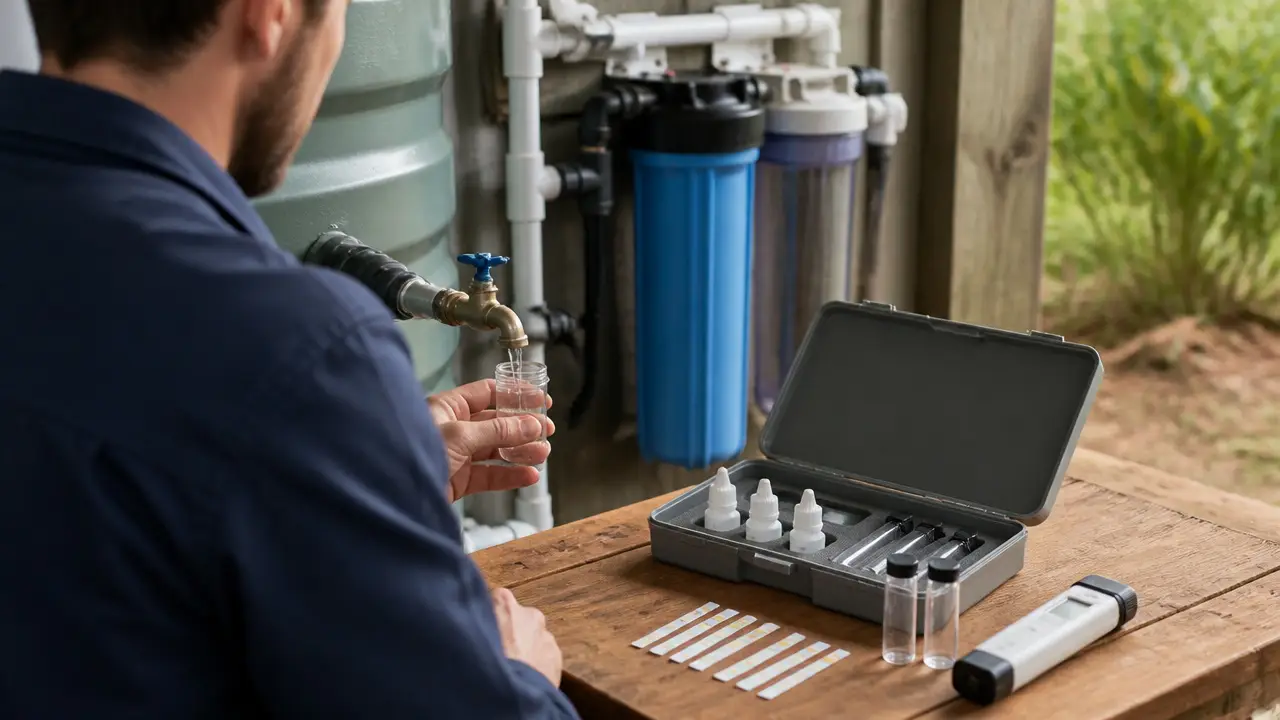
The CDC recommends testing rainwater used for drinking at least once each year for harmful germs and chemicals. Testing may also be needed when water changes in color, taste, or smell or when something happens that could contaminate the system.
Local health authorities may recommend additional testing.
Why a sediment filter is not enough
A sediment filter mainly deals with particles.
It does not necessarily remove:
- Bacteria
- Viruses
- Dissolved metals
- Roofing chemicals
- Other dissolved contaminants
Even very clear water can contain contaminants you cannot see, taste, or smell.
What about very fine filters?
Different membrane filters remove different contaminants.
The CDC explains that microfiltration, ultrafiltration, nanofiltration, and reverse osmosis have different capabilities. For example, reverse osmosis can remove germs and certain chemicals, while less restrictive membrane filters may allow some contaminants through.
Check the actual certification and contaminant-removal claims for any treatment unit. Do not assume that a small micron number means the unit solves every water-quality problem.
What about UV?
UV uses ultraviolet light to inactivate microorganisms.
Account for rainwater filtration methods to interpret maintenance priorities supported by meaningful test results.
It is commonly placed after filtration because UV works best when the water is sufficiently clear. Particles can interfere with the light reaching microorganisms.
UV does not remove sediment, metals, salts, or other chemicals. It is a disinfection stage, not a complete rainwater treatment system.
Where Should the Filter Go?
Filter location depends on what you are trying to remove.
A well-planned rainwater system removes contaminants in stages rather than forcing one filter to handle everything.
A typical arrangement might be:
Roof
↓
Leaf and gutter screening
↓
First-flush diverter
↓
Tank inlet screen
↓
Storage tank
↓
Pump
↓
Sediment filtration
↓
Additional treatment required for the intended use
↓
Fixture or irrigation system
Some pumps require a strainer or other protection on the inlet side. Other filtration equipment belongs on the pressure side of the pump. Follow the pump and filter manufacturers' installation requirements because excessive restriction on a pump inlet can cause operating problems.
Do You Filter Before or After the Rainwater Tank?
Usually, both.
Use coarse filtration before the tank to keep large debris out.
Use finer filtration after the tank when the water needs to pass through pumps, irrigation equipment, household plumbing, or additional treatment equipment.
This approach keeps the storage tank cleaner while preventing fine filters from filling with leaves and large debris.
It is much easier to clean an accessible gutter screen than to remove decomposing material from the bottom of a large cistern.
Don't Forget Filter Flow Rate
A filter has to pass enough water for the system it serves.
A tiny drinking-water cartridge might work well at one faucet but be unsuitable for a pump supplying several irrigation zones.
Check:
- Required flow rate
- Filter connection size
- Pump flow
- Pump pressure
- Maximum operating pressure
- Recommended replacement interval
- Pressure loss through the filter
Flow rate is the amount of water moving through the system over a period of time, such as gallons per minute.
A dirty filter usually creates more resistance. You may notice lower pressure or reduced flow as it loads with sediment.
Rainwater Filters Need Maintenance
No rainwater filter is maintenance-free.
Depending on the system, routine work may include cleaning screens, emptying first-flush devices, replacing cartridges, checking tank openings, removing accumulated sediment, and maintaining UV or other treatment equipment.
A neglected filter can restrict flow. Treatment equipment can also become a place for microbial growth when it is not maintained correctly. The CDC recommends maintaining filters according to their manufacturer's instructions.
It helps to install filters where you can reach them without taking apart half of the plumbing.
Choosing the Right Rainwater Filter
Start with the intended use rather than the filter.
For a simple rain barrel feeding a garden hose, concentrate on keeping leaves, insects, and tank sediment under control.
For drip irrigation, add filtration that meets the requirements of the emitters.
For indoor non-potable water, determine the filtration, disinfection, plumbing separation, and testing requirements that apply where you live.
For drinking water, treat the entire collection and treatment system as one system. Do not rely on a sediment cartridge, carbon filter, UV unit, purifier, or home test by itself to establish that roof-collected water is safe to drink.
The safest treatment plan is one based on the collection materials, intended use, current laboratory water testing, proper equipment selection, ongoing maintenance, and applicable local health and plumbing requirements.
Frequently Asked Questions
Can I put a filter on a rain barrel?
Yes. You can screen the water as it enters the barrel and add a sediment filter at the outlet if your hose, pump, or irrigation system needs cleaner water. Make sure the filter can handle the required flow.
What is the best filter for rainwater?
There is no single best filter. A garden system may only need debris and sediment filtration. Household reuse can require additional treatment. Drinking-water systems may require several filtration and disinfection stages selected according to water testing.
Will a 5-micron filter make rainwater safe to drink?
No. A micron-rated sediment filter mainly controls particles. It does not establish that the water is free from harmful microorganisms or dissolved chemicals.
Does a carbon filter make rainwater drinkable?
Not by itself. Activated carbon can reduce certain chemicals, tastes, and odors depending on the filter, but many carbon filters are not designed to remove disease-causing microorganisms. Drinking-water treatment must address the specific contaminants present.
Do I need to filter rainwater for watering plants?
Basic watering may only require screens that keep leaves, insects, and large debris out of the tank. Finer filtration may be needed for drip irrigation or other equipment with small openings.
Should a rainwater filter go before or after the pump?
It depends on the filter and pump. Coarse screens and some strainers may be installed before pumping, while cartridge filters are often installed after the pump. Follow the equipment manufacturer's requirements so the filter does not restrict the pump inlet or exceed the filter's pressure limits.
Can UV replace a rainwater filter?
No. UV is a disinfection method. It does not remove sediment or dissolved chemicals, and it works best with adequately clear water. Filtration is normally used before UV when UV is part of a treatment system.