As an affiliate, we may earn a commission from qualifying purchases. We get commissions for purchases made through links on this website from Amazon and other third parties.
A TDS reading of 29 ppm is low, and the TDS level itself is not considered a drinking-water health concern. But a reading of 29 ppm does not prove that the water is safe to drink.
TDS stands for total dissolved solids. It is an estimate of dissolved minerals, salts, and other charged substances in water. A TDS meter cannot tell you whether the water contains harmful bacteria, viruses, lead, arsenic, pesticides, or many other contaminants.
As of August 2026, the World Health Organization does not set a health-based guideline value for TDS because TDS at levels normally found in drinking water is not considered a health concern. In the United States, the EPA lists 500 mg/L as a secondary standard for TDS. That is mainly related to taste, deposits, staining, and other aesthetic effects rather than a health limit.
What Does 29 TDS Mean?
A TDS reading of 29 ppm means the meter estimates that the water contains about 29 parts per million of dissolved solids.
For ordinary water testing, ppm and mg/L are often treated as roughly equivalent. So a reading of 29 ppm is approximately 29 mg/L.
That is a relatively low amount of dissolved material.
Low readings are common in water such as:
- Rainwater that has had little contact with minerals
- Reverse-osmosis water
- Some spring or surface waters
- Water treated by deionization or other purification methods
The number does not tell you what those 29 ppm consist of.
For example, two water samples could both show 29 ppm while having very different chemistry and microbiological quality.
Is 29 TDS Too Low to Drink?
A TDS level of 29 ppm is not automatically too low for drinking.
There is no WHO health-based minimum TDS level that drinking water must contain. WHO's current drinking-water guidance does not establish a health guideline for TDS.
You may notice a difference in taste. Water with very little dissolved mineral content can taste flat compared with mineral-rich tap or well water.
Low TDS can also be one clue that water has low mineral content, but you should not use TDS alone to judge whether the water is corrosive. Corrosion also depends on factors such as:
- pH
- Alkalinity
- Hardness
- Temperature
- Dissolved gases
- Plumbing materials
If low-TDS water is being used throughout a house, a proper water analysis gives you much more useful information than a TDS meter alone.
Why 29 TDS Does Not Prove Water Is Safe
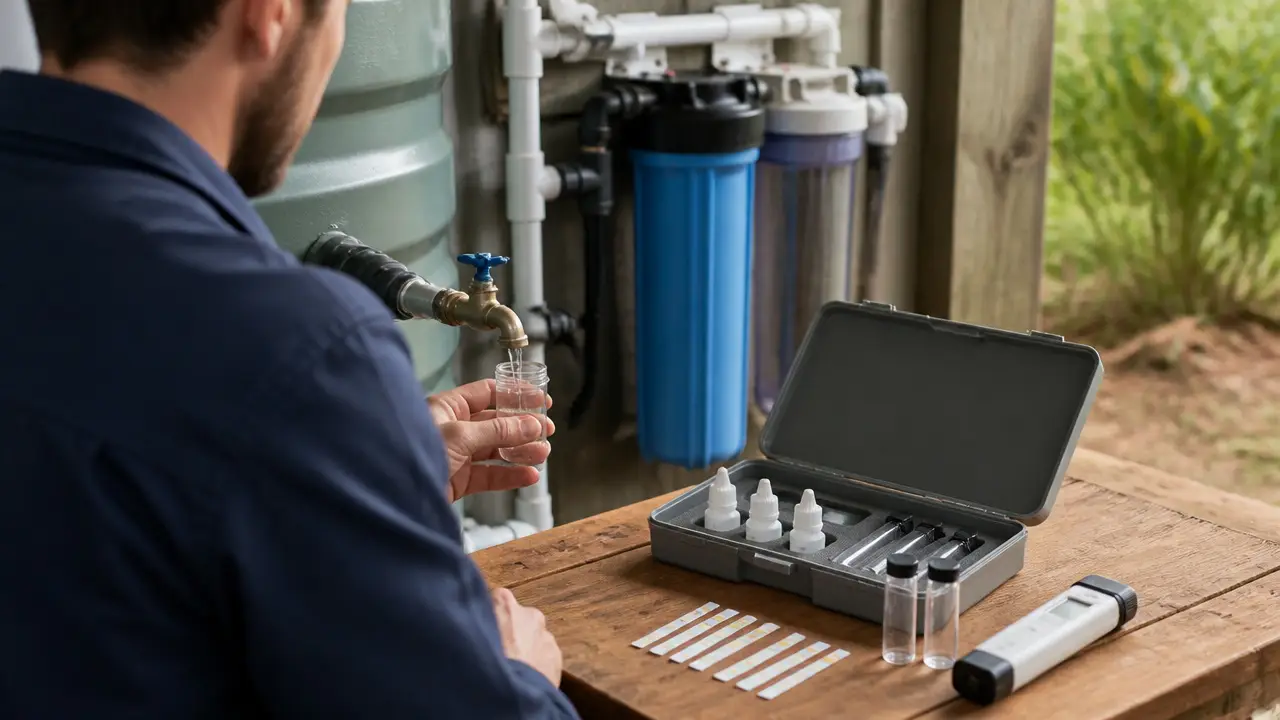
A handheld TDS meter usually works by measuring the water's electrical conductivity. Dissolved ions conduct electricity, so the meter uses conductivity to estimate TDS.
It does not perform a complete chemical or microbiological analysis.
A TDS meter may therefore give a very low reading even when the water has another problem.
It does not reliably establish the absence of:
- Disease-causing microorganisms
- Lead
- Arsenic
- Many pesticides
- Many organic chemicals
- Other contaminants that may matter at very small concentrations
This is why a reading such as 29 ppm should be treated as information about mineral content, not as a pass-or-fail drinking-water test.
What If the 29 TDS Water Comes From a Public Water Supply?
If the water comes from a regulated public water system, your TDS meter is not the best way to decide whether the water is suitable for drinking.
Public systems monitor drinking water for regulated contaminants. In the United States, you can review the water-quality report supplied by your utility and follow any current drinking-water advisories. CDC recommends using these reports and local notices to understand your tap-water quality.
A TDS reading of 29 ppm by itself would not normally be a reason to avoid the water.
However, unusual changes in taste, odor, color, or plumbing conditions may justify further investigation.
What If the Water Comes From a Private Well?
For a private well, 29 TDS is not enough information to decide whether the water is safe.
Private wells in the United States generally are not monitored like public water systems. CDC recommends testing private well water at least once each year for harmful germs and chemicals, along with additional testing when contamination is suspected or water conditions change.
The tests you need depend partly on local conditions. Your health department or a certified drinking-water laboratory can help determine what should be included.
TDS can still be useful. A sudden change from your normal reading can signal that something in the water or treatment system has changed. But the meter cannot identify the cause.
What If 29 TDS Is Collected Rainwater?
Be more cautious with collected rainwater.
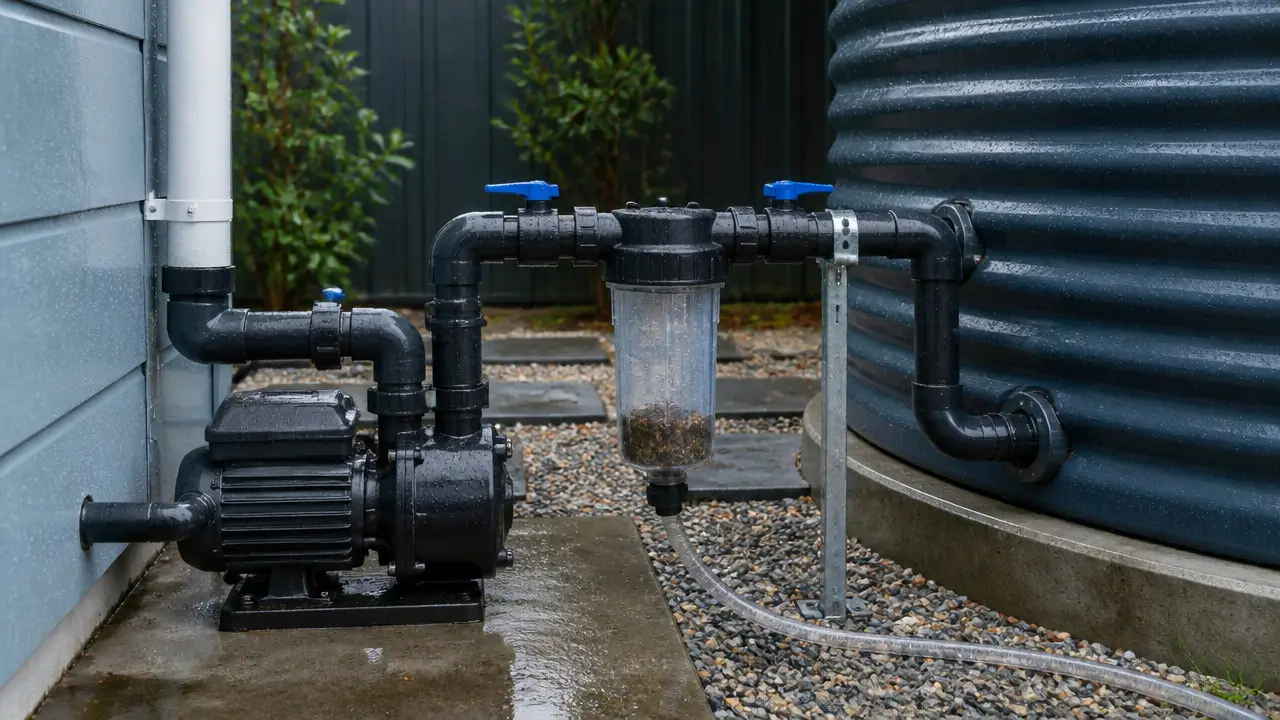
A low TDS reading is expected in many rainwater systems because rain contains relatively little dissolved mineral material before it contacts surfaces. But once rain lands on a roof and travels through gutters, pipes, and storage, it can pick up contaminants.
Possible sources include:
- Roof and gutter debris
- Bird and animal waste
- Dust
- Roofing or plumbing materials
- Dirty storage tanks
- Contaminated collection components
A TDS meter will not provide a complete picture of these risks.
Consider 20 ppm TDS drinking-water safety to interpret the cleaning or replacement step justified by test evidence.
So roof-collected rainwater with a TDS of 29 ppm should not be assumed potable, meaning safe for drinking, simply because the number is low.
Drinking-water use needs to be treated as a whole system. That includes suitable collection surfaces, debris removal and prefiltration, appropriate treatment, regular maintenance, current laboratory testing, and compliance with applicable local requirements.
A first flush device can also help divert some of the initial roof runoff, which often carries accumulated debris. It is useful as a pretreatment step, but it does not make collected rainwater safe to drink by itself.
What If the Reading Is After a Reverse-Osmosis System?
A reading of 29 ppm can be reasonable for water leaving a reverse-osmosis system, depending on the incoming water and the system.
TDS readings can be useful for watching changes in RO performance. For example, comparing the feed-water TDS with the treated-water TDS can show whether dissolved-ion rejection has changed over time.
But even after RO treatment, TDS does not provide a complete safety check.
A low reading does not prove that:
- The membrane is intact
- The storage tank is sanitary
- The plumbing is uncontaminated
- Microorganisms are absent
- Every chemical of concern has been removed
Follow the treatment-system maintenance schedule and use appropriate water testing when drinking-water safety needs to be confirmed.
Should You Try to Raise a TDS of 29?
Usually, you do not need to add minerals simply because the TDS meter reads 29 ppm.
Some people prefer the taste of water with more minerals. Some treatment systems also use a remineralization stage for taste or water chemistry.
But there is no universal TDS target that everyone needs to reach for health.
If your concern is plumbing corrosion, measure the factors that actually affect corrosion rather than adding minerals until the TDS meter reaches an arbitrary number.
If your concern is drinking-water safety, test for the contaminants relevant to the source instead.
How to Decide Whether 29 TDS Water Is Drinkable
Start by asking where the water came from.
For regulated tap water, check your utility's current water-quality information and advisories.
For a private well, use a qualified laboratory and follow local health-department guidance about appropriate testing. CDC recommends at least annual testing for harmful germs and chemicals.
For collected rainwater, do not use the TDS reading as proof of potability. Evaluate the entire collection, storage, treatment, and testing system.
For RO or other treated water, use TDS as an operating clue rather than a complete water-quality test.
The important distinction is simple:
29 ppm TDS is a low TDS reading, not a drinking-water safety certification.
Frequently Asked Questions
Is 29 ppm TDS good drinking water?
A TDS reading of 29 ppm is low and is not, by itself, considered a health problem. However, the water is only suitable for drinking if other important microbiological and chemical contaminants are also within appropriate limits.
Is 29 TDS too low?
There is no general health-based minimum TDS requirement for drinking water. WHO does not establish a health-based guideline value for TDS. Low-TDS water may taste different and can have different water chemistry, but 29 ppm alone does not mean the water is unsafe.
Is lower TDS always better?
No. Lower TDS only means the water contains fewer dissolved ions according to the meter's estimate. It does not necessarily mean the water contains fewer harmful contaminants.
Can bacteria be present when TDS is only 29 ppm?
Yes. A TDS meter is not a microbiological test. Water can have a low TDS reading while still containing microorganisms, so laboratory testing is needed when microbiological safety must be established.
Is 29 TDS normal for reverse-osmosis water?
It can be. The final reading depends on the incoming water and treatment system. Comparing treated-water TDS with the untreated feed water can help monitor RO performance, but the result does not prove drinking-water safety.
Can rainwater with 29 TDS be safely drunk?
Not based on TDS alone. Roof-collected rainwater can pick up microorganisms and chemicals from the roof, gutters, storage tank, and plumbing. Potable rainwater requires an appropriate whole-system approach to collection, treatment, maintenance, testing, and local requirements.
Should I remineralize water with 29 TDS?
Not simply to reach a particular TDS number. Remineralization may be used for taste or water-chemistry reasons, but there is no universal TDS target that every drinking-water supply needs to meet.