As an affiliate, we may earn a commission from qualifying purchases. We get commissions for purchases made through links on this website from Amazon and other third parties.
Yes. Water with 20 TDS can be okay to drink, but the TDS number alone does not tell you whether the water is safe.
A reading of 20 TDS means the water contains a small amount of dissolved minerals and salts. It does not show whether the water contains harmful bacteria, viruses, parasites, lead, pesticides, or other contaminants. If the water comes from collected rainwater, a private well, or another untreated source, you should not decide it is safe to drink based only on a 20 TDS reading.
What Does 20 TDS Mean?
TDS stands for total dissolved solids. It measures dissolved substances in water, mainly minerals and salts such as:
- Calcium
- Magnesium
- Sodium
- Potassium
- Bicarbonate
- Chloride
- Sulfate
TDS is normally reported in milligrams per liter (mg/L) or parts per million (ppm). In ordinary water testing, 20 ppm TDS is roughly equivalent to 20 mg/L.
A reading of 20 ppm is low. It means there are relatively few dissolved minerals in the water.
The World Health Organization does not set a health-based minimum or maximum TDS guideline because TDS itself is not considered a health concern at levels normally found in drinking water. High TDS can affect taste and other water qualities, but TDS is not a complete measure of safety.
Is 20 TDS Too Low to Drink?
Not necessarily.
There is no WHO health guideline saying that drinking water must contain more than 20 mg/L of TDS. WHO's current drinking-water guidance does not establish a health-based TDS value.
Water with very low TDS may include water produced by:
- Reverse osmosis systems
- Distillation
- Deionization
- Some naturally low-mineral water sources
- Rainwater before or after treatment
Low TDS water may taste flat compared with mineral-rich water. It can also behave differently in plumbing depending on its pH, alkalinity, and other chemistry. But a TDS reading of 20 does not, by itself, make the water unsafe.
You also do not need to add minerals simply because a meter reads 20 ppm. Whether remineralization makes sense depends more on taste and the chemistry of the finished water than on hitting a particular TDS number.
Why a 20 TDS Reading Does Not Prove Water Is Safe
This is the most important limitation of a TDS meter.
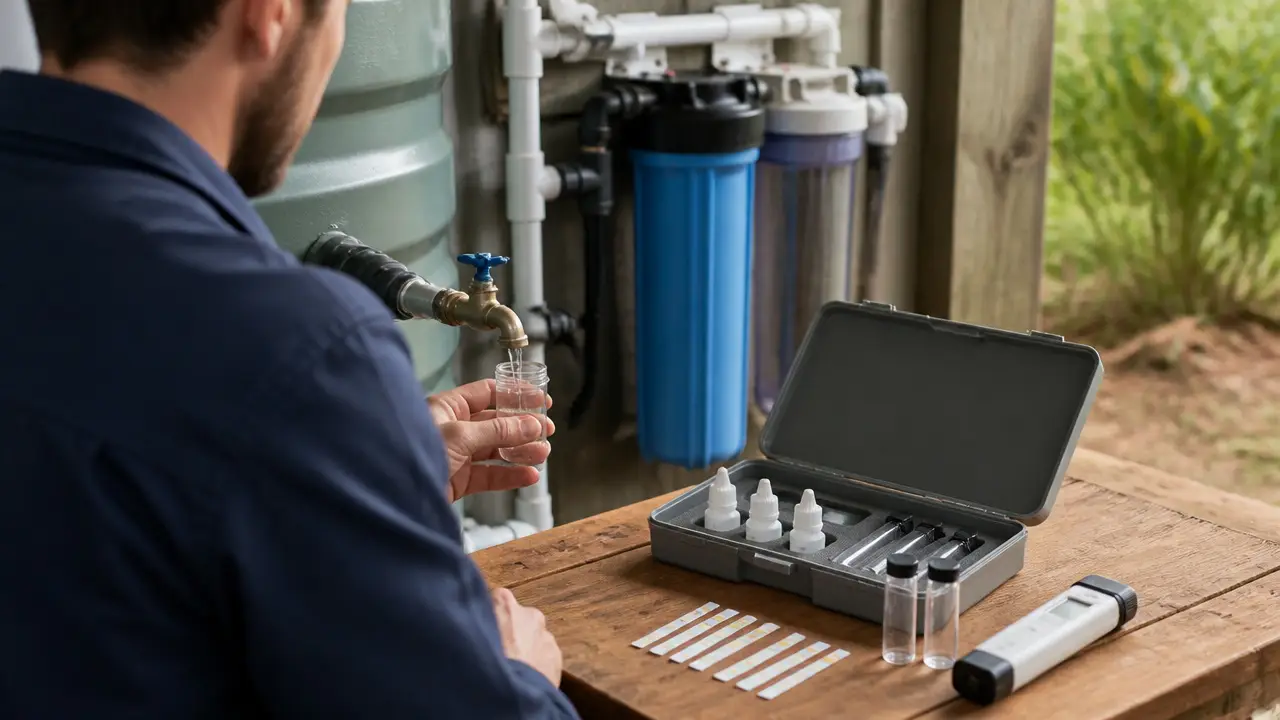
A handheld TDS meter usually estimates dissolved solids from the water's electrical conductivity. Dissolved ions make water conduct electricity more easily. The U.S. Geological Survey uses conductivity as one way to evaluate dissolved material in water.
But a TDS meter is not a drinking-water safety test.
| A TDS meter can help indicate | A TDS meter cannot establish |
|---|---|
| Amount of electrically conductive dissolved material | Whether bacteria are present |
| Changes in mineral content | Whether viruses or parasites are present |
| Whether an RO system is reducing many dissolved ions | Whether lead is at a safe level |
| Changes in a water source over time | Whether pesticides or other chemicals are safe |
| Very high or very low dissolved-mineral levels | Whether water is potable |
Potable means safe for drinking.
Water could measure 20 ppm TDS and still contain a harmful contaminant. Another water supply could have several hundred ppm of harmless minerals and still be safe to drink.
That is why TDS should be treated as one water-quality measurement, not a pass-or-fail drinking-water test.
How 20 TDS Compares With the EPA TDS Guideline
The U.S. Environmental Protection Agency lists 500 mg/L TDS as a secondary drinking-water standard. Secondary standards mainly address things such as taste, staining, deposits, and other aesthetic effects. They are not federal health-based limits in the same way as primary drinking-water standards.
That does not mean that everything below 500 ppm is automatically safe.
For example:
- 20 ppm TDS does not guarantee safe drinking water.
- 200 ppm TDS does not guarantee safe drinking water.
- 500 ppm TDS does not guarantee safe drinking water.
TDS tells you how much dissolved material is present. It does not tell you exactly what that material is or whether other hazards are present.
What If the 20 TDS Water Comes From Reverse Osmosis?
A reading around 20 TDS can occur with water that has gone through an effective reverse osmosis, or RO, system.
In that situation, the number can be useful for checking whether the membrane is reducing dissolved ions. For example, comparing the TDS before and after the RO membrane can help reveal a major change in membrane performance.
But the finished-water TDS number still does not prove that the entire treatment system is producing safe drinking water.
Other things matter, including:
- The quality of the source water
- What contaminants need to be removed
- Whether the treatment equipment is designed for those contaminants
- Filter and membrane replacement
- Tank and faucet sanitation
- Whether bacteria can grow downstream of treatment
- Appropriate water testing
CDC recommends choosing treatment based on contaminants actually present in the source water rather than relying on appearance, taste, or one general measurement.
What If It Is Rainwater With 20 TDS?
Be much more cautious.
Rainwater can contain relatively little dissolved mineral material and therefore produce a low TDS reading. But after falling through the air and running across a roof, gutters, pipes, and a storage tank, it can pick up contaminants.
CDC notes that collected rainwater can contain germs and chemicals even when it looks clean. Possible sources include dust, smoke, bird droppings, roofing materials, gutters, pipes, and storage materials.
So this situation:
Rainwater → TDS meter → 20 ppm
does not mean:
Rainwater → safe to drink
A TDS meter might completely miss the main problem you need to address.
Study EPA guidance for TDS in drinking water to assess service priorities supported by the latest reliable readings.
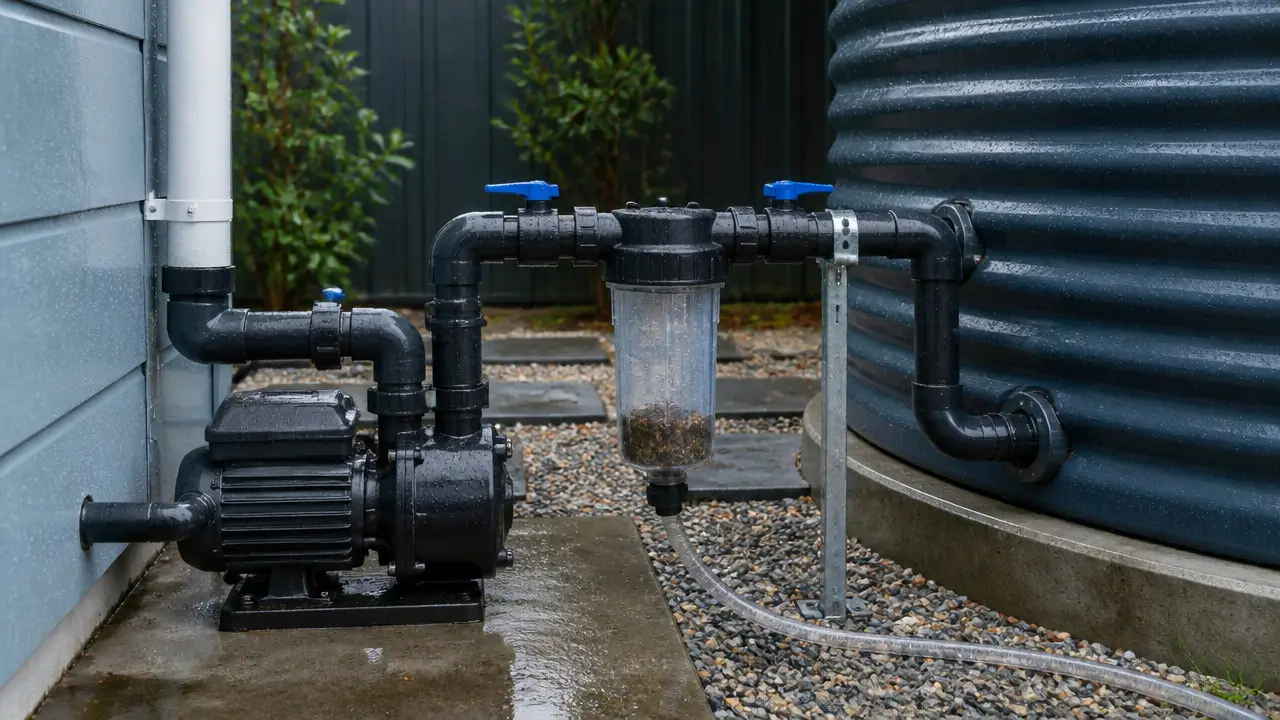
For drinking-water use, think of rainwater as a whole system:
catchment → debris control → first flush → storage → prefiltration → treatment → testing → maintenance
A first-flush diverter sends away the first portion of roof runoff during a storm. That water often carries more dirt and contamination from the roof. It can improve incoming water quality, but it does not make the remaining water automatically potable. CDC recommends regular testing for germs and chemicals when rainwater is used for drinking, cooking, or bathing.
Should You Drink Water Just Because the Meter Says 20?
Use the source of the water to guide your decision.
Treated municipal water
If the water comes from a regulated public drinking-water supply and has simply been treated further with an RO system, a low TDS reading by itself is usually not a reason to avoid it.
Bottled or commercially treated water
Follow the supplier's information and applicable drinking-water requirements rather than judging the water by TDS alone.
Private well water
A 20 TDS reading is not enough. Private water supplies need appropriate laboratory testing for contaminants relevant to the source and local conditions.
Collected rainwater
Do not assume it is safe because the TDS is low. CDC recommends regular testing for harmful germs and chemicals if collected rainwater is consumed.
Unknown water source
If you do not know where the water came from or how it was treated, a TDS meter cannot establish that it is safe to drink.
Do You Need a Higher TDS for Healthy Water?
There is no single ideal TDS number that makes drinking water healthy.
TDS combines many different dissolved substances into one number. Two samples can both measure 100 ppm while containing very different minerals.
For that reason, trying to reach a particular number such as 50, 100, or 150 ppm does not provide meaningful proof of drinking-water quality.
A better question is:
Does the water meet appropriate drinking-water requirements for the contaminants that could realistically be present?
For a private rainwater system, that normally requires laboratory testing based on the catchment, storage system, treatment process, local conditions, and intended use. CDC advises people using rainwater or private wells to test their water at least annually and to seek local health-department advice about appropriate testing.
The Bottom Line
20 TDS water can be perfectly reasonable to drink if the water is otherwise known to be potable.
The low number itself is not a health warning. WHO does not set a health-based TDS guideline, and the EPA's 500 mg/L secondary standard deals mainly with aesthetic and nuisance effects rather than defining whether water is microbiologically and chemically safe.
The important limitation is that 20 TDS does not prove safety.
If the water is roof-collected rainwater, well water, or another private source, use suitable treatment and current laboratory testing rather than relying on a handheld TDS meter.
Frequently Asked Questions
Is 20 ppm TDS good drinking water?
It can be. A TDS reading of 20 ppm means the water has relatively little dissolved mineral material. Whether it is safe to drink depends on the source, treatment, and testing, not the TDS number alone.
Can low TDS water make you sick?
A low TDS reading itself does not show that water will make you sick. The greater concern is contaminants that a TDS meter cannot identify, such as harmful germs or specific chemicals.
Is 20 TDS reverse osmosis water safe?
It may be safe if the source water and complete RO treatment system are suitable for drinking-water use and are properly maintained. The 20 ppm reading alone cannot verify microbiological or chemical safety.
Is 20 TDS rainwater safe to drink?
Not based on that measurement alone. Roof-collected rainwater can contain germs and chemicals even with a very low TDS reading. Drinking-water use calls for suitable collection, treatment, regular maintenance, and appropriate laboratory testing.
What is a good TDS level for drinking water?
There is no single TDS number that guarantees healthy or safe drinking water. WHO does not establish a health-based guideline value for TDS. The EPA lists 500 mg/L as a secondary standard mainly for taste and other aesthetic concerns.
Does zero TDS mean pure water?
Not in the sense of being proven safe to drink. A zero or near-zero meter reading means the device detects very little electrically conductive dissolved material. It does not prove that every chemical or microorganism has been removed.
Can a TDS meter detect bacteria?
No. A normal handheld TDS meter is not a microbiological test. Laboratory testing or other appropriate validated methods are needed to check drinking water for microbial contamination.