As an affiliate, we may earn a commission from qualifying purchases. We get commissions for purchases made through links on this website from Amazon and other third parties.
A smart water irrigation system is an irrigation setup that changes watering based on real conditions instead of running the same schedule every day.
It may use weather data, soil-moisture sensors, flow sensors, or programmed plant information to decide when and how long to water. The goal is to give plants enough water while reducing unnecessary watering.
For a rainwater system, smart irrigation can also help make stored water last longer because the controller can skip watering when the soil is already wet or when rain has recently fallen.
How a Smart Irrigation System Works
A basic irrigation timer follows a fixed schedule. For example, it might turn on every Monday, Wednesday, and Friday for 20 minutes.
A smart irrigation controller can adjust that schedule.
Depending on the system, it may consider:
- Recent or expected rainfall
- Air temperature
- Soil moisture
- Plant type
- Sun and shade
- Seasonal changes
- Water flow
- Different watering zones
The controller then opens and closes irrigation valves as needed.
Not every smart system uses all of these inputs. Some mainly use internet-based weather information. Others rely on sensors installed in the yard.
Smart Controller vs. Regular Irrigation Timer
The biggest difference is how the watering schedule is created.
A regular timer normally waters according to times you enter manually. Unless you change the settings, it will keep using that schedule.
A smart controller can adjust watering automatically.
| Regular timer | Smart irrigation controller |
|---|---|
| Uses a fixed schedule | Can change the schedule |
| Usually requires manual seasonal changes | May adjust for seasonal conditions |
| May water after recent rain unless stopped | Can often skip unnecessary watering |
| Usually has limited sensor support | May work with weather, soil, or flow sensors |
| Simple to set up | Requires more setup and configuration |
A regular timer can still work well when it is managed carefully. Smart controls mainly reduce the amount of manual adjustment needed.
What Parts Make an Irrigation System Smart?
The controller is usually the main part, but several devices may work together.
Smart Irrigation Controller
The controller operates the irrigation valves.
It may calculate watering times using weather information, sensor readings, or settings for each irrigation zone.
Soil-Moisture Sensor
A soil-moisture sensor measures how wet the soil is.
If the soil already has enough moisture, a compatible controller may delay or skip watering.
Sensor location matters. A sensor placed in an unusually wet or dry part of the yard may not represent the rest of the irrigation zone.
Rain Sensor
A rain sensor tells the controller that rainfall has occurred.
It is simpler than a full weather-based controller but can prevent an automatic system from watering during or shortly after rain.
Flow Sensor
A flow sensor measures how much water is moving through the irrigation line.
Flow rate means the amount of water passing through the system over a period of time, such as gallons per minute.
Some compatible smart controllers can use unusual flow readings to identify possible problems such as a broken irrigation line or valve that did not close properly.
A flow sensor does not guarantee that every leak will be detected.
Irrigation Valves
Electric valves control individual watering zones.
The smart controller sends a signal to each valve when that section of the yard needs water.
Sprinklers or Drip Irrigation
The controller does not actually deliver water to the plants. Sprinklers, drip tubing, emitters, or other irrigation devices handle that job.
A smart controller cannot correct poor irrigation design. Uneven sprinklers, clogged emitters, excessive pressure, or badly divided zones can still waste water.
Weather-Based Smart Irrigation
Many smart systems adjust watering using weather conditions.
They may consider information such as:
- Rainfall
- Temperature
- Humidity
- Sun exposure
- Seasonal weather patterns
Some systems receive this information from online weather services. Others use sensors located at the property.
Weather-based control can work well, but it should not be treated as completely automatic. Local conditions can differ from nearby weather stations.
Check the soil and plants periodically to make sure the schedule is appropriate.
Soil-Based Smart Irrigation
Soil-based systems use moisture readings to help decide whether watering is needed.
This can be useful where different parts of a property dry at different rates.
For example, a sunny vegetable bed may need water sooner than a shaded landscaping bed.
The controller and sensor must be compatible, and the sensor needs to be installed where it represents the irrigation zone reasonably well.
Can Smart Irrigation Work With Rainwater?
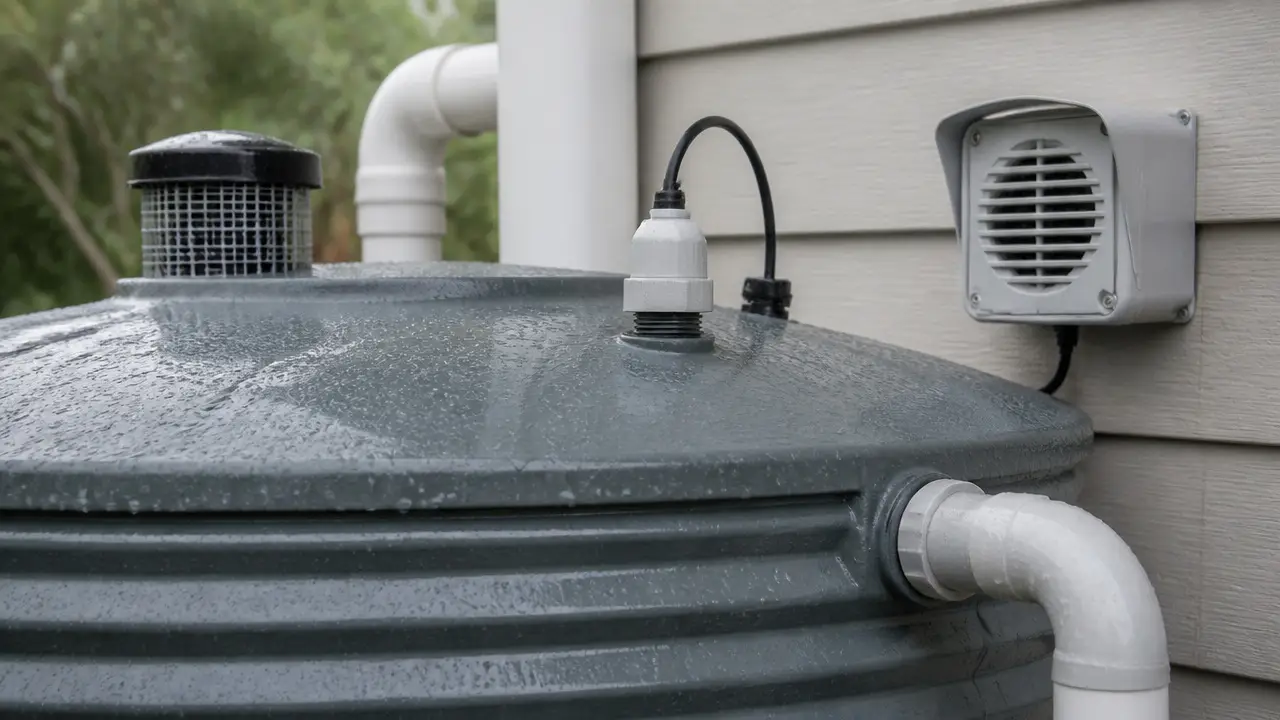
Yes. Smart irrigation can work very well with rain barrels, IBC totes, cisterns, and other rainwater storage systems.
The irrigation controller normally controls when watering occurs. The rainwater equipment provides the water.
However, you need to make sure the entire system works together.
Important factors include:
- Available water volume
- Pump flow
- Water pressure
- Irrigation flow requirements
- Pipe and hose sizes
- Filter capacity
- Valve compatibility
- Pump controls
- Electrical requirements
A controller cannot make a low-pressure rain barrel operate sprinklers that require much higher pressure.
Gravity-Fed Rain Barrels and Smart Irrigation
Gravity-fed systems can sometimes be automated, but available pressure is limited.
Water pressure from gravity depends mainly on the vertical distance between the water surface and the irrigation outlet.
This vertical distance is sometimes called head height.
A barrel sitting slightly above the garden may work with certain low-pressure drip systems. It will usually provide much less pressure than a household plumbing system.
If an electric irrigation valve needs more pressure than the barrel can provide, it may not open or close correctly.
Always check the operating requirements of the valve and irrigation equipment.
Using a Pump With Smart Irrigation
Larger rainwater systems often use a pump.
The pump must provide enough flow and pressure for the irrigation zone being operated.
For example, suppose an irrigation zone needs several gallons per minute at a certain pressure. A pump that cannot supply both at the same time may give poor sprinkler coverage.
The controller and pump also need a safe way to work together.
Some systems use:
- Pump-start relays
- Pressure switches
- On-demand pumps
- Pressure tanks
- Dedicated pump controllers
Alongside practical steps for setting the automatic water timer, evaluate control options for dependable low-pressure operation.
Do not assume an irrigation controller can power a water pump directly. Pump motors can draw much more electricity than irrigation control circuits are designed to handle.
Follow the pump and controller wiring requirements. Use a qualified electrician or irrigation professional when line-voltage wiring or unfamiliar pump controls are involved.
Why Filtration Still Matters
Smart controls do not replace filtration.
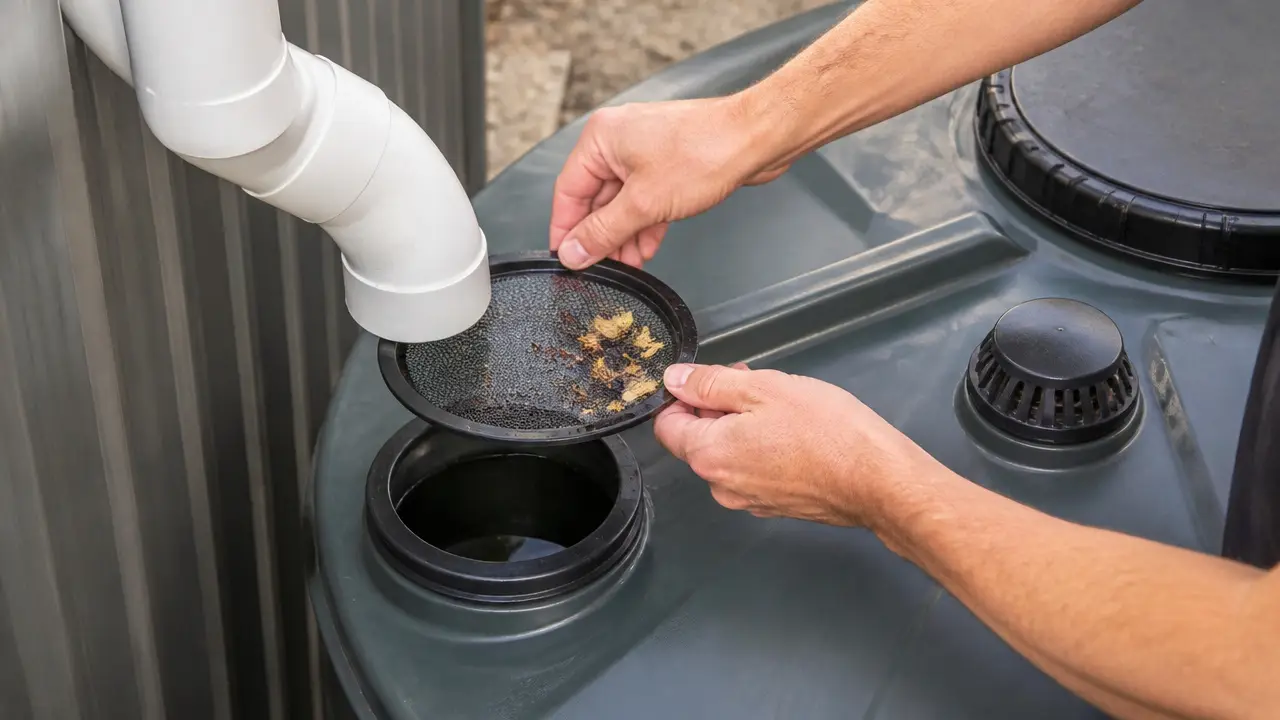
Rainwater can carry leaves, roof debris, sediment, insects, and other material into storage.
Drip emitters and small irrigation passages can clog easily.
A rainwater irrigation system may therefore include several debris-control stages, such as:
- Gutter screens
- Downspout debris control
- A first-flush device where appropriate
- Tank inlet screening
- A pump or irrigation filter
A first flush device diverts some of the initial roof runoff, which may carry a higher amount of accumulated roof debris.
Filter choice depends on the irrigation equipment. Small drip emitters generally require finer filtration than an open-ended garden hose.
Smart Irrigation Does Not Measure Water Quality
Smart irrigation technology mainly controls water use. It does not make contaminated water safe.
Weather sensors, moisture sensors, and flow meters do not tell you whether stored rainwater contains harmful microorganisms or chemicals.
For normal landscape irrigation, rainwater is generally treated as non-potable water, meaning water that is not intended for drinking.
Use extra care where irrigation water may contact food that will be eaten raw, children, pets, or areas where people could inhale fine spray. Follow applicable local requirements for collected rainwater and irrigation use.
How Smart Irrigation Can Save Stored Rainwater
A smart controller can be especially useful when your rainwater supply is limited.
Instead of watering simply because the clock says it is time, the system may postpone irrigation after rain or shorten watering during cooler weather.
That can help stretch the water in a tank through longer dry periods.
Still, a controller cannot create water.
Before designing a rainwater irrigation system, compare expected irrigation demand with available storage and local rainfall patterns.
Divide the Yard Into Useful Zones
Smart irrigation works best when areas with similar watering needs are grouped together.
For example, separate:
- Lawn from vegetable beds
- Sunny areas from shaded areas
- Drip irrigation from sprinklers
- New plants from established plants
- Plants with high water needs from drought-tolerant plants
If very different plants share one valve, the controller cannot give each group its ideal amount of water.
Pressure and Flow Still Matter
Smart controls cannot overcome basic hydraulic limits.
Two important terms are pressure and flow rate.
Pressure is the force pushing water through the system. It is often measured in pounds per square inch, or PSI.
Flow rate is how much water moves through the system over time, often measured in gallons per minute.
Your pump, pipe, valves, filters, and irrigation devices all need to work within compatible pressure and flow ranges.
Too little pressure can cause poor sprinkler coverage.
Too much pressure can cause misting, leaks, damaged fittings, or excessive flow.
What Can Go Wrong With Smart Irrigation?
Smart systems reduce some irrigation problems, but they still require attention.
Common issues include:
- Incorrect zone settings
- Poorly placed soil sensors
- Failed rain sensors
- Clogged filters
- Blocked drip emitters
- Broken sprinklers
- Leaking pipes
- Stuck valves
- Incorrect weather information
- Lost internet connections
- Pump problems
- Empty rainwater tanks
- Freeze damage
Inspecting the system is still important.
A controller may report that irrigation ran successfully even when a clogged emitter delivered little or no water to a plant.
Maintenance for a Smart Rainwater Irrigation System
Check the irrigation system regularly rather than relying only on the controller.
Useful maintenance includes:
- Clean tank inlet screens.
- Remove debris from gutters and downspouts.
- Clean irrigation filters as needed.
- Check emitters for clogging.
- Inspect sprinkler patterns.
- Look for damaged or leaking pipes.
- Test irrigation valves.
- Check soil sensors for damage or poor placement.
- Verify that rain sensors still operate properly.
- Watch pump operation for unusual cycling or noise.
- Confirm that the tank has enough water before irrigation.
- Review the watering schedule as plants and seasons change.
Rainwater storage tanks also need their own inspection and cleaning schedule.
Smart Irrigation in Freezing Climates
Smart controls do not protect irrigation pipes from freezing.
Water trapped in exposed pumps, filters, valves, hoses, and irrigation lines can freeze and damage equipment.
Systems in freezing climates may need seasonal shutdown, drainage, insulation, or other winter protection appropriate to the equipment and local conditions.
Follow the irrigation and pump manufacturers' winterizing instructions.
If the system includes buried pressure lines, complicated pumps, or equipment that cannot be drained safely, consider professional winterization.
Is Smart Irrigation Worth Using?
Smart irrigation can be useful when you want automatic watering without relying on the same fixed schedule all season.
It is especially helpful when:
- Weather changes often.
- Several irrigation zones have different needs.
- You travel frequently.
- You want to reduce unnecessary watering.
- Your stored rainwater supply is limited.
- You want alerts or better information about irrigation operation.
It is less important for very small systems that are easy to operate manually.
A simple rain barrel feeding a short drip line may only need a basic timer. A large cistern supplying several irrigation zones may benefit much more from sensors and automated controls.
The important point is to match the controller to the whole water system, not just the irrigation schedule.
Frequently Asked Questions
What does a smart irrigation system do?
A smart irrigation system automatically adjusts watering based on information such as weather conditions, soil moisture, seasonal changes, or programmed landscape needs. This can reduce unnecessary watering compared with a fixed timer.
Does smart irrigation need Wi-Fi?
Not always. Some controllers use Wi-Fi to receive weather information and allow remote control through an app. Other systems can operate using local sensors and programmed settings without a continuous internet connection.
Can a smart irrigation controller work with a rain barrel?
Sometimes. The main issue is not the controller itself but whether the rain barrel provides enough pressure and flow for the irrigation valves and watering devices. Gravity-fed barrels are usually best suited to compatible low-pressure irrigation.
Can I use a smart irrigation system with a rainwater pump?
Yes, provided the pump, controller, valves, and electrical controls are designed to work together. An irrigation controller should not be connected directly to a pump motor unless the equipment is specifically designed for that arrangement.
Does a smart irrigation system prevent overwatering?
It can reduce the chance of overwatering, but it cannot guarantee it. Incorrect settings, poor sensor placement, leaking valves, uneven irrigation, or inaccurate weather information can still cause problems.
Are soil-moisture sensors better than weather-based irrigation?
Neither approach is always better. Weather-based systems estimate watering needs from weather conditions, while soil sensors measure moisture in a specific location. The better choice depends on the property, soil, plants, irrigation design, and how accurately the sensor represents the watering zone.
Does smart irrigation make rainwater safe to use?
No. Smart irrigation controls when and how water is applied. It does not disinfect rainwater or determine whether it is safe for drinking or other sensitive uses.