As an affiliate, we may earn a commission from qualifying purchases. We get commissions for purchases made through links on this website from Amazon and other third parties.
Yes, you can fill a rain barrel from the bottom. The barrel needs a watertight lower inlet, a way for air to escape, and an overflow path near the top.
Bottom filling can work well when water comes from another rain barrel, a storage tank, or a properly designed downspout diverter. But it is not always simpler than filling through the top.
How Bottom Filling Works
A normal rain barrel fills from an opening near the top. Water enters from a downspout and the water level rises.
With bottom filling, water enters through a fitting low on the barrel. The water still rises inside the barrel in the same way.
The important difference is pressure. Water must have enough force to enter through the lower connection.
That force may come from:
- Gravity from a higher water source
- Water backing up inside a downspout diverter
- A pump
- Another barrel with a higher water level
If the incoming water source is lower than the water level in the barrel, gravity alone will not keep pushing water into it.
The Barrel Still Needs a Vent
Do not seal a rain barrel completely when filling it from the bottom.
As water enters, it takes up space that was filled with air. That air needs somewhere to go.
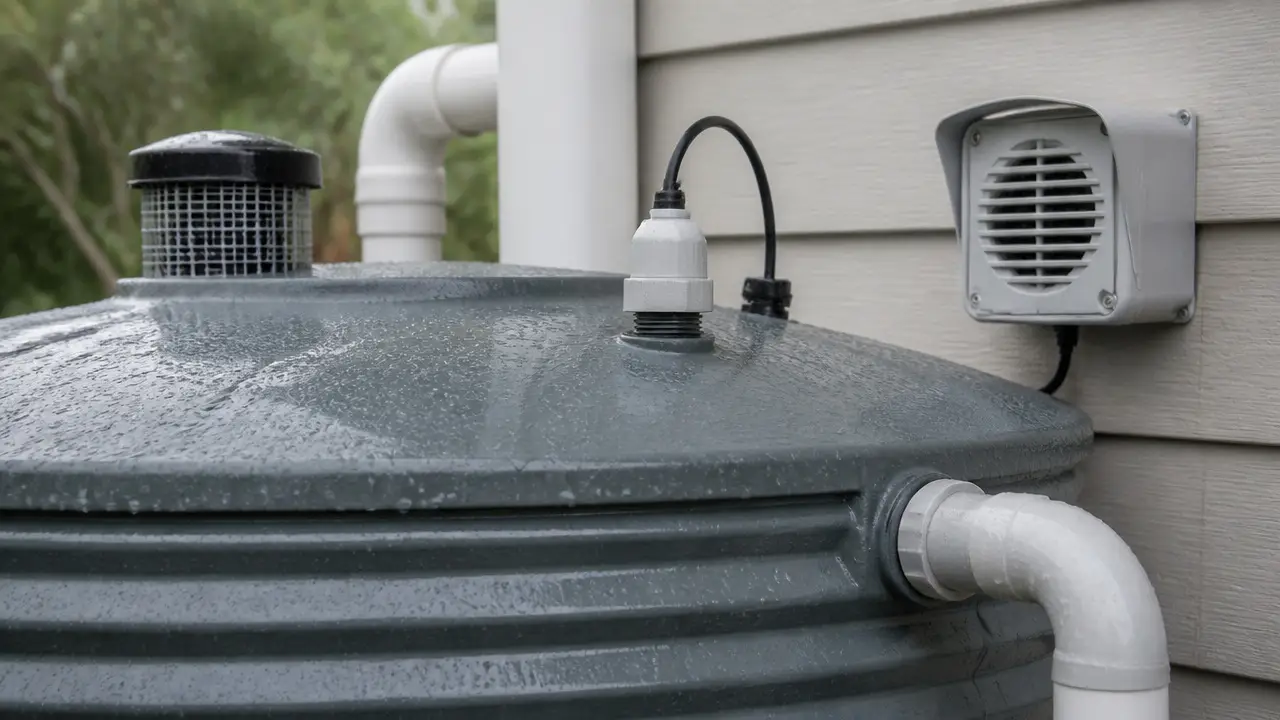
A vented lid, screened opening, or other suitable vent lets air escape. Without ventilation, pressure can build inside the container.
Most rain barrels and IBC totes used for rainwater storage are not designed to operate as pressure vessels.
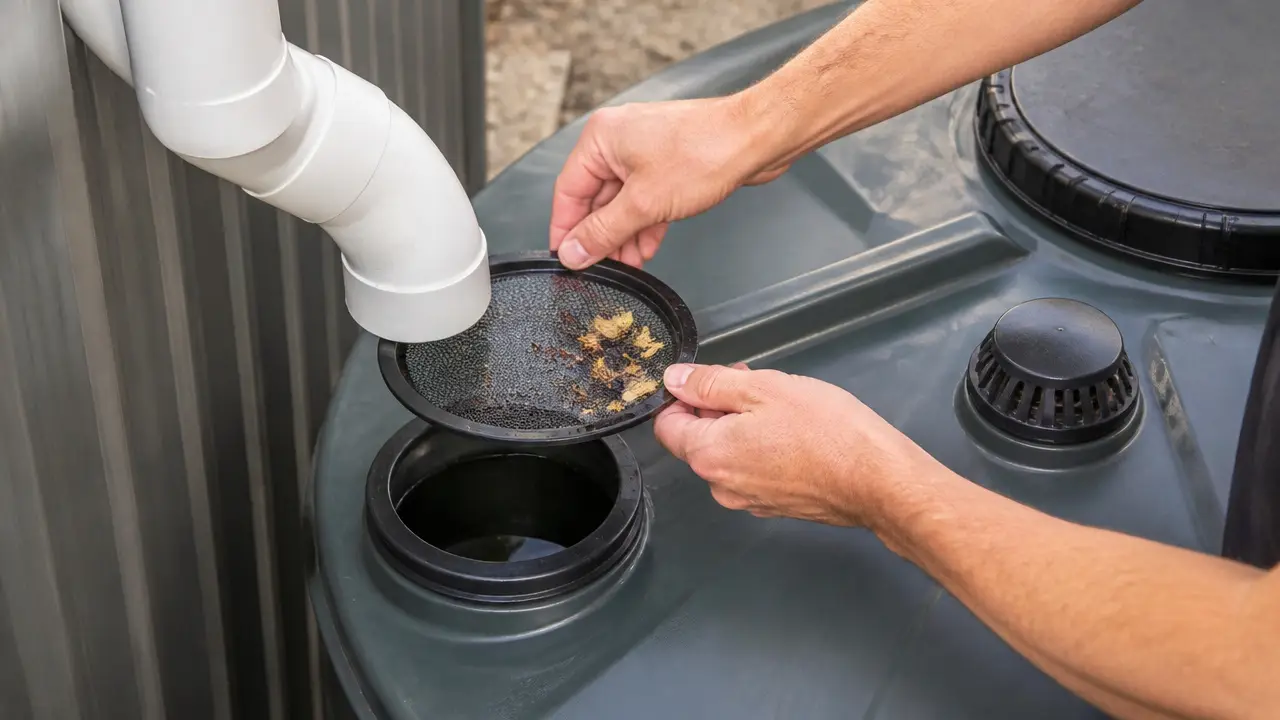
The vent should also be screened where practical to help keep insects and debris out.
You Also Need an Overflow
Bottom filling does not remove the need for an overflow.
Install or maintain an overflow near the upper part of the barrel. Once the barrel reaches its normal full level, extra rainwater needs a safe place to go.
Route the overflow away from:
- Building foundations
- Crawl spaces
- Septic system components
- Areas that cannot handle extra water
- Neighboring property where runoff could cause a problem
An overflow should be large enough to handle the incoming flow expected from the collection system.
Filling From Another Rain Barrel
Connecting two barrels near their bottoms is a common use for bottom connections.
When two vented barrels are connected near the bottom, their water levels tend to equalize.
For example, imagine two barrels connected with a hose between low fittings. Rainwater enters the first barrel. As its water level rises, water moves through the connecting hose and into the second barrel.
For this arrangement to work well:
- Both containers must be vented.
- The connecting fittings must remain watertight.
- The connecting line should not be easily kinked or blocked.
- The barrels should sit on stable, level supports.
- The barrels should have compatible overflow arrangements.
The connecting line also needs enough flow capacity. A very small hose may transfer water too slowly during heavy rain.
Can a Downspout Fill a Barrel From the Bottom?
It can, but the setup needs to be designed for it.
Some rainwater diverter arrangements send water through a hose into a side connection on the barrel. The connection may be below the normal full-water level.
The water in the downspout provides the pressure needed to push water into the barrel.
This type of system usually depends on the water levels in the diverter and barrel reaching a certain balance. When the barrel becomes full, additional rainwater should continue safely through the normal drainage system rather than forcing more water into the barrel.
Do not simply connect the bottom of a downspout to a sealed barrel. A blocked or poorly vented arrangement can cause drainage problems or put unwanted pressure on the container.
Use a Proper Tank Connection
Do not make a hole near the bottom and simply push a hose through it.
A lower opening is especially important because it remains underwater whenever the barrel contains water. A bad seal can drain the entire barrel.
A common connection uses a bulkhead fitting. A bulkhead fitting passes through the wall of a tank and creates a sealed connection for pipe, tubing, or a valve.
The fitting must be suitable for:
- The wall thickness and shape of the container
- The hose or pipe size
- The expected water pressure
- Outdoor exposure
- The intended use of the stored water
Curved barrel walls can make sealing some fittings harder than sealing fittings on flat tank surfaces.
Keep the Bottom Connection Accessible
A fitting near the very bottom may seem ideal, but it can be difficult to reach once the barrel is full.
Regarding practical steps for connecting two rain barrels together, understand storage reserves based on use rate and likely rainfall.
Leaving enough space around the fitting makes it easier to:
- Inspect for leaks
- Tighten or replace fittings when appropriate
- Disconnect hoses
- Drain the barrel
- Clean sediment from the system
Do not place a full barrel where servicing the lower fitting would require moving the barrel.
Water is heavy. A full rain barrel can weigh hundreds of pounds.
Watch for Sediment
Bottom connections can collect sediment.
Small pieces of roofing material, dirt, pollen, and other debris can enter roof runoff. Some of this material settles at the bottom of the barrel.
If the fill connection is very low, sediment can collect around the opening or move into connecting hoses.
A screened gutter or inlet and suitable prefiltration can reduce debris. A first-flush diverter, where appropriate, can also divert some of the first roof runoff away from storage. That first runoff often carries more material washed from the roof.
Even with these measures, barrels still need periodic inspection and cleaning.
Be Careful When Using a Household Hose
You can physically fill many barrels through a bottom fitting using a garden hose, but extra care is needed if that hose is connected to a drinking-water supply.
Stored rainwater or dirty tank water should not be allowed to flow backward into household plumbing.
A direct hose connection can create a backflow risk under the wrong conditions.
Use an appropriate air gap or approved backflow protection when connecting a potable water system to non-potable storage. Local plumbing requirements may determine what protection is required.
For a simple manual fill, putting the hose through the top of the barrel while maintaining an air gap is often easier than making a permanent pressurized connection at the bottom.
Do Not Pressurize the Rain Barrel
A bottom inlet does not turn a rain barrel into a pressurized tank.
If you use a pump or pressurized water source to fill the barrel, control the flow so the barrel remains essentially at atmospheric pressure.
The container should have:
- An open or properly vented air space
- A reliable overflow
- Connections rated for the conditions in which they are used
Never rely on the barrel walls or lid to contain pump or household water pressure unless the container was specifically designed and rated for that purpose.
When Bottom Filling Makes Sense
Bottom filling is most useful when you want several storage containers to work together or when a specific rainwater diverter is designed for a lower side connection.
A top inlet is usually simpler for a single barrel collecting water directly from a downspout.
For several barrels, low connecting lines can make it easier to share stored water between containers. Just remember that a leak in a low connection can release much more water than a leak near the top.
Frequently Asked Questions
Will two rain barrels connected at the bottom fill evenly?
Usually, yes. If both barrels are vented and connected by an unrestricted water line, their water levels will tend to equalize. A small or blocked connecting hose can make the second barrel fill more slowly.
Does a bottom-fill rain barrel need a hole in the lid?
It needs some form of ventilation, but it does not necessarily need a large open hole. A screened or otherwise suitable vent can allow displaced air to escape while helping keep insects and debris out.
Can I fill a rain barrel from the bottom with a garden hose?
Yes, if the fitting is suitable and the barrel remains vented. If the hose is connected to household drinking water, use appropriate backflow protection or an air-gap arrangement so stored water cannot enter the potable plumbing.
Can I connect several rain barrels at the bottom?
Yes. Low connections are often used to link multiple barrels. Use watertight fittings and adequately sized connecting lines, and place all containers on stable supports.
Will a bottom connection leak?
A properly installed fitting should remain watertight, but any connection can eventually leak. Lower fittings deserve regular inspection because a failure can drain most or all of the barrel.
Do I still need an overflow if the barrel fills from the bottom?
Yes. Every rain barrel needs a safe way to handle water after it reaches its normal full level. Bottom filling does not protect the barrel from overfilling.
Can I pump water into the bottom of a rain barrel?
You can use a pump to move water into a vented barrel, but do not allow pump pressure to pressurize an ordinary rain barrel. Use suitable controls, ventilation, and an overflow, and follow the limits of the container and pump system.