As an affiliate, we may earn a commission from qualifying purchases. We get commissions for purchases made through links on this website from Amazon and other third parties.
A water filter usually needs to be changed when it reaches its rated service life, water flow drops, pressure loss increases, or the filter shows signs of heavy loading. Do not wait for the water to look, taste, or smell bad. Some filters can lose treatment performance before there is an obvious warning.
For a rainwater system, filter life can vary a lot. A clean roof and good prefiltration may help a cartridge last longer. Heavy pollen, dust, algae, roof debris, or sediment from a dirty tank can clog the same filter much faster.
The safest rule is simple: follow the filter manufacturer's replacement schedule and replace the filter sooner if system performance shows that it is becoming clogged or damaged. CDC and EPA guidance also stresses regular filter replacement and maintenance according to the manufacturer's instructions.
Signs Your Water Filter May Need Changing
Several clues can tell you that a filter is reaching the end of its useful life.
Water flow has slowed down
A noticeable drop in flow is one of the clearest signs of a clogged mechanical filter.
Sediment, rust, dirt, pollen, and other particles collect inside or on the surface of the filter. As this material builds up, water has less open space to move through.
You might notice:
- A garden hose filling more slowly.
- Lower flow at a filtered faucet.
- A pump running longer to move the same amount of water.
- Irrigation zones receiving less water.
- A storage tank taking longer to refill through a filter.
NSF notes that mechanical filters can become clogged enough that water can no longer pass through them effectively.
A slow-flowing filter is not always a worn-out filter, however. A closed valve, blocked screen, weak pump, low tank level, or kinked hose can cause similar symptoms.
Pressure drops across the filter
Larger rainwater systems sometimes have pressure gauges before and after the filter housing.
As a filter plugs with debris, the pressure difference between those gauges usually increases. This is called pressure drop or differential pressure.
Do not use one universal pressure-drop number as a replacement rule. Filters and housings have different operating limits. Follow the filter or housing manufacturer's stated limit.
A growing pressure difference is especially useful because it can show that the cartridge is loading up even when water is still flowing.
The cartridge is heavily coated with sediment
If you open a sediment-filter housing and find the cartridge covered with mud, rust, organic material, or fine roof debris, it may be time for replacement.
This is common in rainwater systems after:
- Heavy storms.
- Long dry periods followed by rain.
- Roof or gutter cleaning.
- Tank disturbance.
- Algae or sediment problems in storage.
- Failure of an upstream screen or prefilter.
A dirty appearance can help you spot sediment loading, but appearance should not be your only replacement test.
Some filters remove substances that cannot be seen.
Taste or odor has returned
Activated carbon filters can help reduce certain tastes, odors, and chemicals, depending on the filter's design and verified performance.
The carbon works partly by adsorption, meaning certain substances stick to its large internal surface area. Eventually, that available surface becomes used up.
If an odor or taste that the filter normally controls starts returning, the cartridge may be near the end of its useful life.
But do not wait for this sign before replacing a drinking-water filter. NSF explains that carbon media may become exhausted without producing an obvious change in water flow.
The replacement indicator says it is due
Some refrigerator, countertop, under-sink, and other filters use a timer or water-use counter.
Replace the cartridge when the indicator reaches its replacement point unless the manufacturer's instructions say otherwise.
Remember that an indicator may only estimate cartridge use. It usually does not examine the cartridge itself or test the quality of the water leaving it.
EPA recommends tracking either time or gallons used when a system does not have a replacement indicator.
The filter has reached its rated gallons or service period
This is often the most important replacement signal.
A filter manufacturer may specify service life as:
- A number of gallons or liters.
- A number of months.
- A pressure-drop limit.
- Some combination of these.
The filter should normally be replaced when the first applicable limit is reached.
A household that uses a lot of water may reach the gallon limit long before the calendar limit. A rainwater system with unusually dirty incoming water may need even earlier replacement.
For filters used to reduce specific drinking-water contaminants, continuing to use the cartridge past its rated service life can reduce its effectiveness.
Different Filters Give Different Warning Signs
The right replacement rule depends on what kind of filter you have.
Sediment filters
Sediment filters trap suspended particles such as sand, rust, grit, and roof debris.
A micron rating describes the approximate size of particles the filter is designed to capture under its stated rating system. A micron is one-millionth of a meter.
Sediment filters often show their condition through:
- Reduced flow.
- Increased pressure drop.
- Heavy visible dirt buildup.
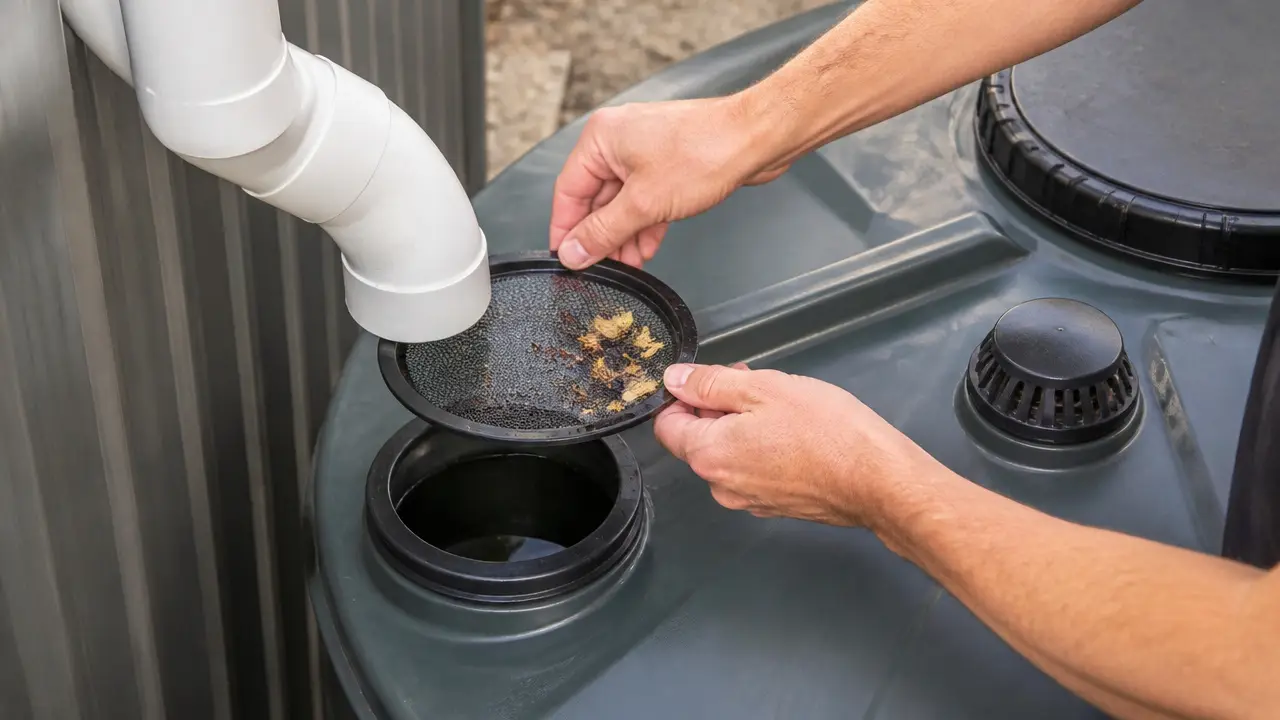
A fine sediment filter may clog quickly if it is being asked to catch large amounts of coarse material. In a rainwater system, a roof screen, leaf guard, tank inlet screen, or larger upstream sediment stage may reduce this load.
Pleated filters
Pleated cartridges have folded filter material that creates a larger filtering surface.
Depending on their design, some pleated filters are disposable while others may be cleaned and reused a limited number of times.
Do not assume a cartridge is washable because it looks sturdy. Follow its instructions. Cleaning a cartridge that was designed for disposal may damage the media or leave contamination behind.
Activated carbon filters
Carbon cartridges are different from simple sediment filters.
They can become exhausted even if they still look fairly clean and water still flows well. Because of this, replacement should be based mainly on the manufacturer's service life rather than visible dirt.
CDC also warns that germs can grow in poorly maintained water filters. Regular replacement is part of proper filter maintenance.
Ceramic filters
Some ceramic filters are designed so their outer surface can be cleaned when flow decreases. Others have replacement limits based on wear, damage, or the manufacturer's service life.
Never keep using a ceramic element that is cracked or otherwise damaged.
Cleaning can restore flow in some designs, but it does not give a damaged element its original performance back.
Reverse osmosis filters and membranes
A reverse osmosis, or RO, system normally contains several treatment parts rather than one filter.
It may include:
- A sediment prefilter.
- Carbon prefilters.
- An RO membrane.
- A carbon postfilter.
These parts do not necessarily need replacement at the same time.
The prefilters protect the membrane and may require more frequent service. Membrane condition may be evaluated using the manufacturer's schedule and system performance.
Do not assume that a normal reading from a total dissolved solids, or TDS, meter proves the water is safe to drink. TDS measures dissolved material indirectly through electrical conductivity. It does not provide a complete test for bacteria, viruses, harmful chemicals, or every other drinking-water concern.
Why Rainwater Filters Can Clog Faster
Rainwater filter life is strongly affected by what happens before the water reaches the cartridge.
Use signs a water filter needs replacement to understand a follow-up sample focused on the likely source of contamination.
Roof runoff may carry:
- Dust.
- Pollen.
- Leaves and plant material.
- Insect debris.
- Bird and animal waste.
- Fine roofing particles.
- Smoke or airborne deposits.
- Sediment that has accumulated in gutters.
A first-flush device diverts some of the first runoff from a rain event so part of the material that accumulated on the roof does not immediately enter storage. It can reduce some incoming contamination, but it does not make collected rainwater clean or safe to drink.
Tank condition also matters. If sediment has accumulated on the bottom of a cistern or IBC tote, a pump intake placed too close to that layer may send large amounts of material toward the filters.
Good system design uses each stage for the job it can reasonably handle instead of asking one fine cartridge to catch everything.
Do Not Judge Drinking-Water Filters by Appearance Alone
A cartridge can look clean and still need replacement.
This matters most when a filter is being used to reduce a drinking-water contaminant. Some contaminants do not change the color, taste, or smell of water. CDC specifically advises against relying on those senses to determine whether water is safe.
A filter also only treats the substances it was designed and verified to reduce.
For example, a filter intended mainly to remove sediment or improve taste should not be assumed to remove bacteria, viruses, lead, pesticides, or other contaminants.
If collected rainwater will be used for drinking, cooking, or other potable uses, filter condition is only one part of water safety. The whole system needs suitable collection, prefiltration, appropriate treatment for the identified hazards, proper maintenance, and current water testing. CDC recommends at least annual testing of private well or rainwater supplies for harmful germs and chemicals, with additional testing when water conditions change.
Potable means suitable for drinking. Non-potable water is intended for uses that do not require drinking-water quality, such as certain irrigation or outdoor cleaning applications where allowed.
Should You Change a Filter Early?
Yes, in some situations.
Replacing early may make sense when:
- Flow has fallen substantially.
- Pressure drop has reached the manufacturer's service limit.
- The cartridge is damaged.
- Sediment loading is unusually heavy.
- Water quality entering the filter has changed.
- The system was contaminated or serviced in a way that requires cartridge replacement.
- The cartridge has reached its rated capacity.
- The manufacturer specifically requires replacement after certain conditions.
Do not automatically stretch filter life just because the cartridge still looks clean.
A carbon filter, for example, may have plenty of open flow while its capacity for a particular contaminant is becoming exhausted.
A Filter That Clogs Quickly May Be Telling You Something
Changing cartridges constantly can mean the filter is not the real problem.
Look upstream.
For a rainwater system, repeated clogging may point to:
Poor roof or gutter screening
Large debris should normally be stopped before it reaches a fine cartridge.
Too much sediment in the tank
If the pump repeatedly pulls settled material from the tank bottom, filters can plug rapidly.
A missing coarse filtration stage
A very fine cartridge may not be the best first filter after a dirty water source.
For example, placing a fine cartridge directly in a heavily sediment-loaded line can shorten its useful life. A staged system can let a coarser filter handle larger particles before water reaches finer treatment.
An undersized filter
A small housing handling a high flow rate or large sediment load may require frequent service.
The solution may be a properly sized filter system rather than simply changing cartridges more often.
Changes in the source water
A severe storm, nearby construction, wildfire ash, roof work, tank cleaning, or another change around the collection area can alter what enters the system.
For water intended for drinking, significant source-water changes may also justify additional water testing.
Keep a Simple Filter Maintenance Record
It is easy to forget when a cartridge was installed.
Write the installation date on the housing label, maintenance log, or another place that will stay dry and readable.
Record:
- Installation date.
- Filter type and exact replacement model.
- Rated service limit.
- Meter reading, if water use is tracked.
- Pressure readings, if gauges are installed.
- Reason for replacement.
- Any unusual sediment or odor observed.
After several changes, the record can show how long filters actually last in your system.
That can also reveal seasonal patterns. A rainwater system may load filters faster during pollen season or after long dry periods, while another system may see its heaviest sediment during repeated storms.
Use the Correct Replacement Cartridge
Two cartridges that look alike are not necessarily interchangeable.
Small differences in dimensions, seals, media, flow rating, or construction can affect whether water actually passes through the filter as intended.
NSF notes that an incorrectly matched cartridge may allow water to bypass the filtering media.
Check:
- Cartridge model or specified replacement type.
- Physical dimensions.
- Seal and gasket arrangement.
- Connection or housing compatibility.
- Flow requirements.
- Micron rating where applicable.
- Verified contaminant-reduction claims when treating drinking water.
For drinking-water treatment, use replacement components that preserve the system's relevant certification and documented performance rather than assuming a cartridge is equivalent because it fits.
What to Do When You Change a Filter
Follow the instructions for your specific filter and housing.
In general, filter service is a good time to inspect the surrounding system for leaks, damaged seals, cracks, unusual buildup, or other problems.
Some cartridges need to be flushed or otherwise prepared before normal use. Carbon filters, for example, may release some loose carbon particles during initial flushing. Follow the manufacturer's stated preparation procedure.
CDC recommends wearing gloves while changing drinking-water filters and washing your hands afterward because used filters can contain trapped contaminants or microbial growth.
For pressurized housings, pumps, or electrical treatment equipment, isolate and depressurize the system according to its instructions before opening equipment. Stop and use a qualified professional if the system cannot be safely isolated or you are unsure about its pressure, wiring, or treatment setup.
Frequently Asked Questions
How can I tell if my water filter is bad?
Common clues include reduced water flow, increased pressure drop, heavy sediment buildup, physical damage, or reaching the filter's rated service life. Carbon and other contaminant-reduction filters can become exhausted without obvious visual signs, so follow the manufacturer's replacement schedule.
Should I change my filter when the water flow slows down?
Usually, a major decrease in flow suggests that a mechanical filter is becoming clogged. Check for other possible restrictions first, such as closed valves, blocked screens, low tank levels, or pump problems. Replace or service the filter according to its instructions.
Can a water filter look clean but still need replacement?
Yes. This is especially true for activated carbon and other filters that remove substances by adsorption. Their treatment capacity can become exhausted even when the cartridge does not look dirty.
Can I keep using a filter past its replacement date if the water tastes fine?
That is not a good way to judge filter condition. Harmful contaminants do not always affect taste, smell, or appearance. Replace drinking-water filters within their stated service limits.
Why does my rainwater filter clog so quickly?
The water may contain unusually high levels of sediment, pollen, roof debris, algae, or material from the storage tank. Check upstream screens, gutters, tank sediment, pump intake position, and whether the filtration stages are properly sized for the job.
Can I clean a cartridge instead of replacing it?
Only if the manufacturer says that particular cartridge is reusable. Some pleated and ceramic elements can be cleaned under specified conditions. Many sediment, carbon, and other cartridges are designed for replacement rather than cleaning.
Does changing the filter make collected rainwater safe to drink?
No. A new filter does not by itself make rainwater potable. Drinking-water use requires a suitable collection and treatment system matched to the hazards present, correct maintenance, current water testing, and compliance with applicable local requirements.