As an affiliate, we may earn a commission from qualifying purchases. We get commissions for purchases made through links on this website from Amazon and other third parties.
Bag filters should be changed when they become clogged, damaged, hard to clean, or unable to maintain the flow your system needs. There is no single replacement schedule that works for every rainwater system.
In a lightly used rainwater setup, a reusable bag filter may last for many cleaning cycles. In a system that receives lots of roof debris, sediment, algae, or fine particles, it may need cleaning often and replacement much sooner.
The best approach is to inspect the filter regularly and use its condition, flow rate, and pressure drop to decide when it needs attention.
What Determines How Often a Bag Filter Needs Changing?
Bag filter life depends mostly on how much dirt reaches it.
A filter protecting a garden irrigation system may handle very different water than a filter installed after a large cistern or before additional treatment equipment.
Important factors include:
- How dirty the incoming water is
- The filter's micron rating
- How much water passes through it
- Whether the bag is reusable or disposable
- How well leaves and sediment are removed before the filter
- The filter housing size
- How often the system operates
A micron rating describes the approximate size of particles a filter is designed to capture. A smaller micron number generally catches finer particles, but it can also clog faster.
For example, a fine bag filter placed directly after a dirty rainwater tank may load with sediment much faster than a coarser filter used after good prefiltration.
Clean or Replace the Filter When Flow Drops
Reduced water flow is one of the easiest signs that a bag filter needs attention.
As particles collect in the bag, water has more difficulty passing through it. You may notice:
- Slower filling of a downstream tank
- Reduced irrigation flow
- Longer pump run times
- Lower pressure at fixtures
- A pump struggling to maintain normal flow
If cleaning restores normal flow, the bag may still be usable.
If flow remains poor after proper cleaning, replacement may be the better choice.
Watch the Pressure Difference Across the Filter
Pressurized systems can often provide a clearer indication of filter loading.
As a bag becomes clogged, the pressure before the filter becomes higher relative to the pressure after it. This difference is called pressure drop or differential pressure.
Some filter housings have gauges that make this easy to monitor.
Follow the filter and housing manufacturer's limits for allowable pressure drop. Do not keep running a badly clogged filter simply because water is still passing through it. Excessive restriction can reduce system performance and may place extra load on pumps and filter components.
Disposable and Reusable Bag Filters Are Different
Not every bag filter should be treated the same way.
Disposable bag filters
Disposable bags are generally removed and replaced once they are heavily loaded.
Trying to repeatedly wash a disposable filter can damage the filter material or change how effectively it captures particles.
Follow the manufacturer's instructions for that particular filter.
Reusable bag filters
Some filter bags are designed to be cleaned and reused.
They may be rinsed or cleaned using the method recommended for their material. Even reusable bags eventually wear out.
Replace one if you notice:
- Tears
- Holes
- Split seams
- Damaged filter fabric
- A stretched or deformed opening
- Particles passing through that were previously captured
- Persistent clogging shortly after cleaning
A clean-looking filter is not necessarily in good condition. Damage to the fabric can allow particles through even when the bag does not appear dirty.
Rainwater Prefiltration Can Extend Bag Filter Life
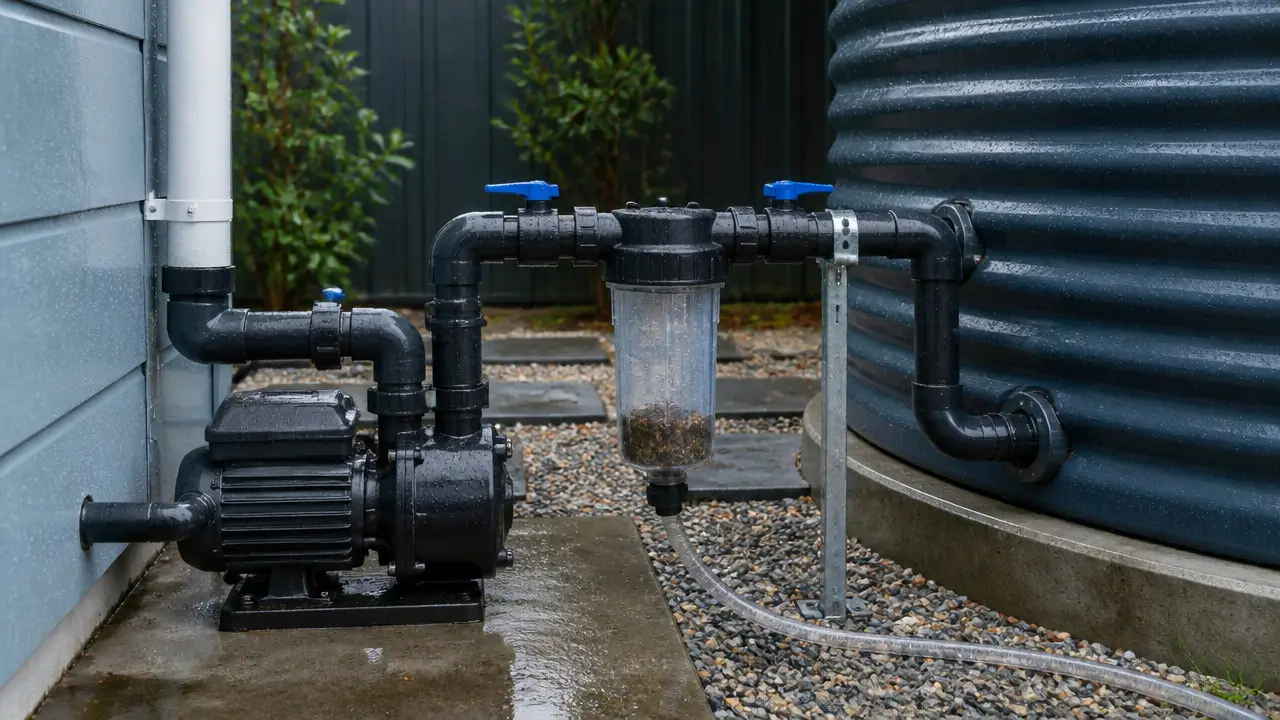
A bag filter should usually not be expected to catch every leaf, insect, piece of roof grit, and layer of tank sediment.
Removing larger material earlier in the system can greatly reduce the amount reaching the bag.
Depending on the system, this may include:
- Gutter screens
- Leaf guards
- Inlet screens
- First-flush devices
- Tank calming inlets
- Settling space in the tank
- Pump intake screens
A first-flush device diverts some of the initial roof runoff, which can contain concentrated dust and debris.
Good upstream debris control usually means less frequent bag cleaning and replacement.
Tank Sediment Can Cause Filters to Clog Quickly
Consider recommended water-filter replacement intervals to verify safety controls aligned with potable or non-potable use.
If bag filters suddenly begin clogging much faster than usual, the filter itself may not be the main problem.
Check whether the pump or outlet is drawing sediment from the bottom of the tank.
Rainwater tanks naturally collect some settled material over time. Heavy sediment entering the pump can rapidly load a downstream bag filter.
Possible causes include:
- A tank that needs inspection or cleaning
- An intake located too close to bottom sediment
- Recent disturbance of settled material
- Poor roof or gutter debris control
- Algae or organic growth entering the system
Fixing the source of the material can be more useful than simply replacing bags more frequently.
Keep a Simple Maintenance Record
Filter replacement becomes easier to predict after the system has operated for a while.
Record:
- Installation date
- Cleaning dates
- Replacement dates
- Changes in flow or pressure
- Unusual storms or debris loads
After several maintenance cycles, you may notice that your system normally needs attention after a certain amount of use or during particular seasons.
Use that pattern as an inspection schedule rather than assuming the filter will always last exactly the same amount of time.
Heavy pollen, nearby trees, roof cleaning, storms, or tank sediment can shorten a filter's normal service life.
Do Not Judge a Bag Filter Only by Time
Replacing a bag every fixed number of weeks can be convenient, but time alone is a poor indicator.
Two identical filters can have very different service lives.
One might receive relatively clear tank water and remain usable for months. Another might receive sediment-heavy runoff and clog quickly.
For most rainwater systems, these indicators are more useful than the calendar:
- Water flow
- Pressure drop
- Visible filter loading
- Filter condition
- Manufacturer limits
Inspecting regularly helps you learn what is normal for your particular system.
What If the Rainwater Is Used for Drinking?
A bag filter is mainly a particle filtration step. It should not be treated as proof that rainwater is safe to drink.
Removing visible sediment does not necessarily remove harmful microorganisms or dissolved contaminants.
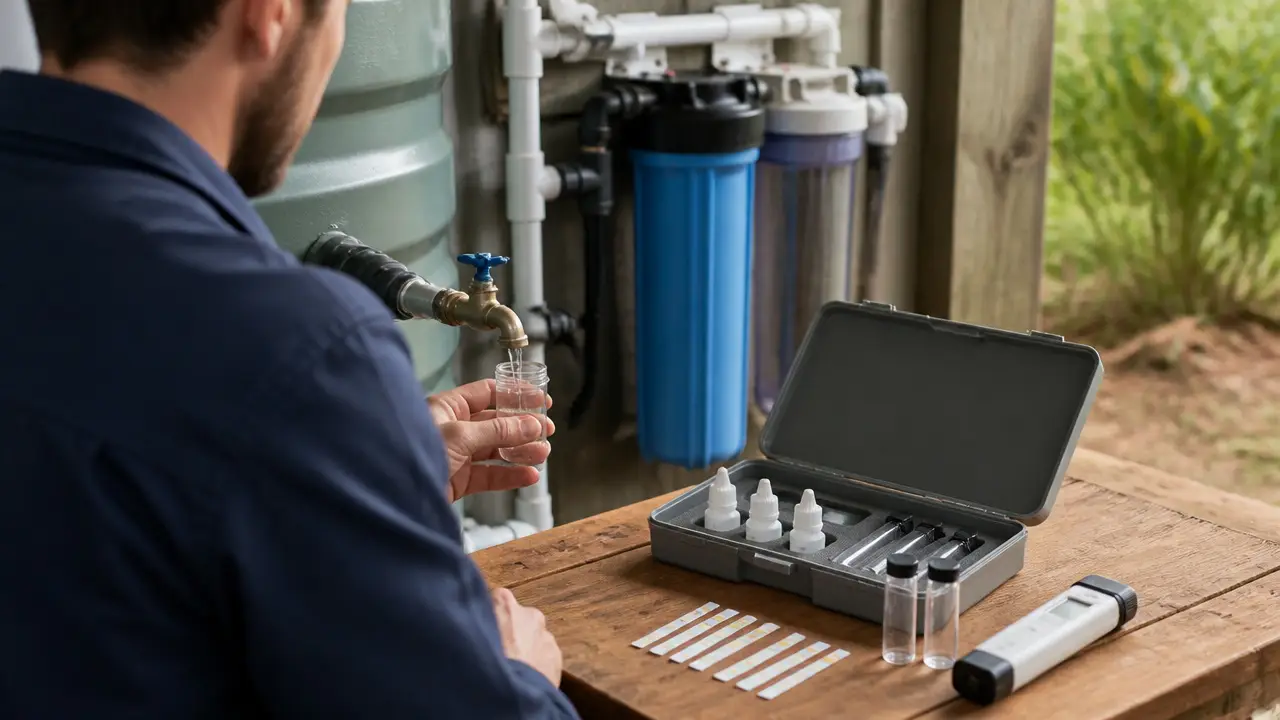
Rainwater intended for drinking requires a suitable collection system, appropriate treatment stages, proper maintenance, current water-quality testing, and compliance with applicable local requirements.
The correct replacement schedule for a bag filter in such a system should also follow the requirements of the complete treatment setup. Do not extend filter use beyond manufacturer limits simply because the bag still looks acceptable.
Frequently Asked Questions
How do I know when a bag filter is clogged?
Reduced water flow or increasing pressure difference across the filter are common signs. A heavily coated filter surface can also indicate that the bag needs cleaning or replacement.
Can bag filters be washed and reused?
Some can. Others are intended for single use. Check the manufacturer's instructions before washing a filter because cleaning a disposable bag can damage the material.
Do finer bag filters need changing more often?
They often clog faster because they capture smaller particles. Actual service life still depends on how much sediment reaches the filter and how much water passes through it.
Why does my rainwater bag filter clog so quickly?
Common causes include heavy roof debris, poor prefiltration, tank sediment, algae, or a pump intake drawing material from near the bottom of the tank.
Can I keep using a bag filter until water stops flowing?
It is better to service it before it becomes completely blocked. Severe restriction can reduce flow, lower pressure, and interfere with pump operation.
Should I replace a bag filter if it has a small tear?
Yes. Holes, tears, damaged seams, or worn filter material can allow particles to bypass the filtration media.
Does a bag filter make rainwater safe to drink?
No. A bag filter removes particles within its intended filtration range, but it does not by itself establish that rainwater is potable. Drinking-water use requires a complete treatment and testing approach.