As an affiliate, we may earn a commission from qualifying purchases. We get commissions for purchases made through links on this website from Amazon and other third parties.
A rainwater tank that is too full should send extra water safely through its overflow outlet. If the overflow is too small, blocked, badly placed, or missing, water can spill from the lid, back up into the inlet, damage the tank, or create drainage problems around your home.
A full tank is not usually a problem by itself. The real issue is what happens to the next gallon of rainwater after the tank reaches capacity.
What Happens When a Rainwater Tank Fills Up?
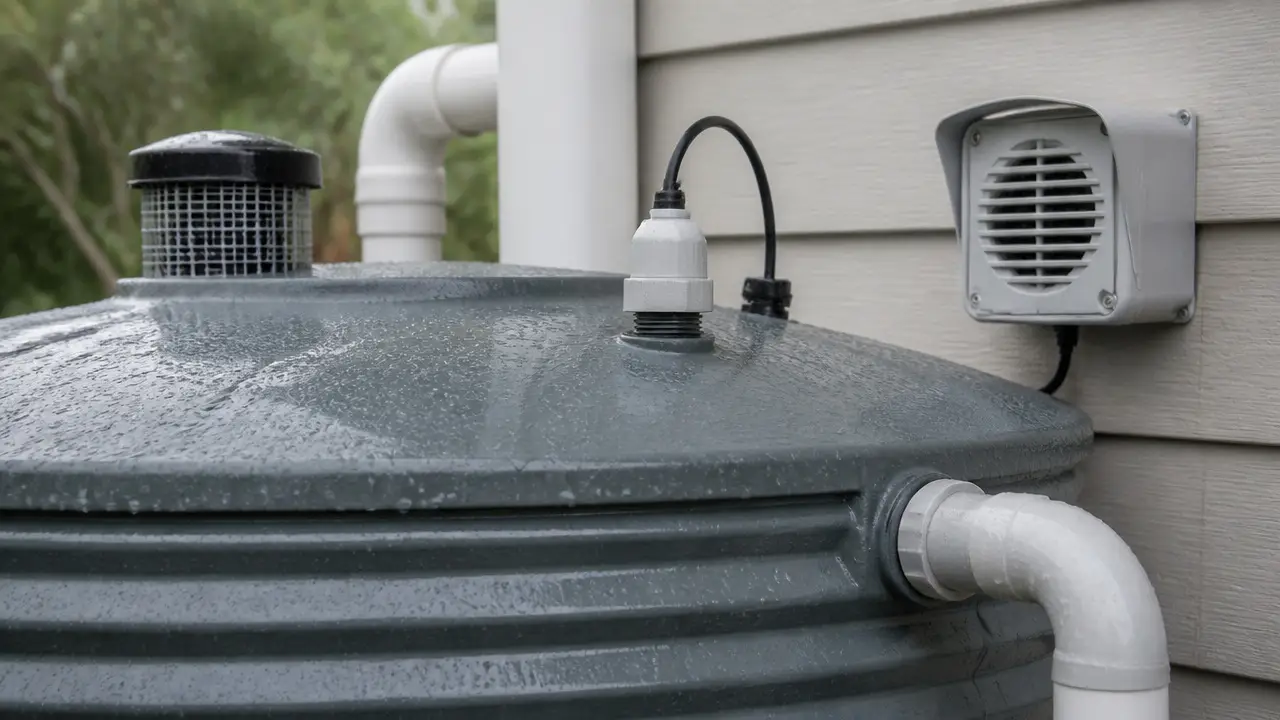
A properly set up rainwater tank has an overflow connection near the top.
Once the water reaches that level, new water entering the tank leaves through the overflow. The overflow should carry water to a safe place, such as:
- A stormwater system where allowed
- A drainage area designed to handle the flow
- A swale or other suitable landscape feature
- Another storage tank in a connected system
The exact discharge location depends on your property and local drainage rules.
The important point is that the overflow must be able to handle incoming water during heavy rain.
What Can Go Wrong If the Tank Overfills?
If water cannot escape fast enough, several problems can develop.
Water Can Spill Around the Lid
Many tank lids are not designed to act as overflow outlets.
If the normal overflow cannot keep up, water may push through gaps around the lid or other openings. This can wash debris into the tank or send water down the outside walls.
Repeated spilling can also soften soil around the base.
Water Can Back Up Into the Inlet
A tank that cannot discharge water fast enough may cause water to rise into the inlet pipe.
That can affect gutters, downpipes, leaf screens, first-flush devices, or other parts of the collection system.
A first-flush device diverts the first portion of runoff from a roof so some dirt and debris do not enter the tank. Backflow can interfere with how this equipment drains or resets.
In severe cases, water may back up toward the roof drainage system.
The Tank Can Be Damaged
Most rainwater tanks are designed to operate full, so normal water pressure from a full tank should not be a problem.
Problems are more likely when the tank is sealed in a way that prevents proper venting or when overflowing water creates pressure where it should not.
Possible warning signs include:
- Bulging tank walls
- A distorted lid
- Leaks around fittings
- Movement at pipe connections
- Water escaping from unexpected places
Do not seal vents or overflow openings to try to increase storage capacity. A tank should be installed and used according to its design.
The Ground Around the Tank Can Erode
A full tank may release a large amount of overflow during a storm.
If that water is dumped directly beside the tank, it can wash soil away from the foundation or base.
This matters because a full tank is very heavy.
Water weighs about 8.3 pounds per US gallon, or about 1 kilogram per liter. A 1,000-gallon tank holds more than 8,000 pounds of water before the weight of the tank itself is included.
The base needs to remain level, stable, and able to support that load.
Overflow Can Cause Problems Near the House
Water overflowing close to a building can contribute to:
- Wet foundations
- Basement or crawlspace moisture
- Soil erosion
- Muddy areas
- Standing water
- Damage to nearby paths or landscaping
Direct overflow away from structures unless the drainage system was specifically designed otherwise.
Standing Water Can Attract Mosquitoes
Overflow water should not be allowed to sit in open containers, blocked drains, or low spots.
Tank openings should also be screened where appropriate to help keep mosquitoes and insects out.
A tank can be completely full without becoming a mosquito problem if its openings are protected and overflow water drains away properly.
Why Tanks Overflow Even When They Have an Overflow Pipe
Having an overflow pipe does not guarantee that the system will work well during a storm.
Several problems can reduce its capacity.
The Overflow Pipe Is Too Small
Rain can enter a tank quickly when a large roof drains into it.
If the inlet can deliver water faster than the overflow can remove it, the water level may rise above the intended overflow point.
Overflow sizing should consider the roof catchment area, expected rainfall intensity, pipe layout, and other restrictions in the drainage path.
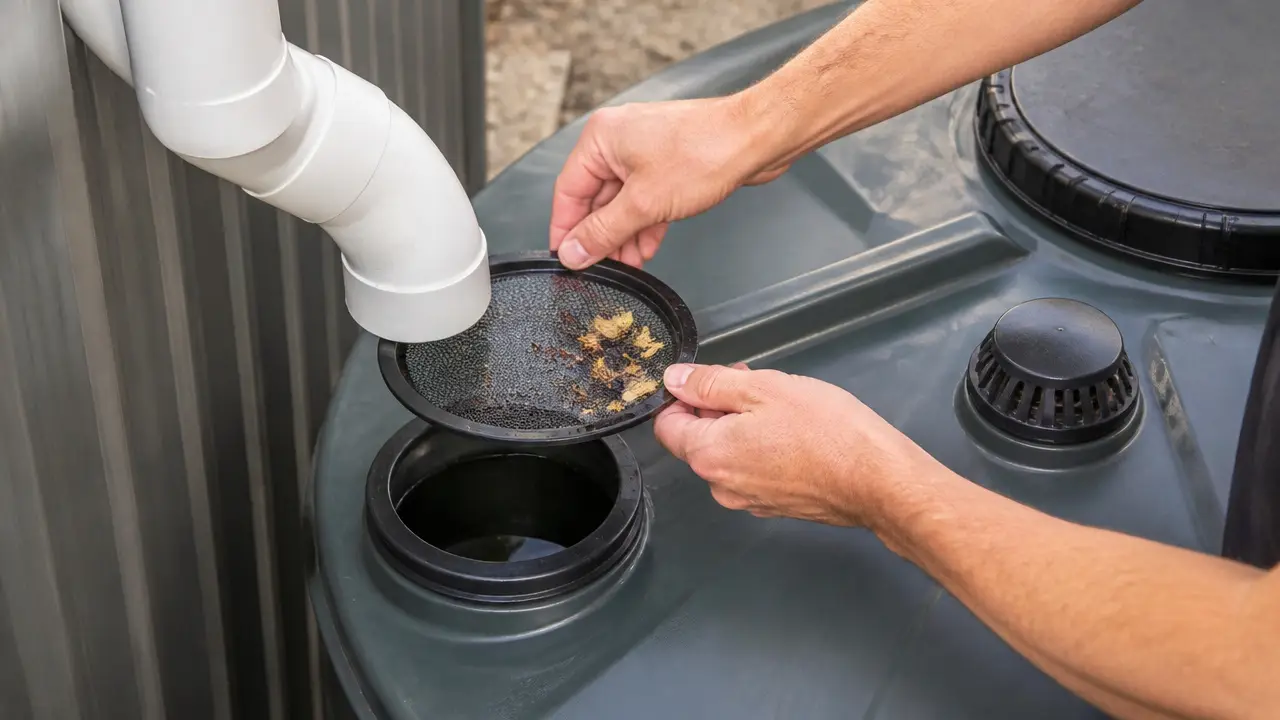
The Overflow Screen Is Clogged
Many systems use screens to keep insects, leaves, and animals out.
These screens need cleaning.
A screen covered with leaves, algae, sediment, or other debris can greatly reduce water flow.
The Pipe Is Blocked
An overflow line can become restricted by:
- Leaves
- Insect nests
- Sediment
- Roots
- Crushed pipe
- Ice in freezing weather
- Debris at the discharge point
Check accessible sections of the overflow system as part of routine tank maintenance.
The Pipe Does Not Drain Properly
Poor pipe slope can leave water sitting in an overflow line.
Sagging flexible pipe can also trap water and debris.
In freezing climates, trapped water may freeze and block the line when the next rain or thaw occurs.
The Outlet Is Underwater
An overflow pipe that ends in a flooded ditch, full drain, or submerged discharge point may not work as intended.
A drainage system also needs somewhere for the water to go.
Can a Rainwater Tank Burst From Being Too Full?
A properly designed tank should be able to hold water up to its normal full level.
Planning around practical steps for stoping a rainwater tank from overflowing helps understand maintenance access for controlling sediment and odors.
Simply reaching capacity should not make it burst.
A more serious concern is abnormal pressure caused by poor plumbing, blocked vents, unsuitable modifications, physical damage, or incorrect installation.
Large tanks can also fail if their base shifts or if the tank is not supported as required.
If a tank is visibly bulging, leaning, cracking, or moving, keep people away from it and have the installation assessed. A large volume of stored water can cause significant damage if the tank fails suddenly.
What Should You Do If Your Tank Is Overflowing?
First determine whether the water is coming from the intended overflow outlet.
If it is, the tank may simply be full and working normally.
Then check where the discharged water goes. It should move away without causing erosion, flooding, or standing water.
If water is escaping from the lid or another unexpected location, check accessible parts of the system for:
- A blocked overflow screen
- Leaves or debris inside the overflow connection
- A clogged discharge pipe
- A flooded or obstructed outlet
- A damaged or poorly fitted pipe
- An overflow that appears too small for the incoming flow
Do not climb onto a wet tank or roof during a storm to inspect the system.
If the overflow plumbing is buried, difficult to access, connected to building drainage, or clearly unable to handle the water, a qualified installer or drainage professional may be the safer option.
Where Should Tank Overflow Water Go?
The best destination depends on the site.
A suitable overflow area needs enough capacity to receive water during a strong storm without sending it toward buildings or neighboring property.
Possible approaches include properly designed drainage systems, infiltration areas, or landscape drainage features where they are suitable and permitted.
Do not assume that tank overflow can legally be connected to any nearby drain. Stormwater and plumbing requirements vary by location.
Can You Add Another Tank to Prevent Overflow?
Yes. Additional storage can capture some water that would otherwise overflow.
Two or more tanks can be connected in different ways. For example, one tank may overflow into another, or tanks may be connected near their bases so their water levels balance.
The connections need to be sized and arranged correctly.
Adding another tank does not eliminate the need for a final overflow. Eventually, every storage system can fill during enough rainfall.
Extra capacity delays overflow. It does not replace safe drainage.
How Much Rain Can Fill a Tank?
The amount collected depends mainly on:
- Roof catchment area
- Rainfall depth
- Collection losses
- Available tank capacity
A larger roof can fill a tank surprisingly quickly during heavy rain.
As a rough theoretical relationship, 1 inch of rain falling on 1 square foot of roof equals about 0.623 US gallons of water before losses.
Real systems collect less because water can be lost through first-flush diversion, splash, gutter overflow, leaks, wetting, debris, and other factors.
For example, a tank that has only a small amount of empty space before a storm may reach capacity early even if the tank itself is large.
Should You Drain Some Water Before Heavy Rain?
Sometimes using stored water before a forecast storm creates useful extra capacity.
For example, you might use rainwater for irrigation or another suitable non-potable purpose if your system is set up for it.
Non-potable means water that is not intended for drinking.
However, regularly dumping stored water just to prevent normal overflow is usually unnecessary when the overflow system is properly designed.
A rainwater system should have a safe plan for excess water even when every tank is full.
Full Tanks in Freezing Weather
Cold climates create additional concerns.
A full outdoor tank may be affected by ice expansion, frozen pipes, and blocked overflow lines depending on the tank design and installation.
Do not assume that leaving a tank completely full or completely empty is always the correct winter approach. Follow the tank manufacturer's guidance and the freeze-protection plan for the whole system.
Pay particular attention to:
- Exposed valves
- Overflow pipes
- Pumps
- Filters
- Narrow fittings
- Pipes that hold trapped water
Freeze protection is a system issue, not just a tank issue.
How to Prevent Overfilling Problems
You do not need to prevent a tank from becoming full. You need to make sure excess water has a safe path.
A good setup includes:
- A properly sized overflow
- Protected tank openings
- Clean screens
- Unblocked pipes
- A stable tank base
- A discharge point that can handle the water
- Overflow directed away from vulnerable structures
- A final overflow even when several tanks are connected
Inspect the system before wet seasons and after major storms. Overflow components are easy to forget because they may do nothing for long periods and then need to carry a large amount of water in a short time.
Frequently Asked Questions
Is it bad for a rainwater tank to stay completely full?
Usually not. Rainwater tanks are generally designed to hold water at their normal full level. Problems occur when overflow, venting, support, or plumbing is inadequate.
Why is water coming out of the top of my rain barrel?
The barrel may be full, or its overflow outlet may be blocked or too small. Check the normal overflow path and make sure water can leave freely.
Can I plug the overflow to store more water?
No. Blocking the overflow can cause water to escape through unintended openings or create pressure and drainage problems. Add suitable storage capacity instead.
Can I connect my overflow to a second tank?
Yes, if the tanks and connections are suitable for that arrangement. The last tank still needs its own safe overflow route.
Should rainwater tank overflow go next to the foundation?
Usually no. Large amounts of water near a foundation can cause moisture and erosion problems. The discharge point should be chosen based on site drainage and local requirements.
How often should I check the overflow screen?
Check it regularly and whenever you inspect gutters, inlet screens, or other collection components. It is especially useful to inspect it before periods of heavy rain and after storms that carry lots of leaves or debris.
What if my tank overflows even though the overflow pipe is clear?
The overflow may be too small, poorly routed, restricted farther downstream, or discharging into an area that cannot accept the flow. A drainage or rainwater-system professional can help assess the full path.