As an affiliate, we may earn a commission from qualifying purchases. We get commissions for purchases made through links on this website from Amazon and other third parties.
Is 50 PSI Enough Water Pressure for a Sprinkler System?
Yes. 50 PSI is enough water pressure for many residential sprinkler systems. In fact, some sprinkler heads are designed to work at much lower pressure.
But pressure alone does not tell you whether an irrigation system will work well. You also need enough flow rate, measured in gallons per minute (GPM), while the sprinklers are running.
A yard may show 50 PSI at an outdoor faucet with nothing using water, then drop sharply when several sprinkler heads turn on. That operating pressure is what matters most.
What Does 50 PSI Mean?
PSI means pounds per square inch. It measures water pressure.
A reading of 50 PSI means the water supply is pushing with 50 pounds of force per square inch.
For irrigation, there are two useful pressure readings:
- Static pressure: Pressure when no water is flowing.
- Dynamic pressure: Pressure while water is flowing through the irrigation system.
Static pressure is easy to measure, but dynamic pressure gives you a better idea of how the sprinklers will actually perform.
For example, your faucet might show 50 PSI when closed. Once an irrigation zone starts running, pressure could fall to 35 PSI.
That does not automatically mean something is wrong. Pressure normally drops when water starts moving.
Most Residential Sprinklers Do Not Need the Full 50 PSI
Different irrigation devices operate best at different pressures.
Small spray heads commonly use moderate pressure. Rotary sprinklers often need somewhat more pressure than basic spray heads. Large impact sprinklers or systems covering long distances may require more.
The important number is the pressure at the sprinkler head, not just the pressure where water enters the property.
Pressure can be lost through:
- Long pipes
- Small pipe sizes
- Valves
- Filters
- Backflow devices
- Fittings
- Elevation changes
- High water flow
If you have 50 PSI at the supply, you may have considerably less pressure at the farthest sprinkler.
Flow Rate Matters Just as Much as Pressure
A sprinkler system needs both pressure and enough available water.
Flow rate tells you how much water can move through the system during a certain amount of time. Residential irrigation flow is usually measured in gallons per minute.
Suppose your water supply maintains 50 PSI but can only provide 6 GPM.
If a sprinkler zone contains six heads using 2 GPM each, that zone would need about 12 GPM. The supply cannot keep up.
The result may be:
- Short spray distances
- Weak sprinkler rotation
- Uneven watering
- Poor coverage
- Large pressure drops
Reducing the number of sprinklers operating at the same time can often solve this problem.
That is one reason irrigation systems are divided into zones.
Measure Pressure While Water Is Flowing
If you are trying to determine whether 50 PSI is enough, test the system under realistic conditions.
A simple pressure gauge attached to an outdoor faucet can show static pressure. A flow test can help estimate how much water the supply can deliver.
For existing irrigation systems, watch what happens when one zone is operating.
Look for:
- Sprinklers reaching their expected area
- Heads rising fully
- Rotors turning correctly
- Similar performance between nearby heads
- Large differences between the first and last heads
If the sprinklers work normally while the supply stays near the pressure required by the heads, the system probably has enough pressure.
Why 50 PSI at the House May Not Mean 50 PSI at the Sprinkler
Every irrigation system loses some pressure between the water source and the sprinkler.
Pipe Length
Water rubbing against the inside of a pipe creates friction.
Longer irrigation lines generally lose more pressure than short ones.
Pipe Diameter
Small pipes restrict flow more than larger pipes.
Trying to move a large amount of water through a small pipe can cause significant pressure loss.
Valves and Fittings
Water must pass through valves, elbows, tees, filters, regulators, and other components.
Each adds some resistance.
Elevation
Water pressure changes with elevation.
Sprinklers uphill from the water source receive less pressure. Sprinklers downhill may receive more.
Elevation becomes especially important on sloped properties.
Too Much Pressure Can Also Cause Problems
Higher pressure is not always better.
If sprinkler heads receive more pressure than they are designed for, water can break into very fine droplets. These droplets are more easily carried away by wind.
Excess pressure can also contribute to:
- Mist around spray heads
- Uneven distribution
- Higher water use
- Faster wear on irrigation parts
- Leaks at weak connections
Some systems use pressure-regulating sprinkler bodies or a pressure regulator to keep operating pressure within the range intended for the equipment.
Do not add a regulator simply because your supply reads 50 PSI. First check what pressure your particular sprinkler heads require.
Is 50 PSI Enough for a Large Lawn?
It can be, but lawn size is not the main deciding factor.
Review typical sprinkler-system flow rates to compare delivery-pressure changes that indicate lost prime.
A large lawn can still operate from a 50 PSI water source when the system is divided into properly sized zones.
For example, instead of operating 20 sprinklers at once, a controller may run smaller groups one zone at a time.
Important factors include:
- Available GPM
- Sprinkler type
- Number of sprinklers per zone
- Pipe diameter
- Pipe length
- Elevation
- Desired spray distance
A properly designed system with 50 PSI can perform better than a poorly designed system supplied with much higher pressure.
What If Your Sprinklers Are Weak at 50 PSI?
If your pressure gauge shows about 50 PSI but the sprinklers still perform poorly, do not assume you need a pressure booster.
First check for simpler problems.
Too Many Heads on One Zone
The total flow required by the sprinkler heads may exceed the available supply.
Splitting the area into additional zones may help.
Clogged Sprinklers
Dirt, sediment, or small debris can restrict sprinkler nozzles and filters.
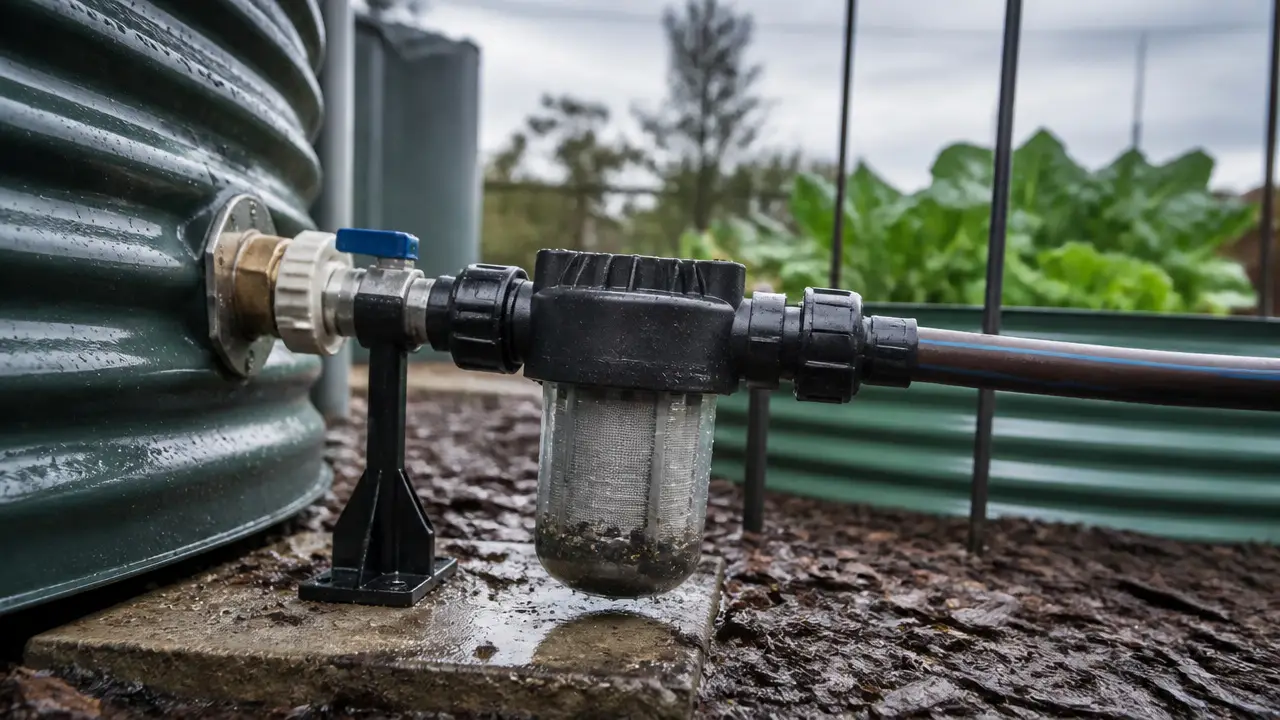
This can be especially important when irrigation water comes from a rainwater tank, cistern, pond, or other stored-water system.
Undersized Pipe
Small irrigation piping can produce excessive friction loss when flow is high.
Partially Closed Valves
A valve that does not open fully can restrict water.
Leaks
A broken pipe or damaged sprinkler connection can reduce both pressure and flow available to the rest of the zone.
Pump Problems
If the irrigation system uses a pump, the pump must provide the required combination of flow and pressure.
A pump labeled for high maximum pressure does not necessarily provide that pressure while also delivering the flow your sprinkler zone needs.
Using 50 PSI With a Rainwater Irrigation System
If sprinklers are supplied from a rainwater tank or cistern, tank capacity is only one part of the system.
Most storage tanks do not create enough pressure by gravity alone to supply conventional lawn sprinklers at 50 PSI.
A pump may be required.
When choosing or setting up the pump, consider:
- Required sprinkler pressure
- Total zone flow
- Vertical lift
- Pipe length
- Pipe diameter
- Filter pressure loss
- Pump controls
- Dry-run protection
Head height describes how high a pump can push water and is closely related to pressure. However, a pump's maximum head is normally measured when very little or no water is flowing.
The useful question is how much pressure the pump can maintain at the flow rate your sprinkler zone requires.
Stored rainwater used for irrigation should also be screened and filtered as needed to keep leaves, grit, and sediment from clogging small sprinkler passages.
How to Decide Whether Your 50 PSI Supply Is Adequate
You can make a better decision by checking the system in this order:
- Identify the recommended operating pressure for your sprinkler heads.
- Measure the available water pressure.
- Determine the available flow rate.
- Add up the water demand of the heads on one zone.
- Account for pipe length, pipe diameter, elevation, valves, and filters.
- Check pressure while the zone is actually running.
- Reduce zone demand if operating pressure falls too far.
You usually do not need exactly 50 PSI at every sprinkler.
You need enough remaining pressure at the heads for them to operate correctly.
When a Booster Pump May Be Needed
A booster pump can make sense when the water source cannot provide enough pressure after normal system losses.
However, adding a pump should not be the first response to poor sprinkler performance.
If the real problem is an undersized pipe, clogged filter, oversized irrigation zone, or damaged valve, a stronger pump may not solve it safely or efficiently.
Pump systems also require proper electrical installation, pressure control, and protection against running without water. Have a qualified professional handle electrical work or complex pressure-system changes.
Frequently Asked Questions
Is 50 PSI good water pressure for lawn sprinklers?
Yes. Fifty PSI is adequate for many residential lawn sprinkler systems. Actual performance depends on the sprinkler type, available flow, pipe losses, elevation, and the number of heads operating at once.
Can sprinklers run on 40 PSI?
Many can. Some residential sprinkler heads are designed to operate well around this pressure or lower. Check the operating range specified for the heads in your system.
Is 50 PSI too high for sprinklers?
Not necessarily. Fifty PSI may be perfectly reasonable at the water supply. Some sprinkler heads may require pressure regulation if the pressure reaching the nozzle is higher than their intended operating range.
Why do my sprinklers have low pressure when my gauge shows 50 PSI?
The gauge may be showing static pressure. Pressure can drop when the irrigation zone starts because of limited flow, small pipes, long pipe runs, clogged components, leaks, valves, or too many sprinklers operating at once.
How many sprinklers can I run at 50 PSI?
Pressure alone cannot determine the number. You need to know the available GPM and the flow required by each sprinkler. The combined demand of the zone must stay within what the water source and piping can deliver.
Do I need a booster pump if I have 50 PSI?
Usually not based on pressure alone. First measure the pressure while the irrigation system is running and check available flow. A booster pump may only be needed if the system cannot maintain the required operating pressure after normal losses.
Can a rainwater tank provide 50 PSI without a pump?
A typical above-ground rainwater tank usually cannot produce 50 PSI from gravity alone. Conventional sprinkler systems commonly need a pump when supplied from a tank or cistern.