

As an affiliate, we may earn a commission from qualifying purchases. We get commissions for purchases made through links on this website from Amazon and other third parties.
Best Overall
Best Filter-Regulator Combo
Best Hose-Thread 2-Pack
A pressure regulator solves a very specific problem: water arrives at a higher pressure than your drip tubing or emitters should receive. It reduces that pressure to a lower target.
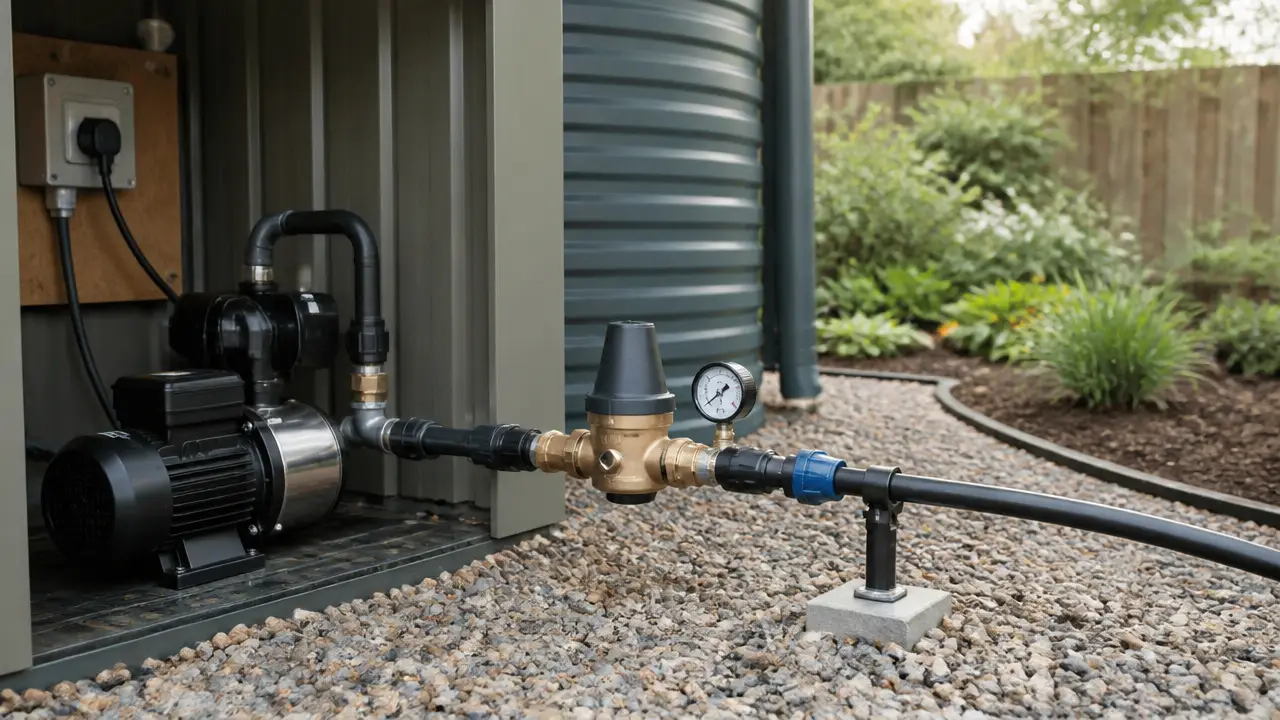
That distinction matters with rainwater. A gravity-fed rain barrel often has far less than 25 or 30 PSI, so adding a 25 PSI regulator does not create pressure. In a simple barrel-fed system, it may only add restriction. These regulators make more sense when a pump, household supply, or another pressurized source feeds the irrigation line.
Choose the regulator by target pressure first, then connection type, flow, and installation location. Hose-thread regulators suit faucet-style connections. Pipe-thread and valve-box models belong in more permanent irrigation plumbing.
Pressure Regulators at a Glance
| Product | Best For | Target | Main Tradeoff |
|---|---|---|---|
| Rain Bird HT07525PSI | Pressurized drip lines using hose connections | 25 PSI | Some units fail or crack |
| Orbit 67798 | Valve-box systems needing filtration and regulation together | 30 PSI | 1-inch pipe connection and upstream pressure limits complicate fit |
| Breezliy 25 PSI 2-Pack | Simple hose-thread branches | 25 PSI | Its practical flow capacity is unclear |
| Raindrip R463CT | Replacement in a matching Raindrip-style layout | 30 PSI | Thread-fit confusion and leak complaints make it the least forgiving option |
First Decide Whether You Need a Regulator at All
A raised rain barrel creates pressure from water height. Roughly speaking, a few feet of elevation produces only a few PSI. That is enough for some gravity-fed drip products but nowhere near the 25-30 PSI targets of the regulators in this roundup.
If your system is purely gravity-fed, look for emitters and timers designed for low or zero pressure instead of trying to regulate up to a pressure you do not have.
A regulator becomes useful when a pump boosts stored rainwater or when a pressurized supply feeds the drip network. In that case, the regulator protects the downstream layout from receiving more pressure than it is designed to handle.
Best Overall: Rain Bird 25 PSI Drip Pressure Regulator
1 / 4
Rain Bird HT07525PSI Drip Pressure Regulator

Preset Pressure
25 PSI
Connections
3/4 in female hose thread x 3/4 in male hose thread
Flow Claim
Up to 20 GPM
Use
Pressurized drip irrigation
The Rain Bird is the simplest match when a pumped rainwater line or other pressurized source needs to feed standard drip equipment at about 25 PSI. Its 3/4-inch female and male hose-thread connections make the intended installation clearer than products with conflicting pipe-thread descriptions.
It also has a documented flow-through capacity of up to 20 gallons per minute. Your actual drip system will normally use much less, but the specification helps distinguish this from tiny inline parts that may become a bottleneck before the distribution tubing.
The main caution is durability. Some units run leak-free in automated systems, while others crack or stop regulating correctly. Install it where failure will be visible, and measure downstream pressure rather than assuming the preset value remains correct forever.
Why It Works
- Preset 25 PSI target suits many pressurized drip layouts.
- Clearly identified hose-thread inlet and outlet simplify matching.
- Straightforward installation works well after a timer or pressurized water source.
- Documented flow capacity leaves room for multi-emitter garden layouts.
What To Keep In Mind
- It cannot raise low barrel pressure to 25 PSI.
- Some units crack or stop regulating correctly.
- A pressure gauge is useful when a pumped system needs reliable downstream pressure.
- Protect exposed plastic plumbing from freezing conditions.
Best Filter-Regulator Combo: Orbit 30 PSI 3-in-1 System
2 / 4
Orbit 67798 30 PSI Filter and Pressure Regulator

Preset Pressure
30 PSI
Inlet
1 in MPT product claim
Filter
120-mesh stainless screen
Flow Claim
5 GPM
The Orbit combines three functions that are often installed separately: a screen filter, a 30 PSI regulator, and an adapter for drip distribution tubing. That makes it useful in a valve box or pumped rainwater irrigation system where sediment protection and pressure reduction are both required before the emitters.
The built-in 120-mesh screen is especially relevant to stored rainwater because small debris can clog drip passages. The top-mounted flush access is intended to make screen maintenance easier without dismantling the whole line.
This is not a drop-in barrel-spigot accessory. Its 1-inch male pipe-thread inlet belongs in fixed irrigation plumbing, not on a garden-hose fitting. Supply pressure must also stay within the unit's intended input range.
Why It Works
- Combines debris filtration and 30 PSI regulation.
- 120-mesh screen helps protect small drip passages.
- Integrated drip adapter reduces the number of separate components.
- Straight layout suits a valve-box installation.
What To Keep In Mind
- 1-inch pipe-thread connection requires compatible irrigation plumbing.
- It is unnecessary on a low-pressure gravity barrel.
- Screen damage or clogging can affect downstream performance.
- Match inlet pressure to the allowed range for the installed configuration.
Best Hose-Thread 2-Pack: Breezliy 25 PSI Regulators
3 / 4
Breezliy 25 PSI Pressure Regulators

Preset Pressure
25 PSI
Connections
3/4 in FHT x 3/4 in MHT product claim
Material
ABS
Quantity
2
The Breezliy pair is useful when two separate irrigation branches need a simple preset regulator. Its 3/4-inch female and male hose threads suit hose-style plumbing rather than a buried pipe manifold.
Its 25 PSI target fits the same general drip-pressure role as the Rain Bird. The advantage is getting two matching regulators for separate zones. That can be useful when a pumped rainwater system splits into two independently timed garden lines.
Its practical flow capacity is unclear, so this is not the first choice for long, high-demand runs. Match it to smaller branches where the required flow is modest and known.
Why It Works
- Hose-thread format simplifies above-ground irrigation connections.
- Two regulators can serve separate zones.
- 25 PSI preset is appropriate for many pressurized drip layouts.
- Can be installed alongside a timer or filter when connections match.
What To Keep In Mind
- No clear GPM figure is available for sizing a demanding zone.
- Do not assume it will improve a gravity-fed barrel with pressure below 25 PSI.
- Plastic construction should be protected from impact and freezing.
Best Only for a Carefully Matched Replacement: Raindrip 30 PSI Regulator
4 / 4
Raindrip R463CT Preset Pressure Regulator

Preset Pressure
30 PSI
Nominal Connection
3/4 in
Material
Plastic
Use
Drip irrigation
The Raindrip is a preset 30 PSI regulator intended for drip irrigation, but it ranks last because its connection descriptions cause repeated confusion. Some received units do not match ordinary garden-hose expectations despite the nominal 3/4-inch size.
That makes it better as a replacement when you already know the exact fitting it must match rather than as a first regulator for a new rainwater system. Thread mistakes are especially frustrating with plastic female connections because forcing the wrong fitting can split the body.
There are also reports of immediate leaks and units that did not appear to reduce pressure. If you use it, test thread fit and downstream PSI during commissioning.
Why It Works
- Preset 30 PSI target serves common drip-irrigation pressure needs.
- Compact one-port design is simple when the connections are already known.
- Useful as a like-for-like replacement in a compatible existing setup.
What To Keep In Mind
- Hose-versus-pipe thread confusion makes fit less predictable.
- Plastic female connections can be damaged by overtightening.
- Leak and non-regulation complaints are more prominent than on the higher-ranked choices.
Where the Regulator Goes
In a pressurized drip layout, the usual order is source, shutoff or timer, debris filtration, pressure regulation, then distribution tubing. Some products combine the filter and regulator in one body.
The exact sequence can change with the hardware. Follow the manufacturer's directions, keep components accessible, and do not bury a serviceable screen or regulator where you cannot inspect it.
For pumped rainwater, also consider the pump controls. A drip regulator manages downstream irrigation pressure; it does not replace a pump pressure switch, dry-run protection, expansion tank, or other controls required by the pump system.
How to Check a New Regulator
Check the thread before tightening
A nominal 3/4-inch size can still use a different thread form. Hose thread and pipe thread are not interchangeable just because their labeled diameter looks the same.
Measure pressure downstream
If pressure matters to the emitters, test it. A preset regulator that has failed internally may still pass water while no longer controlling pressure correctly.
Test at normal flow
Regulators behave as part of a flowing system. Test with the actual irrigation zone running rather than judging the installation only with every downstream valve closed.
Inspect for leaks after several cycles
Automated irrigation can hide a small leak until a large amount of stored water is gone. Check threaded joints, housings, and timer connections after the first several scheduled runs.
Frequently Asked Questions
Do I need a pressure regulator on a gravity-fed rain barrel?
Usually not if the barrel pressure is already below the regulator's preset value. A regulator reduces excessive pressure; it does not increase low pressure.
Can a 25 PSI regulator make my rain barrel deliver 25 PSI?
No. A passive regulator cannot boost pressure. Raising pressure requires more water head or a suitable pump.
Is 25 or 30 PSI better for drip irrigation?
Use the pressure specified for your tubing, emitters, valves, and other downstream components. Neither value is universally better.
Should the filter go before the pressure regulator?
Many drip systems filter water before small downstream passages, but the correct order depends on the specific hardware. Combination units may integrate both functions. Follow the manufacturer's installation instructions.
Can I connect a pressure regulator directly to a hose timer?
Yes when the thread types, operating pressure, and flow requirements are compatible. Support the assembly so several fittings are not hanging from a weak barrel spigot.
How do I know if the regulator failed?
Possible signs include downstream pressure returning close to supply pressure, unexpected emitter leaks, reduced flow, or leakage from the regulator itself. A pressure gauge gives a direct check when pressure is critical.
If your system is truly gravity-fed, start with the best gravity-fed drip irrigation kits instead of adding an unnecessary regulator. For automatic zones, the best hose timers for rain barrels focus on valves that can operate with very low pressure. If one outlet needs several branches, compare the best garden hose splitters for rain barrels before building the manifold.



