As an affiliate, we may earn a commission from qualifying purchases. We get commissions for purchases made through links on this website from Amazon and other third parties.
For most homes, the best outdoor tap splitter is a well-made 2-way splitter with separate quarter-turn shutoff valves, a secure swivel inlet, replaceable sealing washers, and water passages that do not sharply restrict flow. Brass is a strong all-around choice for a wall-mounted outdoor tap. For a rain barrel or plastic tank spigot, a lighter splitter can sometimes be better because it puts less strain on the outlet fitting.
The key is not simply choosing the heaviest splitter. It must fit your tap, provide enough flow for what you are connecting, seal without leaking, and handle outdoor conditions.
What Makes a Good Outdoor Tap Splitter?
An outdoor tap splitter turns one faucet into two or more water outlets. You might use one branch for a garden hose and another for drip irrigation, a watering timer, or a rainwater transfer hose.
For most users, look for these features:
- Two independently controlled outlets
- Quarter-turn valves that are easy to open and close
- A swivel connection at the tap
- Replaceable rubber or silicone washers
- Large internal water passages
- Strong threads that are hard to cross-thread
- Enough space between outlets for timers and large hose fittings
- Outdoor-rated construction
- A connection size that actually matches your faucet
A simple two-way design is usually more dependable than a large four-way manifold if you only need two water lines.
Brass Is Usually the Best Material for a House Tap
A good-quality brass splitter works well on a typical outdoor faucet because it is strong and handles repeated hose connections well.
Brass threads are also less likely to deform than thin plastic threads if hoses are frequently attached and removed.
That does not mean every metal splitter is equally durable. Some low-cost metal splitters are made from lighter alloys rather than solid brass. These can be more prone to corrosion or damaged threads.
When plastic can be the better choice
Plastic has an important advantage: it is light.
That matters when attaching a splitter to:
- A plastic rain barrel spigot
- An IBC tote outlet adapter
- A lightweight tank fitting
- A faucet mounted in a thin plastic wall
A heavy brass splitter with two hoses hanging from it can place considerable leverage on a plastic spigot.
In this situation, a good-quality plastic splitter or a short flexible hose between the spigot and splitter may reduce stress on the tank fitting.
Choose Two Outlets Unless You Really Need More
A two-way splitter is the best choice for most yards.
It gives you two controlled water lines without making the fitting unusually large or heavy.
For example, you could run:
- One outlet to a normal garden hose.
- One outlet to a watering timer and drip irrigation line.
A four-way splitter makes sense when several watering zones must share one faucet. However, it adds more valves, connections, weight, and potential leak points.
Remember that a splitter does not create more water.
If the faucet can supply a certain flow rate, every open branch must share that available water.
Flow rate means how much water moves through the system during a given time.
Opening several sprinklers at once can therefore produce weaker performance than running them separately.
Look for a Full-Flow Design
The outside of a splitter can look large while its internal water passages are surprisingly small.
This matters especially with:
- Sprinklers
- Long garden hoses
- Soaker hoses
- Rainwater systems
- Gravity-fed rain barrels
- Low-pressure irrigation
Look for descriptions such as full-flow, high-flow, or full-bore, but also inspect the actual openings when possible.
A narrow valve passage adds resistance. That resistance can become noticeable when the water pressure is already low.
This is especially important for rain barrels
A rain barrel does not usually provide the pressure available from a household water line.
Pressure from a gravity system depends largely on head height, which is the vertical distance between the water level in the tank and the point where the water is being used.
Because the available pressure can be low, a restrictive splitter may noticeably reduce flow.
For gravity-fed rainwater, keep the water path simple:
Tank → spigot → splitter → short hose or irrigation line
Avoid stacking many small adapters, valves, quick-connects, and filters unless they are actually needed.
Check the Thread Before Buying
Thread compatibility is one of the easiest things to overlook.
In North America, most residential garden-hose connections use nominal 3/4-inch Garden Hose Thread, usually called GHT. GHT is a straight thread that seals against a washer rather than by tightening tapered pipe threads together.
Do not assume that a 3/4-inch pipe fitting is the same thing. A fitting using NPT pipe threads and one using 3/4-inch GHT are different even though both may be described as 3/4 inch.
Outside North America, different standards are common. BSP-threaded outdoor tap connections, for example, are widely used with garden fittings in the UK.
The options compared “5 Best Garden Hose Splitters for Rain Barrels” helps match flow, pressure, and compatible plumbing components.
Before buying a splitter, check what is already attached to your faucet or tank.
This becomes especially important with rain barrels and IBC totes. Their valves may use pipe threads, adapters, bulkhead fittings, or manufacturer-specific connections rather than normal garden-hose threads.
A bulkhead fitting is a fitting that passes through the wall of a tank and seals around the opening.
A Swivel Inlet Makes Installation Easier
A splitter with a rotating or swivel inlet is useful because the body can remain upright while the connection is tightened.
Without a swivel, the entire splitter may have to rotate around the faucet.
That can be awkward when:
- The tap is close to a wall
- A backflow device is already installed
- The splitter has large handles
- A watering timer is attached
- The outlets need to face downward
The swivel should turn smoothly but should not feel loose after installation.
Good Shutoff Valves Matter
Each splitter outlet should have its own valve.
Quarter-turn valves are usually convenient because the handle only moves about 90 degrees between open and closed.
The valve should move smoothly without needing excessive force.
A very small handle may be difficult to operate when your hands are wet or when wearing gloves.
Also check whether the handles have enough clearance. Large irrigation timers and quick-connect fittings can sometimes block neighboring handles on compact splitters.
The Washer Usually Makes the Seal
Garden-hose connections normally seal against a washer inside the female fitting.
The threaded connection mainly holds the two parts together.
If a splitter leaks where it connects to the tap, first check the washer.
Common problems include:
- Missing washer
- Cracked washer
- Flattened washer
- Dirt on the sealing surface
- Cross-threaded connection
- Damaged faucet threads
Replacing a worn washer is often more useful than tightening the splitter harder.
Look closely at comparing reliable hose connectors to verify service needs that influence lifecycle performance.
Overtightening can damage plastic fittings and may deform washers.
Consider the Weight of Connected Equipment
The splitter itself is only part of the load on your faucet.
You might eventually attach:
- Two garden hoses
- A digital watering timer
- Quick-connect fittings
- A filter
- A pressure regulator
- An irrigation manifold
Together, these parts can become heavy.
That load creates leverage on the faucet.
A sturdy wall-mounted hose bib usually handles accessories better than a small plastic rain-barrel spigot.
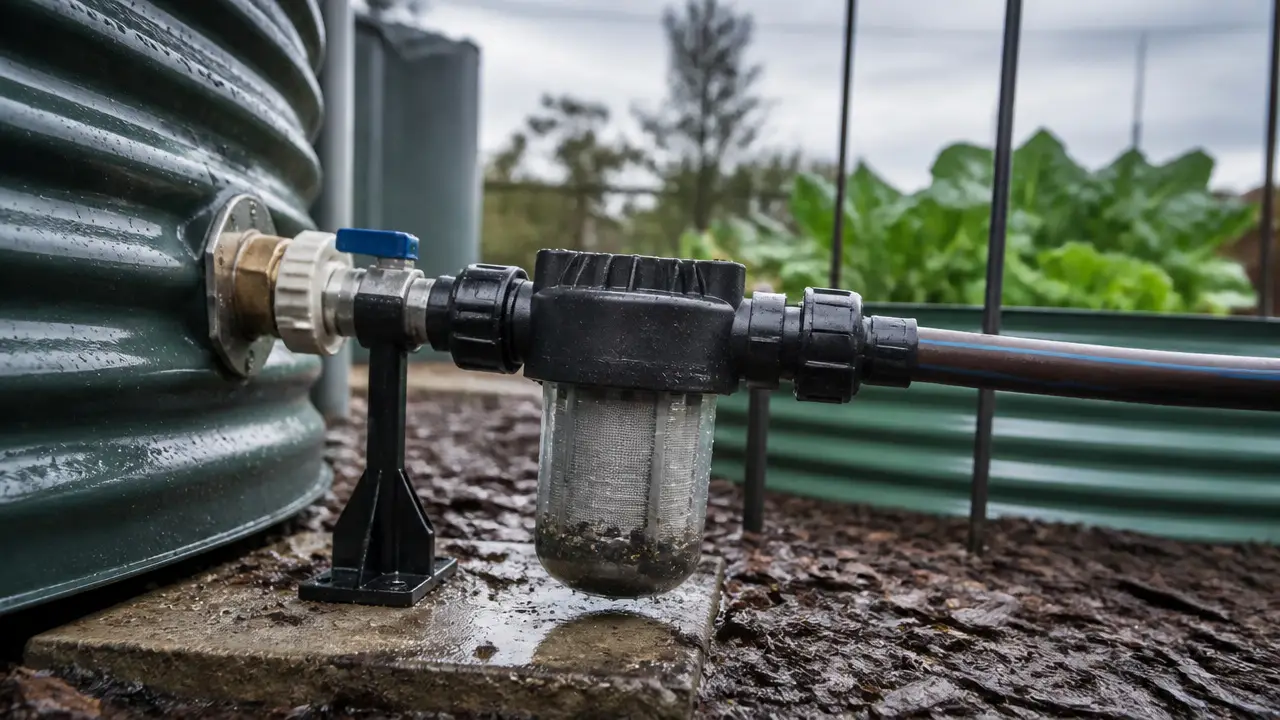
For a rain barrel, IBC tote, or plastic cistern outlet, consider attaching a short flexible leader hose first. Put the splitter at the end of that hose and support it separately.
That reduces sideways force on the tank connection.
Think About Your Watering Setup
The best splitter depends partly on what will be connected to it.
Garden hose plus irrigation
A two-way splitter works very well.
Keep one outlet available for normal hose use and dedicate the second to the irrigation system.
Two sprinklers
Make sure your faucet supplies enough flow for both.
If sprinkler performance becomes poor when both valves are open, run them one at a time rather than assuming a larger splitter will solve the problem.
Drip irrigation
A splitter can separate a normal hose from the drip system.
Any pressure regulator, filter, or irrigation equipment should be installed where required by that specific irrigation system.
Rain barrel
Favor low restriction and low weight.
Gravity pressure is limited, so small passages and unnecessary fittings can make a noticeable difference.
The related explainer “Which Hose Splitter Is Leak resistant?” shows where an undersized or incompatible component can restrict delivery.
Multiple watering zones
A four-way manifold may be useful, but check whether your available flow can actually operate several zones at once.
Often, the better arrangement is to open one zone at a time.
Do Not Treat a Splitter as Backflow Protection
A splitter's shutoff valves are not a substitute for proper backflow protection.
Backflow can occur when water moves in the wrong direction toward the household supply. One form is backsiphonage, which can happen when supply pressure suddenly falls while a hose is connected to contaminated water.
The U.S. EPA describes hose-bibb vacuum breakers as devices used to protect against backsiphonage at hose connections. It also notes that these devices do not provide protection against every type of backflow, including backpressure conditions.
This matters if a hose may be connected to:
- Fertilizer equipment
- Chemical sprayers
- Non-potable rainwater
- Ponds
- Tanks
- Containers where the hose end can become submerged
Do not create a direct cross-connection between a potable household water supply and a rainwater system simply by joining hoses through a splitter.
Use the type of backflow protection required for the application and by your local plumbing or water authority.
Be Careful With Drinking-Water Uses
Many outdoor splitters are intended only for ordinary garden watering.
If the water may be used for drinking, cooking, food preparation, or another potable use, do not assume that any brass, plastic, or metal splitter is suitable.
Potable means suitable for drinking.
Use fittings specifically intended for potable-water service and verify any applicable certification and local requirements.
Likewise, collected roof rainwater should not be considered safe to drink merely because it passed through a clean splitter, hose, or filter. Drinking-water use requires suitable collection, treatment, maintenance, and current water-quality testing as part of the complete system.
Remove or Drain Splitters Before Freezing Weather
A splitter contains small chambers and valves where water can remain after the faucet is shut off.
If that trapped water freezes, it can expand and damage the splitter or connected fittings.
In freezing climates, disconnect hoses and removable accessories as part of winter preparation. Rain barrels and their fittings also need to be drained or otherwise winterized before freezing conditions. Extension guidance recommends draining rain barrels and removing hoses so trapped water cannot freeze and damage components.
Do not assume that a splitter marked for outdoor use is freeze-proof.
How to Choose the Best Outdoor Tap Splitter
For a normal household garden faucet, a practical choice is a splitter with:
- Two outlets
- Durable brass construction
- Independent quarter-turn valves
- A swivel inlet
- Replaceable washers
- Large internal water passages
- Adequate clearance between outlets
- Threads matching your faucet
For a rain barrel or lightweight plastic tank fitting, change one priority: keep weight and leverage low.
A lighter splitter or separately supported manifold may be safer for the tank connection than hanging a heavy brass splitter and two hoses directly from the spigot.
The best splitter is therefore the one that fits the complete water path rather than simply the strongest-looking fitting.
Frequently Asked Questions
Is a brass or plastic outdoor tap splitter better?
Brass is usually a good choice for a sturdy household outdoor faucet because it has strong threads and handles repeated use well. Plastic is lighter and may be preferable on rain barrels or plastic tank spigots where a heavy splitter could strain the fitting.
Does a tap splitter reduce water pressure?
The splitter itself can create some restriction, especially if it has narrow internal passages. More importantly, opening two outlets makes both branches share the available water supply. High-flow sprinklers may therefore work better one at a time.
Can I put a watering timer after a tap splitter?
Yes, provided the fittings are compatible and the timer is suitable for the available pressure and intended watering system. Make sure there is enough space around the splitter for the timer and valve handles.
Can I use a tap splitter on a rain barrel?
Yes, if the thread matches and the barrel spigot can safely support it. Choose a low-restriction design because gravity-fed rain barrels have limited pressure. Avoid putting excessive weight on plastic spigots.
Why does my tap splitter leak?
The most common places to check are the sealing washer, threaded connection, swivel joint, and outlet valves. Make sure the washer is present and undamaged and that the fitting has not been cross-threaded. Tightening harder is not always the solution.
Is a four-way splitter better than a two-way splitter?
Only when you actually need the extra outlets. A four-way splitter adds weight and more potential leak points, and all open outlets still share the same available flow. A two-way splitter is simpler for most garden setups.
Can I leave a tap splitter outside all winter?
It is safer to disconnect and drain removable splitters where freezing occurs. Water can remain inside valves and fittings, freeze, expand, and damage them.