As an affiliate, we may earn a commission from qualifying purchases. We get commissions for purchases made through links on this website from Amazon and other third parties.
A good garden hose splitter should do three things well: fit the faucet correctly, let enough water through, and shut off each branch without leaking. For most North American garden and rainwater systems, a well-made two-way brass splitter with standard 3/4-inch garden hose threads is the safest general choice.
If you want one manufacturer to start with, ELEY stands out for heavy-duty outdoor use. Its current two-way splitter uses lead-free brass, full ball valves, standard 3/4-inch garden hose threads, and relatively large internal flow passages. Melnor and Orbit also make practical metal and brass splitters. GARDENA is worth considering when you already use its hose-connection system, but thread and connector compatibility deserves extra attention. These product lines were current as of September 2026.
Who Makes Good Garden Hose Splitters?
There is no single best splitter for every system. A garden faucet running one hose has different needs from a rain barrel feeding two drip lines.
These manufacturers currently offer useful options.
ELEY
ELEY is a strong choice when durability and unrestricted flow matter more than keeping the splitter small.
Its current brass two-way splitter has:
- A forged, lead-free brass body
- Brass internal ball valves
- Quarter-turn control levers
- Standard 3/4-inch garden hose threads
- Two controlled outlets
- A third capped expansion port
- Replaceable control levers
The two controlled valve openings are about 14 mm, or a little over 1/2 inch, in diameter. That matters because a small internal opening can become a bottleneck even when the outside fittings look large.
ELEY also states that this splitter is meant for outdoor intermittent use rather than permanent pressurized plumbing. The faucet should be turned off and pressure relieved when the splitter is not being used.
That makes it a good fit for garden hoses, manual watering, and many outdoor rainwater distribution setups.
Melnor
Melnor makes several styles rather than relying on one splitter design.
Its current brass two-way hose valve uses solid brass construction, a rotating coupling nut, and separate shutoffs for both outlets. Melnor also makes higher-flow metal versions with larger operating levers.
Melnor can make sense when you want a conventional splitter that is simple to operate or when large handles are important.
Orbit
Orbit also makes standard outdoor two-way splitters.
Its brass Y adapter has two independently controlled ball valves and connects to a standard 3/4-inch outdoor hose faucet. Orbit specifies its brass version for cold-water outdoor irrigation.
Orbit also makes larger ergonomic splitter designs intended to make the valves easier to operate.
For a basic garden hose, sprinkler, or irrigation branch, this type of simple two-valve design is usually enough.
GARDENA
GARDENA is especially useful when your watering setup already uses GARDENA quick-connect fittings.
The company makes two-way tap distributors and hose-branching fittings, including versions with individually adjustable outlets. It also has larger-flow hose systems for longer hoses and pumps.
Compatibility is the main thing to check. Some GARDENA fittings use G 3/4 or G 1 threads, which should not automatically be assumed to be the same connection as the common North American 3/4-inch garden hose thread.
What Actually Makes One Splitter Better?
Brand matters less than construction and system fit.
A splitter that works perfectly on a house faucet can be frustrating on a low-pressure rain barrel.
Look for large internal passages
The opening inside the splitter matters just as much as the thread size.
A fitting can have 3/4-inch hose threads while narrowing sharply inside. That restriction limits flow rate, which means the amount of water that can pass through the fitting during a certain amount of time.
This becomes important when running:
- Two sprinklers
- Long hoses
- High-flow spray nozzles
- Multiple irrigation zones
- A pump-fed rainwater system
Opening a second outlet does not create more water.
If your faucet or pump can supply 8 gallons per minute, for example, adding a two-way splitter does not suddenly provide 8 gallons per minute from each side. Both branches share the available supply, and the splitter, hoses, valves, and other fittings add resistance.
Choose real shutoff valves
A good splitter should let you turn either branch completely off.
Quarter-turn ball valves are especially convenient. Turning the lever about 90 degrees moves the valve from open to closed.
This is useful when one branch feeds a hose while the other feeds drip irrigation.
You can leave both connected and select the one you need.
Check the inlet swivel
A rotating or free-spinning inlet nut makes installation much easier.
Without one, you may have to rotate the entire splitter to thread it onto the faucet. That becomes awkward when hoses or timers are already attached.
The swivel should also give you enough surface to grip without tools.
Check handle size
Tiny metal levers can be difficult to move, especially after a splitter has spent months outside.
Larger levers are easier to operate with wet hands. They are also helpful when the splitter sits close to a wall or inside a rainwater system enclosure.
Check the washer
The seal between a garden hose fitting and faucet normally comes from a rubber washer or O-ring.
It does not normally come from sealing the threads with plumber's tape.
If a splitter leaks where it screws onto a normal garden hose connection, inspect the washer before adding tape. A damaged, flattened, or missing washer is one of the most common causes of leaks.
Brass vs. Plastic Hose Splitters
For a splitter that will stay outside for much of the watering season, metal is usually the better starting point.
A solid brass body can provide good thread strength and valve support. It is especially useful when heavy hoses hang from the splitter.
Plastic still has advantages. It is light, does not add much weight to a faucet, and can work well in modular quick-connect systems.
The construction matters more than simply seeing the word "metal."
Some splitters combine brass, zinc alloys, polymers, stainless parts, and rubber seals. Check what the manufacturer actually says about the water-contact parts and threads rather than assuming every metal-looking splitter is solid brass.
Make Sure the Threads Match
This is one of the easiest mistakes to make when buying a splitter online.
Most conventional garden hoses and outdoor faucets in the United States use 3/4-inch garden hose thread, often abbreviated GHT.
Other countries and watering systems may use different thread standards.
Two fittings can both be described as "3/4 inch" and still not screw together correctly.
Do not force them.
Cross-threading can permanently damage the splitter or faucet.
This is especially important with:
- Imported watering fittings
- GARDENA components
- Pumps
- IBC tote adapters
- Tank outlets
- Plumbing pipe fittings
Pipe thread, garden hose thread, and metric or BSP-style fittings are not automatically interchangeable.
What Is Best for a Rain Barrel?
For a simple rain barrel, a large expensive splitter may not improve performance very much.
The bigger limitation is often water pressure.
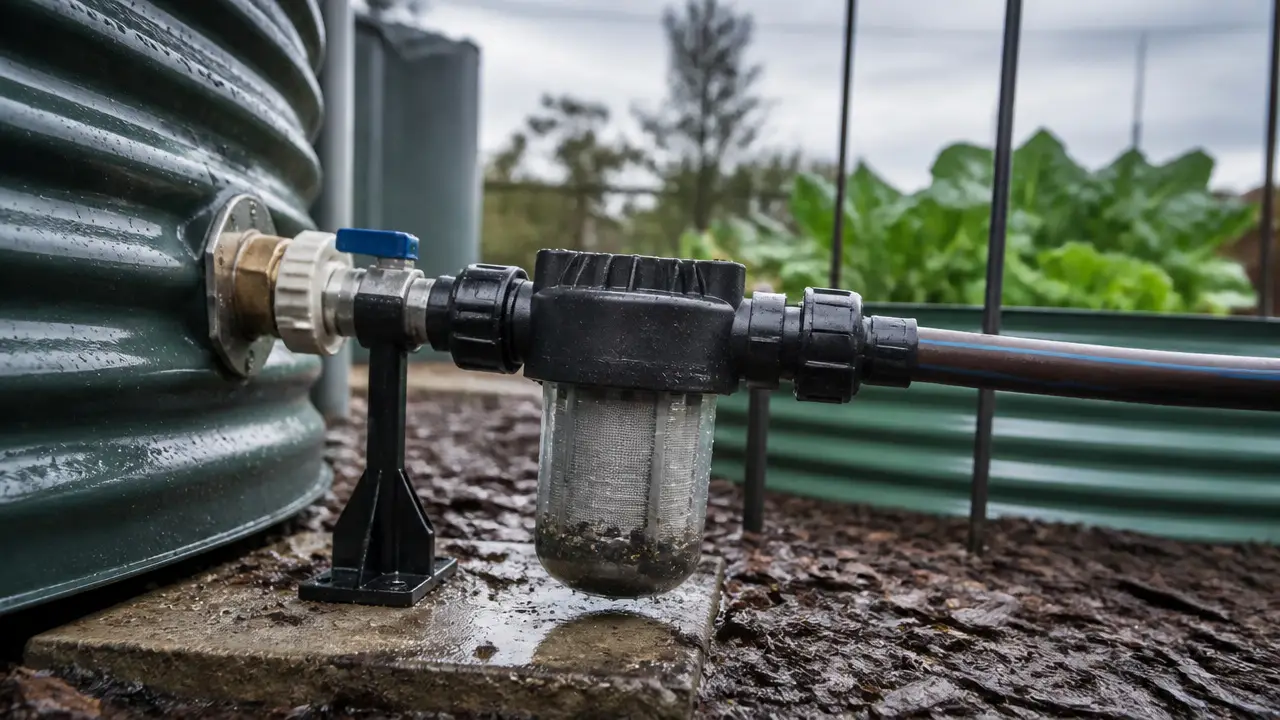
Examine the performance of garden hose splitters to evaluate plant water requirements compared with tank replenishment.
A rain barrel normally relies on gravity. Head height is the vertical distance between the water surface and the point where the water comes out.
Each foot of water height provides only about 0.43 psi of static pressure.
For example:
- 2 feet of water height provides about 0.9 psi
- 4 feet provides about 1.7 psi
- 6 feet provides about 2.6 psi
Those numbers are before accounting for losses through the outlet, splitter, hose, filter, elbows, and irrigation tubing.
A normal house faucet may operate at many times that pressure.
Because of this, a restrictive splitter can be much more noticeable on a gravity-fed barrel than on household plumbing.
For a rain barrel, look for:
- A large internal opening
- Short hose runs
- Few unnecessary fittings
- Full-opening valves
- Irrigation equipment designed for low pressure
Raising a rain barrel can increase pressure, but water is heavy. One gallon weighs about 8.3 pounds. Do not place a full barrel on a makeshift platform that was not designed for the load.
What Is Best for an IBC Tote or Cistern?
With larger storage tanks, first determine what comes out of the tank.
An IBC tote does not necessarily have garden hose threads on its main valve. IBC valve thread styles vary, so identify the actual valve before buying an adapter.
A typical setup may look like:
tank outlet → correct tank adapter → shutoff valve → garden hose adapter → splitter
Avoid stacking adapters unless necessary. Every extra fitting creates another possible leak and may reduce the available flow.
If a pump supplies the splitter, also check the pump's available flow and pressure.
A splitter rated for ordinary garden use should not automatically be treated as permanent pressure plumbing.
Can You Run Two Sprinklers From One Splitter?
Sometimes.
The deciding factor is available water flow.
Suppose each sprinkler needs substantial flow to operate correctly. If the faucet, hose, or rainwater pump cannot supply both at the same time, splitting the line can cause:
- Short sprinkler range
- Poor spray patterns
- Low pressure at both branches
- Uneven irrigation
The splitter itself cannot fix an undersized supply.
A simple test is to operate one watering device, then open the second branch. A large performance drop means the supply or distribution system cannot comfortably support both loads at once.
Long, narrow hoses can make the problem worse.
Two-Way or Four-Way Splitter?
Use the fewest outlets you actually need.
A two-way splitter is usually best when you want to keep a hose and one irrigation line connected.
A four-way manifold is useful when one faucet must serve several permanent outdoor branches.
However, four outlets do not mean four full-capacity water supplies.
All four still share the same inlet.
For a rainwater system, several irrigation zones are often better operated one at a time rather than simultaneously. This can provide better flow to each zone without requiring a larger pump.
Be Careful When Mixing Rainwater and Tap-Water Systems
A hose splitter should not create a direct connection between untreated rainwater and household drinking-water plumbing.
The CDC recommends keeping collected rainwater separate from piped drinking water because rainwater can contain germs and chemicals picked up from air, roofs, gutters, piping, and storage equipment.
A potable water system carries water considered suitable for drinking. A non-potable system carries water that is not intended or established as safe for drinking.
A cross-connection between the two can allow contaminated water to move into potable plumbing under certain pressure conditions. EPA guidance identifies garden hoses and non-potable systems as potential cross-connection concerns.
If your rainwater installation connects in any way with household plumbing or a municipal water supply, proper backflow protection and local plumbing requirements become important. That is beyond the job of an ordinary garden hose splitter.
Do Not Assume a Brass Splitter Makes Rainwater Drinkable
The material used in a splitter is only one small part of water quality.
Roof runoff can contain microbes and chemicals even when the water looks clear. CDC guidance says rainwater intended for drinking, cooking, or bathing requires appropriate system design, maintenance, treatment, and regular testing for relevant germs and chemicals.
A lead-free splitter does not make untreated roof runoff potable.
For simple garden irrigation, this is normally less complicated. For drinking-water use, evaluate the entire system from the collection surface through storage, treatment, distribution, and current laboratory testing.
How to Keep a Hose Splitter Working
Most failures come from weather, damaged seals, corrosion, or leaving the fitting under pressure.
A few habits help.
Check the inlet washer when you reconnect the splitter each season. Replace it if it is cracked, flattened, or hardened.
Turn valves through their full range occasionally so they do not remain stuck in one position for months.
Avoid hanging unnecessary weight from the faucet. A splitter, timer, filter, and two heavy hoses can put considerable leverage on a hose bib.
Turn off the water supply when the system is not being used unless every component is specifically intended for continuous pressure.
Before freezing weather, disconnect and drain outdoor splitters. Water trapped inside a closed valve can expand as it freezes and damage the body, seals, or fittings. ELEY, for example, specifically recommends removing watering attachments before freezing conditions where practical.
Which Garden Hose Splitter Should You Choose?
For most homeowners using North American garden hose connections, start with a two-way metal splitter with full-size flow passages, individual quarter-turn valves, a swiveling inlet, replaceable washers, and standard 3/4-inch GHT connections.
Among current manufacturers, ELEY is particularly well suited to someone looking for a robust heavy-duty design. Melnor and Orbit offer simpler metal and brass alternatives for ordinary garden watering. GARDENA makes sense when compatibility with its existing watering system is more important than using conventional North American hose fittings.
For a rain barrel or cistern, do not choose by brand alone. Check the outlet connection, available pressure, required flow, hose size, and intended irrigation equipment first. Those factors often have a bigger effect on performance than the name stamped on the splitter.
Frequently Asked Questions
Are brass garden hose splitters better than plastic ones?
Brass is generally a good choice for a splitter that will see frequent outdoor use because it provides strong threads and a rigid valve body. A well-designed polymer splitter can also work well, especially as part of a quick-connect system. Internal flow size, valve quality, seals, and thread compatibility matter as much as the body material.
Does a garden hose splitter reduce water pressure?
A splitter adds some flow resistance, and running two outlets at once divides the water available from the source. The effect may be small with light watering but much more noticeable when operating two high-flow sprinklers or using a low-pressure rain barrel.
Can I connect a garden hose splitter to a rain barrel?
Yes, if the barrel outlet has a compatible garden hose connection or the correct adapter is installed. Gravity-fed barrels have very low pressure, so choose a splitter with large internal passages and avoid unnecessarily long or narrow hoses.
Can I put a splitter on an IBC tote?
Yes, but first identify the IBC valve thread. IBC totes use several outlet and thread styles, and they are not automatically compatible with ordinary garden hose fittings. Use the correct tank adapter rather than forcing mismatched threads together.
Can I leave a hose splitter pressurized all the time?
Do not assume you can. Many garden hose splitters are designed for intermittent outdoor watering rather than permanent static pressure. Follow the manufacturer's instructions and shut off the upstream faucet when the system is not being used unless all components are specifically designed for continuous pressure.
Can I use plumber's tape on a leaking garden hose splitter?
Standard garden hose connections normally seal against a washer or O-ring rather than at the threads. Check that the washer is present, clean, undamaged, and properly seated before using thread-sealing tape.
Can the same splitter connect tap water and harvested rainwater?
Do not use an ordinary splitter to create a direct connection between a drinking-water system and untreated rainwater. Cross-connections can allow non-potable water to contaminate potable plumbing. Keep the systems separated and follow applicable local backflow and plumbing requirements.