
As an affiliate, we may earn a commission from qualifying purchases. We get commissions for purchases made through links on this website from Amazon and other third parties.
Best Overall
Best for Volume Tracking
Best Compact
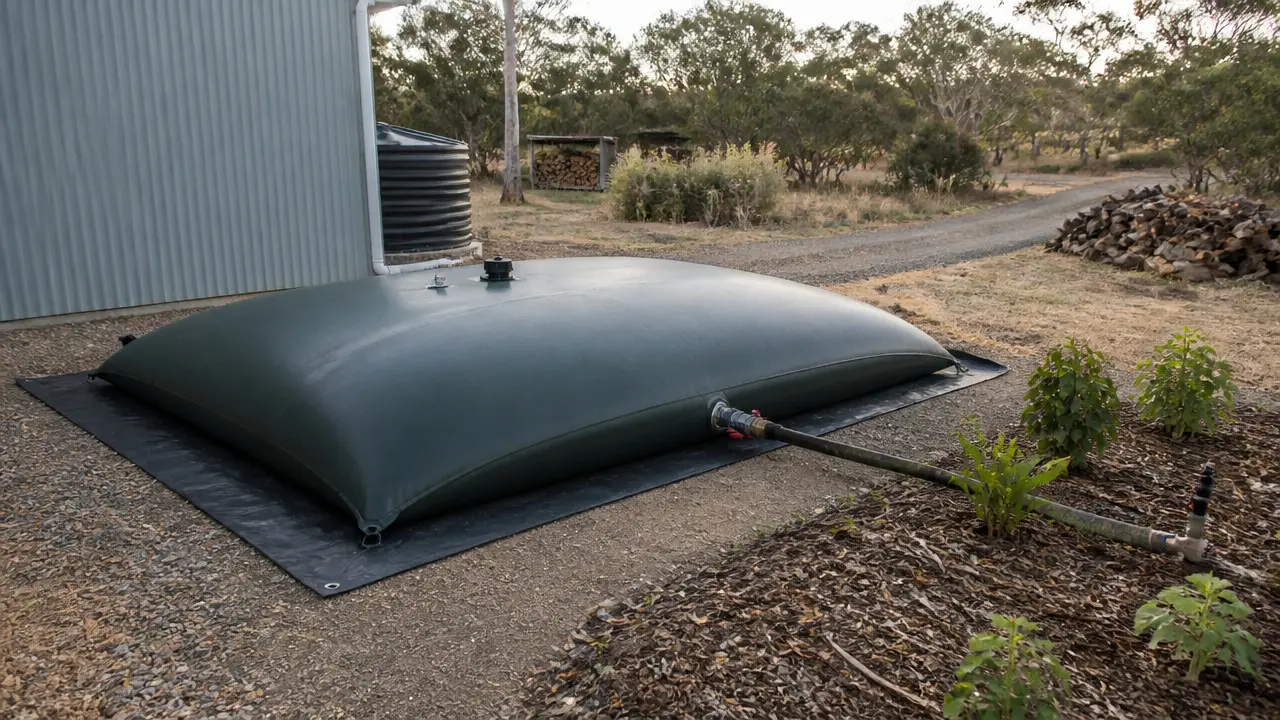
A water storage bladder can give you useful temporary capacity without dedicating permanent space to a rigid tank. The tradeoff is that a flexible bag depends heavily on its seams, fittings, support surface, and how carefully it is handled when full.
For a rainwater system, start with the job the bladder needs to do. A bag used beside a garden bed has different connection needs from one carried in a truck bed or stored empty between uses. Capacity matters, but so do the filled footprint, hose connection, drain valve, exposure to sharp objects, and whether the maker limits the product to non-potable water.
The four options here cover two broad sizes and several fitting layouts. Material, dimension, or capacity details conflict for the VIVOSUN, MXQMKL, and Tasyphia models, so those uncertain figures are left out. Their clear connection, handling, and use details still provide useful points of comparison.
Water Storage Bladders at a Glance
| Product | Best For | Useful Strength | Main Tradeoff |
|---|---|---|---|
| GHOSOONE Water Bladder | Most balanced rainwater use | Clear 63.4-gallon size, reinforced PVC-coated construction, and dedicated inlet/outlet fittings | Hose compatibility still needs planning before filling |
| VIVOSUN Water Storage Bladder | Watching stored volume | 240-liter capacity, graduation marks, foldable body, and outlet faucet | Leakage around the nozzle is the main concern |
| MXQMKL Water Bladder | Adapter-focused setups | Dedicated outlet valve and included pipe connection give you a defined plumbing starting point | Several size and material fields conflict, so those claims are omitted |
| Tasyphia Collapsible Bladder | Storage between uses | Folds down when empty and includes pull rings for positioning | Capacity and dimension fields conflict, and the bag should not be moved while full |
Start With the Filled Footprint, Not the Folded Size
A bladder looks easy to store because it packs down small when empty. Once filled, it spreads across the support surface and becomes too heavy to treat like a normal carry bag. That change is the most important part of planning.
The GHOSOONE model gives the clearest filled dimensions here at 39.3 x 23.6 x 15.7 inches. Its 63.4-gallon capacity puts it in the range of a large rain barrel, but with a low flexible shape rather than a rigid upright wall. That can help in a truck bed, beside a shed, or on a prepared ground pad where height is limited.
The VIVOSUN model is a 240-liter bladder with graduation marks that make it easier to watch the water level. Size or capacity figures conflict for the Tasyphia and MXQMKL models, so those measurements are not useful for a safe comparison. If either model interests you, choose it from the fitting layout and handling needs rather than a disputed dimension.
A full bladder also needs a smooth, stable base. Stones, sharp edges, protruding fasteners, and rough concrete can become concentrated stress points. Flexible storage solves a space problem, but it does not remove the need for a proper support area.
Best Overall: GHOSOONE 240L/63 Gal Water Bladder
1 / 4
GHOSOONE 240L/63 Gal Water Bladder Tank
Capacity
63.4 gal
Dimensions
39.3 x 23.6 x 15.7 in
Material
PVC-coated polyester mesh
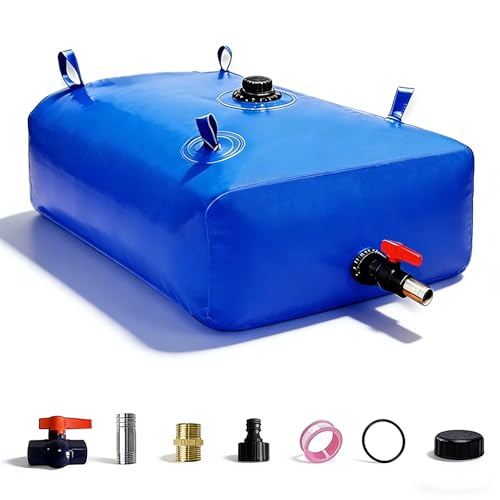
The GHOSOONE bladder has the clearest combination of usable capacity, footprint, and connection details. It stores 63.4 gallons in a body measuring 39.3 x 23.6 x 15.7 inches. The flexible shell uses PVC-coated polyester mesh with welded seams and reinforced sealing, so it is designed as a reusable storage bag rather than a thin disposable liner.
Its plumbing layout is also well defined. The inlet is 1 inch, with a 32 mm outside diameter and 25 mm inside diameter. The outlet uses a 3/4-inch shutoff valve, and a rigid 32 mm connector is included. Those measurements give you something concrete to plan around before you buy adapters or cut hose.
The main caution is connection fit. One use case ran into trouble because a normal garden-hose setup needed extra adapters. Another unit failed at a side seam during filling. That makes a dry layout check important: place the empty bag, assemble the inlet and outlet parts, and make sure the hose path works before putting a large water load into it.
Why It Works
- The 63.4-gallon capacity is clearly documented and large enough for meaningful garden or utility storage.
- Its 39.3 x 23.6-inch footprint is narrower than a square 39.3-inch bladder layout.
- Separate inlet and shutoff outlet fittings make fill and drain planning easier.
- The foldable body takes far less storage room once it is empty.
What To Keep In Mind
- Do not assume a standard garden hose will connect without the right adapter chain.
- Put the bladder on a smooth support surface before filling.
- Treat seam or fitting leaks as a reason to drain the bag rather than keep using it under load.
- This model is intended for non-potable storage, not as a drinking-water solution.
Best for Volume Tracking: VIVOSUN 240L Water Storage Bladder
2 / 4
VIVOSUN 240L/64 Gal Water Storage Bladder
Capacity
240 L
Design
Foldable
Feature
Graduation scale
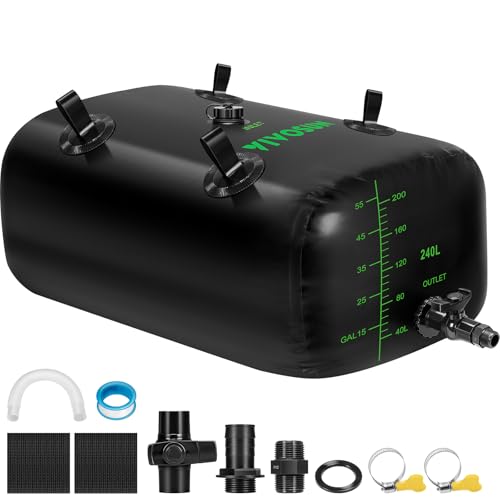
The VIVOSUN bladder is the easiest option here to use when you want a rough visual sense of how much water remains. Its capacity is 240 liters, and the bag includes a graduation scale for watching volume during filling and use. Four pull rings help with positioning while the bag is empty, and the body folds for storage when it is not needed.
Water enters through the top opening and drains through an outlet faucet. That simple layout works well for a temporary garden or utility setup where the bladder can stay in one place during use. The maker also warns against alcohol, gasoline, diesel, and drinking-water storage, so this is best treated as a non-potable water container.
The weak point is the outlet area. Leakage near the nozzle appeared during first use on at least one unit. Its material details are inconsistent, so the stronger reason to choose this model is its known capacity, visible volume scale, foldable design, and simple faucet-style outlet.
Why It Works
- The 240-liter capacity gives you a clearly defined storage target.
- Graduation marks make changing water volume easier to see.
- The bag folds down when empty instead of occupying permanent tank space.
- A simple outlet faucet suits low-pressure draining and garden-transfer tasks.
What To Keep In Mind
- Inspect the nozzle and surrounding seam during the first controlled fill.
- Keep sharp objects away from the bag and its support area.
- Pull rings are most useful for empty-bag handling, not moving a loaded bladder.
- This model is not intended as a drinking-water storage solution.
Best for Adapter-Focused Setups: MXQMKL Water Bladder
3 / 4
MXQMKL Foldable Portable Water Bladder

Outlet
25 mm OD / 3/4 in ID
Included Pipe
32 mm OD
Storage
Foldable when empty
The MXQMKL bladder makes the most sense for a buyer who is willing to plan the hose connection around the supplied metric-style dimensions. Its outlet valve is described with a 25 mm outside diameter and a 3/4-inch inside dimension, and the included pipe uses a 32 mm outside diameter. That gives you a more useful starting point than guessing from a product photo.
Connection planning is essential because ordinary U.S. garden-hose parts may not mate directly with the supplied fittings. The outlet threads can also be difficult to seal when the wrong adapter is forced onto them. Build the adapter path on the empty bladder first, and avoid using extra tape or sealant as a substitute for a correctly matched thread.
Several material, dimension, and capacity details disagree. The product remains useful when its outlet arrangement fits the rest of your system, but it is not the model to choose when an exact footprint or storage volume is the deciding factor.
Why It Works
- The outlet and included pipe dimensions provide a concrete starting point for plumbing.
- The bladder folds away when it is not in service.
- The outlet layout can work for a planned transfer or irrigation connection when the adapters match.
What To Keep In Mind
- Do not rely on disputed capacity, dimension, or material fields for system design.
- Standard U.S. garden-hose compatibility should not be assumed.
- A poor thread match can leak even when the bag itself is intact.
- Do not fill the bladder with alcohol or diluted chemicals.
Best Compact: Tasyphia Collapsible Water Storage Bladder
4 / 4
Tasyphia Collapsible Water Storage Bladder

Design
Foldable
Handling
Move when empty
Use
Non-potable water
The Tasyphia bladder is the most attractive option when empty-storage space matters as much as water storage itself. The bag is designed to fold down between uses, and several product-specific experiences describe a surprisingly small packed size compared with the filled form. That makes it easier to keep in a shed, RV storage bay, or utility box until it is needed.
The shell uses welded flexible construction and includes pull rings, but those rings are for handling the empty bag. The maker specifically warns against lifting or moving the bladder when it is full. That is sensible for any flexible water bag: the load shifts, and pulling from a small attachment point can concentrate stress in the fabric and seams.
Capacity, dimension, and material details conflict, so choose this model for its foldable storage and non-potable utility role. Make sure the physical bag and fittings suit your placement before a full fill.
Why It Works
- It packs down into a small bundle when empty.
- The flexible form suits users who only need extra storage part of the year.
- Pull rings help position the empty bag before filling.
- The product is intended for rainwater, irrigation, RV, and other non-potable storage uses.
What To Keep In Mind
- Do not move the bladder by its pull rings when full.
- Exact capacity and dimension claims are not used here because the product fields disagree.
- Avoid overfilling, sharp objects, alcohol, and chemicals.
- A compact folded package does not mean the filled bladder can sit on an unprepared surface.
How to Choose a Water Storage Bladder
Match Capacity to the Job
Start with how much water you need between fills or transfers. A bladder used to move irrigation water across a property may only need to bridge one watering session. A temporary storage bag beside a cabin or shed may need to hold more.
Do not size from capacity alone. Water weighs about 8.3 pounds per U.S. gallon, so a 60-gallon class bladder carries roughly 500 pounds of water before you count the bag and fittings. That is a stationary load in practice, even when the empty product is easy to carry.
Leave Room for the Bag to Spread
Flexible tanks change shape as they fill. Give the bladder more room than its nominal footprint and keep hoses from pulling sideways on the inlet or outlet. A tight compartment can press against fittings or fold the wall in ways the bag was not designed to handle.
The support surface should be smooth, level, and free of sharp debris. A protective ground sheet can help on rough soil, but it does not make nails, stones, or jagged edges safe under a loaded bladder.
Plan Every Connection Before Filling
This is where many bladder setups become frustrating. An inlet may use a nominal inch size while the actual outside diameter is metric. A supplied pipe may not match the garden hose already on the property. Threaded outlets may require the right male or female adapter rather than more sealant.
Lay out the bag empty. Attach the intended fill hose, outlet hose, valve, and any adapters. Make sure the hose can reach without twisting the fitting. A correct connection is easier to fix before hundreds of pounds of water are sitting on the bag.
Decide Whether the Bladder Stays Put
A foldable bladder is portable when empty. Once full, it should generally stay where it was filled unless the entire installation was designed for transport. In a truck bed or trailer, the support, containment, load rating, and movement of the water become part of the setup.
Do not drag a filled bladder across the ground. Do not lift it from pull rings that are meant for positioning the empty bag. Drain first, then move it.
Keep Intended Water Use Clear
Several of these products are specifically framed for non-potable storage. That can suit garden irrigation, equipment washing, flushing, or other utility uses when the rest of the rainwater system supports the job.
A flexible storage bag does not make roof runoff safe to drink. Drinking-water use requires a suitable collection path, treatment stages, current water testing, maintenance, and any local requirements that apply to the complete system.
Common Water Bladder Problems
Leaks at the Nozzle or Seam
Start with a controlled first fill where a leak will not damage property. Watch the outlet, inlet, welded seams, and any adapter joints. If the bag itself leaks, drain it. Do not keep adding pressure or loading to see whether the leak stops.
Hose Connections That Do Not Match
Nominal sizes can hide different thread standards or outside diameters. Match the actual fitting dimensions and thread type before buying adapters. A garden hose should not be forced onto an outlet just because the size sounds close.
Moving the Bag While Full
Water shifts inside flexible storage. Dragging or lifting the bag can pull on seams and fittings. Position it first, fill it in place, and drain it before relocating it.
Sun, Heat, and Freezing Exposure
Flexible coated fabrics still have use limits. Long sun exposure, hot surfaces, freezing water, and repeated flexing can shorten service life. Follow the maker's temperature and storage directions and drain seasonal systems when freezing conditions call for it.
Storing the Bag Wet and Folded
Drain the bladder completely and let it dry as the maker directs before long storage. Folding a dirty or wet bag can trap residue and make the next use harder to clean. Keep the fittings together so the correct parts are not lost between seasons.
Frequently Asked Questions
Are water storage bladders good for rainwater collection?
They can be useful as temporary or flexible storage when the inlet, outlet, support surface, capacity, and intended water use fit the system. They are usually better as a storage component than as the entire collection setup.
Can I connect a garden hose directly to a water bladder?
Sometimes, but not every bladder uses standard garden-hose threads. Measure the actual inlet and outlet and use the correct adapter rather than forcing a close-fitting connection.
Can I move a water bladder when it is full?
A full bladder should normally stay in place. The water load is heavy and shifts inside the flexible body. Drain the bag before moving it unless the complete transport setup was designed for a filled bladder.
Can I drink water stored in these bladders?
The models in this guide should not be treated as a complete drinking-water solution. Several are intended for non-potable storage. Drinking-water use depends on the entire collection, treatment, storage, testing, and maintenance system.
What should I put under a water storage bladder?
Use a smooth, level support area without sharp stones, screws, splinters, or rough edges. A protective mat can add separation from the ground, but the base still needs to carry the full water load evenly.
How should I store a bladder after use?
Drain it fully, clean and dry it according to the maker's directions, then fold it without trapping sharp fittings against the fabric. Store it away from damaging heat, sunlight, chemicals, and pests.
For a rigid alternative with known mounting dimensions, compare portable water storage tanks. If you want the collection hardware bundled with storage components, rainwater harvesting kits cover a different path. For systems built around an IBC tote, IBC tote covers can help protect the container from light exposure.