

As an affiliate, we may earn a commission from qualifying purchases. We get commissions for purchases made through links on this website from Amazon and other third parties.
Best Overall
Best Mid-Size
Best Compact
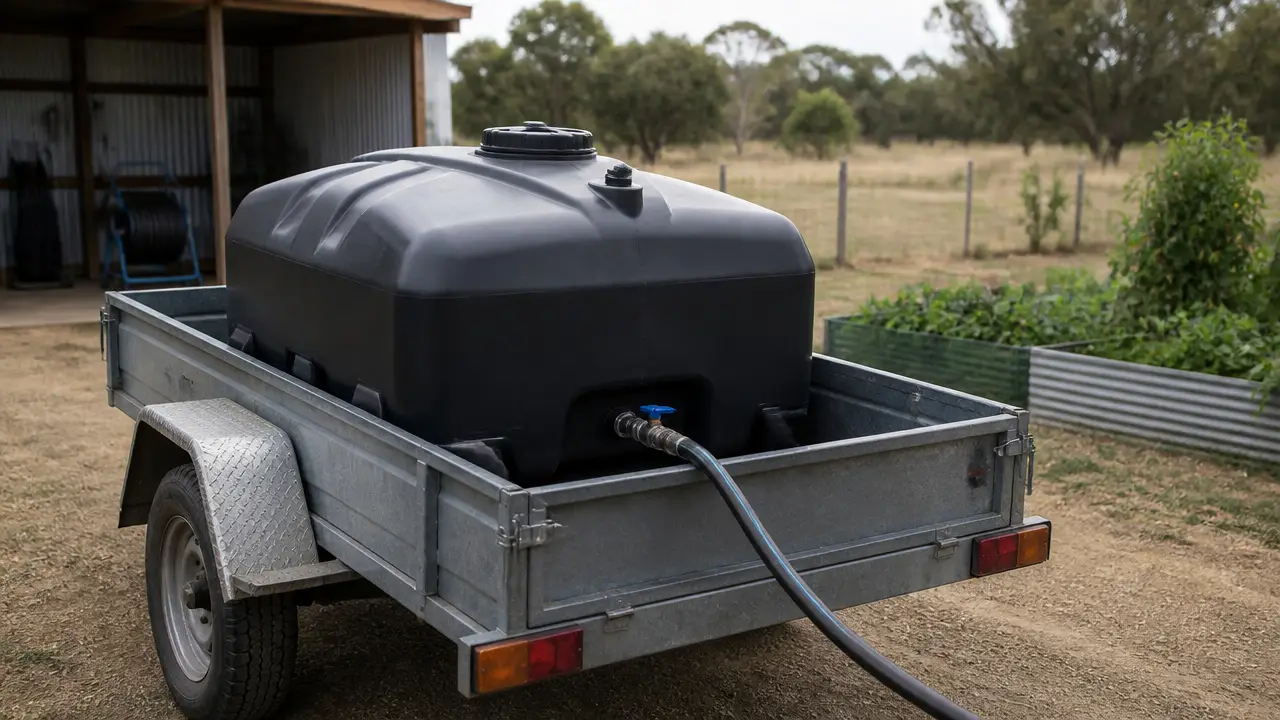
Portable water storage works best when the tank fits the space before it is filled. Water gets heavy fast, fittings need room for hoses and valves, and a tank that looks compact on a product page can become awkward once it is braced, vented, and connected.
The four tanks here cover very different footprints. Three A.A polyethylene tanks provide clearly documented 42-, 30-, and 10-gallon choices. The fourth is a horizontal square reservoir with a translucent body, a large fill opening, and a 3/4-inch NPT outlet, but its available capacity details conflict, so capacity is not used as a buying claim for that model.
These are non-pressurized storage choices. They need a stable support surface and a system plan for filling, venting, draining, and keeping the tank from shifting. For rainwater use, also think about where the water came from, how it will be used, and what treatment or testing that use may require.
Portable Water Storage Tanks at a Glance
| Product | Best For | Key Strength | Tradeoff |
|---|---|---|---|
| A.A 42 Gallon Tank | Maximum storage among the clearly sized options | 42-gallon capacity with a 39 x 18 x 14-inch body | Largest footprint and needs secure bracing |
| A.A 30 Gallon Tank | Mid-size builds | 30 gallons in a narrower 34 x 12 x 18-inch footprint | Additional fittings are needed for installation |
| A.A 10 Gallon Tank | Small vans, campers, and tight storage areas | Compact 17 x 14 x 10-inch body | Limited volume and still needs proper venting |
| Horizontal Square Reservoir Tank | Simple drain or hose connection | Translucent body, large fill opening, and 3/4-inch NPT outlet | Capacity claim is omitted because product fields conflict |
Start With Capacity and Footprint
Capacity is only useful when the tank physically fits the place you have for it. The 42-gallon A.A tank gives you the most storage of the three clearly sized options, but its 39-inch length demands room. The 30-gallon version shortens the tank and narrows one dimension to 12 inches, which can help in a vehicle, cabinet, or utility area where width matters more than total length.
The 10-gallon A.A tank is a different class of storage. At 17 x 14 x 10 inches, it is easier to place under a counter, inside a small camper, or in a compact utility space. The tradeoff is simple: you refill it more often.
The horizontal square reservoir deserves a different comparison. Its useful features are the translucent body, molded level markings, large fill opening, and 3/4-inch NPT outlet. Because its capacity fields conflict, choose it only from the connection and physical-layout details you can safely match to your system, not from a gallon figure.
The Largest Clearly Sized Option
1 / 4
A.A 42 Gallon RV Fresh/Gray Water Tank

Capacity
42 gal
Dimensions
39 x 18 x 14 in
Material
Polyethylene
The A.A 42-gallon tank is the clearest choice when storage volume is the main constraint. It measures 39 x 18 x 14 inches before accounting for the fittings, so the installation area needs more than the bare tank dimensions. The polyethylene body is rotationally molded and intended for fresh or gray water storage.
Connection planning matters just as much as capacity. The tank includes one 1.25-inch water fill inlet and three 3/8-inch NPT connections. It is a non-pressurized tank, which means the installation needs a vent so air can move in and out as the water level changes. Additional fittings are needed to connect it into a working system.
This tank should sit on a level support and be braced so it cannot shift during transport. It should not hang from straps. That makes it a better match for a planned van, trailer, boat, or stationary utility build than for someone who wants a container to carry by hand when full.
Why It Works
- The 42-gallon capacity is the largest clearly documented volume among these options.
- The 39 x 18 x 14-inch shape gives you a known footprint to design around.
- Multiple threaded connections provide options for filling, draining, and plumbing a non-pressurized system.
What To Keep In Mind
- The tank needs level support and bracing rather than hanging from straps.
- It must be vented during use.
- The fittings extend beyond the tank body, so leave extra installation space.
A Mid-Size Tank With a Narrower Footprint
2 / 4
A.A 30 Gallon RV Fresh/Gray Water Tank

Capacity
30 gal
Dimensions
34 x 12 x 18 in
Material
Polyethylene
The A.A 30-gallon tank lands between the compact and high-capacity choices. Its documented dimensions are 34 x 12 x 18 inches, so it can suit a long, narrow space that would not accept the 18-inch width of the 42-gallon model in the same orientation. The tank can also be rotated, but the fittings still need clearance.
Like the larger A.A tank, this is a non-pressurized fresh or gray water tank. It comes with one 1.25-inch fill inlet and three 3/8-inch NPT connections. The system needs a vent, added fittings, and a stable mounting surface. The tank should be braced against movement rather than supported by hanging straps.
Long-term operating experience with this exact model is limited, so the buying decision should stay focused on the documented tank construction, dimensions, connections, and installation requirements. If 30 gallons fits your planned water use and the 12-inch dimension solves a space problem, this is the most straightforward reason to choose it.
Why It Works
- Thirty gallons gives you meaningful storage without the footprint of the 42-gallon option.
- The 12-inch dimension can help in narrow compartments.
- The fill inlet and three NPT connections give you several plumbing points to work with.
What To Keep In Mind
- Additional fittings are required to turn the tank into a complete storage setup.
- The tank needs venting and secure bracing.
- Do not put weight on top of the tank or modify the body to force an installation.
A Compact Tank for Tight Spaces
3 / 4
A.A 10 Gallon RV Fresh/Gray Water Tank

Capacity
10 gal
Dimensions
17 x 14 x 10 in
Material
Polyethylene
The A.A 10-gallon tank is the easiest of these four to fit into a small build. Its body measures about 17 x 14 x 10 inches, not including the fittings. That makes it much easier to place under a sink, inside a camper cabinet, or in another space where the larger tanks simply will not fit.
The basic plumbing layout follows the same pattern as the larger A.A tanks. It is non-pressurized, needs a vent, and includes a 1.25-inch fill inlet plus three 3/8-inch NPT connections. A small tank is not automatically a simple installation; you still need access for the fill line, drain or outlet plumbing, venting, and any valve or pump connection the system uses.
Its main limit is volume. Ten gallons can be useful for a compact setup, but the water itself still adds substantial weight when the tank is full. Mounting and bracing matter even in a small camper. The compact footprint is the reason to buy this model, not an assumption that it can be placed anywhere without support.
Why It Works
- The 17 x 14 x 10-inch body fits places the larger tanks cannot.
- Ten gallons can suit a small camper, van, or limited-use water setup.
- Standard fill and threaded connection points make it easier to plan a fixed installation.
What To Keep In Mind
- The smaller capacity means more frequent refilling.
- A full tank is still heavy and needs a secure support surface.
- Some installation layouts may need extra adapters or replacement parts to match the rest of the plumbing.
A Horizontal Reservoir With a Large Fill Opening
4 / 4
Horizontal Square Reservoir Water Tank

Outlet
3/4 in NPT
Fill Opening
5 in opening
Body
Natural translucent poly
This horizontal square reservoir takes a different approach from the A.A tanks. Its natural translucent polyethylene body lets you see the water level more easily, and molded level markings add another visual reference. A roughly 5-inch fill opening sits under a 5-1/2-inch lid, which gives you more room for filling and basic access than a small threaded neck.
The built-in bulkhead uses a 3/4-inch NPT outlet. That larger outlet can make a simple drain or hose connection easier to plan than the 3/8-inch connections on the other tanks here. The body is intended for non-flammable liquids and uses UV-stabilized, corrosion-resistant polyethylene.
The key caution is the capacity field. The product material contains conflicting capacity signals, so this guide does not use a gallon figure for this tank. There are also fit concerns around the outlet threads, including difficulty finding a matching fitting in some setups and damage to bulkhead threads in some units. Inspect the outlet closely before building the rest of the plumbing around it.
Why It Works
- The translucent body and molded markings make the water level easy to see.
- The large fill opening gives you more access than a narrow fill neck.
- The 3/4-inch NPT outlet suits a straightforward drain or hose connection.
What To Keep In Mind
- Do not choose this model from a capacity figure because its product fields conflict.
- The bulkhead and outlet threads deserve close inspection before installation.
- A damaged or poorly matched outlet can turn a simple tank into a plumbing repair.
How to Choose a Portable Water Storage Tank
Work Backward From the Space
Measure the full installation area before choosing capacity. Include the fittings, hose bends, fill line, vent, valves, and enough room to service the tank later. A 39-inch tank does not fit a 39-inch compartment once a fitting sticks out from the end.
Think about orientation too. Some rectangular tanks can be rotated to change which dimension becomes height or width, but the connection locations move with the tank. A rotated tank only helps when the fill, vent, and outlet can still be routed cleanly.
Match Capacity to Real Water Use
Bigger is not always better. A large tank gives you more reserve, but it also takes more room and becomes much heavier when full. In a vehicle or trailer, that means stronger support and more attention to movement during travel.
For a small cabin, camper, garden cart, or temporary setup, a 10-gallon tank may be easier to live with than a 42-gallon tank. For a fixed build where refilling is inconvenient, the larger option may be worth the space.
For collected rainwater, storage size should also make sense for the roof area, local rainfall, and intended use. A large tank that rarely fills may not solve the same problem as a smaller tank that turns over regularly.
Understand Non-Pressurized Tank Plumbing
The A.A tanks here are non-pressurized storage tanks. They are not pressure vessels. They need to breathe as water enters and leaves, so venting is part of the installation.
If you need pressurized water at a faucet or hose, that pressure comes from the rest of the system, such as a suitable pump and controls. Do not treat a storage tank as a pressure tank.
Look Closely at the Connection Sizes
A tank can fit perfectly and still create extra work if the fittings do not match your hose or plumbing. The A.A tanks use a 1.25-inch fill inlet and 3/8-inch NPT connections. The horizontal reservoir uses a 3/4-inch NPT outlet.
Plan the adapter chain before mounting the tank. Fewer adapters usually mean fewer joints to inspect for leaks. Leave room to tighten and remove fittings later.
Support the Full Tank, Not the Empty One
An empty polyethylene tank is easy to move. A full tank is not. The support surface should carry the tank evenly and keep it from shifting.
In a mobile setup, bracing is especially important. The tank should not be left free to slide, and it should not be hung by straps when the manufacturer calls for level support. A secure installation protects the tank body and the plumbing attached to it.
Using Portable Tanks in a Rainwater System
A portable or compact tank can work as part of a rainwater system, but the intended water use should decide the rest of the setup. Garden watering has different treatment needs from water used inside a home. A storage tank by itself does not make collected roof runoff suitable for drinking.
Keep light, debris, and contamination in mind. A closed tank helps with storage, but the collection path, inlet screening, cleaning routine, and turnover all affect water quality. If the tank is used for any higher-risk purpose, use suitable treatment and current water testing for the complete system.
For freezing climates, a tank that remains full outdoors needs a cold-weather plan. Draining, relocating, or protecting the system may be necessary depending on the tank, plumbing, and local conditions. Follow the tank maker's use limits rather than assuming polyethylene alone makes a system freeze-proof.
Common Portable Tank Installation Mistakes
Forgetting Fitting Clearance
Tank dimensions usually describe the body. Threaded fittings and hose bends add length. Measure the real envelope of the installed tank.
Skipping the Vent
A non-pressurized tank needs air to move as water enters and leaves. A poor vent arrangement can interfere with filling and draining.
Letting the Tank Shift
Movement can stress the tank and the attached plumbing. Brace the tank on a level support, especially in a van, trailer, or boat.
Choosing Capacity Before Weight
Every extra gallon adds more water weight. A larger tank changes how the support platform and mobile installation need to be designed.
Treating the Tank as the Whole Rainwater System
The tank only stores water. Collection, debris control, overflow, pumping, filtration, treatment, and testing are separate system decisions.
Frequently Asked Questions
What size portable water storage tank should I buy?
Choose from the available space and the amount of water you actually need between refills. Leave room for fittings, hoses, venting, and service access instead of sizing from the tank body alone.
Is a 42-gallon tank too large for a van?
It depends on the van, support structure, and planned load. The 42-gallon A.A tank measures 39 x 18 x 14 inches before fittings, and the water adds substantial weight when full.
Do portable water tanks need to be vented?
Non-pressurized tanks need a way for air to enter and leave as the water level changes. The A.A tanks in this guide specifically require venting during use.
Can I connect a pump directly to one of these tanks?
A pump may be part of the larger system when its inlet, flow needs, fittings, and installation match the tank setup. The storage tank itself is not a pressure vessel, so pump selection and controls need to be handled separately.
Can these tanks store collected rainwater?
They can serve as storage components when the tank material, connections, installation, and intended use fit the system. The tank does not make roof runoff safe to drink; treatment and current water testing depend on how the water will be used.
Should I choose the biggest tank that fits?
Not automatically. More capacity means more stored water, but also more weight, a larger support requirement, and slower turnover. Choose the smallest capacity that comfortably meets the real use case and refill pattern.
If you are still deciding how much storage the property needs, how to size a rainwater tank puts roof area, rainfall, and planned water use into the same decision. If the tank will be filled from a downspout, the rainwater harvesting kit guide covers the connection hardware that routes runoff into storage. For a tote-based setup, how to use an IBC tote for rainwater explains the practical fit and plumbing questions around that container type. If sunlight is a concern for a tote installation, IBC tote covers for rainwater collection compare protective cover options.



