
As an affiliate, we may earn a commission from qualifying purchases. We get commissions for purchases made through links on this website from Amazon and other third parties.
Best Overall
Best Complete Kit
Best Compact Pump
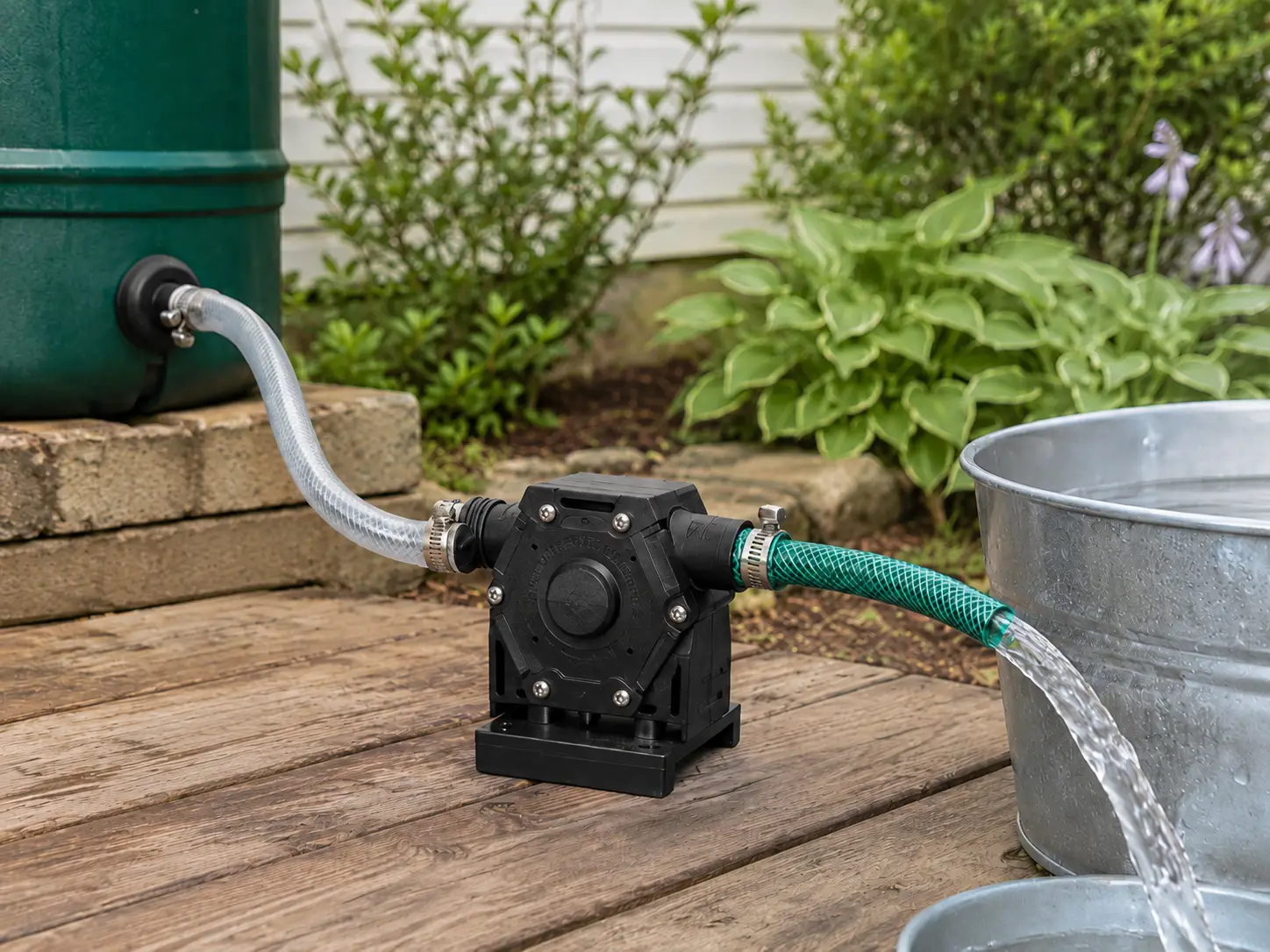
A drill pump turns a common power drill into a small water-transfer pump. It is useful for draining a rain barrel, moving water between containers, emptying a shallow tank, or handling a short transfer job when buying a dedicated electric pump feels excessive.
The pump itself is only half of the system. Drill speed, hose size, priming, suction lift, and how firmly the pump is supported all affect the result. A drill pump that can move hundreds of gallons per hour on a short, level setup may slow sharply when it has to pull water uphill through a long suction hose.
These are compact utility pumps, not pressure systems. Use them for moving water from one place to another. For sprinklers, household fixtures, or long uphill runs, a dedicated pump with known pressure and duty cycle is the safer match.
Drill Pumps at a Glance
| Product | Best For | Key Strength | Tradeoff |
|---|---|---|---|
| Milescraft DrillPump750 | General rainwater transfer | Up to 750 GPH and standard garden-hose connections | Needs careful priming, lubrication, and support |
| KITLUCK 750 GPH Drill Pump | Complete hose-and-adapter setup | Includes hoses, adapters, filter, and pump | Fittings and long-term durability are inconsistent |
| FIDISP 750 GPH Drill Pump | Accessory-heavy DIY kit | Includes multiple adapters, hoses, and clamps | Impeller and shaft durability are weak under longer use |
| Red Lion RLMPDP | Small compact transfer jobs | Very compact and light | Much lower documented flow than the 750 GPH options |
The Drill Matters as Much as the Pump
A drill pump has no motor of its own. The drill spins the pump shaft, so drill speed and torque decide how the pump behaves. Some pumps here call for more than 1,300 RPM, while the Milescraft is designed for drills up to 2,800 RPM.
Use the rotation direction required by the pump. Reversing the drill can stop flow or run the impeller incorrectly. Keep the drill dry and positioned where hose movement cannot pull it toward the water source.
A cordless drill makes the setup portable, but long pumping sessions can drain batteries quickly. A corded drill avoids battery limits but brings an electrical cord into a wet work area, so safe placement becomes even more important.
A Proven General-Purpose Drill Pump
1 / 4
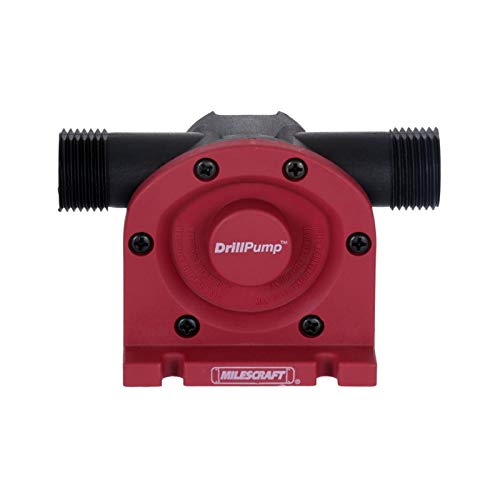
Milescraft DrillPump750
Maximum Flow
750 GPH / 12.5 GPM
Maximum Lift
12 ft
Hose Connection
3/4 in garden hose
The Milescraft DrillPump750 is the most balanced option here for rainwater transfer. It uses a 3/8-inch shaft that fits common drill chucks and 3/4-inch hose connections that work with standard garden hoses. The documented maximum flow is 750 gallons per hour, or 12.5 gallons per minute.
It is also compact enough to keep with general plumbing tools. That makes it useful for occasional jobs such as draining a rain barrel before winter, moving water out of a shallow container, or transferring water to a lower tank when you already have a drill nearby.
The pump needs more care than a sealed electric utility pump. Priming matters, silicone grease is recommended after use, and longer sessions can create heat. Product-specific use ranges from excellent volume to premature failure when the pump runs hot or dry. Mounting or bracing the pump also helps keep torque from twisting it in your hands.
Why It Works
- Up to 750 GPH gives useful flow for small transfer jobs.
- Standard 3/4-inch hose connections simplify setup.
- 3/8-inch shaft fits common drill chucks.
- Compact body is easy to store and transport.
- Maximum documented lift of 12 feet covers modest elevation changes.
What To Keep In Mind
- Prime the pump and suction hose before relying on full flow.
- Do not run it dry for extended periods.
- Long continuous use can build heat and shorten pump life.
- Support the pump instead of letting drill torque twist the body freely.
A Complete Kit With Hoses and Adapters
2 / 4
KITLUCK 750 GPH Drill Pump

Maximum Flow
750 GPH / 12.5 GPM
Drill Speed
Above 1300 RPM
Included
Hoses, adapters and filter
The KITLUCK pump is the better choice when you want more of the transfer setup in one box. It includes the drill pump, a water suction hose, a smaller tube, hose adapters, washers, and a water filter. That reduces the amount of separate plumbing hardware needed before the first test run.
The pump is designed for an ordinary electric drill running above 1,300 RPM. Under favorable conditions, its documented output reaches 750 gallons per hour. The included filter is useful for rainwater because it can keep larger debris from reaching the pump inlet.
The weak point is fitting quality and long-term durability. Product-specific use includes cross-threading, poor hose quality, missing parts, and pumps failing after short operation. It works best as an occasional transfer kit rather than a pump you expect to run for hours at a time.
Why It Works
- Includes more of the hose and adapter hardware than basic pump-only options.
- Up to 750 GPH is suitable for barrel and small-tank transfer.
- Water filter adds intake protection.
- Works with ordinary drills above the stated speed requirement.
What To Keep In Mind
- Threads can be easy to cross if fittings start crooked.
- Inspect the package before the job so missing hardware does not stop setup.
- Avoid long uninterrupted runs that overheat the pump or drill.
An Accessory-Rich Pump for Short DIY Jobs
3 / 4
FIDISP 750 GPH Drill Pump Kit

Maximum Flow
750 GPH / 12.5 GPM
Pump Shaft
8 mm
Included Items
12
The FIDISP kit includes a compact drill pump, hoses, brass adapters, clamps, and related hardware. It is built around drills running above 1,300 RPM and has a documented maximum flow of 750 gallons per hour.
For rain-barrel work, the water hose and multiple garden-hose adapters are the useful pieces. The pump should be primed before starting, and its own directions warn against dry operation beyond a very short period. That is important because small flexible impellers depend on water for cooling and lubrication.
Durability is the concern. Product-specific use includes smoke, leakage, worn impellers, and shafts that stop rotating after relatively short use. The kit can still make sense for an occasional emergency transfer, but it ranks below the Milescraft and KITLUCK for repeated work.
Why It Works
- Broad accessory set helps connect the pump to different hose arrangements.
- Up to 750 GPH provides useful short-job flow.
- Brass adapters offer sturdy hose interfaces.
- Compact size is easy to store with a cordless drill.
What To Keep In Mind
- Prime before starting and keep dry-running time to a minimum.
- Impeller and shaft durability are inconsistent.
- Better suited to short jobs than long continuous pumping.
A Small Pump for Light Transfer Work
4 / 4
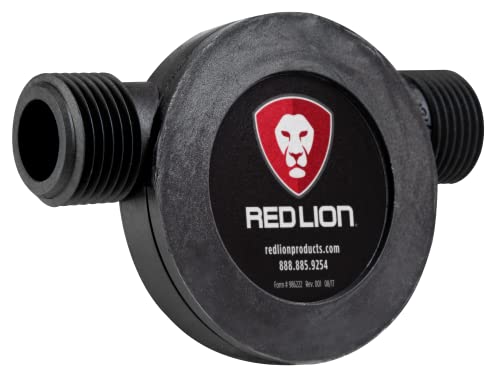
Red Lion RLMPDP Drill Powered Transfer Pump
Maximum Flow
154 GPH / 2.56 GPM
Maximum Lift
32 in
Weight
4.96 oz
The Red Lion RLMPDP is the smallest and lightest pump here. Its compact 3-by-4-by-3-inch body weighs under 5 ounces, making it easy to keep in a toolbox for light transfer jobs.
The tradeoff is capacity. Its documented maximum flow is 154 gallons per hour, or about 2.56 gallons per minute, with a 32-inch lifting height. That is much lower than the 750 GPH options, so it is better for buckets, shallow containers, and short low-lift transfers than for emptying a large tank quickly.
The lower output can actually be useful when you want more control and do not need a high-volume stream. Choose it because the job is small, not because you expect it to compete with a dedicated transfer pump.
Why It Works
- Very compact and light for toolbox storage.
- Lower flow is manageable for small containers.
- Drill-powered format avoids a separate motor and battery platform.
- Suitable for short, low-lift water-transfer tasks.
What To Keep In Mind
- 154 GPH is far slower than the 750 GPH pumps here.
- Maximum lift is limited to 32 inches.
- Not suited to long uphill hose runs or rapid barrel emptying.
How to Set Up a Drill Pump for Rainwater
Keep the Drill Dry
Place the drill and pump on a stable surface away from splashing water. Secure the pump body if its design tends to twist under torque.
Use a Short Suction Hose
The inlet side is more sensitive than the discharge side. Keep the suction hose as short and airtight as practical. Every extra foot and fitting makes priming harder.
Prime the Pump
Fill the inlet hose and pump body with water when the instructions call for it. A small drill pump may not reliably pull air through a dry hose even when marketed as self-priming.
Connect the Discharge Hose
Route the outlet so it cannot whip free once water starts moving. Keep the end where you can see the receiving container fill.
Start at Controlled Speed
Begin slowly. Once the pump moves water in the correct direction, increase drill speed within the pump's operating limit. More RPM is not automatically better once the pump reaches useful flow.
Common Drill-Pump Problems
The Pump Spins but No Water Moves
The pump may not be primed, the drill may be turning the wrong direction, or the suction side may be pulling air. Fill the inlet path and inspect all connections.
The Pump Gets Hot
Stop the drill. Dry running, excessive speed, or long continuous use can overheat a small impeller pump.
The Hose Collapses
A soft suction hose can flatten under vacuum. Use hose suited to suction service rather than a thin discharge-only tube.
Flow Is Much Lower Than Expected
Reduce suction lift, shorten the hose, remove unnecessary fittings, and check the intake for blockage. Maximum flow figures assume favorable conditions.
The Pump Twists in Your Hands
Brace or mount the pump body. The drill applies torque to the shaft, and a jam can suddenly twist the pump or drill.
Drill Pump vs. Battery Transfer Pump
A drill pump is inexpensive and compact when you already own the drill. It is a good backup tool for occasional water movement.
A dedicated battery transfer pump is easier for frequent use. It combines motor and pump into one tool, usually needs less setup, and often handles longer runs more comfortably.
If you move water every week, the dedicated pump is usually worth the convenience. If you only drain a barrel twice a year, a drill pump may be enough.
Frequently Asked Questions
Can a drill pump empty a rain barrel?
Yes. A properly primed drill pump can move water from a rain barrel through a hose when the drill speed, suction lift, and pump capacity fit the job.
Do drill pumps work with cordless drills?
Many do. The pump shaft must fit the chuck, and the cordless drill needs enough speed, torque, and battery capacity for the pump.
Do I need to prime a drill pump?
Often yes. Priming the pump and suction hose improves reliability and reduces dry running, even when a pump is marketed as self-priming.
Can I connect a garden hose to a drill pump?
Several models here use 3/4-inch garden-hose connections or include adapters for them. Match the connection to the exact pump.
How long can I run a drill pump?
These compact pumps are best for short transfer jobs. Stop if the pump or drill becomes unusually hot, and follow the manufacturer's duty and lubrication guidance.
Why is my drill pump not moving the advertised flow?
Lift, hose length, suction leaks, drill speed, and restrictions all reduce real flow. Maximum flow is measured under easier conditions than many yard setups.
For quicker cordless transfer with less setup, battery-powered water transfer pumps combine the motor and pump in one tool. If you want no powered tool at all, hand pumps for water barrels use lever or piston action. When the receiving container can sit lower than the source, siphon pumps for water barrels let gravity do most of the work. For a permanent garden-water system, rain barrel pumps are better suited to regular hose and irrigation use.