
As an affiliate, we may earn a commission from qualifying purchases. We get commissions for purchases made through links on this website from Amazon and other third parties.
Best Overall
Best Low-Maintenance Sensor
Best for Data Analysis
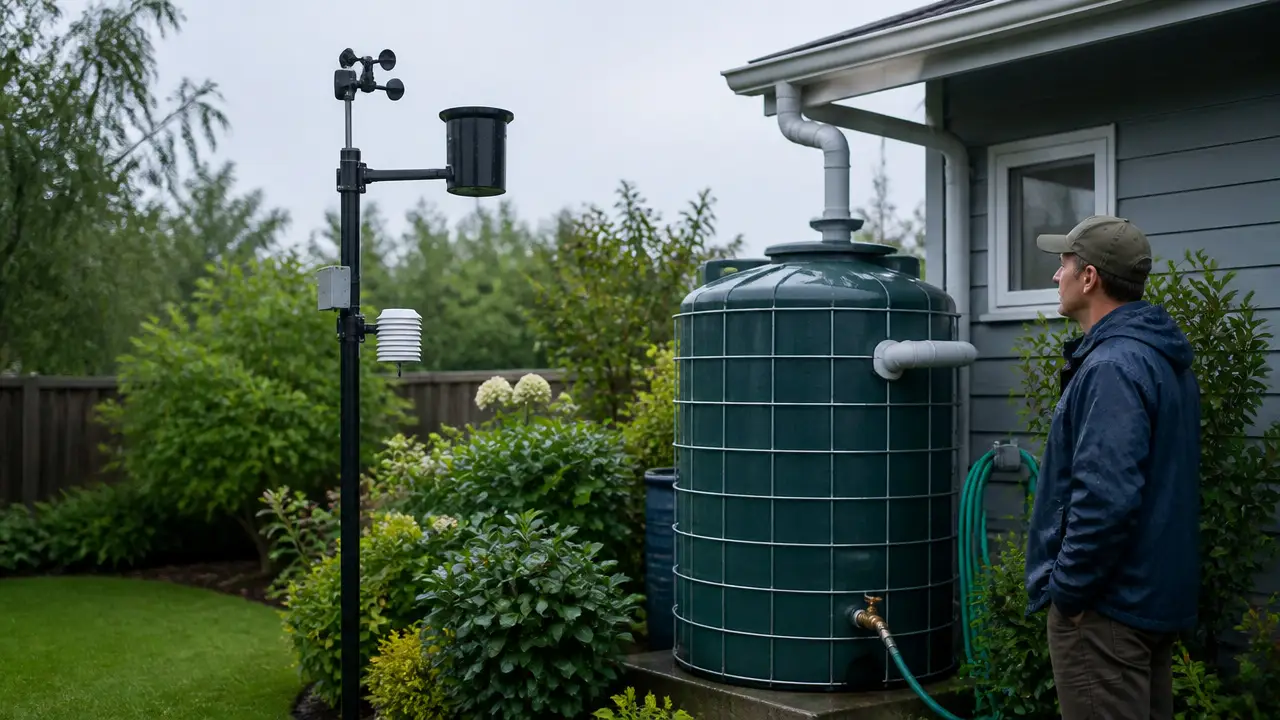
A weather station earns its place in a rainwater-harvesting system when it helps answer two different questions: how much water is arriving, and how quickly will you need to use it? Rainfall affects collection supply. Temperature, humidity, wind, and solar conditions influence garden demand, evaporation, and how soon irrigation may be needed again.
That does not mean every rainwater owner needs a full station. If you only want storm totals, a dedicated rain gauge is simpler. A weather station becomes more useful when stored rainwater supports a garden, orchard, greenhouse, or irrigation system where changing weather affects both supply and demand.
The four stations here all measure rainfall, but they differ in power source, sensor design, connectivity, local data access, and maintenance. The Ambient WS-2902 is the strongest all-around balance, Tempest reduces moving outdoor parts, the WS-2000 adds stronger local data handling, and the AcuRite Atlas provides a prominent indoor display with programmable weather information.
What Matters Most for Rainwater Harvesting
- Rainfall and rain rate: These are the direct collection inputs.
- Reliable local history: One storm is less useful than a pattern across weeks and seasons.
- Outdoor sensor placement: The station needs representative exposure, not simply proximity to the tank.
- Temperature and humidity: These help explain how quickly irrigation demand returns after rain.
- Wind: High wind can increase plant water loss and affect rainfall measurement if sensor placement is poor.
- Local display or export: Data is more useful when you can review it rather than only glance at current conditions.
- Maintenance burden: Moving rain buckets and anemometers need cleaning and inspection.
Weather Stations at a Glance
| Product | Best For | Rainwater-Relevant Strength | Tradeoff |
|---|---|---|---|
| Ambient Weather WS-2902 | Most home rainwater systems | Rain rate, local console, Wi-Fi, broad weather sensing | Wi-Fi setup and conventional sensor maintenance |
| WeatherFlow Tempest | Lower moving-part maintenance | Solar outdoor sensor, app history, long wireless range, no conventional tipping bucket | Greater dependence on app ecosystem |
| Ambient Weather WS-2000 | Historical analysis | Local archive, optional SD-card export, full weather array | More setup and console complexity |
| AcuRite Atlas | Indoor display and programmable weather view | HD display, rainfall measurement, local forecast and multiple weather conditions | Rain-gauge reliability concerns are stronger in customer evidence |
Best Overall: Ambient Weather WS-2902
1 / 4
Ambient Weather WS-2902
Measures
Rain rate, humidity, pressure, temperature, wind
Sensor Power
Solar + battery backup
Connectivity
RF to console + Wi-Fi
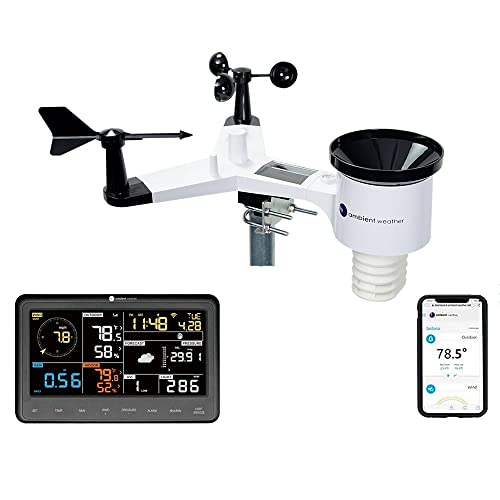
The Ambient Weather WS-2902 has the most balanced feature set for a typical rainwater-harvesting property. Its outdoor array measures rain rate, temperature, humidity, pressure, and wind, then sends the data to a local color console over RF. Wi-Fi adds online access without making the outdoor sensor itself depend on the home's Wi-Fi signal.
For rainwater use, that architecture is practical. The console can stay near the house or utility area, while the outdoor array sits in better weather exposure. The manufacturer documents up to 330 feet line of sight between array and console, with about 100 feet expected under many ordinary conditions.
The outdoor array uses solar power with battery backup. That reduces battery changes while retaining a conventional weather-station layout familiar to users who want a visible local console.
Customer experience is mixed but useful. Some stations have reportedly operated for many years, while others have experienced Wi-Fi connection or rainfall-accuracy problems. Because rainfall is central to rainwater planning, compare the station with a correctly placed manual gauge during the first few storms.
Why It Works
- Measures both collection supply and weather variables tied to garden demand.
- Local console keeps current data available without opening an app.
- RF sensor link separates outdoor placement from Wi-Fi coverage.
- Solar outdoor power reduces routine battery replacement.
What To Keep In Mind
- Wi-Fi configuration can be sensitive to router and password setup.
- Conventional rain and wind components need periodic cleaning and inspection.
- Cross-check rainfall during initial setup rather than assuming factory readings are perfect.
Best Low-Maintenance Sensor: WeatherFlow Tempest
2 / 4
WeatherFlow Tempest Weather Station
Outdoor Power
Solar
Wireless
Up to 1,000+ ft claimed
Measures
Rain, wind, temperature, UV, lightning
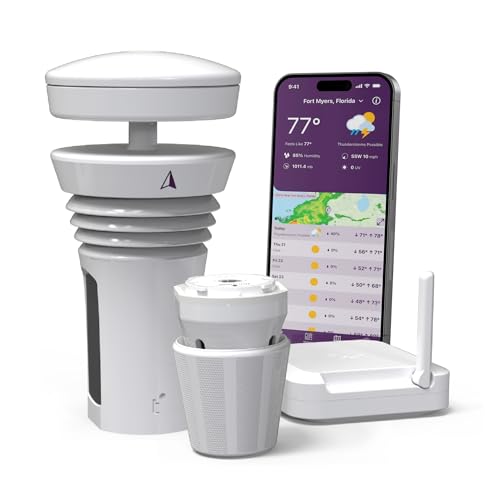
Tempest takes a different approach from a conventional multi-part weather station. Its outdoor unit has no traditional tipping-bucket rain collector or cup anemometer, reducing the number of moving assemblies exposed to insects, debris, and mechanical wear.
That is attractive for rainwater harvesting when the sensor is mounted somewhere inconvenient to service. The manufacturer documents wireless transmission over 1,000 feet under suitable conditions, so the station can be placed for weather exposure rather than simply for easy maintenance access.
The app provides rainfall and broader weather history, including wind, temperature, UV, and lightning activity. Customer evidence is positive around setup and local data usefulness, particularly for properties where regional forecasts do not reflect actual on-site weather.
The tradeoff is software dependence. Tempest is strongest when you are comfortable using its app and ecosystem. A local manual rain gauge remains useful as a periodic check if precipitation data ever looks implausible.
Why It Works
- No conventional moving rain bucket or anemometer reduces specific maintenance tasks.
- Solar outdoor power fits long-term fixed installation.
- Long-range wireless design helps with better sensor siting.
- App history supports seasonal rainfall and irrigation review.
What To Keep In Mind
- Smart integrations can have separate requirements or costs.
- App and platform support are part of long-term ownership.
- Low-maintenance does not mean maintenance-free; exposure and sensor cleanliness still matter.
Best for Data Analysis: Ambient Weather WS-2000
3 / 4
Ambient Weather WS-2000
History
Min/max with timestamps
Export
Optional SD card
Sensor Link
915 MHz RF
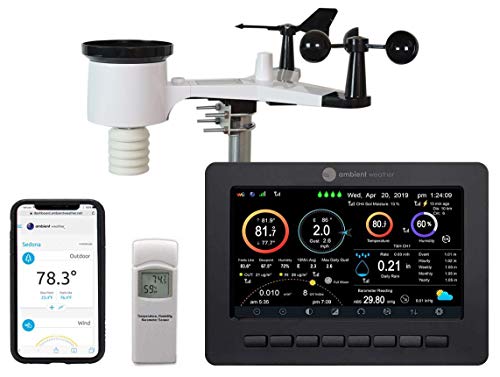
The WS-2000 is the stronger Ambient option when historical records matter as much as current conditions. Its console displays archived values with timestamps and can export data to an optional SD card for further analysis.
That local export can be genuinely useful for rainwater system planning. You can compare monthly rainfall with tank shortages, record overflow frequency, or line up rainfall with irrigation use without relying exclusively on a cloud dashboard.
Like the WS-2902, its outdoor array uses solar power with battery backup and communicates over RF to the console. The manufacturer documents the same general 330-foot line-of-sight range, with shorter range under ordinary conditions.
The cost of better data handling is complexity. Customer notes describe setup as manageable but time-consuming, and app connection can add another layer of troubleshooting. It fits someone who will actually use the archive rather than a buyer who only wants to glance at today's rainfall.
Why It Works
- Local archived data supports rainwater analysis beyond the current storm.
- Optional SD-card export provides a path to your own records.
- Full weather array connects rainfall supply with irrigation conditions.
What To Keep In Mind
- More setup is required than with a basic station.
- Optional storage components add another item to manage.
- Console and power-supply longevity appear as concerns in some customer evidence.
Best Display-First Alternative: AcuRite Atlas
4 / 4
AcuRite Atlas Weather Station

Display Power
5V adapter + AAA backup
Rain Resolution
0.01 in
Features
Programmable alerts and local forecast
The AcuRite Atlas is the most display-oriented station in this group. Its high-definition indoor console presents temperature, humidity, wind, rainfall, barometric information, and a localized forecast, while programmable alerts let you flag selected conditions.
For a rainwater owner who prefers an always-visible indoor weather center, that can be more convenient than an app-first system. The display runs from a power adapter with battery backup, while the outdoor sensor uses separate batteries.
The Atlas measures rainfall in 0.01-inch increments and carries a published accuracy figure, but customer experience raises more concern about rain-sensor reliability than for the top picks. Reports include rain gauges that stopped working or never read correctly despite troubleshooting. That pushes the Atlas to the bottom of this list even though its display and weather presentation are appealing.
Why It Works
- Large indoor display keeps weather information visible at a glance.
- Programmable alerts can be tied to weather conditions you care about.
- Measures multiple conditions relevant to both rainfall supply and garden demand.
What To Keep In Mind
- Customer evidence includes recurring rain-gauge reliability complaints.
- Battery changes or resets may affect stored data or require reconfiguration.
- Compare rainfall with a manual reference before relying on it for collection calculations.
How to Use Weather Data With a Rainwater Tank
Start with rainfall and tank response. Record the rainfall total from the station and compare it with the change in tank level. If the tank gains much less water than expected, look for a collection problem rather than blaming the weather station immediately.
Next, use temperature, humidity, and wind as demand context. A hot, dry, windy week can draw down stored water much faster than a cool, humid week even when both begin with the same tank level.
Over time, the useful question becomes less about individual readings and more about patterns: Which months repeatedly overflow the tank? Which dry periods exhaust storage? Does irrigation demand surge before the next normal rainy period? A weather station can provide the local environmental record needed to answer those questions.
Weather-Station Placement Matters
The best location for rainfall is not always the best location for wind, and the best location for weather exposure is rarely beside a sheltered tank wall. Follow the manufacturer's siting guidance and prioritize representative exposure.
Avoid roof drip, sprinklers, trees, and walls around the rain collector. Keep the array level where required. If a station measures wind, mount it high enough to avoid obvious obstructions without making the rain collector impossible to service.
Common Failure Modes
Rainfall Stops but Other Sensors Still Work
Inspect the rain-measuring element for debris, insects, webs, or mechanical blockage. A working temperature sensor does not prove the tipping bucket is moving.
The Whole Outdoor Array Disappears
Check battery backup, sensor power, RF pairing, and distance to the console. If all outdoor measurements vanish together, the problem is probably communication or power rather than rainfall alone.
Wi-Fi Data Disappears but the Console Still Works
Treat that as a network or cloud problem. Do not reset the outdoor array first if local sensor readings remain normal.
Rainfall Never Matches a Manual Gauge
Make sure both gauges are level and similarly exposed. If the discrepancy persists across several storms, review calibration options or contact the manufacturer before using the station for yield calculations.
Frequently Asked Questions
Do I need a full weather station for rainwater harvesting?
No. A dedicated rain gauge is enough for basic rainfall tracking. A weather station becomes more useful when temperature, humidity, wind, history, or irrigation planning also matter.
Which weather measurement matters most for rainwater collection?
Rainfall depth is the primary collection input. Rain rate can also help explain overflow or collection behavior during intense storms.
Can a weather station tell me how many gallons entered my tank?
Not directly. It measures rainfall at the property. Roof area, runoff efficiency, diverters, filtration, and overflow determine actual captured volume.
Is Wi-Fi necessary?
No. Many stations use RF between the outdoor array and local console. Wi-Fi is mainly for remote app access, cloud history, alerts, and online integrations.
How often should I maintain the outdoor sensor?
Inspect it routinely during the rainy season and whenever readings look wrong. Conventional rain buckets need debris and insect checks; solar panels and sensor surfaces should also remain clean.
Should I compare the station with a manual rain gauge?
Yes, especially during initial setup. A simple manual gauge is a useful reference for identifying calibration, placement, or sensor problems.
If rainfall is the only weather variable you need, best digital rain gauges compares simpler electronic options. For app-first rainfall tracking and alert features, best smart rain gauges focuses specifically on connected systems.