As an affiliate, we may earn a commission from qualifying purchases. We get commissions for purchases made through links on this website from Amazon and other third parties.
A 20-gallon water tank does not need cleaning on a fixed schedule just because it holds 20 gallons. The right cleaning interval depends more on what water goes into the tank, how the water is used, and how much dirt or sediment reaches the tank.
For a small tank collecting rainwater for garden or other non-potable use, a good routine is to inspect it often and plan on a full clean about once a year, or sooner if sediment, slime, algae, odor, insects, or other contamination appears. EPA guidance for rainwater storage systems also notes that tanks should be cleaned when debris is present and that accumulated sediment needs periodic removal.
A tank used for drinking water needs more careful handling. Cleaning the tank is only one part of keeping drinking water safe.
Tank Size Does Not Set the Cleaning Schedule
A 20-gallon tank may get dirty faster than a much larger cistern, but its small size alone does not mean it must be cleaned every few weeks.
What matters most is what enters the tank.
A tank may need more frequent cleaning if it receives:
- Rainwater directly from a roof
- Leaves, pollen, dust, or roof grit
- Water without a debris screen or first-flush system
- Water that sits unused for long periods
- Sunlight that encourages algae growth
A tank may stay cleaner longer when incoming water is well screened, the tank stays sealed and shaded, and sediment is kept out.
A first flush is a device that diverts the first portion of roof runoff away from the tank. That first runoff often carries much of the dust, pollen, bird droppings, and other material that built up on the roof between rains.
A Practical Cleaning Schedule for a 20-Gallon Rainwater Tank
For most small rainwater tanks used for irrigation or other non-potable purposes, use this schedule as a starting point.
Check the tank every month or so
You do not have to drain and scrub it each month. Simply check for signs that cleaning is needed.
Look for:
- Sediment building up on the bottom
- Slime on the tank walls
- Algae
- Unusual odors
- Insects or mosquito larvae
- Leaves or other debris
- Cloudy or unusually colored water
- Blocked screens
- Dirty inlet fittings
- A clogged outlet or valve
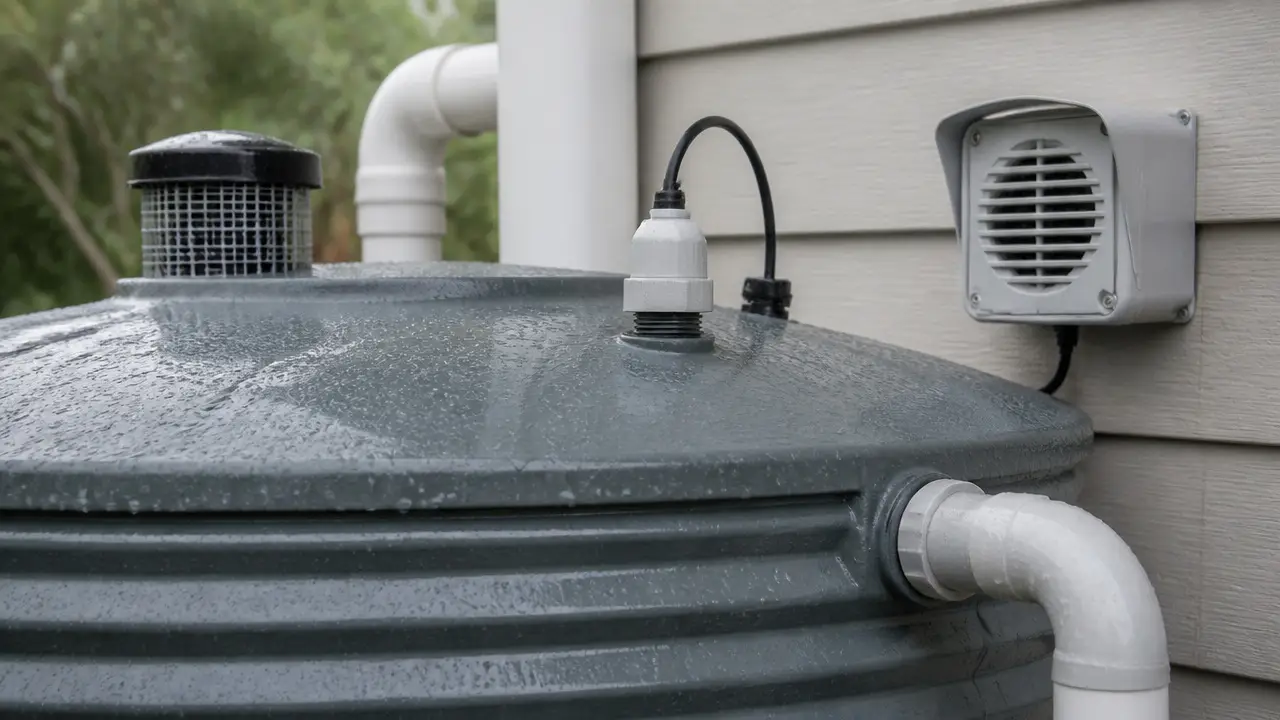
Also check the lid, screen, overflow, and fittings. Keeping debris out is usually easier than cleaning it out later.
Give the tank a full cleaning about once a year
Annual cleaning is a reasonable starting point for a small rainwater tank that receives roof runoff.
The tank may not need much scrubbing if your roof, gutters, screens, and first-flush system are working well. On the other hand, a tank that develops a thick sediment layer may need cleaning more often.
EPA materials recommend periodic inspection of rainwater systems and cleaning stored debris and sediment rather than relying only on a calendar.
Clean sooner when something goes wrong
Do not wait for your normal cleaning date if the tank becomes contaminated.
Drain and clean the tank when practical if:
- An animal gets inside
- Floodwater enters the tank
- The lid has been left open
- A large amount of roof debris enters
- The water develops a strong odor
- Heavy algae or slime appears
- An unknown chemical may have entered the water
Floodwater is especially important. It can carry germs, chemicals, sewage, soil, and other contaminants. CDC guidance says untreated catchment systems affected by floodwater or heavy storm debris may need to be drained and cleaned before being used again.
How Often Should You Remove Sediment?
You do not necessarily have to scrub the entire tank every time you see a little sediment.
A thin layer of roof grit can slowly collect at the bottom even in a well-maintained rainwater system.
Check the sediment level whenever you inspect the tank. Clean it out when the buildup becomes noticeable, begins reaching the outlet, affects water quality, or makes the tank harder to maintain.
A 20-gallon tank has little room for accumulated dirt compared with a large cistern. Even a small amount of sediment can take up useful storage space or get pulled into a hose, valve, pump, or irrigation line.
Better inlet screening can greatly reduce this problem.
How to Clean a Small Rainwater Tank
For a tank used only for irrigation or another non-potable purpose, cleaning is usually straightforward.
Non-potable means the water is not intended for drinking, cooking, brushing teeth, or other uses where drinking-water quality is required.
1. Disconnect incoming water
Keep new rainwater from entering while you work.
If possible, redirect the downspout or close the inlet.
2. Drain the tank
Use the stored water first when practical rather than wasting it.
Do not enter a tank. A 20-gallon tank should normally be small enough to clean from outside through its access opening.
3. Remove loose sediment
Flush or wipe out dirt, leaves, and sediment.
Pay special attention to the bottom and around the outlet, where debris often collects.
4. Clean accessible surfaces
Wash away slime and dirt from surfaces you can safely reach.
Avoid using chemicals that could damage the tank material or leave unwanted residues. Follow the tank manufacturer's cleaning instructions when they are available.
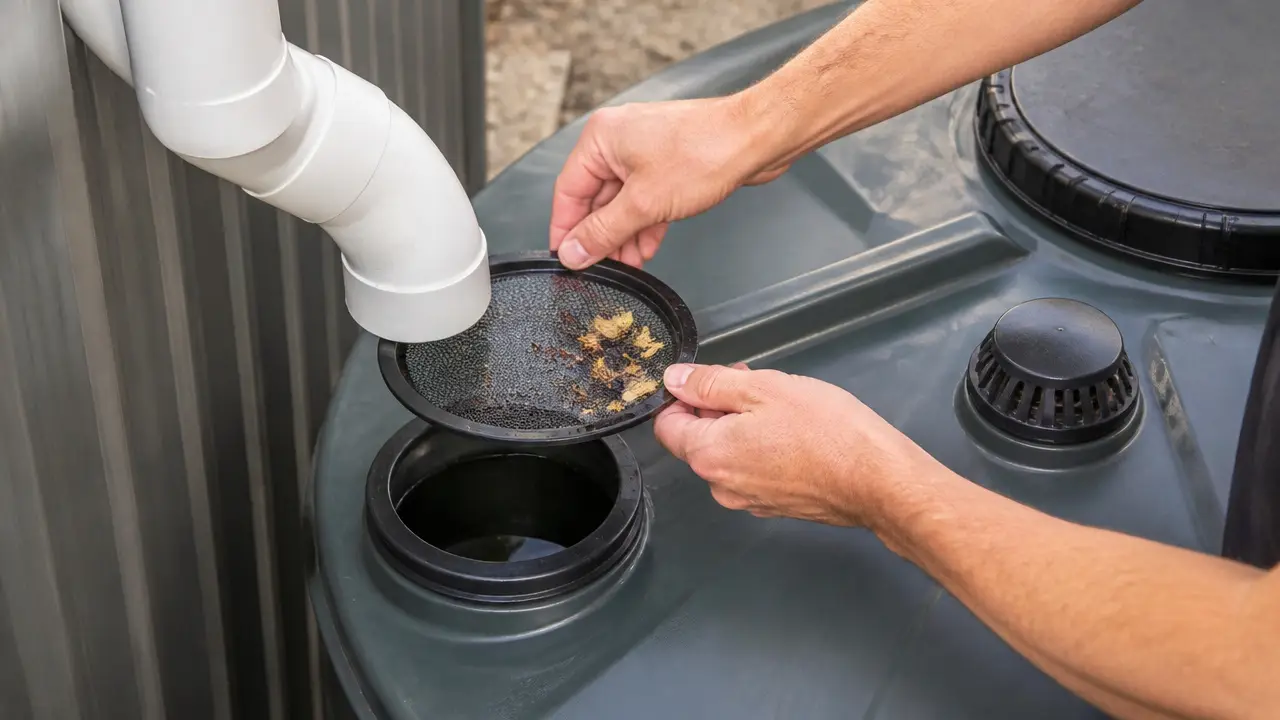
5. Clean the fittings and screens
Check the:
- Inlet screen
- Outlet
- Valve
- Overflow
- Mosquito screen
- First-flush components
A clean tank can quickly become dirty again if these parts are clogged or contaminated.
6. Rinse and reconnect the system
Use rainwater-tank cleaning requirements to verify service access for sediment removal and odor prevention.
Remove loosened debris before putting the tank back into service.
Check that the lid closes securely and that insects cannot enter.
What If the Tank Stores Drinking Water?
A tank that stores drinking water requires a different level of care.
CDC recommends regularly cleaning water storage containers and cleaning and sanitizing containers before storing safe drinking water. For home-filled emergency drinking-water containers, CDC also recommends replacing the stored water every six months.
But a clean tank does not automatically make collected rainwater safe to drink.
Roof runoff can contain microorganisms, animal waste, dust, roofing contaminants, chemicals, and other material. A household rainwater system intended for drinking normally needs to be considered as a complete system, including:
- A suitable collection surface
- Gutter and debris management
- First-flush diversion where appropriate
- Protected storage
- Prefiltration
- Suitable water treatment
- Proper system maintenance
- Current laboratory water testing
- Compliance with applicable local requirements
A filter or disinfectant alone cannot prove that roof runoff is safe to drink.
If you plan to use stored rainwater as drinking water, check current local health and plumbing requirements and consider having the system reviewed by a qualified water-treatment professional.
Cleaning Is Only Part of Tank Maintenance
You can reduce the amount of tank cleaning needed by stopping contamination before it reaches the tank.
Keep gutters clean
Leaves and roof debris eventually become sediment if they are allowed into the tank.
Inspect gutters regularly, especially after storms or during seasons when trees drop leaves or pollen.
Use an inlet screen
A screen catches larger debris before it enters the tank.
Clean the screen whenever it begins collecting material. A blocked screen can cause water to overflow instead of entering the tank.
Keep the tank covered
The lid should prevent insects, animals, leaves, and other material from entering.
Open tanks can also become mosquito breeding sites.
Keep sunlight out
Sunlight encourages algae growth.
An opaque tank or shaded installation usually has fewer algae problems than a clear or translucent tank exposed to direct sunlight.
Maintain the first-flush system
If your rainwater system has a first-flush diverter, clean and maintain it as required by its design.
A blocked or neglected diverter may stop removing the dirtiest portion of roof runoff.
Clean the Tank Before Seasonal Storage
If you live where freezing temperatures occur and the tank will be drained for winter, the end of the season is often a convenient time to clean it.
Removing sediment before storage prevents dirt and organic material from sitting in the tank for months.
Do not assume simply draining the tank protects every component from freezing. Valves, hoses, pumps, filters, and low sections of pipe may still contain water. Follow the manufacturer's winterization instructions for each part of the system.
When More Frequent Cleaning Makes Sense
You may need to clean a 20-gallon tank more than once a year when:
- The roof is under trees
- The area has heavy pollen or dust
- Gutters frequently contain debris
- There is no first-flush device
- The tank receives unfiltered runoff
- The water remains unused for long periods
- Algae develops repeatedly
- Sediment quickly returns after cleaning
If you find yourself cleaning the tank constantly, look upstream.
Improving the roof, gutter, screening, or first-flush setup is usually more effective than repeatedly scrubbing the storage tank.
Frequently Asked Questions
How often should a 20-gallon rainwater tank be cleaned?
For a tank used for garden watering or another non-potable purpose, inspect it regularly and plan on a full cleaning about once a year as a practical starting point. Clean it sooner if sediment, algae, slime, odors, insects, or contamination appear.
Does a smaller water tank need cleaning more often?
Not automatically. Water source and contamination matter more than tank size. However, sediment takes up a greater percentage of the usable space in a small 20-gallon tank, so buildup may become noticeable sooner.
Can I clean my rainwater tank every six months?
Yes. Cleaning twice a year can make sense when the tank receives a lot of roof debris or sediment. If the tank remains clean, protected, and well screened, a complete cleaning that often may not be necessary.
How do I know when there is too much sediment?
Clean the tank when sediment becomes clearly noticeable, starts reaching the outlet, affects water flow or appearance, or makes other parts of the system dirty. There is no single sediment depth that applies to every rainwater tank.
Does a first-flush diverter mean I never need to clean the tank?
No. A first-flush diverter can reduce the amount of contamination entering the tank, but fine particles can still get through. The tank, screens, gutters, and fittings still need inspection and maintenance.
Should I clean the tank after heavy rain?
Normal rain does not automatically require tank cleaning. Inspect the system after unusually dirty runoff, storm damage, flooding, or a large amount of debris entering the tank. Floodwater contamination requires more caution.
Is clean-looking rainwater safe to drink?
Not necessarily. Clear water can still contain microorganisms or chemicals that cannot be seen. Drinking-water use requires suitable collection, treatment, maintenance, current laboratory testing, and attention to applicable local requirements.