As an affiliate, we may earn a commission from qualifying purchases. We get commissions for purchases made through links on this website from Amazon and other third parties.
A rainwater tank does not need to be emptied and scrubbed on a fixed yearly schedule. A better rule is to inspect the bottom of the tank for sludge every 2 to 3 years and clean or desludge it when buildup is present. NSW Health uses this 2-to-3-year inspection interval for rainwater tanks.
Some tanks need attention sooner. Others can go longer between cleanings when the roof, gutters, screens, and first-flush system keep debris out.
How Often Should You Clean a Rainwater Tank?
For a typical roof-fed rainwater tank:
| Maintenance job | Practical timing |
|---|---|
| Look for leaks, damaged screens, and obvious contamination | Regularly and after major storms |
| Check inlet and overflow screens | Regularly |
| Clear roof and gutter debris | Several times a year or as needed |
| Check the bottom of the tank for sludge | At least every 2 to 3 years |
| Remove sludge or clean the tank | When buildup or contamination makes it necessary |
The important distinction is between checking the tank and cleaning the tank.
You may inspect a tank after two years and find very little sediment. In that case, completely draining it just because the calendar says so may waste water without providing much benefit.
On the other hand, a tank under trees or connected to dirty gutters may collect a noticeable layer of sediment much faster.
Why Sludge Builds Up in a Rainwater Tank
Roof runoff carries small amounts of material into the tank each time it rains. Screens stop larger debris, but they do not catch everything.
Material that may settle on the tank floor includes:
- Fine dust
- Pollen
- Small pieces of leaves
- Dirt from the roof
- Insect material
- Bird and animal debris
- Fine particles washed through gutters
Over time, these particles form a layer of sediment or sludge.
A small amount of settled material at the bottom does not automatically mean the entire tank needs to be scrubbed. The concern increases as the layer becomes thicker, reaches the tank outlet, gets stirred into the water, causes odors, or interferes with pumps and irrigation equipment.
Clean the Tank Sooner If You Notice These Signs
Do not wait for the normal inspection interval when there is a clear problem.
Sediment Is Coming Out of the Tank
Cloudy or dirty water from an outlet near the bottom can mean the sediment layer has reached the outlet or has been disturbed.
This is especially common when a tank becomes nearly empty and the remaining water stirs material from the bottom.
The Water Has Developed an Unusual Odor
An unusual odor deserves investigation. Cleaning may be needed, but also check the roof, gutters, inlet screens, and tank openings.
Simply cleaning the tank will not fix a source of contamination that continues to wash into it.
Algae Is Growing Inside
A properly designed tank should keep most sunlight away from stored water.
If algae repeatedly grows inside, look for:
- A loose lid
- Translucent tank walls
- Openings that admit sunlight
- Poorly sealed fittings
Removing the algae without stopping the light will usually result in the problem returning.
Animals or Large Amounts of Debris Have Entered
A damaged lid or screen can allow insects, rodents, frogs, leaves, and other material into a tank.
Correct the entry point as well as dealing with the contamination.
Floodwater Has Entered the Tank
Floodwater is different from normal roof runoff. It can introduce germs, chemicals, sewage, soil, and other contaminants.
A tank affected by flooding should not simply be treated as an ordinary sediment-cleaning job. CDC guidance recommends cleaning and disinfecting cisterns contaminated by floods or heavy rains before returning them to use.
If the water is intended for drinking or other household uses where it may be swallowed, follow local public-health guidance before using it again.
Good Prefiltration Can Reduce How Often Cleaning Is Needed
Most tank cleaning problems start before the water reaches the tank.
Keeping larger debris out makes it much easier to control sediment.
Useful parts of a system can include:
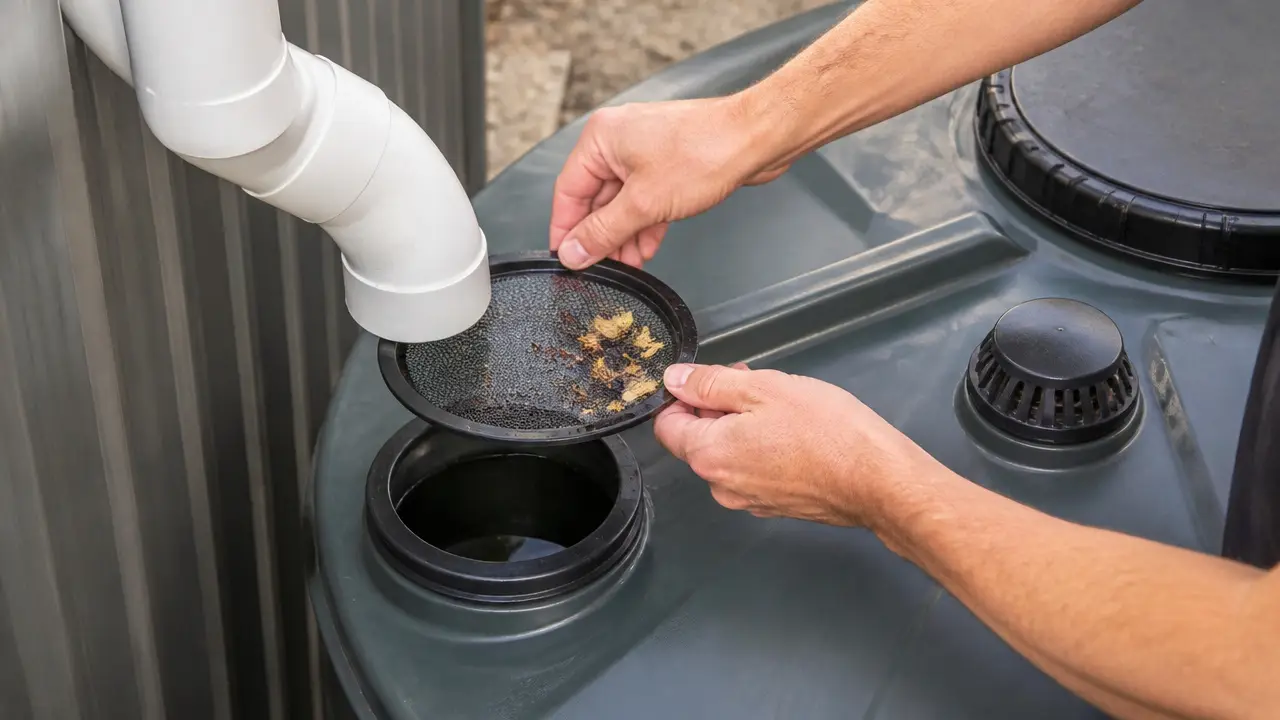
Gutter and Inlet Screens
Screens catch leaves and larger material before it enters storage. They need cleaning themselves. A blocked screen can cause water to overflow instead of entering the tank.
First-Flush Diverters
A first-flush diverter sends the first portion of roof runoff away from the tank.
The beginning of a rain event can carry a larger load of dust, animal droppings, and other material that accumulated on the roof between storms. CDC recommends considering a first-flush device as one way to improve collected rainwater quality.
A first-flush system also needs maintenance. A clogged or permanently full diverter cannot work as intended.
Well-Maintained Gutters
Leaves that sit and break down in gutters can eventually become fine organic material that passes through screens.
Cleaning the collection system regularly is usually easier than removing the same material from the bottom of a large tank later.
Does the Whole Tank Have to Be Emptied?
Not always.
If the main problem is a layer of settled sediment, desludging may be enough. Desludging means removing the material from the tank floor without necessarily performing a full internal cleaning.
Depending on the tank design, sediment may be removed through:
- A low-level cleaning outlet
- A tank drain
- Suitable siphoning equipment
- Professional tank-cleaning equipment
NSW Health notes that sludge can sometimes be removed by siphoning rather than completely emptying the tank.
This can be useful for a large cistern where throwing away thousands of gallons or liters of otherwise usable water would be unnecessary.
When a Full Cleaning Makes More Sense
A more complete cleaning may be appropriate when:
- There is heavy sediment buildup
- Leaves or other large debris have entered
- The tank has been seriously contaminated
- The water has persistent discoloration or odor linked to material inside the tank
- The tank needs internal repairs or inspection
- Sludge cannot be removed adequately through the drain or other external access
Account for rainwater-tank cleaning requirements to assess capacity needed to cover demand until the next refill.
Cleaning should focus on removing sediment and debris rather than aggressively scrubbing every internal surface.
Harsh cleaning chemicals can damage some tank materials or leave residues in the stored water. NSW Health advises against cleaning products that could release hazardous fumes or adversely affect water quality.
Follow the tank manufacturer's instructions for the specific tank material.
A Safe Basic Cleaning Approach
For a small tank that can be cleaned entirely from outside, the basic process is usually straightforward.
1. Stop New Water From Entering
Temporarily divert the downpipe so a rainstorm does not refill the tank while you are working.
2. Protect the Pump
Turn off any pump that could run while the tank is being drained.
A pump that continues operating without enough water can be damaged unless it has effective dry-run protection.
3. Drain or Remove the Sludge
Use the tank's cleaning outlet, drain, or another suitable external method.
Direct the discharged water somewhere that will not erode soil, undermine the tank base, flood a building, or cause another drainage problem.
4. Rinse Accessible Sediment
If the tank design allows safe cleaning from outside, rinse remaining loose sediment toward the drain.
Avoid damaging coatings or liners.
5. Inspect the Tank and Fittings
Before putting the system back into service, check:
- Lid
- Inlet screen
- Overflow screen
- Tank walls
- Bulkhead fittings
- Valves
- Pipes
- Pump connections
A bulkhead fitting is the sealed fitting that passes through the tank wall and provides a connection for a pipe, tap, or valve.
6. Fix the Cause of Excess Debris
Clean the gutters, repair screens, service the first-flush diverter, and close any gaps that allowed contaminants into the tank.
Otherwise, the newly cleaned tank will begin collecting the same debris again.
Do Not Enter a Rainwater Tank to Clean It Yourself
Cleaning from outside the tank is very different from climbing inside it.
A large tank is a confined space. It can have poor ventilation, difficult access, heat, slippery surfaces, hazardous gases, and other risks that are not obvious from outside.
If cleaning requires someone to physically enter the tank, use a qualified professional with appropriate confined-space procedures and equipment.
There are also tanks that should not simply be emptied without checking their installation requirements. Underground tanks, for example, can be affected by surrounding groundwater or soil conditions. Follow the manufacturer's instructions or get professional advice before completely draining a tank when structural movement is possible.
Does a Drinking-Water Tank Need More Frequent Cleaning?
A tank used for drinking water needs more careful management, but cleaning frequency by itself does not determine whether the water is safe.
Rainwater can pick up germs and chemicals from the air, roof, gutters, pipes, and storage system. Water that looks clear can still contain contaminants. CDC advises regular testing when collected rainwater is used for drinking, cooking, or bathing.
For drinking-water use, think about the complete system:
- Suitable roof and collection materials
- Clean gutters and screens
- Effective prefiltration
- Protected storage
- Appropriate treatment
- Regular maintenance
- Current laboratory testing
- Local health and plumbing requirements
Cleaning the tank removes physical buildup. It does not prove that the water is potable, meaning safe for drinking.
Likewise, adding one filter or disinfecting the tank once does not provide a complete drinking-water safety assessment.
How to Make the Tank Stay Cleaner Longer
The easiest rainwater tank to clean is one that receives very little debris in the first place.
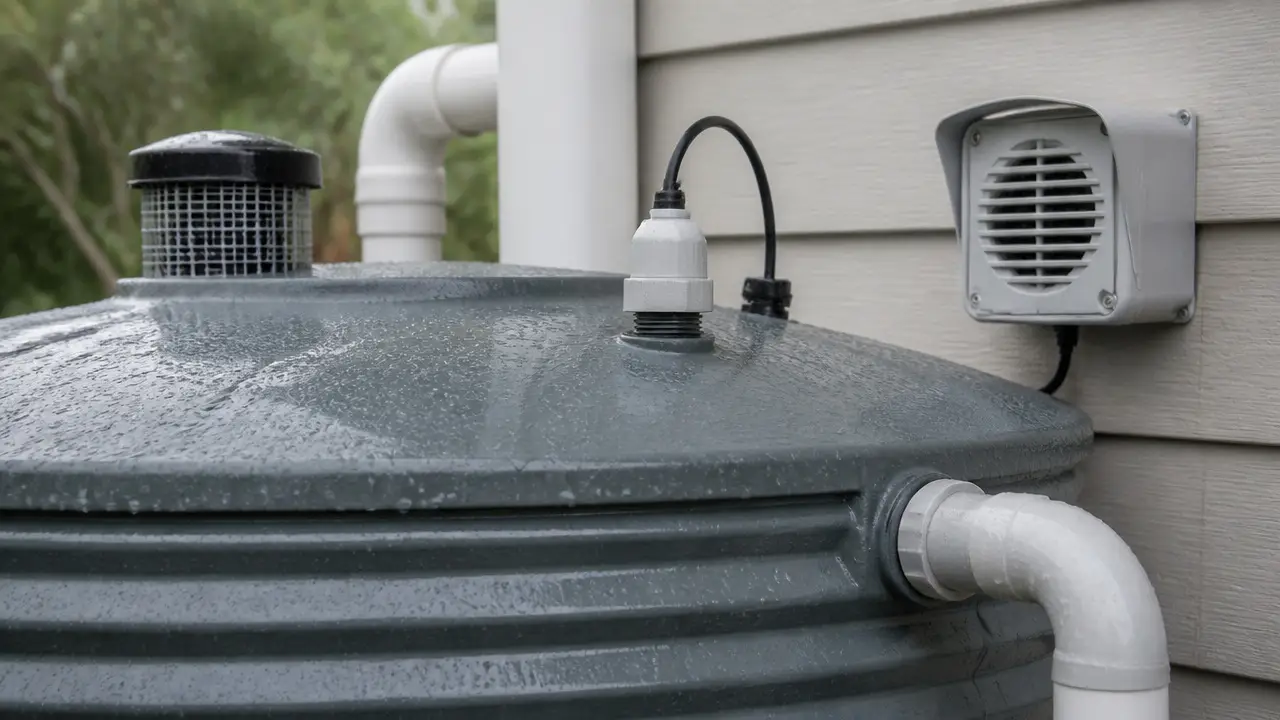
Keep leaves and dirt out of the gutters. Maintain inlet screens. Service the first-flush system. Keep the tank closed to insects, animals, and sunlight. Make sure the overflow is screened and the lid stays secure.
Then check the tank floor every 2 to 3 years rather than automatically draining it.
If you find little sediment, continue monitoring it. If you find a substantial sludge layer, remove it before it begins affecting the outlet, pump, irrigation equipment, or water quality.
Frequently Asked Questions
Should I clean my rainwater tank every year?
Usually not. A full annual cleaning is often unnecessary for a well-maintained tank. A practical approach is to inspect for sediment and sludge at least every 2 to 3 years and clean when buildup is present.
How do I know if my rainwater tank needs cleaning?
Look for significant sediment at the bottom, dirty water from the outlet, persistent discoloration or odor, algae, large debris, or evidence that animals or contaminated water entered the tank.
Can I clean a rainwater tank without emptying it?
Sometimes. Sediment can often be removed through a low-level drain, cleaning outlet, siphon, or professional desludging equipment without completely emptying the tank.
Can I climb inside my tank to clean it?
Do not treat tank entry as a normal DIY cleaning job. Large tanks are confined spaces and can present serious ventilation, access, heat, and other hazards. If entry is necessary, use a qualified professional.
Does a first-flush diverter mean I never have to clean the tank?
No. A first-flush diverter reduces the amount of dirty initial roof runoff entering the tank, but fine material can still accumulate. The tank should still be inspected periodically.
Should I disinfect my rainwater tank every time I clean it?
Not automatically. Physical cleaning and disinfection are different jobs. Whether disinfection is appropriate depends on what contaminated the tank, its intended water use, the tank material, and applicable health guidance. For water used for drinking, seek current guidance from your local health authority.
Is rainwater safe to drink after the tank has been cleaned?
Cleaning alone does not make rainwater safe to drink. Drinking-water use requires suitable collection and storage, appropriate treatment, regular maintenance, current water testing, and compliance with local requirements.