As an affiliate, we may earn a commission from qualifying purchases. We get commissions for purchases made through links on this website from Amazon and other third parties.
Cloudy or smelly rainwater usually means something in the collection or storage system needs attention. The problem may be roof debris, fine sediment, decaying organic matter, algae, a dirty tank, a clogged filter, or contamination entering through an open or damaged part of the system.
Start by finding where the change begins. Then clean the collection path, remove accumulated sediment, correct any openings or stagnant areas, and service the filters. Do not assume that clear, odor-free rainwater is safe to drink. Roof-collected rainwater can contain germs and chemicals even when it looks normal.
First, Decide How You Use the Water
The right response depends on what the rainwater supplies.
Water used only for ornamental plants has different quality needs from water used for showers, cooking, or drinking.
If your rainwater suddenly becomes cloudy or develops a new smell:
- Stop using it for drinking, cooking, brushing teeth, or washing food until the cause is understood.
- Avoid mixing questionable rainwater with a treated drinking-water supply.
- If you suspect fuel, pesticides, solvents, or other toxic chemicals, stop using the water and get advice from your local health or environmental authority. Boiling or disinfecting chemically contaminated water does not make it safe.
- For a potable system, meaning a system intended to supply drinking water, arrange appropriate laboratory testing after correcting the problem.
CDC recommends regular testing for germs and chemicals when collected rainwater is used for drinking, cooking, or bathing. A noticeable change in color, taste, or smell is also a reason to consider testing.
Why Rainwater Turns Cloudy
Cloudiness is often called turbidity. It means small particles are suspended in the water.
Several parts of a rainwater system can cause it.
Dirt and Dust Washed From the Roof
Dust, pollen, soot, leaves, bird droppings, and other material collect on a roof between storms. The beginning of a rain event can wash much of that material toward the tank.
This is especially noticeable after a long dry period.
A first-flush diverter helps by sending the first portion of roof runoff away from the storage tank. That first runoff often carries a higher load of dirt, germs, and other contaminants.
If cloudy water appears mainly after storms, inspect the roof collection system first.
A Dirty or Poorly Working First-Flush Diverter
A first-flush device cannot help much if it is:
- Full of old debris
- Blocked
- Bypassed
- Installed incorrectly
- Not draining between storms
- Too small or otherwise poorly matched to the catchment system
You do not need to assume the diverter is the only problem. Gutters, screens, downspouts, and the tank inlet should be inspected at the same time.
Sediment at the Bottom of the Tank
Small particles eventually settle to the bottom of many rainwater tanks.
Over time they can form a layer of sludge or sediment. Water may become cloudy when that layer is disturbed by:
- A strong inflow from the downspout
- A pump intake positioned too close to the bottom
- Moving the tank
- Running the tank almost empty
- Cleaning or servicing equipment
- High water movement inside the tank
If the water was clear until the tank level became very low, bottom sediment is a likely place to look.
Algae Growth
Algae can make water appear green, cloudy, or discolored.
It usually needs light to grow. Check for sunlight entering through:
- A translucent tank wall
- An uncovered inspection opening
- Damaged lids
- Poorly screened vents
- Open pipe penetrations
Keeping storage covered also helps prevent animals, insects, and outside debris from entering.
Dirty Filters
A neglected filter can become part of the problem rather than the solution.
Sediment filters may clog. Organic material can remain trapped inside housings. Some filter systems can support microbial growth when they are not maintained correctly. CDC recommends replacing and maintaining filters according to their instructions.
Tiny Air Bubbles
If water looks milky only after it passes through a pump or pressurized plumbing, the cloudiness may sometimes be tiny air bubbles rather than dirt.
Fill a clear glass and leave it still.
If the water becomes clear as the bubbles disappear, investigate the pump and plumbing for air entering the system. Loose suction fittings, low tank levels, or pump problems can sometimes introduce air.
If material settles to the bottom instead, suspended sediment is more likely.
Why Stored Rainwater Starts to Smell
Odor usually points toward organic material, biological growth, stagnant water, or contamination somewhere in the system.
The type of smell can offer clues, but smell alone cannot tell you whether water is safe.
Musty or Earthy Smell
A musty odor often goes with:
- Algae
- Biofilm
- Wet leaves
- Pollen
- Organic sediment
- Dirty filter housings
Biofilm is a thin layer of microorganisms and organic material that grows on wet surfaces.
Inspect screens, tank openings, filter housings, pipework, and the storage tank.
Rotten-Egg or Sulfur-Like Smell
A sulfur-like odor can occur when organic material breaks down under low-oxygen conditions.
A deep layer of sludge, long storage periods, or stagnant plumbing may contribute.
Do not simply cover the smell with another treatment stage. Find and remove the source of the organic buildup first.
If the water is used in the home, also check whether the smell is present directly from the tank or only after the water passes through certain plumbing or water-heating equipment. That helps separate a tank problem from a plumbing problem.
Swampy or Sewage-Like Smell
Treat a strong sewage-like or decaying odor as a warning that significant contamination may have entered the system.
Look for:
- Dead animals or insects
- Animal droppings
- Open tank lids
- Damaged screens
- Floodwater entering the tank
- Contaminated surface runoff
- Overflow pipes without proper screening
- Heavy organic sludge
Do not use badly contaminated water for drinking or food preparation.
Floods and heavy rains can introduce both germs and chemicals into cisterns and catchment systems.
Plastic, Fuel, Solvent, or Chemical Smell
Stop and investigate this type of odor before using the water.
Possible sources include:
- Recent roof work
- Paint or coatings
- Tank or pipe materials
- Nearby spraying
- Smoke or industrial fallout
- Fuel contamination
- Chemicals accidentally entering the catchment
Do not assume a carbon filter, disinfectant, or boiling will solve an unknown chemical problem.
How to Find the Source of the Problem
Work from the roof toward the outlet rather than replacing filters at random.
1. Look at the Roof and Gutters
From a safe location, check for obvious contamination.
Look for leaves, branches, nesting material, heavy bird activity, dirt, roof work, or damaged gutters.
Do not climb onto a wet or unsafe roof just to inspect the system. Use safe access methods or hire someone when roof access is risky.
Clean accessible gutters and screens as needed.
2. Inspect the First-Flush System
Open and service the diverter according to its design.
Remove accumulated material and make sure its drain or reset mechanism works properly.
A first-flush diverter helps reduce contamination entering the tank, but it does not make collected rainwater automatically safe to drink.
3. Check Every Tank Opening
Inspect:
- The lid
- Inlet
- Overflow
- Vent
- Inspection ports
- Pipe penetrations
Openings should prevent insects, animals, debris, and unwanted runoff from entering.
Also look for cracks or damage that could allow outside water into the tank.
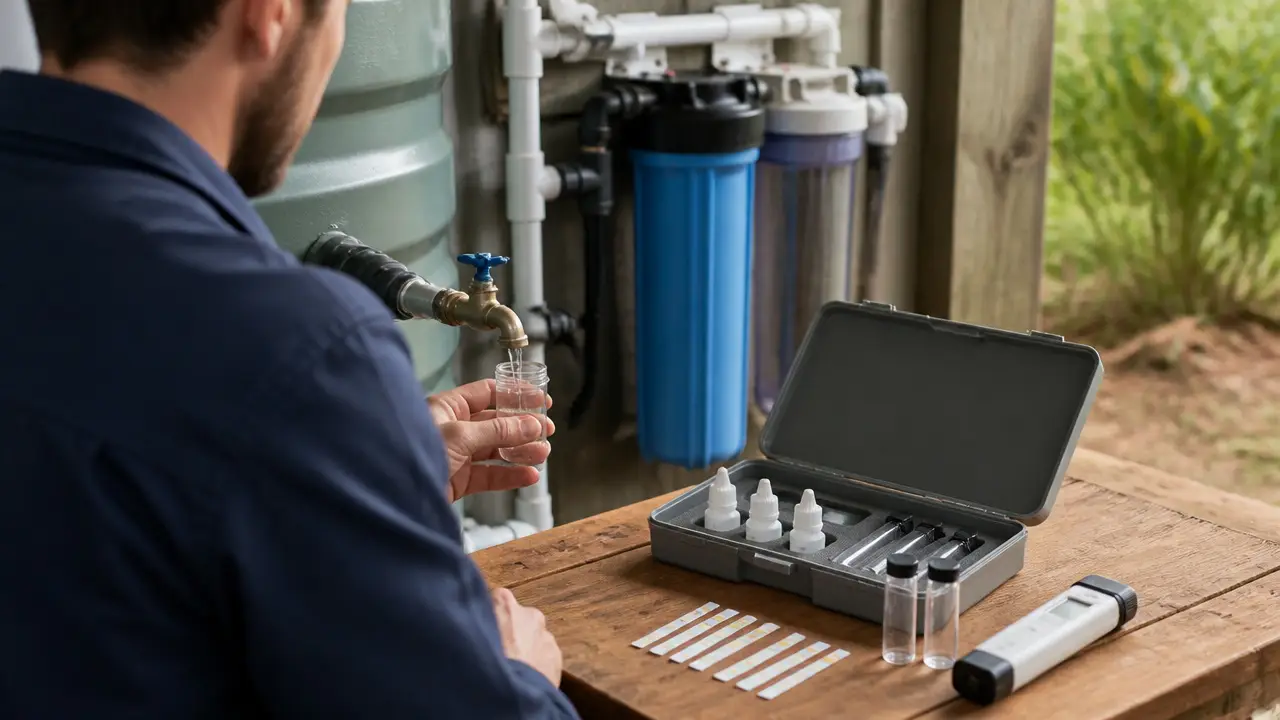
4. Examine a Tank Sample
Take a sample from an accessible outlet without entering the tank.
Check whether particles:
- Settle to the bottom
- Float on the surface
- Remain suspended
- Appear only after the pump starts
This simple check can help separate sediment problems from plumbing or pump problems.
It is not a drinking-water safety test.
5. Compare Water at Different Points
If possible, compare water:
- At the tank outlet
- After the pump
- Before treatment
- After filtration
- At the final tap
If the tank water smells normal but the final tap smells bad, the problem may be downstream in a filter, pressure tank, pipe, fixture, or water heater.
If the odor is already present at the tank, focus on collection and storage.
How to Clear Cloudy Rainwater
The best fix depends on what is causing the particles.
Keep More Dirt Out of the Tank
Start upstream.
Consider health concerns associated with cloudy water to interpret maintenance priorities supported by meaningful test results.
Clean and maintain:
- Gutters
- Leaf screens
- Downspout screens
- First-flush equipment
- Tank inlet screens
Preventing solids from entering is easier than trying to filter them after they reach the tank.
Let Fine Sediment Settle
Many heavier particles will settle when water stays still.
If the tank has just received dirty runoff or sediment has been stirred up, allowing it to settle can improve appearance before further treatment.
Avoid positioning a pump intake directly in the sludge layer.
Some systems use an intake that draws water from above the tank bottom to reduce sediment pickup.
Remove Excess Bottom Sludge
If a significant sediment layer has built up, the tank may need cleaning.
Use an external drain, pump, suction device, or professional tank-cleaning method appropriate for the tank.
Do not climb into a cistern or storage tank. Tanks can be confined spaces with serious risks from poor air quality, difficult exits, slippery surfaces, and other hazards.
Large underground cisterns and tanks that cannot be safely cleaned from outside are jobs for trained professionals.
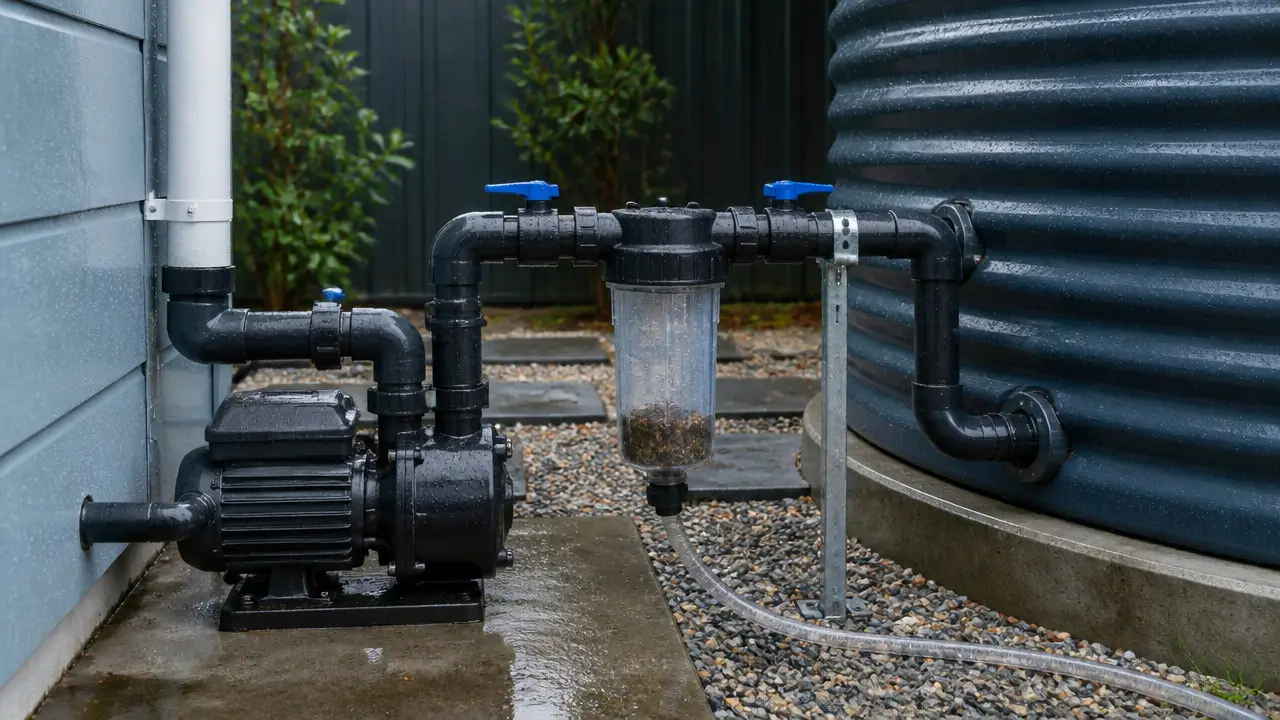
Add Appropriate Sediment Filtration
A sediment filter can remove suspended particles before the water reaches pumps, fixtures, or later treatment stages.
Filter openings are often described by a micron rating. A micron is a very small unit of size. A lower micron rating generally traps smaller particles, but a finer filter also tends to clog sooner.
Do not automatically install the finest filter available.
The filter must be matched to:
- The amount of sediment
- Required flow rate
- Pump performance
- Housing size
- Downstream treatment
- Maintenance frequency
Heavy debris should usually be removed before water reaches a fine filter.
How to Get Rid of Rainwater Odor
Removing the cause usually works better than treating only the smell.
Remove Organic Debris
Clean leaves, insects, dirt, and other material from the roof-to-tank collection path.
Service inlet screens and first-flush equipment.
If decaying material is sitting in the tank, cleaning only the gutters will not remove the existing source.
Clean Accumulated Tank Sediment
Old organic sludge can continue producing odor even after incoming water quality improves.
If the tank needs a major cleaning, isolate it from the collection system first so new runoff does not enter during the work.
Follow the tank manufacturer's cleaning guidance where available.
For drinking-water systems, use a cleaning and disinfection method appropriate for potable-water storage and current local health guidance rather than guessing chemical concentrations.
Service Filters and Housings
Replace filter elements when required.
Clean reusable parts according to the equipment instructions.
A dirty cartridge or carbon filter can hold organic material for long periods.
Activated carbon may help reduce some unwanted tastes and odors, but it is not a substitute for removing contamination, and it does not by itself establish that rainwater is safe to drink. Different filters remove different contaminants.
Keep Light Out
If algae is contributing to the odor, block light from reaching stored water.
Repair lids and openings. If a storage container lets substantial light through its walls, consider whether it is appropriate for long-term water storage.
Do not solve an algae problem only by adding chemicals while leaving the tank exposed to sunlight.
When Filtration Is Not Enough
A sediment filter can make cloudy rainwater look much better while leaving invisible contamination behind.
That distinction is important.
Roof runoff may contain germs and chemicals from air pollution, roofing materials, gutters, pipes, bird droppings, and other sources. Clear water can still contain contaminants.
Likewise, odor-free water is not automatically safe.
If rainwater is intended for drinking, treatment should be planned as a complete system.
Depending on the water and local requirements, that may involve:
- Suitable collection materials
- Roof and gutter maintenance
- Debris screening
- First-flush diversion
- Protected storage
- Sediment removal
- Appropriate filtration
- Treatment for identified germs or chemicals
- Current laboratory testing
- Ongoing maintenance
No single filter, UV lamp, water-quality meter, or test strip proves that roof runoff is potable.
What About UV Treatment?
UV systems use ultraviolet light to reduce or inactivate microorganisms.
They work best with clear water. Suspended particles can shield microorganisms from UV light, which is why filtration before UV treatment is important.
UV also does not remove chemical contaminants.
So if rainwater is cloudy, fixing the turbidity is not just about appearance. Clearer water may also be important for the performance of downstream UV equipment.
Follow the UV system's required water-quality conditions, flow limits, lamp replacement schedule, and maintenance instructions.
Prevent Cloudiness and Odor From Returning
Most recurring rainwater problems are easier to prevent than to clean up.
Make routine checks part of the system.
After Long Dry Periods
Expect more material to have collected on the roof.
Check that screens and the first-flush diverter are ready before relying on the next rainfall.
After Major Storms
Inspect for:
- Damaged screens
- Overflow problems
- Debris buildup
- Floodwater intrusion
- Broken pipes
- Contamination around the tank
If floodwater has entered a cistern, treat it as a contamination event rather than ordinary cloudy water.
During Dry Weather
Check whether stored water has developed odor, algae, heavy sediment, or stagnant areas.
Long storage does not automatically make rainwater bad, but poor storage conditions can allow problems to develop.
Maintain Treatment Equipment
Keep a simple maintenance record for:
- Screen cleaning
- First-flush servicing
- Sediment-filter replacement
- Carbon-filter replacement
- UV lamp and sleeve maintenance
- Tank inspections
- Water testing
A filter that has been forgotten for months can undo much of the work done upstream.
When to Stop DIY Troubleshooting
Some cloudy or smelly rainwater problems are straightforward. Dirty gutters or an overdue sediment filter may be easy to correct.
Get professional or health-authority help when:
- The rainwater is used for drinking.
- Laboratory results show harmful germs or chemicals.
- Fuel, pesticide, solvent, or other chemical contamination is possible.
- Floodwater entered the tank.
- A dead animal or major contamination event occurred.
- The tank requires entry for cleaning.
- Underground plumbing may be cross-connected with drinking-water plumbing.
- Odor returns quickly after cleaning.
- You cannot identify the cause.
- You need to design or change a potable-water treatment system.
For drinking water, the goal is not simply to make rainwater look and smell better. The goal is to know what is in the water and use treatment that addresses those specific risks.
Frequently Asked Questions
Can I drink cloudy rainwater after filtering it?
Not based on appearance alone. A sediment filter may remove visible particles without removing all germs or chemicals. If collected rainwater is used for drinking, it should have suitable collection and treatment, regular maintenance, and appropriate laboratory testing.
Why does my rainwater smell bad after sitting in the tank?
Organic debris, algae, biofilm, or bottom sludge may be breaking down in the tank. Check whether light enters the tank, whether debris is getting through the inlet, and whether sediment has accumulated at the bottom.
Will a first-flush diverter stop cloudy water?
It can reduce the amount of dirt and contamination washed from the roof into storage, especially at the start of a storm. It cannot remove sediment already in the tank or replace good roof, gutter, tank, and filter maintenance.
Will a carbon filter remove rainwater odor?
Activated carbon can reduce some tastes and odors, but it does not solve every cause of smelly water. Remove debris, sludge, algae, or other contamination first. Carbon filtration also does not prove that the water is safe to drink.
How do I know whether cloudiness is sediment or air?
Fill a clear container and let it stand. Sediment may settle toward the bottom. Tiny air bubbles usually disappear as the water sits. If cloudiness appears only after pumping, also inspect the pump and suction plumbing for possible air entry.
Should I completely drain a smelly rainwater tank?
Not always. Minor problems may come from gutters, filters, or a small amount of debris. A tank with heavy sludge, severe odor, animal contamination, or floodwater intrusion may require draining and thorough cleaning. Never enter a cistern or tank to clean it yourself.
Does UV treatment fix cloudy rainwater?
No. UV is a disinfection step, not a sediment-removal step. Cloudy water can interfere with UV treatment because particles may block microorganisms from the light. Water normally needs suitable prefiltration before UV treatment.