As an affiliate, we may earn a commission from qualifying purchases. We get commissions for purchases made through links on this website from Amazon and other third parties.
Cloudy water is often caused by trapped air, fine sediment, minerals, algae, or material stirred up inside a tank or pipe. The right fix depends on what is making the water cloudy.
If the water is only being used for garden irrigation, removing suspended sediment may be enough. If the water may be used for drinking, cooking, or brushing teeth, clear-looking water is not proof that it is safe. Cloudiness can interfere with treatment, and harmful contaminants may be present even when water looks perfectly clear. EPA notes that higher turbidity can sometimes be associated with microorganisms and can reduce filtration effectiveness.
First, Find Out What Kind of Cloudiness You Have
Before adding filters or cleaning a tank, fill a clear glass or jar with the cloudy water and leave it undisturbed.
Watch what happens over the next few minutes.
If the water clears quickly
Tiny air bubbles are a common cause. They can make water look white or milky.
Water containing air usually becomes clear after sitting for a short time. You may see the clearing begin near the bottom as the bubbles rise.
This can happen after:
- Plumbing work
- Pump operation
- Pressure changes
- Filter replacement
- Water warming inside pipes
- Air entering a pump suction line
If the water clears completely and leaves no material at the bottom, filtration may not be needed.
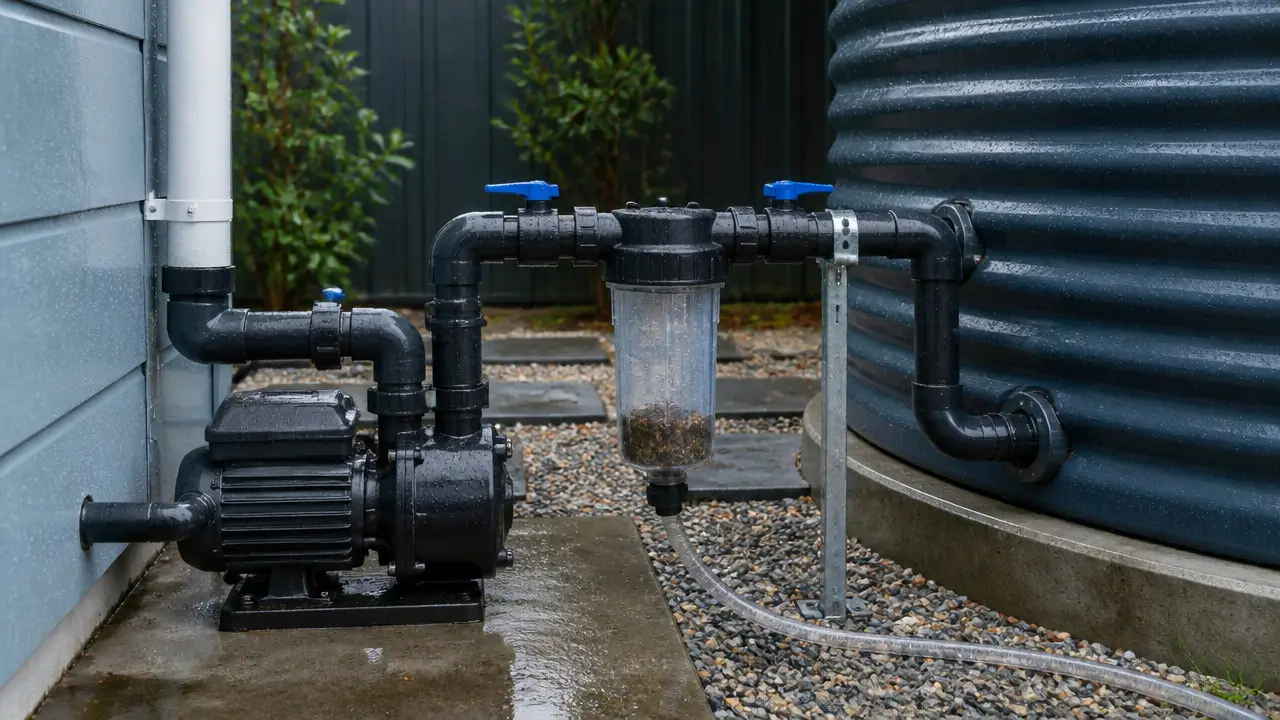
For a pumped rainwater system, repeated air problems are worth checking. Loose suction fittings, a low tank level, or a pump pulling air may affect pump operation.
If particles settle to the bottom
The cloudiness is more likely suspended sediment.
Common materials include:
- Fine dirt
- Silt
- Clay
- Roof dust
- Rust
- Organic debris
- Material stirred up from the bottom of a tank
EPA describes turbidity as cloudiness caused by suspended material in water.
Sediment can often be reduced by settling, better collection practices, tank maintenance, and sediment filtration.
If the water stays cloudy
Cloudiness that remains after sitting needs more investigation.
Possible causes include very fine suspended particles, minerals, biological growth, or contamination. A standard sediment filter will not solve every one of these problems.
Do not keep installing finer filters until you know what you are trying to remove.
How to Clear Cloudy Rainwater
For a rainwater system, start at the collection point and work toward the outlet. This usually works better than relying on one very fine filter.
1. Keep more debris out of the tank
The easiest sediment to remove is the sediment that never reaches storage.
Check the roof collection system for:
- Leaves
- Moss
- Dirt
- Bird or animal debris
- Damaged gutter screens
- Overflowing gutters
- Dirty downpipes
A leaf screen or other coarse prefilter can catch larger material before it reaches the tank.
A first-flush diverter may also help in some systems. A first flush sends away an initial portion of roof runoff that may contain more dust and loose debris. It does not make the remaining rainwater safe to drink, but it can reduce the amount of material entering storage.
Keep these components clean. A clogged prefilter can simply send debris around the filter or cause water to overflow.
2. Avoid stirring up tank sediment
Most storage tanks slowly collect material on the bottom.
Water entering the tank at high speed can stir this layer back into the water. A pump intake located too close to the bottom can do the same thing.
Where the system allows it, arrange the inlet so incoming water does not blast directly into settled sediment.
The outlet or pump intake should also avoid drawing directly from the sludge layer.
A floating intake can sometimes help because it draws water from below the surface rather than from the bottom. Whether it is suitable depends on the tank and pump setup.
3. Let suspended material settle
Settling is one of the simplest ways to improve visibly muddy water.
If practical, stop drawing from the tank and allow the water to sit undisturbed. Heavier particles may drop to the bottom.
Do not assume settled water is safe for drinking. Settling mainly removes larger suspended solids.
For emergency water treatment, EPA also recommends allowing cloudy water to settle and filtering the clearer water before disinfection because disinfection works less effectively in cloudy water.
4. Remove accumulated tank sludge when needed
If water becomes cloudy whenever the tank gets low, after a new inflow, or when the pump starts, bottom sediment may be the main problem.
Inspect the tank where this can be done safely.
Do not enter a cistern or enclosed water tank. Tanks can be confined spaces with serious hazards.
A tank with heavy sludge may need professional cleaning or a cleaning method that can be performed safely from outside the tank.
Also correct the reason so much sediment is entering. Otherwise, the problem will quickly return.
Use Sediment Filters in Stages
When suspended particles remain after basic collection and storage problems are corrected, sediment filtration can help.
A filter's micron rating describes the approximate size of particles it is designed to capture. A micron is one-thousandth of a millimeter.
A smaller micron number means finer filtration.
It is usually better to remove larger material before finer material. For example, a system might have a washable coarse screen followed by a finer sediment cartridge.
The exact filter sizes should match:
- How dirty the source water is
- The smallest particles you need to remove
- Required flow
- Pump pressure
- Pipe size
- Intended water use
Putting an extremely fine cartridge directly on dirty tank water often causes rapid clogging.
Watch the pressure drop
Evaluate comparing high and low turbidity to compare which filtration stages fit the planned household purpose.
Filters resist water flow.
As a sediment filter fills with dirt, the pressure after the filter normally falls. Irrigation sprinklers, pumps, appliances, and household fixtures may then receive less flow.
Check filters regularly rather than waiting for the water to stop.
Clean reusable filters according to their design and replace disposable cartridges when required.
What If the Cloudiness Is Green?
Greenish water can point to algae or other biological growth, especially in tanks that receive sunlight.
Start by checking whether light can enter through:
- A translucent tank wall
- An uncovered opening
- A loose lid
- An inspection hatch
- Open pipe connections
Rainwater tanks generally work better when stored water is protected from sunlight.
Removing visible algae without correcting the light problem is usually temporary.
Do not simply add chemicals to a household water tank without knowing the required concentration, contact time, intended water use, and treatment limits. Drinking-water disinfection needs to be treated as part of the whole system.
What If the Water Is Brown or Rusty?
Brown, orange, or reddish cloudiness may be caused by soil, roof material, corrosion, or iron.
Check where the discoloration first appears.
If stored water is clear but becomes brown after passing through certain pipes, plumbing corrosion may be involved.
If the discoloration appears directly in the tank after rain, inspect the roof, gutters, inlet screens, and tank sediment.
For private wells, EPA recommends testing when there is a noticeable change in water color, taste, or odor rather than identifying safety from appearance alone.
Cloudy Tap Water From a Public Water Supply
If only one faucet is affected, the problem may be inside the building.
Try another cold-water faucet.
If every faucet suddenly produces cloudy or discolored water, especially if neighbors have the same problem, contact the water utility. Water-main work, flushing, pressure changes, or other conditions may be involved.
Follow any drinking-water or boil-water advisory issued by the utility or health authority.
Do not rely on a countertop filter to override an official advisory.
Cloudy Private Well Water
A private well can become cloudy because of sediment, changes in pumping, damaged well components, flooding, or changes in groundwater conditions.
A sudden change deserves attention.
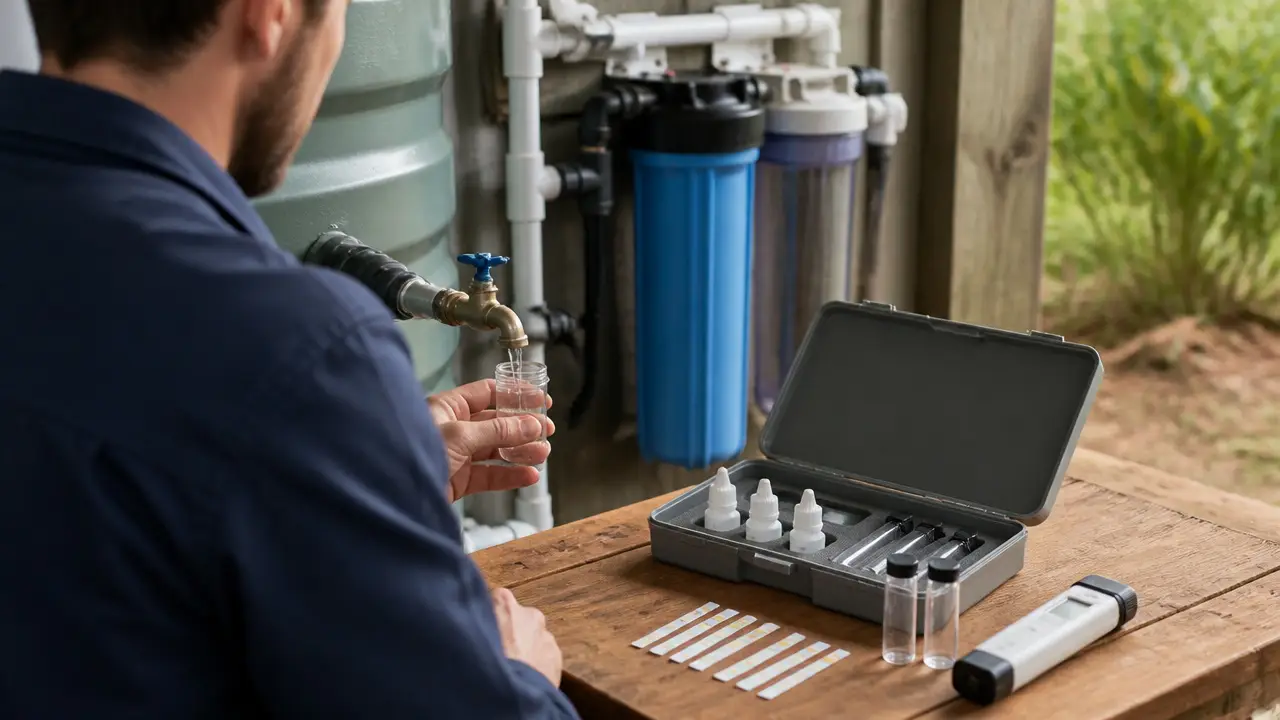
EPA recommends private well testing when water quality changes and advises using a certified drinking-water laboratory. Private wells are generally the owner's responsibility rather than being regulated like public drinking-water systems.
If cloudiness follows flooding, well damage, pump work, construction, or changes around the well, avoid assuming that running the water until it looks clear has made it safe.
Testing and inspection may be needed.
Cloudy Water Intended for Drinking Needs Extra Care
Removing cloudiness and making water potable are two different jobs.
Potable means suitable for drinking.
Removing visible cloudiness does not by itself resolve the health risks associated with turbid water.
A sediment filter may make water look much clearer while leaving bacteria, viruses, dissolved chemicals, or other contaminants behind.
Likewise:
- UV treatment does not remove sediment or dissolved chemicals.
- Activated carbon does not provide a complete microbiological safety assessment.
- A TDS meter does not tell you whether water contains disease-causing organisms.
- Clear water can still contain contaminants.
- Boiling can control many disease-causing organisms but does not remove every chemical contaminant.
For collected rainwater intended for drinking, think of treatment as a complete system. That can include suitable collection, debris control, prefiltration, appropriate treatment stages, correct operation, routine maintenance, current laboratory testing, and compliance with applicable local requirements.
Professional water-treatment help is sensible when household drinking water depends on the system or when test results identify contaminants that require specialized treatment.
A Practical Troubleshooting Order
When you find cloudy water, work through the system in this order:
- Fill a clear glass and let it stand. See whether bubbles disappear or particles settle.
- Check the source. Look at the roof, well, public supply, or other water source.
- Inspect collection equipment. Clean clogged screens, gutters, and prefilters.
- Check the storage tank. Look for sediment, light entry, debris, or disturbance from the inlet.
- Check the pump intake. Make sure it is not pulling sludge or air.
- Inspect existing filters. A damaged, bypassed, or overloaded filter may allow cloudy water through.
- Add or adjust sediment filtration only when appropriate. Match filtration to the actual particle problem and required flow.
- Test water when safety is uncertain. This is especially important for drinking water, private wells, or sudden unexplained changes.
The goal is not just to make the water look better. It is to find and correct the cause.
Frequently Asked Questions
Can I drink cloudy water if it becomes clear after sitting?
Cloudiness caused only by tiny air bubbles is different from cloudiness caused by suspended material. However, appearance alone cannot establish that water is safe to drink. If your normal drinking-water source suddenly changes, investigate the cause and follow guidance from your water provider or health authority.
Will a sediment filter remove cloudy water?
It can remove cloudiness caused by particles that are large enough for the filter to capture. It will not necessarily remove dissolved minerals, chemicals, microorganisms, or extremely fine particles. The filter also needs enough capacity to handle the amount of sediment present without restricting flow too quickly.
Why does my rainwater turn cloudy after heavy rain?
Heavy runoff can carry more roof dirt and debris into the tank. Fast incoming water may also stir up sediment already on the tank floor. Check gutters, prefilters, the inlet arrangement, and accumulated tank sludge.
Why is my tank water clear until the level gets low?
The outlet or pump intake may be getting close to sediment accumulated on the bottom. Low water can also make it easier for a pump to draw disturbed material. Cleaning the tank and changing the intake position may help, depending on the system.
Does boiling cloudy water make it safe?
Cloudy water should generally be allowed to settle and filtered before emergency disinfection because suspended material can reduce treatment effectiveness. Boiling can kill many disease-causing organisms, but it does not remove every chemical contaminant. Follow current public-health guidance when drinking-water safety is in question.
Can activated carbon make cloudy water clear?
Activated carbon may trap some particles depending on the filter design, but sediment removal is not its main job. Heavy sediment can also clog carbon media quickly. A separate sediment stage is normally more appropriate when suspended particles are the main problem.
Is clear rainwater safe to drink?
Not necessarily. Roof runoff can contain microorganisms, animal waste, metals, chemicals, and other contaminants that are invisible. Drinking-water use requires suitable collection and treatment, ongoing maintenance, appropriate laboratory testing, and compliance with local requirements.