As an affiliate, we may earn a commission from qualifying purchases. We get commissions for purchases made through links on this website from Amazon and other third parties.
Is It Better to Have High or Low Turbidity?
Low turbidity is better.
Turbidity describes how cloudy or hazy water is because of tiny suspended particles. These particles can include soil, silt, clay, organic matter, algae, and other material.
Water with low turbidity contains fewer suspended particles and usually looks clearer. Water with high turbidity contains more particles and may look cloudy, muddy, or discolored.
For a rainwater harvesting system, lower turbidity is generally easier to manage. It reduces sediment buildup and can help filters and treatment equipment work more effectively. However, clear-looking water is not automatically safe to drink.
What Does Turbidity Measure?
Turbidity measures how much suspended material interferes with light passing through water.
It does not directly tell you what the particles are.
For example, cloudy rainwater might contain:
- Dust washed from a roof
- Fine soil or clay
- Pollen
- Plant debris
- Algae
- Organic material
- Very small particles from gutters or storage tanks
Turbidity is commonly reported in NTU, or nephelometric turbidity units. A higher NTU reading means the water is more turbid.
The exact number matters most when you are following a water-treatment standard or monitoring a treatment system. For normal rainwater-system maintenance, the general goal is still simple: keep suspended dirt and debris as low as practical.
Why Low Turbidity Is Usually Better
Low-turbidity water puts less strain on the rest of a rainwater system.
Filters may last longer
Water carrying a lot of fine sediment can clog filters quickly. As a filter loads with dirt, flow can decrease and maintenance becomes more frequent.
Removing larger debris and sediment before fine filtration can help.
Less sediment settles in the tank
Some suspended material eventually sinks.
Over time, this can form a layer of sludge at the bottom of a rain barrel, IBC tote, or cistern. Heavy sediment buildup can make cleaning harder and may affect pumps or outlets located near the tank floor.
Treatment can work more reliably
Particles can interfere with some water-treatment processes.
This matters especially when water will receive disinfection or other treatment for higher-risk uses. A treatment system should be designed as a series of compatible stages rather than relying on one filter or device.
Water usually looks and feels cleaner
Lower turbidity generally produces clearer water, which is preferable for many uses around a home or garden.
Appearance alone, however, cannot tell you whether water contains harmful microorganisms or dissolved contaminants.
What Causes High Turbidity in Collected Rainwater?
Rainwater often becomes turbid before it reaches the storage tank.
Dirty roof surfaces
Dust, leaves, bird droppings, pollen, and other debris can collect on a roof between storms.
The first runoff after a dry period may carry much of this material into the gutter.
Poor debris screening
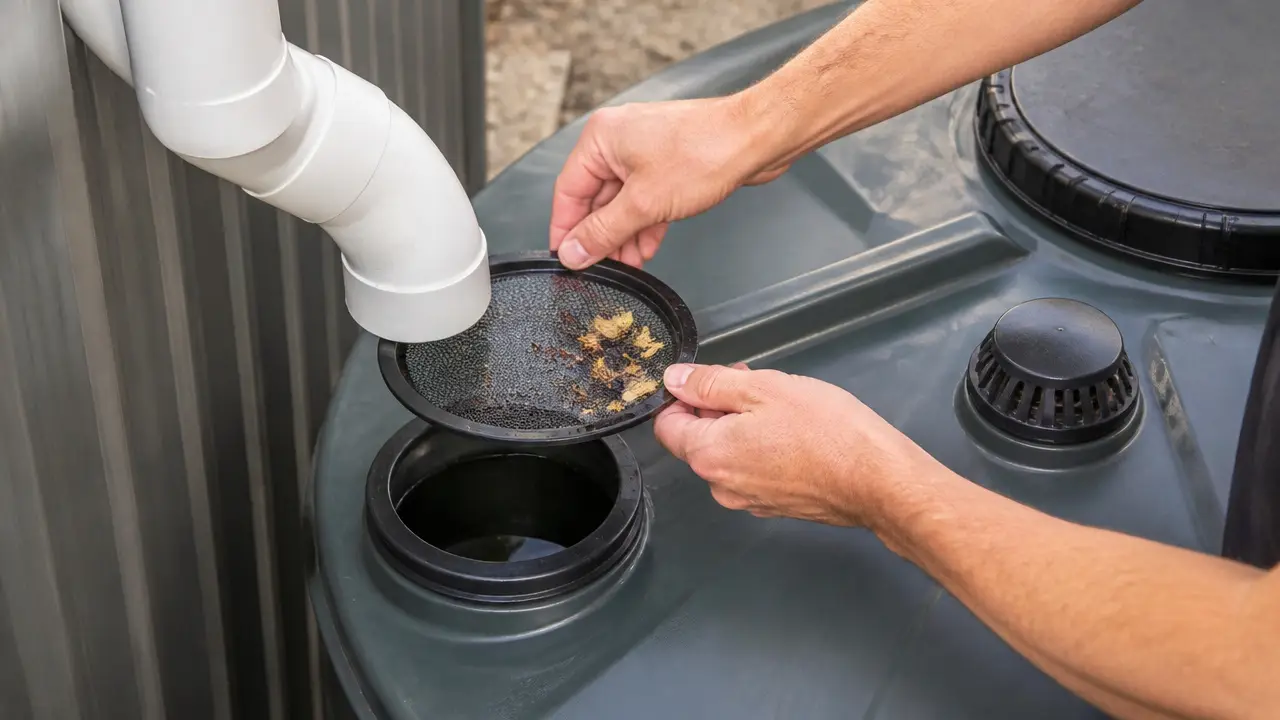
A missing or clogged gutter screen can allow leaves, insects, and other material farther into the system.
As this debris breaks down, smaller particles may remain suspended in the water.
No first-flush control
A first-flush diverter sends away an initial portion of roof runoff before cleaner water enters storage.
It does not make rainwater safe by itself, but it can reduce some of the material washed from the collection surface at the beginning of a storm.
Sediment disturbed inside the tank
A tank may appear clear until accumulated sediment is stirred up.
This can happen when:
- New water enters too forcefully
- A pump intake is close to the bottom
- The tank is moved
- Maintenance disturbs settled material
Algae or biological growth
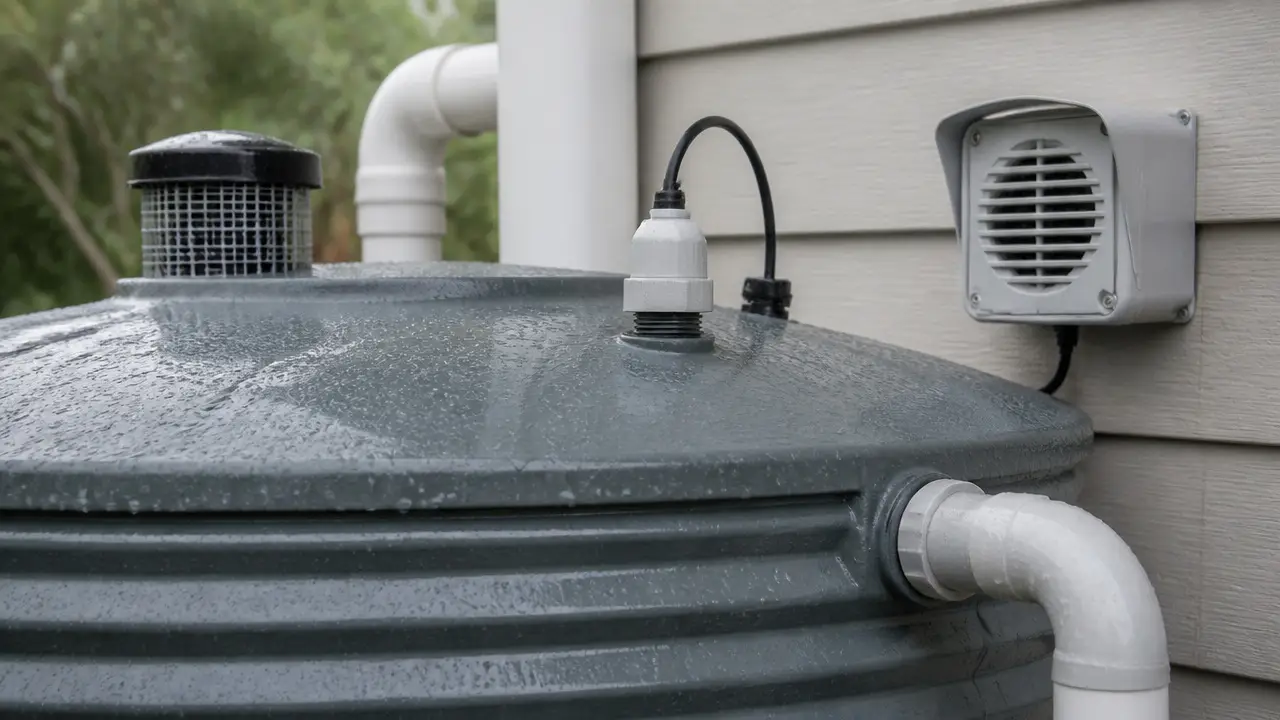
Light entering a storage tank can support algae growth.
Organic debris in the tank can also contribute to poor water quality. Opaque, covered storage generally makes these problems easier to control.
Is Clear Rainwater Safe to Drink?
Not necessarily.
Low turbidity only tells you that relatively little suspended material is making the water cloudy. It does not show whether the water contains:
- Bacteria
- Viruses
- Parasites
- Dissolved metals
- Chemicals
- Other contaminants that cannot be seen
A simple turbidity reading cannot establish that roof-collected rainwater is potable, meaning suitable for drinking.
Factor in home water-turbidity measurements to interpret appropriate testing and treatment for the expected end use.
If rainwater is being considered for drinking, cooking, or other potable use, safety should be evaluated as a complete system. That can include a suitable collection surface, debris control, prefiltration, properly designed treatment and disinfection, regular maintenance, current laboratory testing, and compliance with applicable local requirements.
Should Rainwater Be Perfectly Clear?
Clear water is a useful goal, but perfect visual clarity is not the only thing that matters.
For irrigation or other non-potable uses, a small amount of fine suspended material may not create an immediate problem. What matters is whether the turbidity is causing practical issues such as:
- Clogged irrigation emitters
- Sediment buildup
- Reduced pump performance
- Frequent filter replacement
- Staining
- Unusual odor or appearance
If the system keeps becoming cloudy, fixing the source of the sediment is usually better than simply installing finer and finer filters.
How to Reduce Turbidity in a Rainwater System
Start upstream before relying on fine filtration.
Keep the roof and gutters reasonably clean
Remove accumulated leaves and debris when it can be done safely.
Do not climb onto a wet or difficult roof just to improve rainwater quality. Use safe access methods or hire a qualified person when needed.
Use debris screens
Screens can keep large material out of the storage system.
They need regular inspection because a clogged screen can restrict flow or cause gutters to overflow.
Consider first-flush diversion
A first-flush device can reduce some of the dirt entering storage during the beginning of a storm.
The correct setup depends on the roof, collection area, rainfall pattern, and intended water use.
Let sediment settle
Calm storage allows heavier particles to settle toward the bottom of the tank.
A well-designed inlet can reduce unnecessary mixing of settled material.
Keep pump intakes away from sludge
Drawing water directly from the dirtiest part of the tank can increase turbidity.
Depending on the system, water may be taken from above the sediment layer rather than directly from the bottom.
Match filtration to the intended use
Filtration should solve a specific problem.
For example, irrigation equipment with small openings may need finer particle control than a hose used for general garden watering.
A filter's micron rating describes the approximate particle size it is designed to capture. Smaller micron ratings generally remove finer particles, but they can also clog faster when incoming water contains a lot of sediment.
High Turbidity vs. Low Turbidity
| Condition | What it usually means | Effect on a rainwater system |
|---|---|---|
| Low turbidity | Fewer suspended particles | Easier filtration and less sediment buildup |
| High turbidity | More suspended particles | More clogging, sediment, and maintenance |
| Clear appearance | Water looks clean | Does not prove microbiological or chemical safety |
| Cloudy appearance | Suspended particles are present | Collection, storage, or filtration may need attention |
When High Turbidity May Signal a System Problem
An occasional cloudy tank after a dirty roof runoff event is different from a system that stays cloudy.
Persistent or suddenly increasing turbidity may be worth investigating if:
- Water used to be clear but is now cloudy
- Filters clog much faster than before
- Large amounts of sediment collect in the tank
- Algae is visible
- Water has changed color or odor
- A pump or irrigation system is losing flow
- The water is intended for household or potable use
Start by checking the collection surface, gutters, screens, first-flush components, tank condition, and sediment level.
For drinking-water applications, visible clarity should never replace appropriate treatment, laboratory testing, or professional advice where needed.
Frequently Asked Questions
Is high or low turbidity better for water?
Low turbidity is generally better because it means there are fewer suspended particles in the water. This usually reduces sediment buildup and makes filtration easier.
Does low turbidity mean water is safe to drink?
No. Water can have low turbidity and still contain microorganisms, dissolved chemicals, metals, or other contaminants. Drinking-water safety requires a broader assessment.
What makes rainwater cloudy?
Common causes include roof dust, pollen, fine soil, decaying leaves, algae, disturbed tank sediment, and inadequate debris screening.
Can a filter reduce turbidity?
Yes. Particle filters can reduce turbidity when the suspended material is within the filter's operating range. Very dirty water may require sediment control or prefiltration before finer filters.
Does letting rainwater sit reduce turbidity?
It can. Heavier particles may settle to the bottom of the tank when water remains calm. Very fine particles may stay suspended much longer.
Can high turbidity clog irrigation systems?
Yes. Suspended particles can clog small irrigation openings, especially drip emitters and fine spray nozzles. Suitable screening or filtration may be needed.
Is a turbidity meter enough to test rainwater quality?
No. A turbidity meter only measures cloudiness caused by suspended particles. It does not provide a complete assessment of microbiological or chemical water quality.