As an affiliate, we may earn a commission from qualifying purchases. We get commissions for purchases made through links on this website from Amazon and other third parties.
A good NTU for water depends on what you plan to do with the water. For water that will be disinfected for drinking, turbidity below 1 NTU is a useful treatment target. Lower is generally better. But an NTU reading alone cannot tell you whether water is safe to drink.
NTU stands for Nephelometric Turbidity Unit. It measures how cloudy water is because of tiny suspended particles such as dirt, silt, organic matter, or microorganisms.
For rainwater systems, turbidity is best used as a treatment and maintenance indicator, not as a stand-alone safety test.
What Does NTU Measure?
Turbidity describes how much suspended material interferes with light passing through water.
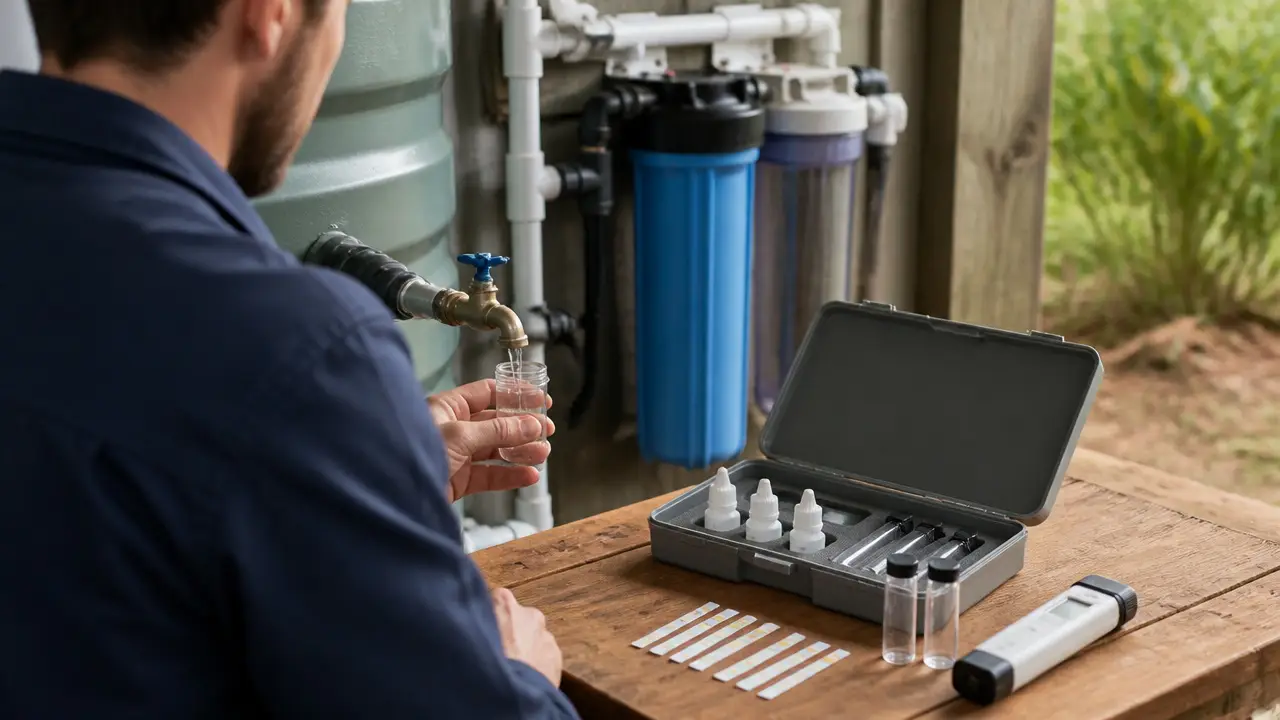
A turbidity meter shines light through a sample and measures how much light is scattered by particles. The result is reported in NTU.
In simple terms:
- Low NTU means the water is relatively clear.
- High NTU means more suspended material is present.
- A sudden increase may mean contamination, sediment movement, poor filtration, or a maintenance problem.
Turbidity does not identify what those particles are.
Water could have a very low NTU and still contain bacteria, viruses, dissolved chemicals, or other contaminants that a turbidity meter cannot detect.
What Is Considered a Good NTU?
There is no single NTU number that is right for every water use.
A practical way to think about turbidity is:
| Turbidity | What It May Mean |
|---|---|
| Below 1 NTU | Very clear water and a useful target before drinking-water disinfection |
| 1–5 NTU | Some suspended material is present; treatment performance should be checked if water will be disinfected |
| Above 5 NTU | Noticeable turbidity may be present and filtration or settling may be needed |
| Much higher readings | Often indicate significant sediment, organic matter, or another source of cloudiness |
These ranges are not drinking-water safety ratings. A reading of 0.5 NTU does not prove that water is potable, which means safe for drinking.
The World Health Organization recommends keeping turbidity below 1 NTU to support effective disinfection. WHO notes that higher turbidity can protect microorganisms and reduce the effectiveness of treatments such as chlorine or ultraviolet light.
Why Drinking-Water Systems Often Aim Below 1 NTU
Particles can cause problems during disinfection.
For example, microorganisms may become attached to or hidden inside suspended particles. That can make it harder for chlorine or UV light to reach them.
Lower turbidity gives the disinfection stage a better chance to work as designed.
WHO guidance for small drinking-water supplies uses less than 1 NTU as a target for effective disinfection. If that cannot be achieved, WHO advises keeping turbidity below 5 NTU while adjusting treatment appropriately. That does not mean 5 NTU automatically makes water safe.
Large water-treatment systems often operate at even lower levels.
In the United States, EPA rules for public surface-water systems using conventional or direct filtration require filtered water to be 0.3 NTU or lower in at least 95% of measurements each month, with turbidity never exceeding 1 NTU.
Those EPA numbers are treatment-performance requirements for regulated public water systems. They should not be treated as a simple pass-or-fail standard for a home rainwater tank.
Is 1 NTU Safe to Drink?
Not necessarily.
An NTU measurement tells you about suspended particles. It does not tell you whether pathogens or harmful chemicals are present.
For example, clear water could still contain:
- E. coli or other bacteria
- Viruses
- Protozoa
- Dissolved metals
- Pesticides
- PFAS
- Other dissolved chemicals
A turbidity meter cannot detect most of these directly.
CDC guidance also stresses that drinking-water safety depends on the water source and the treatment used to control germs and chemicals.
For harvested rainwater intended for drinking, treat turbidity as only one part of a larger water-safety plan. The system may require suitable roof collection, debris control, first-flush management, filtration, disinfection, regular maintenance, laboratory testing, and compliance with local requirements.
A first flush device diverts some of the first runoff from a roof. This early runoff can carry dirt, bird droppings, pollen, and other material that collected between rains.
What Is a Good NTU for Rainwater?
There is no universal turbidity limit for all harvested rainwater.
The useful target depends heavily on what happens after the tank.
Garden Irrigation
A specific low NTU number is usually less important for ordinary garden watering than it is for drinking-water treatment.
However, cloudy water can still create problems.
Sediment can clog:
- Drip emitters
- Small irrigation valves
- Screens
- Pump strainers
- Fine filters
If your irrigation system keeps clogging, checking turbidity can help show whether suspended particles are part of the problem.
Toilet Flushing and Outdoor Cleaning
Moderately turbid water may still work for some non-potable uses, depending on the plumbing and equipment.
Non-potable means water that is not intended for drinking.
Very cloudy water can leave sediment in toilets, hoses, pipes, tanks, and valves. Reducing turbidity can make the system easier to maintain.
Water Going Through UV Treatment
Turbidity becomes much more important when ultraviolet disinfection is used.
UV works by exposing microorganisms to ultraviolet light. Suspended particles can interfere with that exposure.
The water must meet the operating requirements of the specific UV system. Do not assume that simply reaching 1 NTU makes a UV system effective. Flow rate, UV dose, lamp condition, water clarity, maintenance, and other water-quality factors also matter.
Water Going Through Chlorination
High turbidity can also make chlorination less reliable because particles and organic matter may interfere with disinfection.
WHO therefore recommends keeping turbidity below 1 NTU where practical when water is being disinfected.
Does Clear Water Mean Low Turbidity?
Usually, but you cannot judge low turbidity accurately just by looking at the water.
Very cloudy water is easy to see. Small differences at low NTU levels are not.
WHO guidance notes that turbidity below about 4 NTU generally requires an instrument to detect reliably.
That means water that looks perfectly clear could measure 0.3, 1, 2, or another value.
More importantly, clear water is not the same thing as safe drinking water.
Why Rainwater Turbidity Changes
Rainwater quality can change greatly from one storm to another.
Common causes of higher turbidity include:
Roof Debris
Dust, pollen, leaves, bird droppings, insects, and plant material can wash into the collection system.
Good gutter screens and other prefiltration can reduce the amount reaching the tank.
Poor First-Flush Control
The first runoff after a dry period often carries more material from the roof.
A first-flush system can reduce that load, but it still requires cleaning and proper sizing.
Tank Sediment
Fine particles may slowly settle on the tank floor.
For home water-turbidity measurements, first assess appropriate testing and treatment for the expected end use.
They can be stirred back into the water when:
- The tank gets very low.
- New water enters quickly.
- A pump intake sits too close to the bottom.
- The tank is disturbed during cleaning.
A high reading at the pump does not always mean the incoming rain itself was highly turbid.
Organic Growth
Light, nutrients, and warm conditions can encourage biological growth.
Keeping an opaque tank closed to light can help limit algae.
Filter Problems
A sudden increase in turbidity downstream of a filter can indicate:
- A clogged filter
- A damaged cartridge
- Incorrect installation
- Water bypassing the filter
- A filter that is too coarse for the particles present
This makes regular turbidity readings useful for tracking system performance.
Where Should You Measure Turbidity?
Measure at the point that matters to your system.
For example, you might test:
- Water entering the tank.
- Water leaving the tank.
- Water after sediment filtration.
- Water immediately before disinfection.
- Finished water at the point of use.
Comparing readings can be more useful than looking at one number.
Suppose tank water measures 8 NTU and water after filtration measures 0.7 NTU. That tells you the filtration stage is removing much of the suspended material.
If the filtered reading later rises to 4 NTU under similar conditions, the filter or another part of the system deserves attention.
Can a Turbidity Meter Tell You When to Change a Filter?
It can help, but turbidity should not be your only guide.
A filter can need maintenance even when the NTU reading still looks acceptable.
Watch for:
- Increasing turbidity after the filter
- Reduced flow
- Increasing pressure difference across the filter
- Manufacturer maintenance intervals
- Visible sediment
- Changes in smell or appearance
Changing turbidity can be especially useful when you record readings over time.
A normal reading for your system gives you a baseline. Large changes from that baseline can point to a problem.
NTU Is Different From TDS
Turbidity and total dissolved solids measure different things.
Total dissolved solids, or TDS, refers to dissolved minerals and salts in water. A TDS meter usually estimates them by measuring electrical conductivity.
A turbidity meter measures suspended particles that scatter light.
You can therefore have:
- Low NTU and high TDS
- High NTU and low TDS
- Low values for both
- High values for both
Neither measurement alone establishes drinking-water safety.
How to Lower Turbidity in Collected Rainwater
The best approach is usually to remove dirt before it reaches fine treatment equipment.
A rainwater system may use several stages.
Keep Large Debris Out
Roof and gutter maintenance can reduce leaves, dirt, and organic material entering the collection line.
Use suitable screens where needed.
Manage the First Runoff
A first-flush system can divert some of the dirtiest early runoff before it reaches storage.
It still needs regular cleaning.
Let Sediment Settle
Storage tanks naturally allow some suspended material to settle.
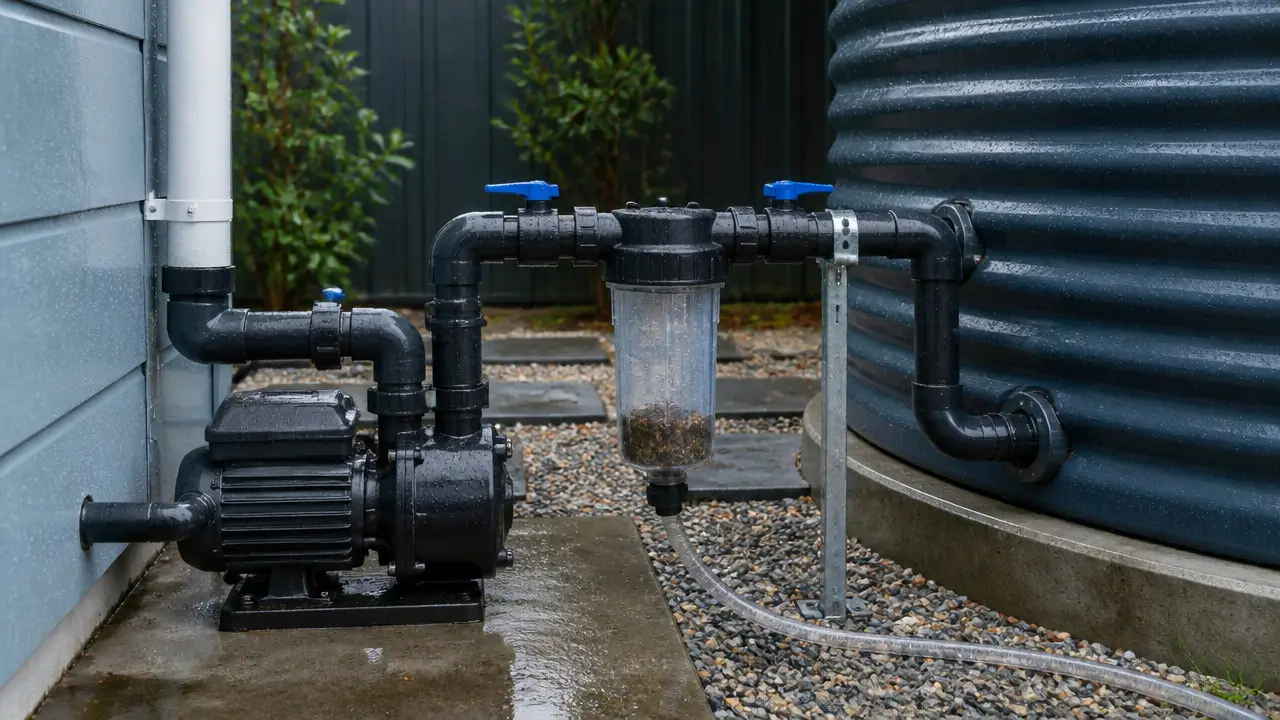
Avoid placing a pump intake directly against the tank floor, where settled material is easiest to pull into the plumbing.
Use Filtration That Fits the Intended Use
Filters are often installed in stages.
For example, coarse filtration can protect finer filters downstream.
A filter's micron rating describes the approximate size of particles it is designed to capture. Smaller micron numbers generally mean finer filtration, but micron rating alone does not tell you whether a filter removes microorganisms or makes water safe to drink.
Maintain the Tank and Filters
Dirty tanks, clogged screens, old cartridges, and poorly maintained first-flush devices can all raise turbidity or reduce treatment performance.
Maintenance matters as much as the equipment itself.
Do Not Use NTU as a Drinking-Water Pass Test
A turbidity reading can tell you whether water is relatively clear and whether particle-removal treatment appears to be working.
It cannot confirm that harvested rainwater is safe to drink.
As of August 2026, current WHO drinking-water guidance continues to use a whole-system approach that manages risks from the water source through treatment and delivery.
If harvested rainwater will be used for drinking, cooking, brushing teeth, or another potable use, use appropriate treatment and current laboratory testing for the risks relevant to your system and location. Follow local health and plumbing requirements, and involve a qualified water-treatment professional where needed.
Frequently Asked Questions
Is 0.5 NTU good water?
A turbidity reading of 0.5 NTU means the water is quite clear and is below WHO's general turbidity target of 1 NTU for effective disinfection. However, 0.5 NTU does not prove that the water is safe to drink. Microbial and chemical contaminants may still be present.
Is 1 NTU good for drinking water?
Less than 1 NTU is a useful target before drinking-water disinfection, but it is not a drinking-water safety test. Safe drinking water depends on the source, treatment, testing, maintenance, and applicable standards.
Is 5 NTU safe to drink?
You cannot determine drinking-water safety from a 5 NTU reading. WHO advises keeping turbidity below 1 NTU where possible for effective disinfection. Higher turbidity can reduce treatment performance.
What does a high NTU reading mean?
A high NTU reading means the water contains more suspended material that scatters light. In a rainwater system, this may come from roof dirt, organic matter, tank sediment, biological growth, or inadequate filtration.
Can you see 1 NTU with your eyes?
Usually not reliably. Small differences in low turbidity require a turbidity meter. Water can look clear while still having measurable suspended particles.
Does a low NTU mean there are no bacteria?
No. Turbidity does not directly measure bacteria or other pathogens. Very clear water can still contain harmful microorganisms.
What NTU should rainwater have before UV treatment?
Lower turbidity is generally better, and WHO recommends less than 1 NTU to support effective disinfection. However, always follow the water-quality and flow requirements specified for the UV system. An NTU reading alone cannot confirm that UV treatment will make rainwater potable.