As an affiliate, we may earn a commission from qualifying purchases. We get commissions for purchases made through links on this website from Amazon and other third parties.
For most treated drinking water, below 1 NTU is a useful practical turbidity target. Very clear water is often well below that level. However, there is no single “normal” turbidity range that proves water is safe to drink.
The World Health Organization recommends keeping turbidity below 1 NTU to support effective disinfection. If that cannot be achieved, WHO advises aiming for below 5 NTU while adjusting treatment as needed. Water at about 4 NTU and above may begin to look visibly cloudy.
In the United States, public water systems using conventional or direct filtration have tighter treatment requirements. Their filtered water generally must be 0.3 NTU or less in at least 95% of measurements each month and never exceed 1 NTU. These are treatment-performance requirements, not a simple home drinking-water safety test.
What Does Turbidity Mean?
Turbidity is a measure of how much suspended material makes water cloudy or scatters light.
It is normally reported in NTU, or nephelometric turbidity units.
Particles that can increase turbidity include:
- Clay and fine soil
- Silt
- Plant debris
- Organic matter
- Algae
- Iron or manganese particles
- Microorganisms
- Sediment stirred up inside a tank or pipe
A turbidity reading does not identify those particles. It only tells you how strongly the water scatters light.
This is why a low turbidity result does not mean the water is free from bacteria, viruses, chemicals, metals, or other contaminants.
Practical Turbidity Ranges
The following ranges are useful for understanding a reading, but they should not be treated as universal safety limits.
| Turbidity | Practical interpretation |
|---|---|
| Below 0.3 NTU | Very clear water and a common performance level for well-operated conventional public water filtration |
| 0.3 to below 1 NTU | Clear water and generally a good target before drinking-water disinfection |
| 1 to 4 NTU | Increasing suspended material; water may still look clear, but turbidity can interfere with treatment |
| Around 4 NTU and above | Cloudiness may become visible |
| 5 NTU and above | High enough to require investigation and better particle removal when treating drinking water |
WHO notes that water below 1 NTU is generally considered very clear and that cloudiness becomes visible around 4 NTU. It also recommends keeping turbidity below 1 NTU when possible because suspended material can reduce the effectiveness of chlorine and ultraviolet disinfection.
These ranges describe turbidity. They do not tell you whether the water is potable, meaning suitable for drinking.
Is 1 NTU a Safe Turbidity Level?
A reading below 1 NTU is desirable for drinking-water treatment, but it does not prove that the water is safe.
For example, clear water could still contain:
- E. coli or other bacteria
- Viruses
- Protozoa
- Nitrates
- Lead
- Arsenic
- Pesticides
- Other dissolved chemicals
Many of these contaminants do not make water cloudy.
Turbidity is therefore best used as a treatment and water-quality indicator. A sudden increase can warn you that filtration has changed, sediment has entered the system, or stored water has been disturbed.
Drinking-water safety requires appropriate collection, filtration, disinfection or other treatment where needed, system maintenance, and suitable laboratory testing.
Why Low Turbidity Matters Before Disinfection
Suspended particles can make disinfection harder.
Microorganisms may be associated with particles, while suspended matter can reduce the amount of disinfectant that reaches them. High turbidity can also reduce the effectiveness of UV treatment because particles and dissolved substances can interfere with UV light reaching microorganisms.
WHO therefore uses below 1 NTU as a preferred target for effective disinfection. When turbidity is higher, treatment may require additional particle removal or changes to the disinfection process.
This does not mean getting below 1 NTU automatically makes chlorine or UV treatment adequate. Flow rate, contact time, UV dose, water chemistry, equipment condition, and microbial risk still matter.
What Is a Normal Turbidity Level for Tap Water?
Properly treated municipal tap water is normally expected to be quite clear.
For U.S. public water systems using conventional or direct filtration of surface water, EPA rules require filtered water to be 0.3 NTU or less in at least 95% of monthly measurements and no more than 1 NTU at any time under the applicable surface-water treatment rules.
Those requirements apply to regulated public systems and specific treatment methods. They should not be treated as a universal standard for every private well, rainwater system, or other water source.
If normally clear tap water suddenly becomes cloudy, brown, or filled with particles, investigate the change rather than relying only on an NTU number.
Air bubbles can also make tap water temporarily look milky. Water clouded by trapped air commonly clears after sitting in a glass, often starting from the bottom. Particle-related turbidity usually behaves differently.
What Is a Normal Turbidity Level for Rainwater?
There is no universal normal turbidity level for harvested rainwater.
Turbidity can change greatly between storms and even during the same storm. Roof runoff may pick up:
- Dust
- Pollen
- Leaves
- Bird or animal waste
- Roofing particles
- Ash
- Insect material
- Organic debris
Water collected after a long dry period may contain more material than later runoff from the same storm.
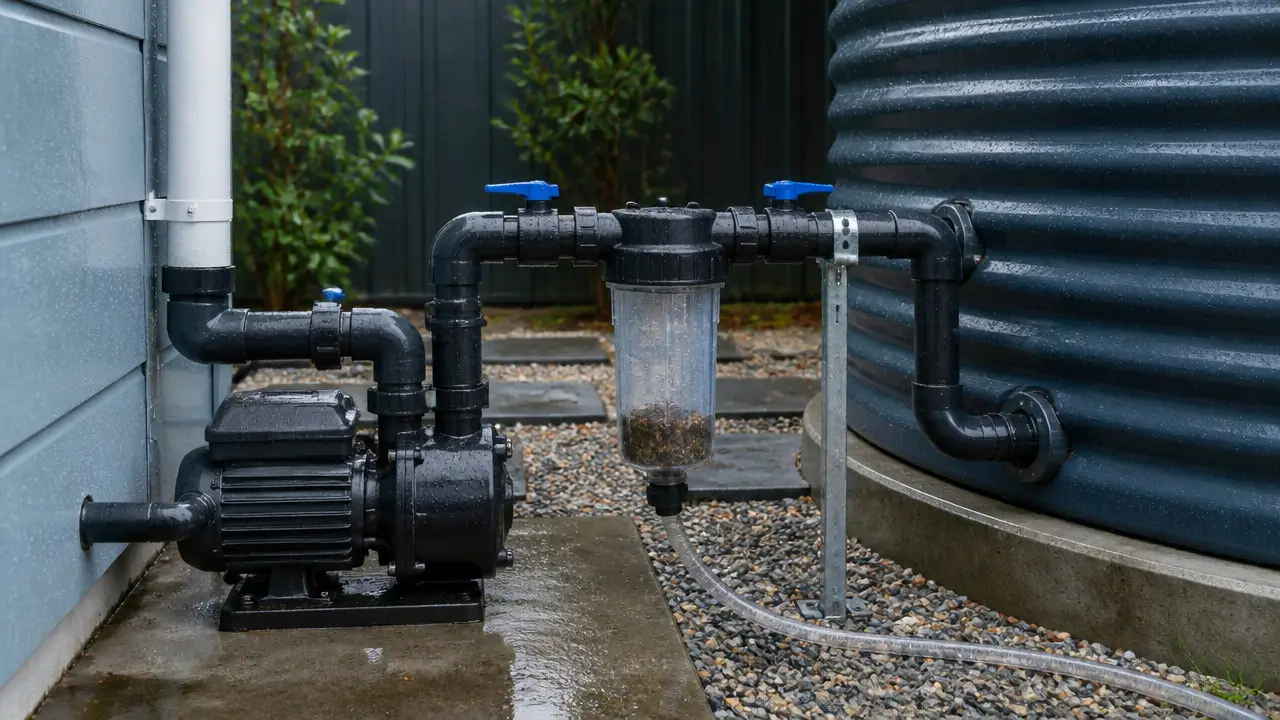
A first-flush diverter sends away some of the early roof runoff before water enters the tank. This can reduce debris reaching storage, but it does not make rainwater clean or safe to drink.
Turbidity may also increase inside a rainwater tank when accumulated sediment is disturbed. WHO specifically notes that increasing turbidity in stored household water, including harvested rainwater, can indicate deteriorating water quality.
For rainwater intended for drinking, do not use a turbidity reading by itself to approve the water. The whole system matters, including the roof and gutters, prefiltration, storage condition, treatment equipment, current laboratory testing, maintenance, and applicable local requirements.
What About Rainwater Used for Irrigation?
Reviewing a suitable NTU range for water helps verify the main trade-offs before the next design decision.
A drinking-water turbidity target is usually not needed for ordinary garden irrigation.
The more important concern is often whether suspended particles will clog:
- Pumps
- Screens
- Valves
- Sprayers
- Drip emitters
In these systems, particle size can matter more than the NTU number.
An irrigation filter may therefore be specified by mesh size or micron rating. A micron rating describes the approximate size of particles a filter is designed to retain. The required filtration depends on the irrigation equipment, especially small drip passages.
High turbidity can still be useful as a warning that gutters, tanks, or filters need attention.
How to Measure Turbidity
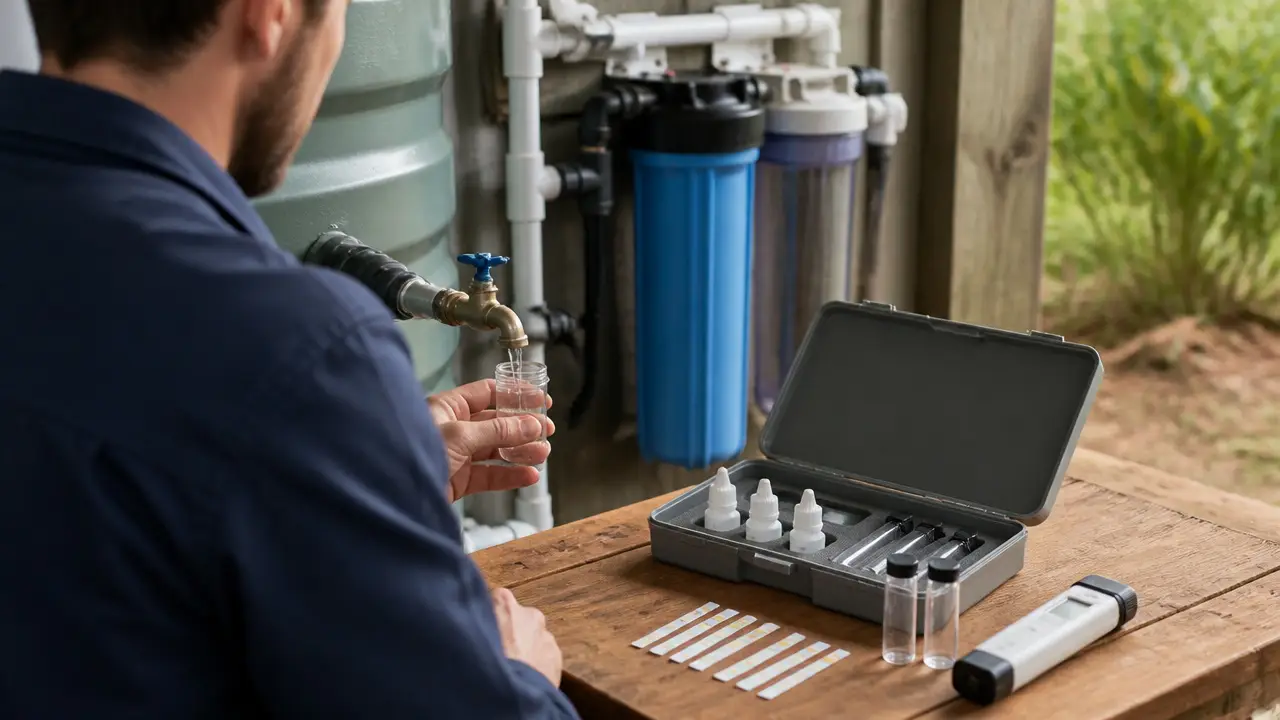
For low turbidity levels, use a turbidity meter, also called a turbidimeter.
The meter shines light through a water sample and measures how much light is scattered by particles.
For useful results:
- Use a clean sample vial.
- Avoid touching the clear part of the vial with your fingers.
- Keep fingerprints, scratches, and condensation off the vial.
- Avoid introducing air bubbles when filling it.
- Follow the meter's calibration instructions.
- Use the correct calibration standards for the instrument.
- Test samples consistently so you can compare readings over time.
Visual inspection alone is not accurate enough for low readings. WHO notes that turbidity below about 4 NTU may not be visible to the eye.
Turbidity Is Not the Same as TDS
Turbidity and total dissolved solids, or TDS, measure different things.
Turbidity mainly reflects suspended particles.
TDS represents dissolved substances such as minerals and salts.
Clear water can have high TDS because dissolved minerals may not make it cloudy. Cloudy water can also have relatively low TDS if the cloudiness comes mainly from suspended sediment.
A TDS meter therefore cannot replace a turbidity meter, and neither instrument can provide a complete drinking-water safety assessment.
When a Turbidity Change Needs Attention
A single number is often less useful than a sudden change from the system's usual reading.
Investigate when:
- Clear water suddenly becomes cloudy.
- Turbidity rises after a filter change.
- Stored rainwater becomes increasingly cloudy.
- Sediment begins appearing at fixtures.
- A treatment system cannot maintain its normal turbidity.
- Turbidity increases before UV or chemical disinfection.
- Water changes color, odor, or appearance at the same time.
Possible causes include a damaged filter, stirred tank sediment, dirty gutters, contamination entering storage, pipe work, pump disturbance, or changes in the source water.
For drinking-water systems, an unexplained turbidity increase should not simply be corrected by increasing disinfectant without understanding the cause. Treatment changes involving chemical dosing, UV system design, or public drinking-water compliance should be handled using the equipment manufacturer's requirements and qualified water-treatment guidance.
The Bottom Line
For treated drinking water, below 1 NTU is a good practical target, especially before disinfection. WHO recommends this level to support effective disinfection. As of August 2026, U.S. EPA requirements for applicable conventional and direct filtration systems are tighter: 0.3 NTU or less in at least 95% of monthly measurements, with a maximum of 1 NTU.
For harvested rainwater, wells, and private systems, there is no single normal turbidity number that proves the water is safe. Use turbidity to track suspended particles and treatment performance, then use appropriate water testing and treatment for the intended use.
Frequently Asked Questions
Is 0.5 NTU good for drinking water?
A turbidity reading of 0.5 NTU is low and falls below WHO's preferred 1 NTU target for supporting effective disinfection. It does not prove the water is safe to drink because microbes and dissolved contaminants may still be present.
Is 1 NTU considered clear water?
Yes. Water around or below 1 NTU is generally very clear. WHO recommends keeping drinking-water turbidity below 1 NTU when possible to support effective disinfection.
Is 5 NTU safe to drink?
Do not use 5 NTU as a stand-alone safety limit. WHO advises aiming for below 5 NTU when achieving below 1 NTU is not practical, but additional treatment considerations still apply. A turbidity result cannot confirm that water is microbiologically or chemically safe.
What causes high turbidity in rainwater?
Common causes include roof dust, pollen, soil, organic debris, bird or animal waste, roofing particles, algae, and sediment disturbed inside the storage tank. Turbidity can change significantly from one storm to another.
Can a water filter reduce turbidity?
Yes. Filters designed to remove suspended particles can reduce turbidity. Performance depends on the type of particles, filter design, micron rating, flow rate, filter condition, and the rest of the treatment system. A sediment filter does not automatically make water potable.
Does boiling water reduce turbidity?
Boiling is not a particle-removal method. Cloudy water may remain cloudy after boiling. When drinking-water treatment is needed, suspended material generally needs to be addressed separately from microbial disinfection.
Can a TDS meter measure turbidity?
No. A TDS meter estimates dissolved ions in water, while a turbidity meter measures light scattering caused mainly by suspended particles. One cannot replace the other.